Trying to picture a size from a product listing or a medical note and getting nowhere fast that’s the 8mm problem. It’s small enough to seem invisible on a ruler but large enough to matter when you’re ordering a ring, drilling a wall, or picking out a straw. 8 mm equals roughly 0.31 inches, sits just under one-third of an inch, and converts to 0.8 cm. Once you anchor it to something you already know, the number stops feeling abstract.
How Big is 8mm? Quick Conversion Table
| Unit | Value |
| Millimeters | 8 mm |
| Centimeters | 0.8 cm |
| Inches | 0.315 in |
| Inches (fraction) | 5/16 in (approx.) |
| Feet | 0.026 ft |
| Meters | 0.008 m |
15 Everyday Things That Are 8mm Big
| Object | Category | Measurement | Part Measured | Exact or Approximate |
| Blueberry | Food | ~8 mm | Diameter | Approximate |
| Bic Cristal pen cap | Stationery | 8 mm | Outer diameter | Exact |
| Adult pinky fingernail | Human body | 8–10 mm | Width | Approximate |
| Drinking straw | Kitchenware | 8 mm | Outer diameter | Exact |
| Large chickpea | Food | ~8 mm | Diameter | Approximate |
| Men’s wedding band | Jewelry | 8 mm | Band width | Exact |
| USB Type-C plug | Electronics | ~8.25 mm | Width | Approximate |
| Small shirt button | Clothing | ~8 mm | Diameter | Approximate |
| Heavy-duty jacket zipper | Clothing/Gear | 8 mm | Teeth track width | Exact |
| Snap fastener | Clothing hardware | ~8 mm | Diameter | Approximate |
| Cultured pearl | Jewelry | 7–8 mm | Diameter | Approximate |
| Masonry wall plug | Hardware | 8 mm | Outer diameter | Exact |
| M5 hex nut | Hardware | 8 mm | Width across flats | Exact |
| 5/16-inch drill bit | Tools | ~7.94 mm | Cutting diameter | Approximate |
| 8mm film strip | Vintage media | 8 mm | Width | Exact |
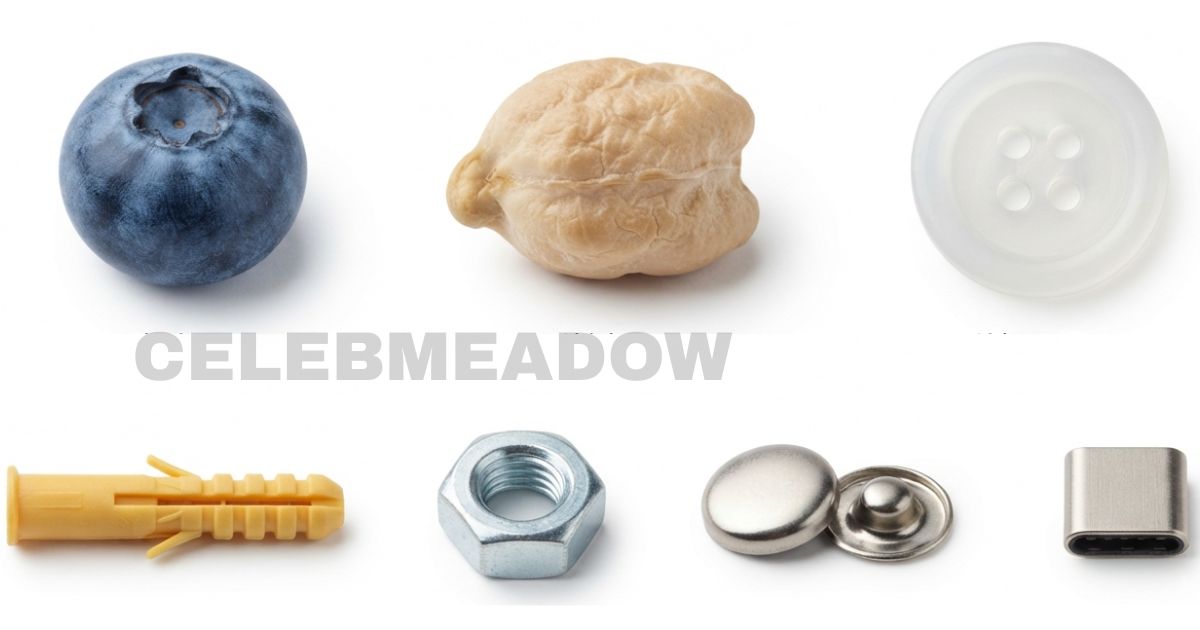
1. Blueberry
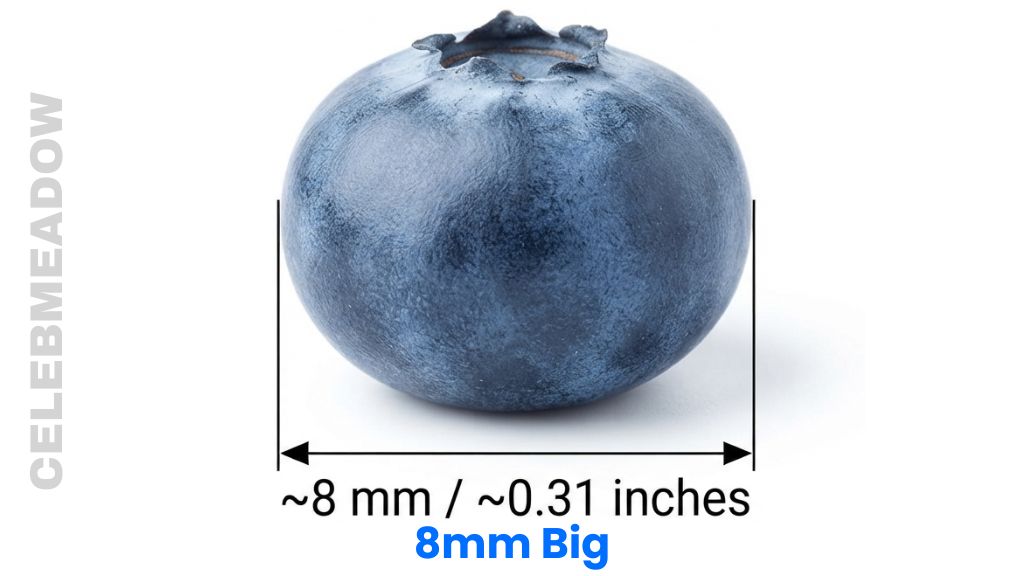
A fresh blueberry is commonly around 8mm across at its widest point.
The size comes from natural growing conditions — soil quality, water, and the specific cultivar. Wild blueberries tend to run smaller, while commercially farmed ones often sit right at that 8–10 mm range. An 8mm berry fits neatly on the tip of your index finger without rolling off.
Pick one up next time you’re near a bowl of them. If it sits flush in the curve of your fingertip with a little room on each side, you’re holding something right at or near 8 millimeters. That mental image sticks.
- Key measurement: ~0.31 inches / ~8 mm
2. Standard Bic Cristal Ballpoint Pen Cap
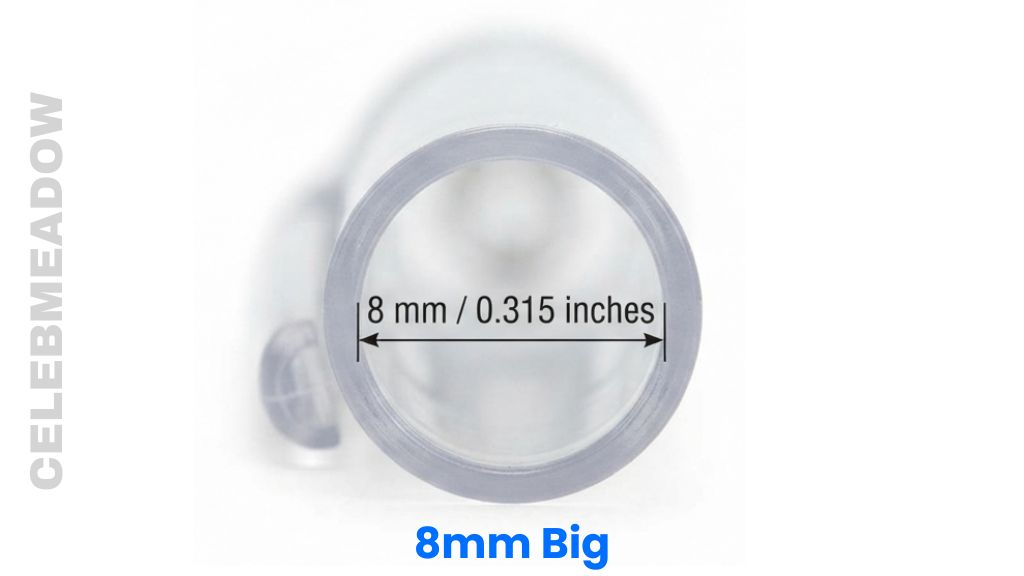
The open end of a Bic Cristal pen cap measures exactly 8mm in outer diameter.
That size isn’t random. The cap is injection-molded to grip the pen barrel with enough friction to seal the ink tip without splitting the plastic. Pull the cap off your pen, flip it around, and look straight down into the opening. That circle you’re looking at — that’s 8mm.
It’s one of the cleanest reference objects you’ll find because the Bic Cristal is sold in more than 160 countries. If you’ve ever clicked or uncapped a ballpoint, you already know this size without realizing it.
- Key measurement: 8 mm / 0.315 inches
3. Adult Pinky Fingernail

The width of an average adult’s pinky fingernail is commonly around 8 to 10mm.
Your skeleton determines this. The phalange bone beneath the nail sets the nail bed width, which is why pinky nails are reliably the smallest on the hand. This measurement is useful for cosmetic nail sizing, medical finger splints, and quick on-the-spot estimates.
Look at your own pinky nail right now. That strip of nail from one side to the other is sitting in 8mm territory. You carry this reference everywhere you go, literally attached to your hand.
- Key measurement: ~8–10 mm / ~0.31–0.39 inches
4. Medium Plastic Drinking Straw
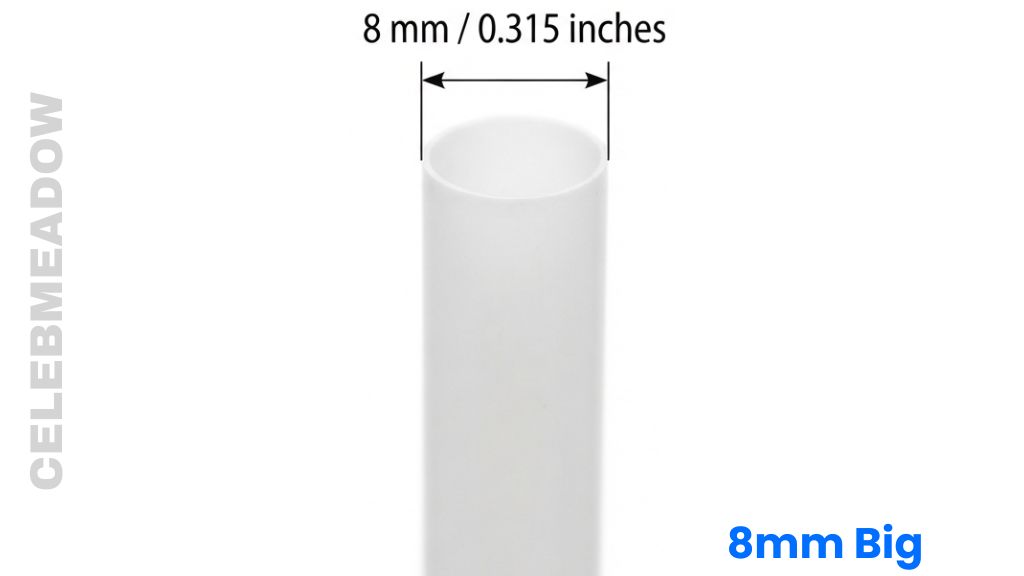
A standard medium plastic drinking straw has an outer diameter of exactly 8mm.
This width is the result of fluid dynamics research. The 8mm opening allows a comfortable sip of water, juice, or soda without requiring too much suction force. Go narrower and the straw feels like work. Go wider and liquid rushes in too fast for a standard drink.
Next time you unwrap a straw at a restaurant or fill a travel cup, look at the circular end straight on. That small circle is 8mm. It’s a size your mouth knows better than your ruler does.
- Key measurement: 8 mm / 0.315 inches
5. Large Chickpea
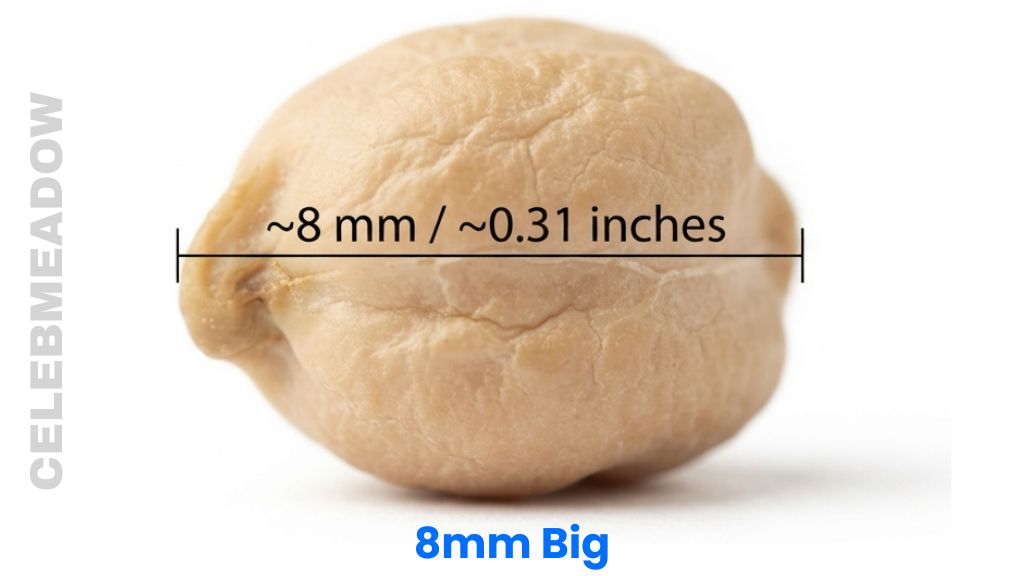
A large, dry chickpea measures commonly around 8mm across its widest point.
Commercial chickpeas are sorted by mesh sieves — an 8mm chickpea would pass through a standard 9mm sorting sieve but not a 7mm one. The size reflects the seed’s nutrient storage capacity and how it was graded at harvest.
Hold one between your thumb and index finger. It fills just enough space to feel distinct without feeling large. That pinched feeling — barely bridging the gap between your fingertip pads — is exactly what 8mm feels like in real life.
- Key measurement: ~8 mm / ~0.31 inches
6. Men’s Wedding Band Width
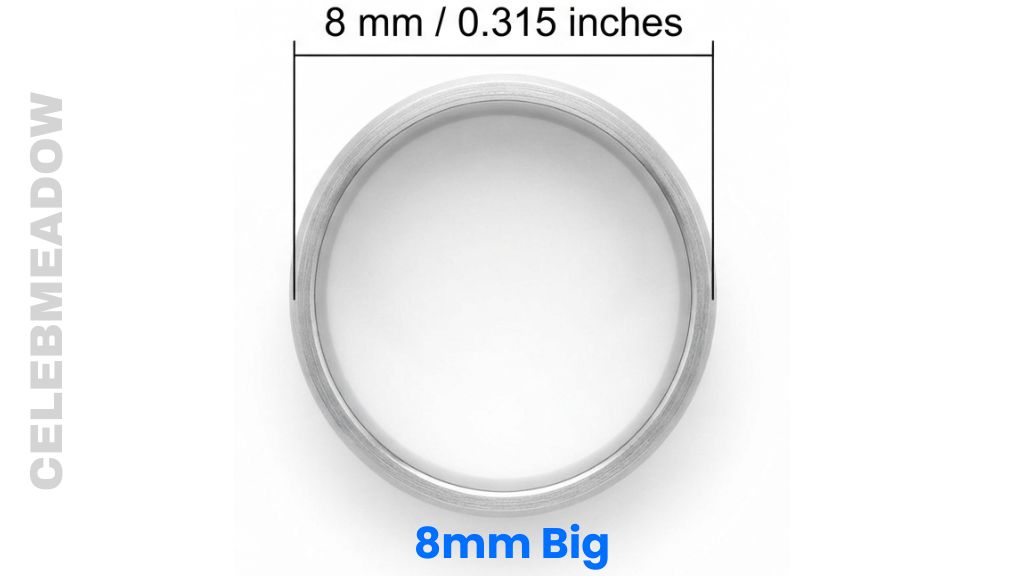
An 8mm wedding band is one of the most popular widths chosen for men’s rings.
Jewelry manufacturers settled on 8mm because it sits wide enough to feel substantial on most men’s fingers without covering the knuckle area or restricting movement. It’s a deliberate visual balance — present but not overwhelming.
If you’ve ever bought or worn a men’s ring, the 8mm band is likely what you picture when someone says “classic men’s wedding ring.” Lay one flat on a table and measure across the face of the band — that strip is your 8mm benchmark.
- Key measurement: 8 mm / 0.315 inches
7. USB Type-C Plug Metal Shroud
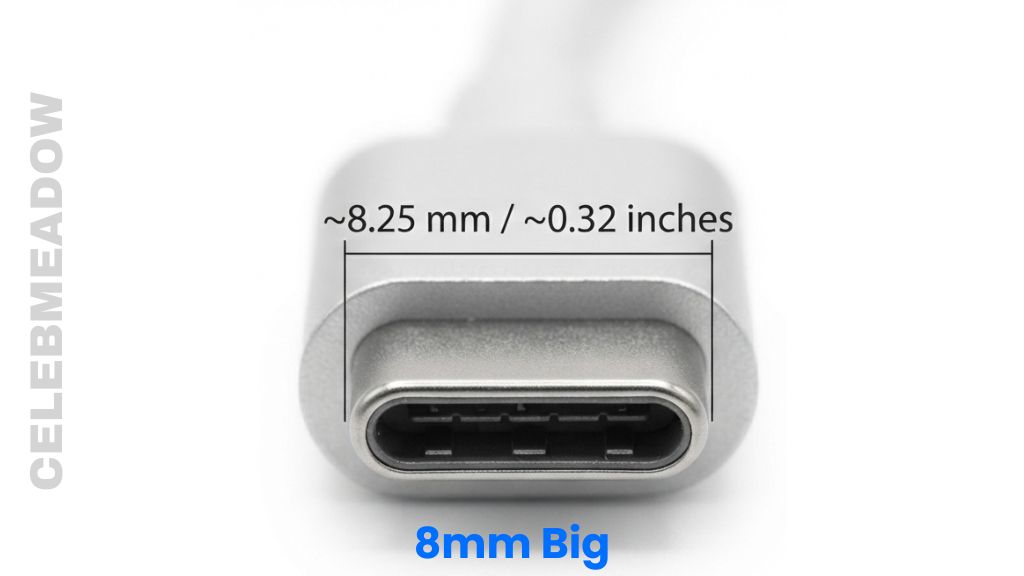
A USB Type-C plug measures approximately 8.25mm across its flat sides — just a hair over 8mm.
The USB Implementers Forum mandated this width so the connector works in any USB-C port on any device, anywhere in the world. Every phone, laptop, and tablet with USB-C uses this same physical spec. No guesswork, no variation.
Look at a charging cable end tonight. That small, rounded rectangle metal piece is sitting at just over 8mm wide. It’s one of the most standardized small objects on the planet right now.
- Key measurement: ~8.25 mm / ~0.32 inches
8. Small Shirt Button
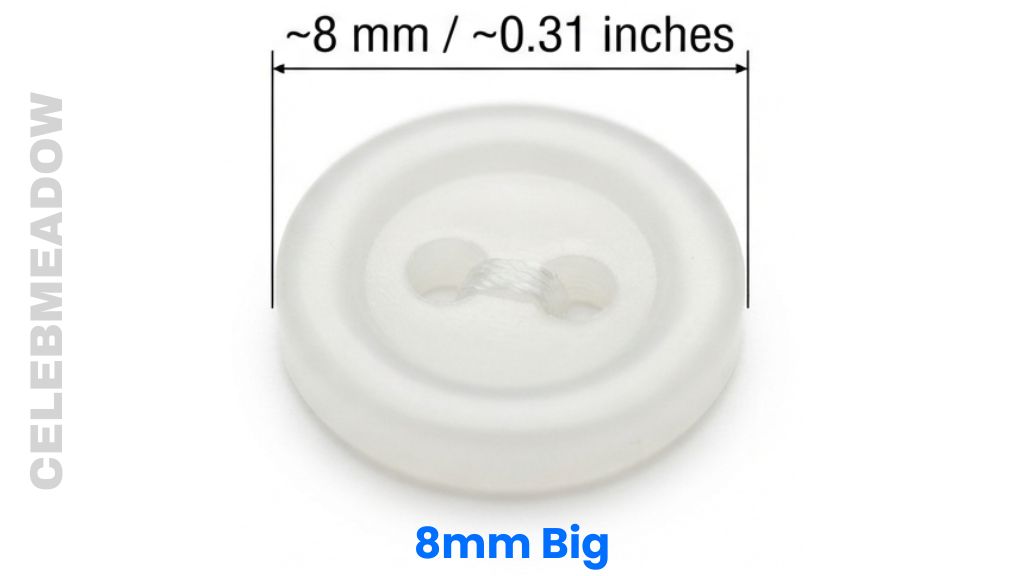
A small button used on dress shirts and blouses is commonly around 8mm in diameter.
Textile manufacturers use this size because it threads cleanly through a narrow buttonhole without pulling the fabric or adding visible bulk. It’s small enough to be unnoticed when done up but large enough for adult fingers to grip.
Unbutton the top collar button on a dress shirt and look at it flat in your palm. If it barely covers the pad of your pinky fingertip, you’re looking at something close to 8mm. That’s the scale.
- Key measurement: ~8 mm / ~0.31 inches
9. Heavy-Duty Jacket Zipper (Size #8)
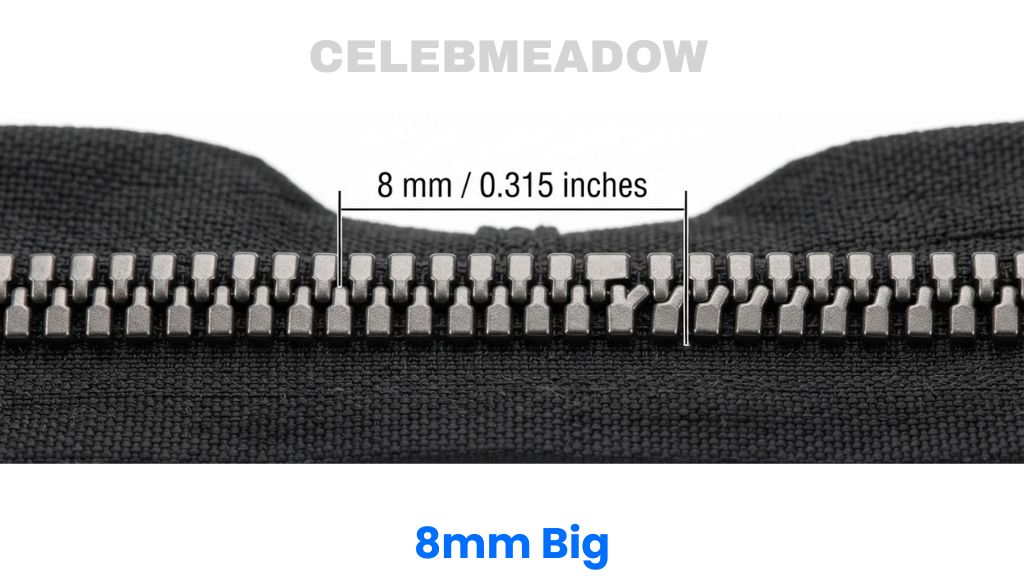
A size #8 heavy-duty zipper has a teeth track width of exactly 8mm when fully closed.
That width is an international garment and gear standard. Winter jackets, mountaineering packs, and large duffel bags all use size 8 zippers because the 8mm track holds under repeated stress and cold-weather stiffness. A smaller zipper would split under tension.
Run your finger along the zipped teeth of a thick winter jacket. That chunky ridge your fingernail catches on — the part that feels substantial — is 8mm wide. Next time you need to replace a zipper slider, the number on the back of the slider matches that track width.
- Key measurement: 8 mm / 0.315 inches
10. Common Snap Fastener
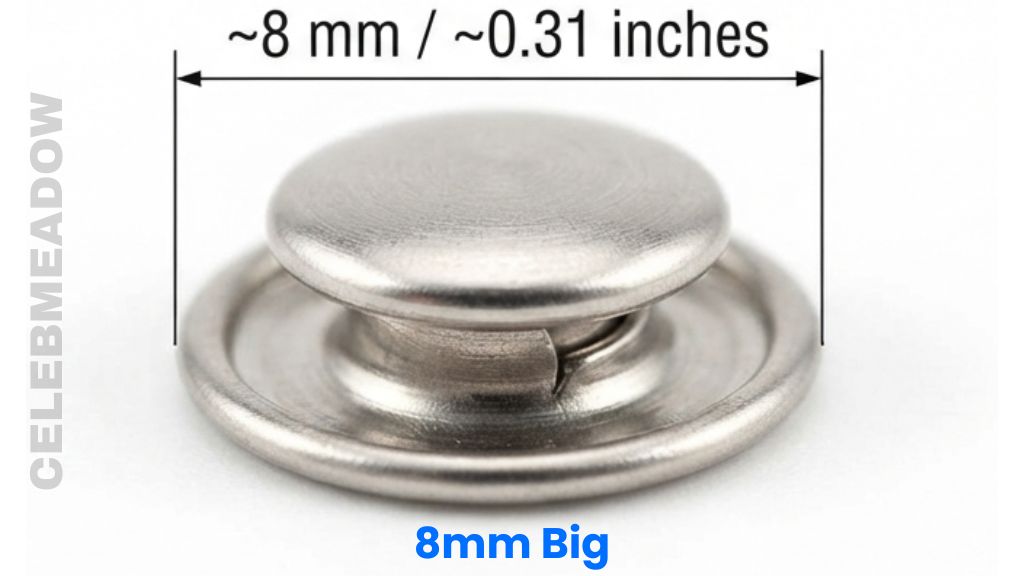
A standard snap fastener used on light clothing is commonly around 8mm across.
The diameter is engineered to close with a firm pop but release under deliberate pressure — too small and it slips open; too large and children or elderly users struggle with it. This 8mm range is the balance point for lightweight garments.
Baby onesies, light athletic jackets, and fabric pouches often use these. The snap feels like pressing two small coins together. That two-sided coin-press sensation — both pieces sitting under 1 cm — is a very physical way to feel 8mm in action.
- Key measurement: ~8 mm / ~0.31 inches
11. Cultured Pearl
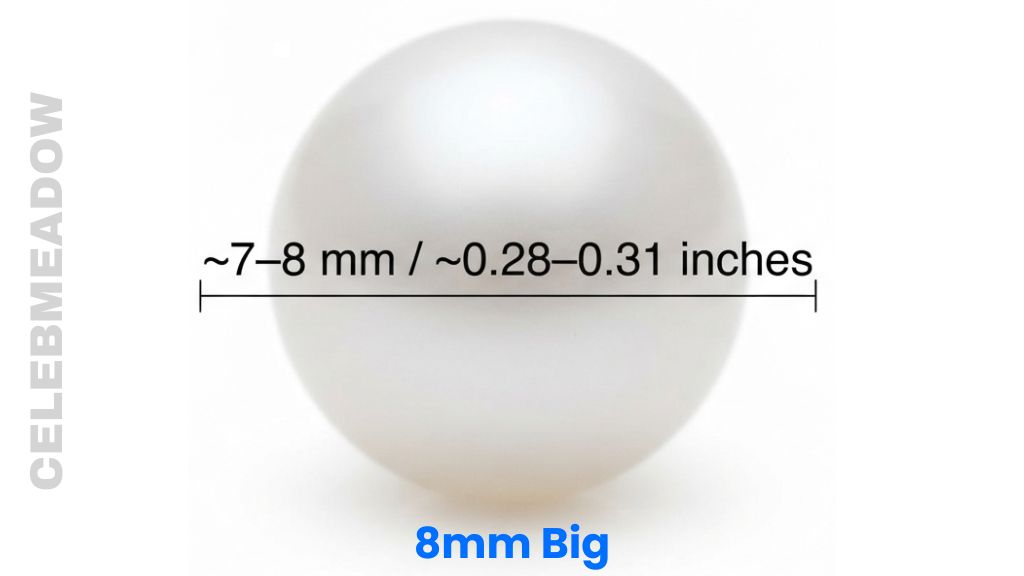
Classic cultured pearls are commonly harvested at 7 to 8mm in diameter.
Pearl farmers time harvests at this size because it’s the point where a pearl is visibly noticeable in jewelry without adding significant weight to a necklace. Below 6mm, the pearl looks delicate. Above 9mm, it starts to command a premium price bracket. The 8mm pearl sits right at the commercial sweet spot.
Roll a pearl between your fingers — if it rolls smoothly with a small, satisfying weight and you can cover most of it with your fingertip pad, you’re handling something in that 7–8mm window.
- Key measurement: ~7–8 mm / ~0.28–0.31 inches
12. Masonry Wall Plug
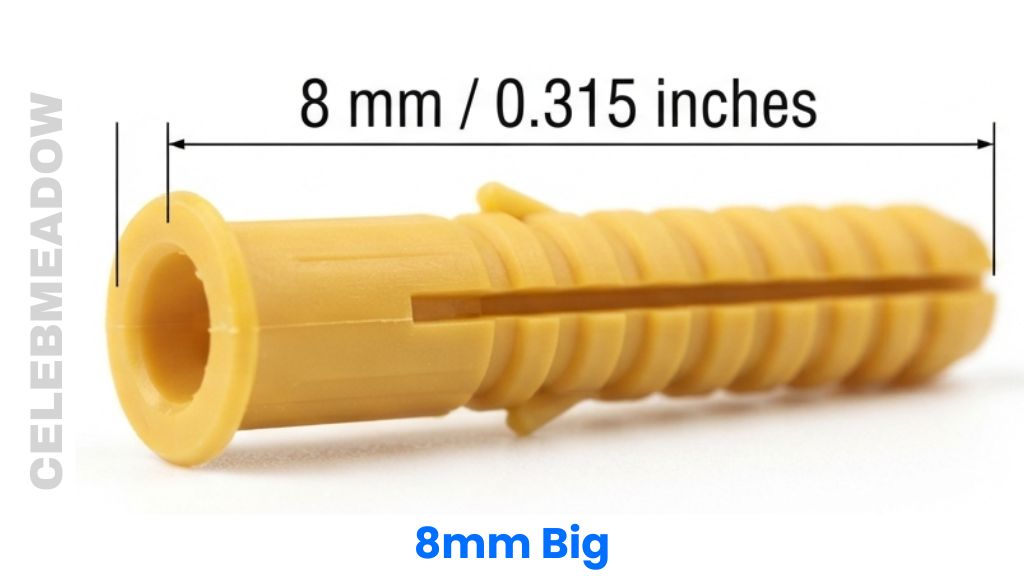
A standard masonry wall plug marked M8 has an outer diameter of exactly 8mm.
That size matches an 8mm masonry drill bit precisely. When you drill the hole and push the plug in, the ribbed plastic grips the concrete or brick walls with enough friction to support medium-weight fixtures — mirrors, shelving brackets, curtain rails.
If you’ve mounted anything on a solid wall at home, you’ve handled an 8mm plug. They’re the small, ribbed plastic cylinders that disappear into the wall before you drive the screw. Small object, but it’s carrying real weight — sometimes 20kg or more.
- Key measurement: 8 mm / 0.315 inches
13. M5 Hex Nut
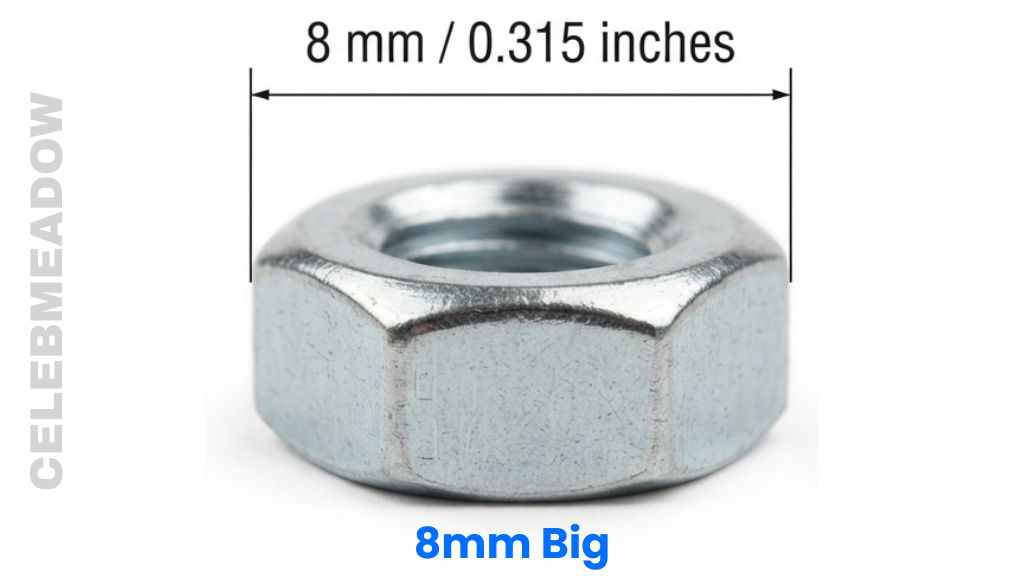
An M5 hex nut measures exactly 8mm across its flat sides, per ISO 4032 specifications.
This is why an 8mm wrench fits an M5 nut perfectly — it’s not a coincidence, it’s an international manufacturing standard. The flat-to-flat distance of 8mm lets the wrench grip without slipping, even under significant torque.
Look at the hex nuts on flat-pack furniture or a bicycle. The M5 size is among the most common you’ll encounter. Place an 8mm open-end spanner over one and you’ll feel exactly how tight that 8mm grip is — snug, with zero play.
- Key measurement: 8 mm / 0.315 inches
14. 5/16-Inch Drill Bit
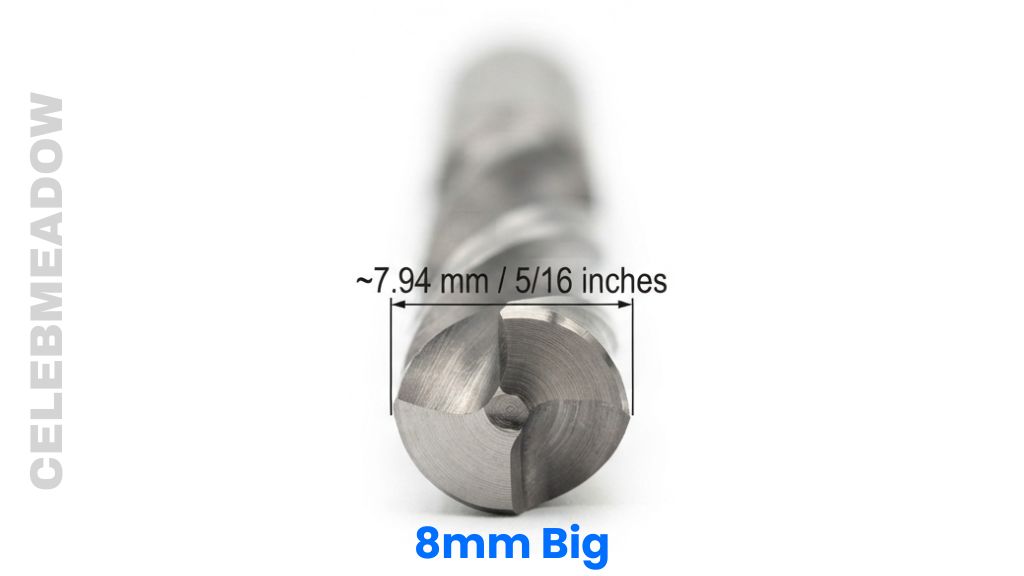
A 5/16-inch drill bit cuts a hole of approximately 7.94mm — the practical equivalent of 8mm.
The imperial fraction 5/16″ comes from tool manufacturing traditions in the US and UK. At 7.9375mm, it’s close enough to 8mm that it’s used interchangeably with metric 8mm bits for wall plugs, anchor bolts, and clearance holes. The difference of 0.06mm is invisible in most real-world tasks.
Pick a 5/16″ bit out of a drill kit and look at the cutting tip end-on. That circle is 8mm in real terms. Knowing this matters when you’re switching between imperial and metric tools on the same job.
- Key measurement: ~7.94 mm / 5/16 inches
15. 8mm Film Strip
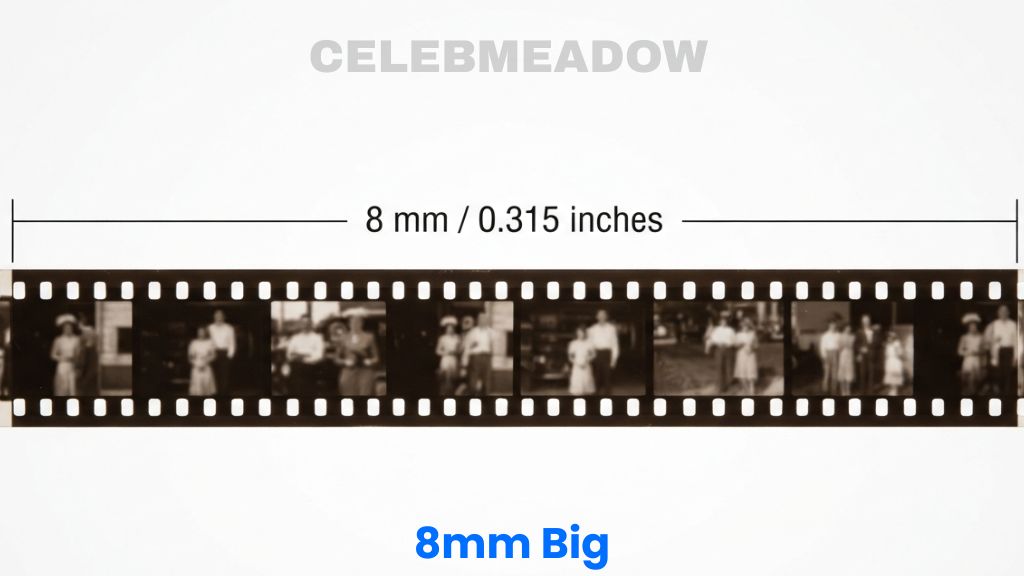
The 8mm film format introduced by Kodak in 1932 has a strip width of exactly 8mm.
Kodak designed it by splitting 16mm film down the middle, making home moviemaking affordable for the first time. The 8mm width was narrow enough to keep costs low while still holding a frame size large enough for home projector screens. It became the global standard for amateur film for over four decades.
If you find an old reel of home movies in a family archive or thrift store, the strip coming off it is 8mm wide. Lay it across a ruler — it sits perfectly between the 0 and 8mm marks. A narrow strip of history that gave this measurement its name.
- Key measurement: 8 mm / 0.315 inches
How to Picture 8mm Without a Ruler
The quickest way to feel 8mm is with your own hand. Pinch your pinky fingernail between the pad of your opposite thumb and index finger — not the tip, the nail itself. The nail width you’re pinching across is sitting right at 8mm. That feeling, that small but distinct pinch of space, is the measurement.
A second method: grab a standard drinking straw and hold it upright. Look straight down at the end. The circular opening staring back at you is 8mm across. Most people are surprised — it looks quite small when viewed that way, but it’s wide enough to sip through comfortably. That contrast between “looks tiny” and “works perfectly” is what 8mm actually is in functional terms.
For a stacking reference, eight standard credit cards stacked flat equal roughly 6.4mm. Add two more business cards on top and you’re at approximately 8mm of total height. That stack in your hand — thin but not paper-thin — is the tactile answer to what 8mm feels like as a thickness.
8mm Compared to Similar Sizes
| Measurement | In cm | Compared to 8mm |
| 5 mm | 0.5 cm | 3mm smaller — width of a pencil |
| 6 mm | 0.6 cm | 2mm smaller — standard pencil eraser |
| 8 mm | 0.8 cm | ← Target size |
| 10 mm | 1.0 cm | 2mm larger — a dime’s thickness × 6 |
| 12 mm | 1.2 cm | 4mm larger — standard AAA battery width approx. |
| 16 mm | 1.6 cm | Double 8mm — width of a standard pencil eraser cap |
Common Questions About 8mm
How big is 8mm in inches?
8mm equals 0.315 inches, or just under 5/16 of an inch. On a ruler, it falls slightly past the 1/4-inch mark toward 3/8 inch.
How big is 8mm compared to a dime?
A dime is 17.91mm wide, so 8mm is roughly half the diameter of a dime. Place an 8mm object next to a dime and it covers about the inner circle of the coin.
How do I find 8mm on a ruler?
On a metric ruler, count eight small tick marks from zero. On an imperial ruler, find the 5/16-inch mark — that’s your 8mm equivalent.
What household item is exactly 8mm?
A standard drinking straw measures exactly 8mm in outer diameter. A Bic Cristal pen cap opening is another exact match — both are easy to grab at home.
How can I estimate 8mm without a ruler?
Look at your pinky fingernail. Its width is approximately 8 to 10mm on most adults. It’s the fastest built-in reference you have.
Is 8mm the same as 1 cm?
No. One centimeter is 10mm, so 8mm is 2mm short of 1 cm. They’re close, but side by side the difference is visible.
Why do so many products use 8mm as a standard size?
Because 8mm hits a practical balance point — strong enough for hardware, light enough for jewelry, compact enough for electronics. That versatility makes it a natural fit across many industries.
The next time 8mm shows up on a product page or a package label, you now have at least three things to reach for mentally — a blueberry, a pen cap, or the end of a drinking straw. Each one gives you a slightly different feel for the same measurement: organic, manufactured, and functional. That range is what makes 8mm easier to hold in your head than any number on a ruler.
Read More Measurements Guides:

I’m Cherry Sin, and I write clear, practical guides that help people understand everyday measurements and sizes. I focus on turning numbers into easy mental pictures using familiar objects and real-life situations. At Celebmeadow, I write guides that explain measurements in a simple, visual way.