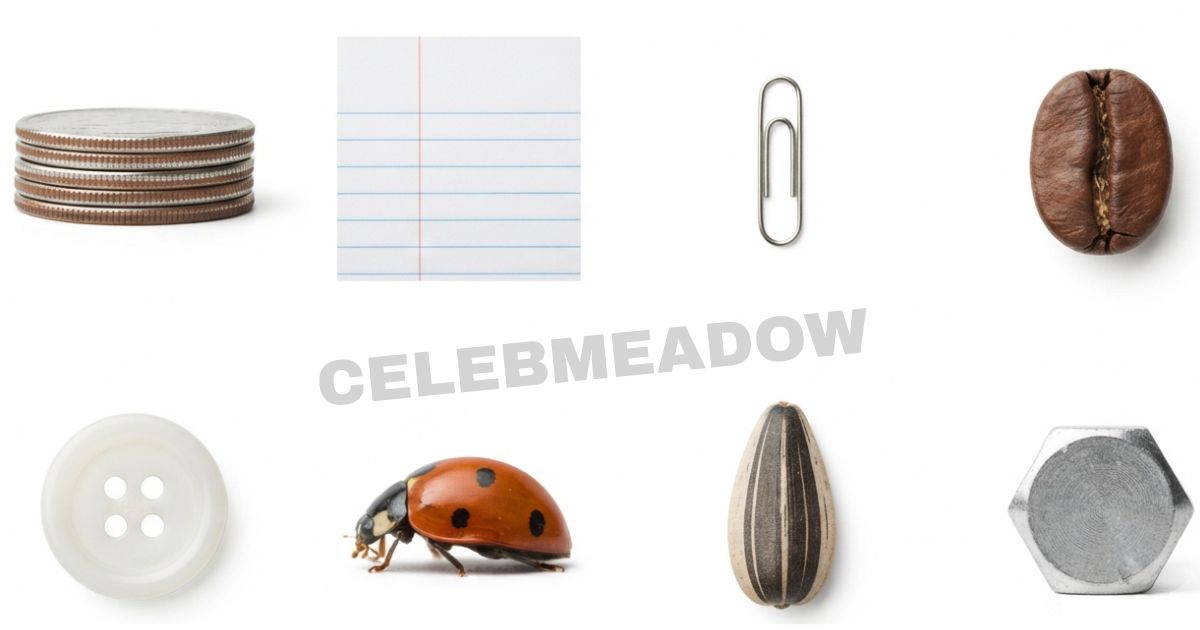
You’re ordering a replacement zipper slider online, and the listing says “No. 7 — 7mm chain width.” You stare at the number. How big is 7mm, exactly? It’s smaller than a centimeter — just barely. To be precise, 7mm equals 0.28 inches, which is roughly 0.7 cm or 0.007 meters. That’s not much to go on visually, which is exactly why this guide exists: to turn an abstract number into something your hands and eyes already know.
How Big is 7mm? Quick Conversions Guide
| Unit | Value |
| Millimeters | 7 mm |
| Centimeters | 0.7 cm |
| Meters | 0.007 m |
| Inches | 0.2756 in |
| Feet | 0.023 ft |
15 Real Things That Are 7mm Big
| Object | Category | Measurement | Part Measured | Exact or Approximate |
| 4 Stacked US Quarters | Currency | 7.0 mm | Thickness (stacked) | Exact |
| Hexagonal Pencil (flat-to-flat) | Stationery | 7.0 mm | Diameter | Exact |
| College-Ruled Line Spacing | Paper | 7.1 mm | Vertical gap | Exact |
| No. 3 Metal Paperclip | Office Supply | ~7.0 mm | Width | Approximate |
| Hexagonal Pencil (corner-to-corner) | Stationery | ~7.4 mm | Outer diameter | Approximate |
| No. 7 Zipper Chain | Textile | 7.0 mm | Tooth track width | Exact |
| Standard Drinking Straw | Kitchenware | 7.0 mm | Outer diameter | Exact |
| Arabica Coffee Bean | Food | ~7.0 mm | Width | Approximate |
| Size 11L Shirt Button | Clothing | 7.0 mm | Diameter | Exact |
| Adult Housefly | Insect | 6.5–7.0 mm | Body length | Approximate |
| Seven-Spot Ladybug | Insect | ~7.0 mm | Body length | Approximate |
| Striped Sunflower Seed | Food | ~7.0 mm | Shell width | Approximate |
| M4 Hex Bolt Head | Hardware | 7.0 mm | Flat-to-flat width | Exact |
| 7mm Twist Drill Bit | Tool | 7.0 mm | Cutting diameter | Exact |
| Mini Hot Glue Stick | Craft Supply | 7.0 mm | Rod diameter | Exact |
1. Stack of 4 Standard US Quarters
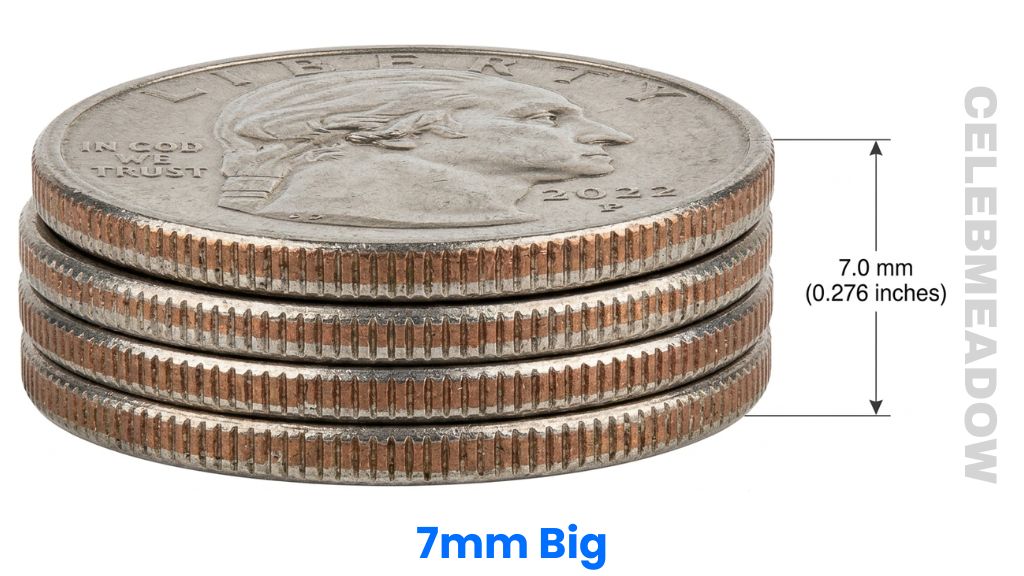
Four US quarters stacked on top of each other reach exactly 7.0mm tall.
The US Mint sets every quarter’s thickness at precisely 1.75mm — not as an arbitrary choice, but because coin-operated machines read depth to confirm authenticity. Four of them stack to exactly 7.0mm. That’s a measurement you can build and verify in under five seconds without any tool.
Pull four quarters from your wallet and stack them right now. That little column sitting on your palm — that’s your 7mm reference. Useful when you need to eyeball a small clearance gap or check a spark plug gap without a feeler gauge.
Key measurement: 7.0mm / 0.276 inches
2. Standard Hexagonal Wooden Pencil (Flat-to-Flat)
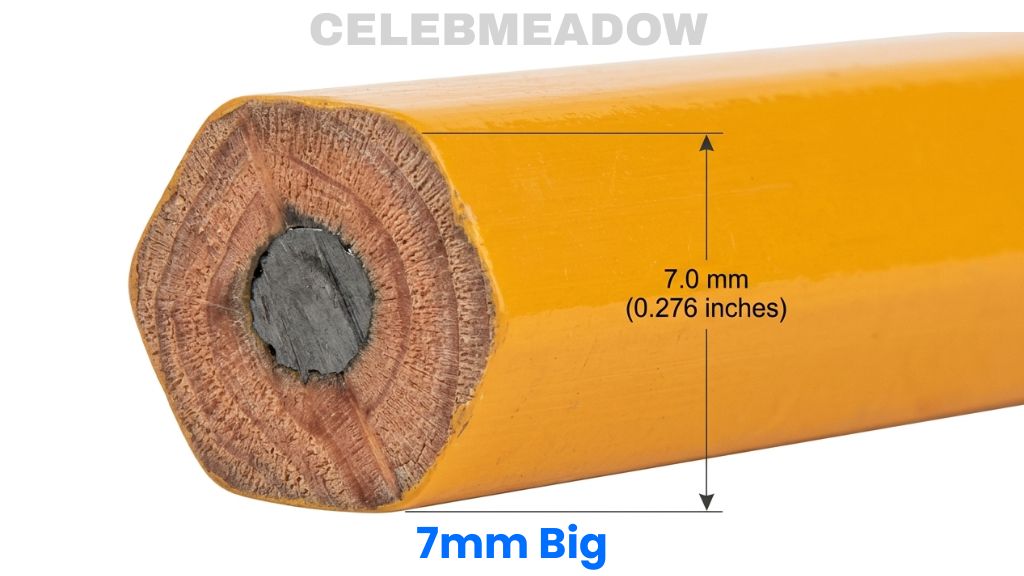
A standard wooden pencil measures exactly 7.0mm across its flat sides.
This size didn’t happen by accident. Pencil manufacturers follow ISO and DIN standards that set the flat-to-flat width at 7.0mm — wide enough to grip without fatigue, narrow enough to roll through automated lacquering machines without jamming. Cedar wood is cut in slats, and 7.0mm extracts the most pencils per board with minimal waste.
Grab a pencil and roll it between your thumb and index finger, stopping when a flat side presses against each finger pad. That feeling — the slight resistance as a flat catches — is 7.0mm against your skin.
Key measurement: 7.0mm / 0.276 inches
3. College-Ruled Paper Line Spacing
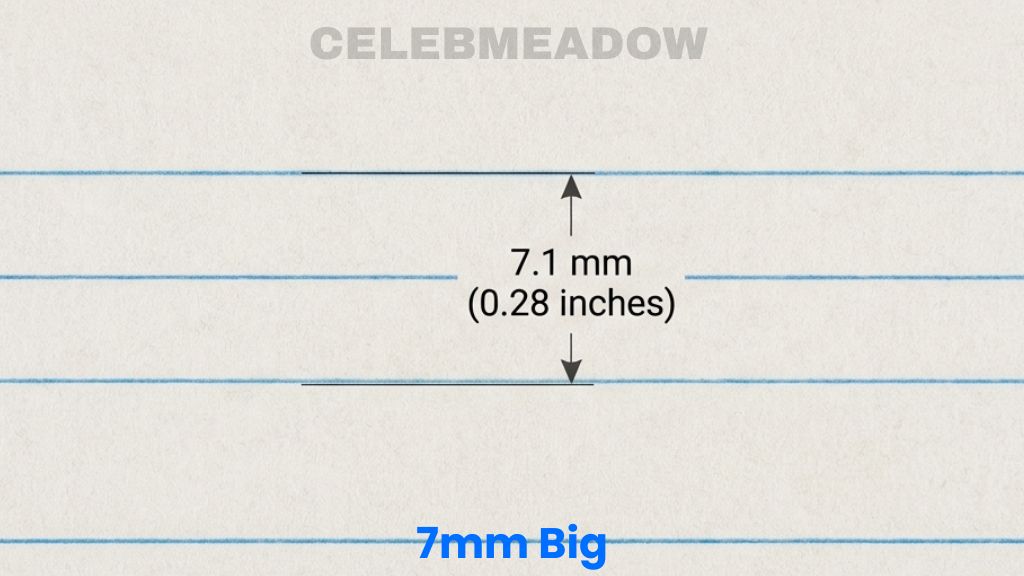
The gap between two blue lines on college-ruled paper is exactly 7.1mm.
Paper mills standardized this at 9/32 of an inch — which works out to 7.1mm — specifically to pack more writing lines onto a page for adults and older students whose handwriting runs smaller than a child’s. Wide-ruled paper, by contrast, spaces lines at 8.7mm. The difference feels minor until you’re cramming notes into a notebook.
Open any standard college-ruled notebook and look at the gap between two lines. That thin stripe of white space you see — that’s your 7mm mental image, printed and waiting.
Key measurement: 7.1mm / 0.28 inches
4. Small No. 3 Metal Paperclip
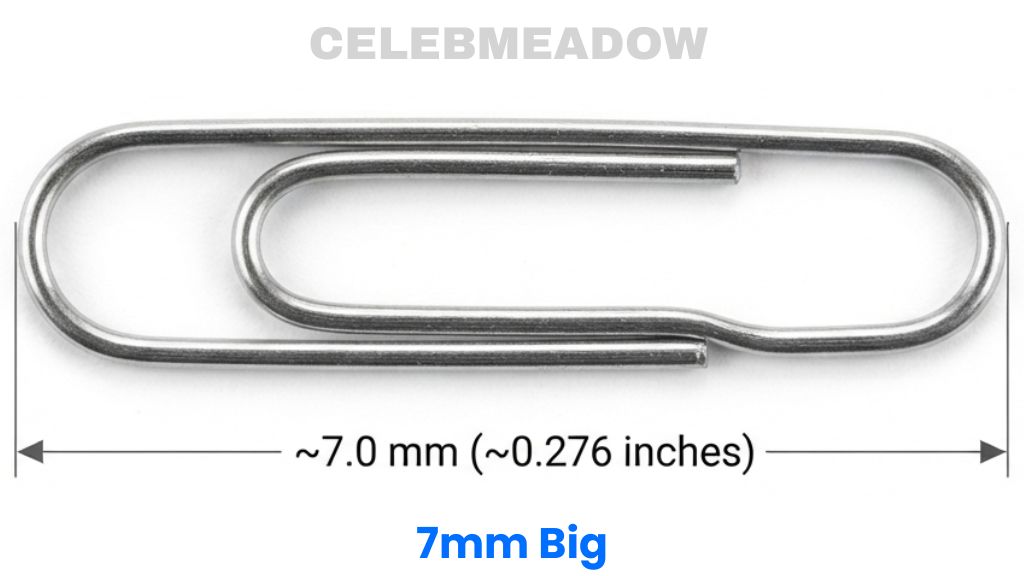
The outer width across a small No. 3 paperclip is commonly around 7mm.
Wire-forming factories standardize the No. 3 clip to create a tool small enough for compact document packets without losing holding tension. The looped wire geometry keeps the clip from splaying open when papers are thin. At roughly 7mm wide, it sits just narrower than the tip of your pinky finger.
Next time you pull a small paperclip off a stack of documents, hold it flat and measure the narrow end against your fingertip. That modest span is a surprisingly reliable approximation of 7mm.
Key measurement: ~7.0mm / ~0.276 inches
5. Hexagonal Pencil Thickness (Corner-to-Corner)
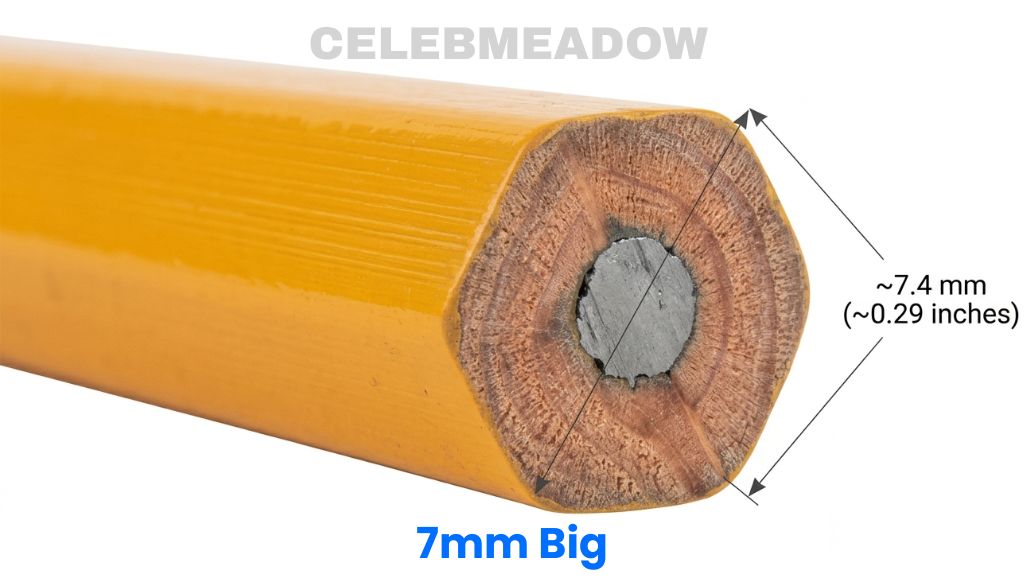
Measured from one raised corner ridge to the opposite corner, a standard pencil is typically near 7.4mm wide.
This is a different measurement than the flat-to-flat width. The corner-to-corner span is larger because of the geometric relationship in a regular hexagon. Manufacturing tolerances and the lacquer coating add a fraction more. The result is a diameter that drifts slightly above 7mm — useful when you need to drill a snug-fit hole for a pencil in a wooden rack or desk caddy.
Hold a pencil up and imagine drawing a line from one sharp ridge to the ridge directly across from it. That diagonal span is your ~7.4mm reference point.
Key measurement: ~7.4mm / ~0.29 inches
6. Standard No. 7 Zipper Chain
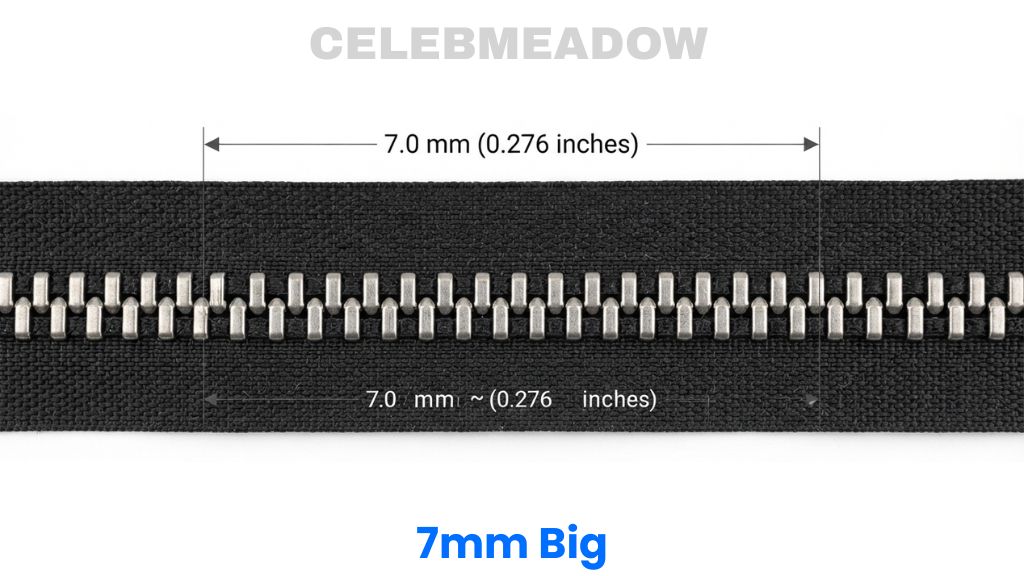
A No. 7 zipper has an interlocked tooth track width of exactly 7.0mm.
The global textile numbering system names zippers by the width of their closed tooth track in millimeters. So a No. 7 zipper literally measures 7mm across when fully zipped. This size is built for load-bearing use — backpacks, tactical jackets, luggage — where a smaller zipper would split under stress.
Run your thumbnail across the teeth of a heavy backpack zipper. That firm, ridged track under your nail is almost certainly 7mm wide. It’s a size you feel more than see.
Key measurement: 7.0mm / 0.276 inches
7. Standard Plastic Drinking Straw
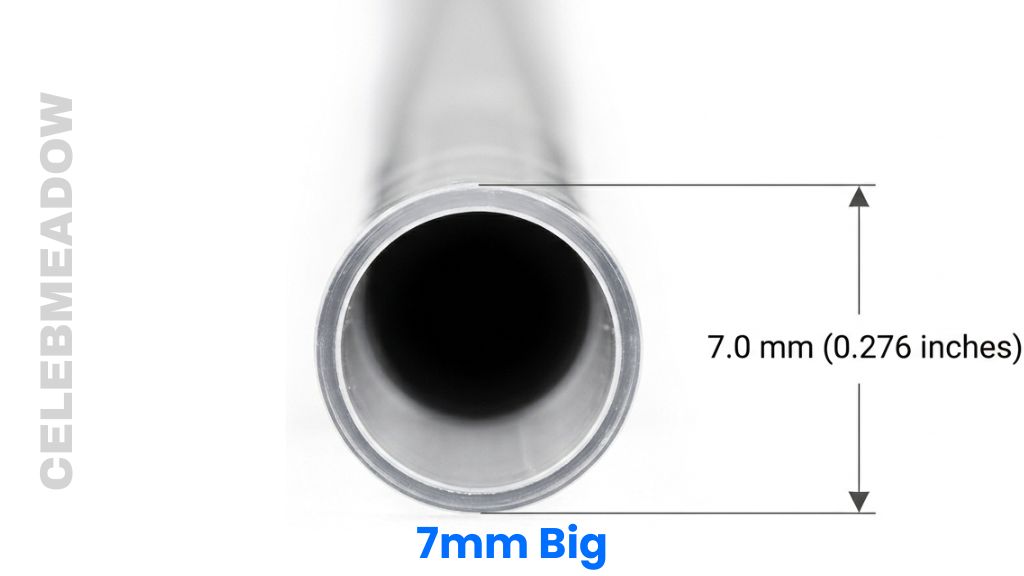
A regular disposable drinking straw has an outer diameter of exactly 7.0mm.
This isn’t a guess. Straw manufacturers extrude plastic tubing to land between 6.5mm and 7.0mm outer diameter because that range creates the right suction hydraulics for water, soda, and iced tea without the straw collapsing mid-sip. Go thinner, and the straw buckles. Go wider, and it won’t fit standard lid holes.
Pick up a regular fast-food straw and look straight down through it. The circular opening you see — rim to rim on the outside — is 7mm across.
Key measurement: 7.0mm / 0.276 inches
8. Graded Arabica Coffee Bean
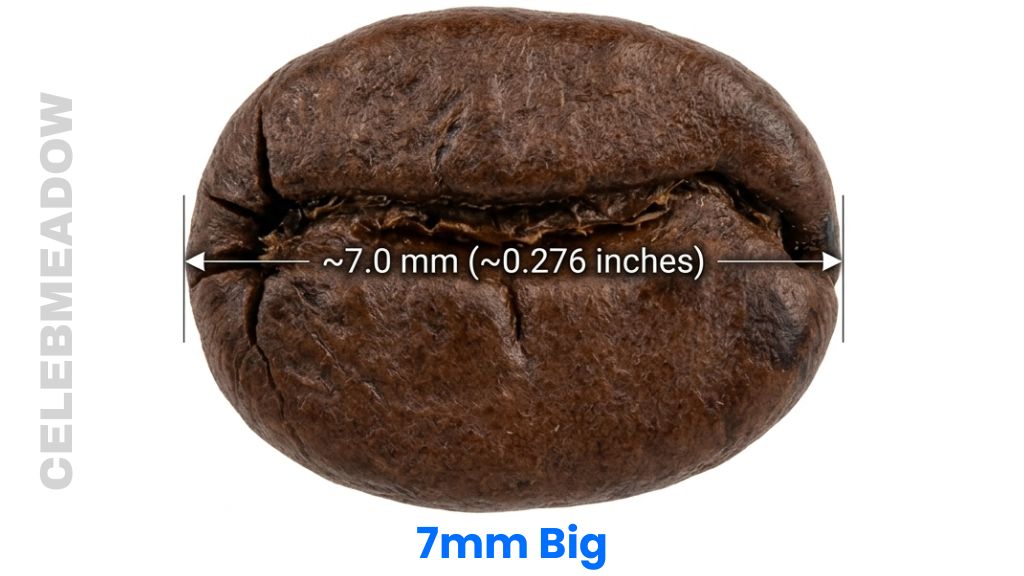
A premium-grade Arabica coffee bean is commonly around 7mm wide across its shorter axis.
Coffee buyers and roasters sort beans using metal screens with standardized mesh holes. A bean that passes “Screen 18” grading sits at roughly 7mm across its narrowest face. This sorting step isn’t just cosmetic — beans of uniform size roast evenly inside drum roasters. An undersized bean in the batch burns; an oversized one stays underdone.
Pick up a single coffee bean at your kitchen counter. Hold it flat between your fingers and look at the narrow width — not the long axis. That measurement is your 7mm.
Key measurement: ~7.0mm / ~0.276 inches
9. Standard Shirt Button (Size 11 Ligne)
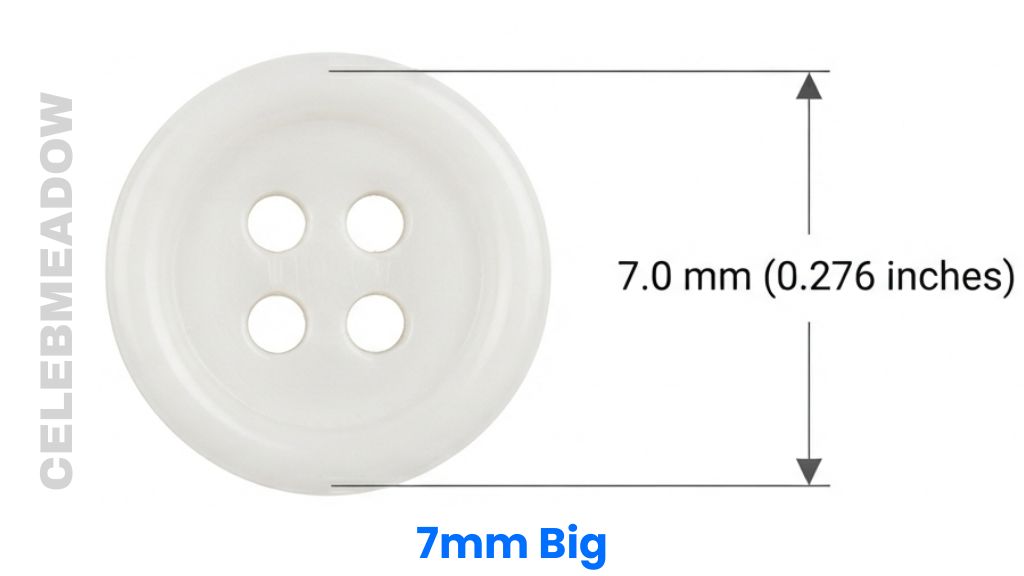
An 11 Ligne shirt button — the kind used on collar bands and cuff edges — has a diameter of exactly 7.0mm.
The Ligne unit dates back to French tailoring tradition. One Ligne equals 0.635mm, so 11 Ligne works out to exactly 7.0mm. These small buttons are engineered to hold collar bands shut without adding bulk that would disrupt the line of a dress shirt. They’re small by design — big enough to grip, small enough to stay invisible.
Look at the topmost collar button on a formal shirt you own. That tiny disc is exactly 7mm across — barely wider than the pencil that might have signed the receipt when you bought it.
Key measurement: 7.0mm / 0.276 inches
10. Adult Housefly (Musca domestica)

A fully grown common housefly measures typically near 7mm from head to the tip of its abdomen.
That size is governed by biology, not manufacturing. Larval development timelines, food availability during growth, and thermal conditions all influence final adult size — but a mature specimen consistently lands between 6.5mm and 7.0mm. This is why insect window screens use mesh openings smaller than 7mm: to block a fly-sized object at its maximum size.
The next time a fly lands on your window, don’t swat it immediately. Look. That entire insect, head to tail, is about 7mm long. You’ve been living alongside a perfect 7mm reference your whole life.
Key measurement: ~6.5–7.0mm / ~0.25–0.276 inches
11. Mature Seven-Spot Ladybug
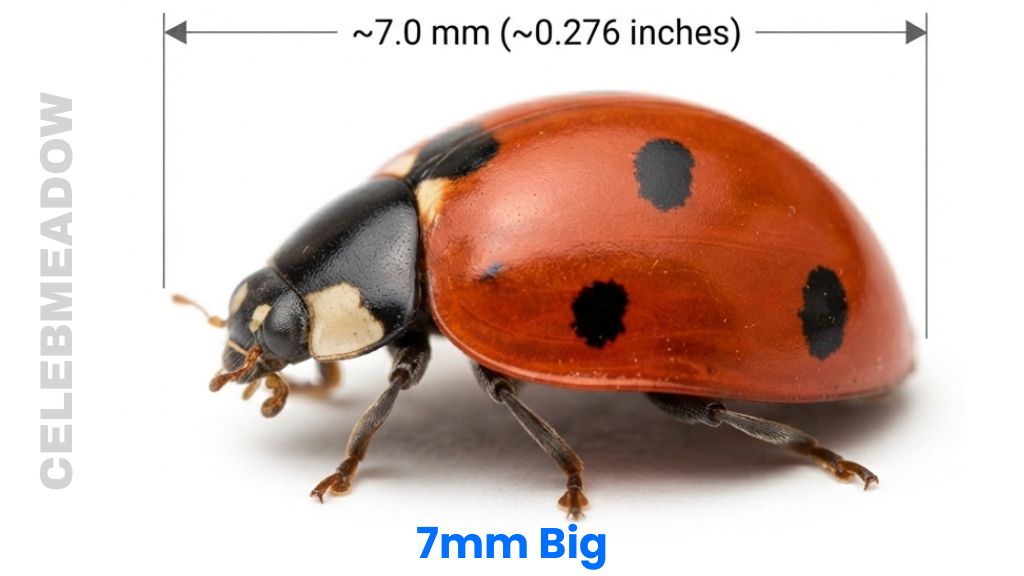
A fully developed seven-spot ladybug typically reaches about 7mm from its head to the back edge of its wing covers.
This is the beetle’s peak adult size once it completes metamorphosis. The seven-spot ladybug (Coccinella septempunctata) is one of the most studied beneficial insects in the world — gardeners value it because it eats aphids. Its consistent size also makes it useful in pest identification: invasive crop pest beetles run smaller, so if the red-and-black bug in your garden is clearly around 7mm, it’s likely a native, helpful species.
Cup your hand and imagine a ladybug sitting on your palm. That domed, red-and-black oval — small but clearly visible — is 7mm long.
Key measurement: ~7.0mm / ~0.276 inches
12. Commercial Striped Sunflower Seed
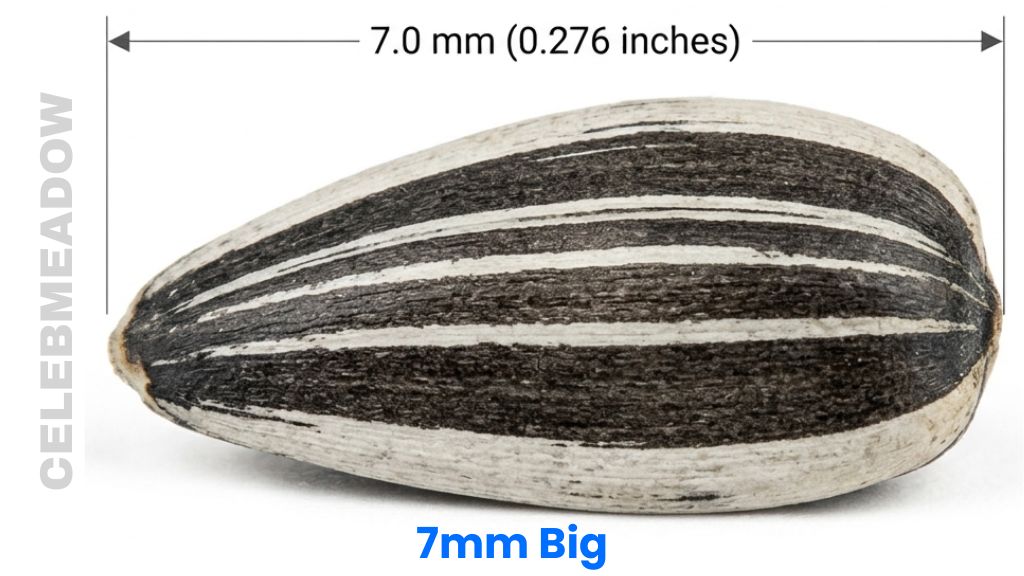
A standard striped sunflower seed is commonly around 7mm wide at its widest point.
After harvest, sunflower seeds move across vibrating sorting screens that separate them into size tiers for roasting and packaging. The confectionery-grade seeds sold for snacking — the black-and-white striped kind — land in a consistent size range, with the widest shell span sitting near 7mm. Uniform sizing means even roasting and consistent flavor.
Grab a handful of sunflower seeds from a bag and set one flat on your palm. The widest part of that teardrop-shaped shell — the fat middle — is your 7mm width reference.
Key measurement: ~7.0mm / ~0.276 inches
13. M4 Hex Bolt Head
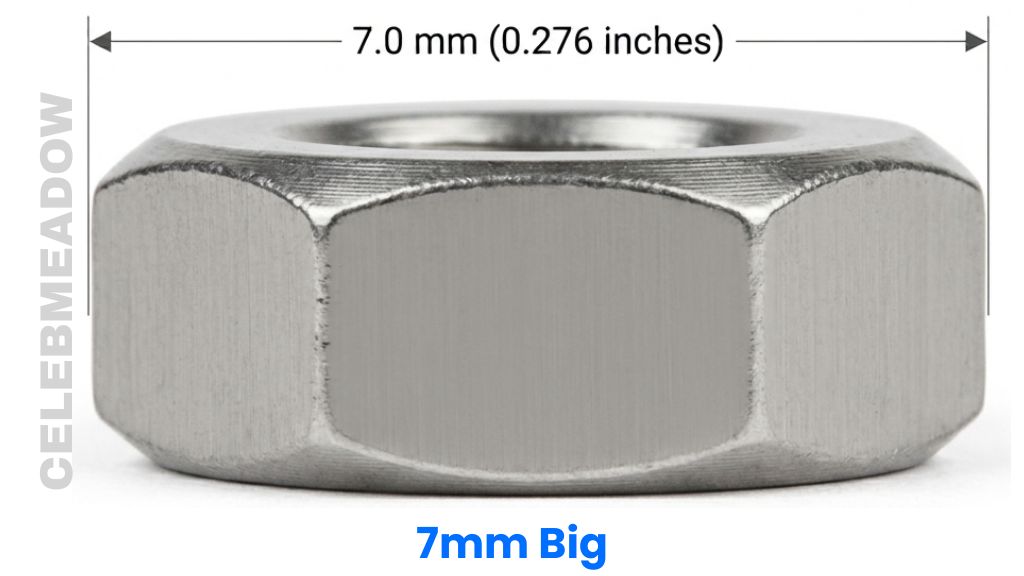
An M4 hex bolt head measures exactly 7.0mm across its flat parallel sides.
This dimension is locked in by ISO 4014 and DIN 931 — the international standards that govern fastener geometry. The 7mm head width pairs precisely with a 7mm wrench or socket. That match isn’t coincidence; it’s engineered so torque transfers evenly to the bolt without rounding the head or slipping.
If you’ve ever assembled IKEA furniture or worked on a bicycle, you’ve had a 7mm bolt head in your hands. A 7mm socket is one of the most-used sizes in a basic home toolkit for exactly this reason.
Key measurement: 7.0mm / 0.276 inches
14. 7mm Twist Drill Bit
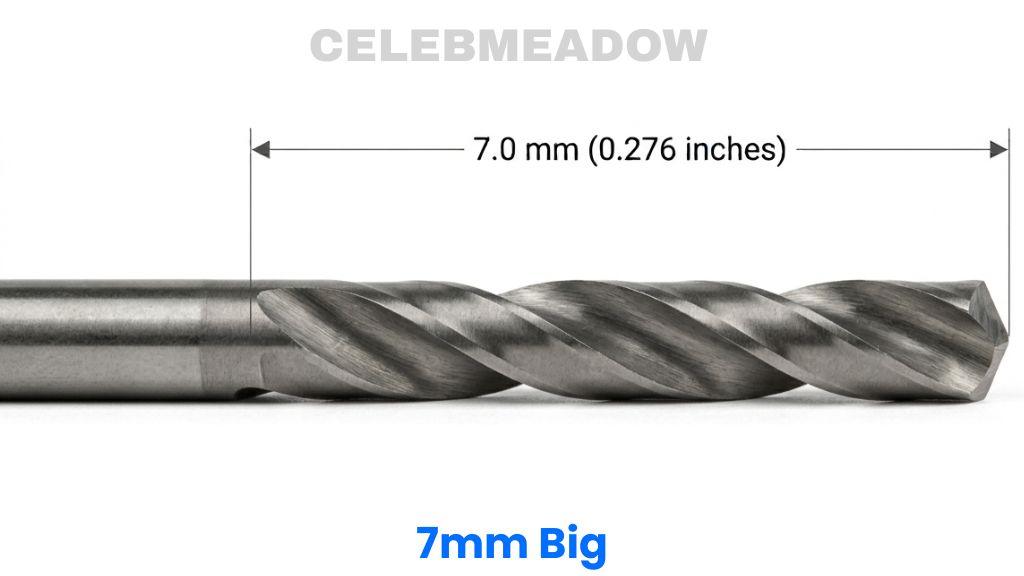
A 7mm twist drill bit cuts a hole exactly 7.0mm in diameter.
Metric drill bits follow ISO indexing, where each size in the sequence creates holes sized to receive matching hardware. A 7mm bit is specifically designed to drill clearance holes for M4 screws — meaning the screw passes through freely without threading the wall. It’s also the right size for the plastic wall anchors sold in most hardware starter kits.
Hold a 7mm drill bit at eye level and look at the tip. The span across those spiral cutting edges is your 7mm diameter — a tight fit for a pencil, but close enough to confirm the scale.
Key measurement: 7.0mm / 0.276 inches
15. Mini Hot Glue Gun Stick
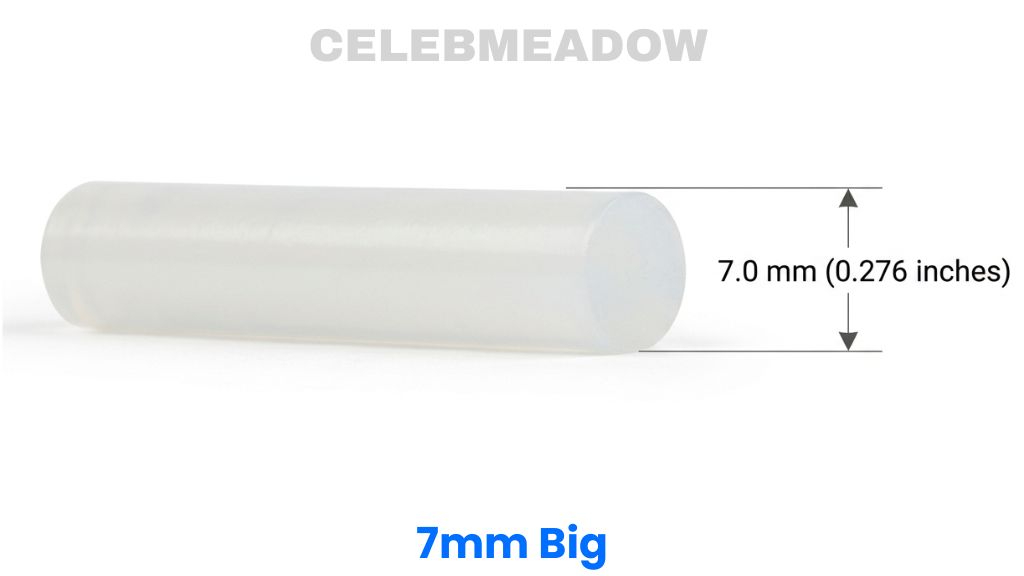
A mini hot glue stick has a diameter of exactly 7.0mm.
This size exists because consumer-grade mini glue guns are built around a spring-loaded heating chamber designed for a 7mm rod. Push an 11mm industrial stick into one and it won’t load. The 7mm diameter is the defining physical spec that separates mini craft guns from full-size professional ones — which is why buying the wrong refills is such a common frustration.
Roll a mini glue stick between your fingers. That soft, slightly rubbery cylinder — about as wide as the eraser end of a pencil — is exactly 7mm across.
Key measurement: 7.0mm / 0.276 inches
How to Picture 7mm Without a Ruler
The most reliable body-based method: press your thumbnail flat against your index finger. The average adult thumbnail is about 6–7mm wide at its base. The width of that nail — right where it meets the skin — is sitting right at your 7mm target. It won’t be lab-precise, but it gets you close enough for most real-world decisions.
For a more tactile approach, use the coin stack method. Pull out four quarters and stack them. You already confirmed this exact height above — 4 × 1.75mm = 7.0mm. That stack is small, dense, and exactly right. You can build this reference in any pocket and feel it between your fingers in seconds.
One more quick check: pinch a standard pencil between your thumb and index finger so a flat side presses against each pad. The distance across those two flat sides is exactly 7mm. It’s muscle memory most people already have — they just didn’t know it had a number.
7mm Compared to Similar Sizes
| Measurement | In cm | Compared to a Standard Pencil Width |
| 5 mm | 0.5 cm | Noticeably narrower |
| 6 mm | 0.6 cm | Slightly narrower |
| 7 mm | 0.7 cm | Exact pencil flat-to-flat width |
| 8 mm | 0.8 cm | Slightly wider |
| 9 mm | 0.9 cm | Noticeably wider |
| 14 mm | 1.4 cm | Double 7mm — about the width of a standard AAA battery |
Common Questions About 7mm
How long is 7mm in inches?
7mm equals 0.2756 inches. That’s just under 9/32 of an inch. On a standard ruler, it sits between the 1/4-inch and 5/16-inch marks — closer to 5/16.
Is 7mm bigger than 1 cm?
No. 7mm is smaller than 1 centimeter. One centimeter equals 10mm, so 7mm is 70% of a centimeter. The gap between them is 3mm — roughly the thickness of two standard US pennies stacked together.
What household object is 7mm wide?
The flat-to-flat width of a standard hexagonal wooden pencil is exactly 7mm. A No. 7 zipper chain and a mini hot glue stick are also exactly 7mm. These are some of the easiest objects to find and hold in your hand for a fast visual reference.
How can I measure 7mm without a ruler?
Stack four US quarters. Each coin is exactly 1.75mm thick, so four stacked coins reach exactly 7mm in total height. It’s the most precise no-tool method available using everyday objects.
What does 7mm look like on a ruler?
On a metric ruler, 7mm is the seventh small tick mark from zero. On an imperial ruler, it falls just past the 1/4-inch line, almost reaching — but not quite hitting — the 5/16-inch mark. The distance is short enough that it can look deceptively small until you hold something that size.
Is 7mm diameter large or small?
In everyday terms, 7mm is quite small. It’s narrower than a standard AAA battery (about 10.5mm) and just slightly wider than a pea. For hardware, it’s a common fastener size. For jewelry or gemstones, a 7mm stone is considered medium-sized and clearly visible to the naked eye.
How big is a 7mm gemstone or earring?
A 7mm round gemstone is about the same diameter as a standard pencil’s flat-to-flat width — just under a centimeter. In jewelry terms, that’s a medium stone: larger than a small stud, smaller than a statement piece. It sits comfortably between subtle and bold.
The next time you pick up a pencil, you’re holding 7mm right between your fingers. A closed zipper on your bag, a stack of four quarters, a ladybug resting on a leaf — all of them measure out to this same small but surprisingly present size. Seven millimeters isn’t invisible. Once you know where to look, it’s everywhere.
Read More Measurements Guides:

I’m Cherry Sin, and I write clear, practical guides that help people understand everyday measurements and sizes. I focus on turning numbers into easy mental pictures using familiar objects and real-life situations. At Celebmeadow, I write guides that explain measurements in a simple, visual way.