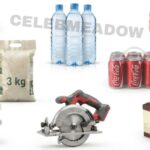
Somewhere between “I can handle this” and “I need a second trip” — that’s where 10 kg lives. It equals 22.05 pounds, or 1 stone 8 pounds, and most adults hit their limit with it within about a minute of carrying it one-handed. It doesn’t sound like much until your arm tells you otherwise. The 12 objects below aren’t just examples — each one reveals something different about how this weight actually behaves in real life.
How Much is 10kg? Quick Conversion Chart
| Unit | Value |
| Kilograms | 10 kg |
| Grams | 10,000 g |
| Pounds | 22.05 lbs |
| Ounces | 352.7 oz |
| Stone | 1 st 8.05 lbs |
12 Everyday Things That Weigh 10 kg
| Object | Category | Weight | Exact or Approximate |
| Large Bag of Basmati Rice | Food / Grocery | 10.0 kg | Exact |
| Ten 1-Liter Bottles of Water | Liquid | 10.0 kg | Exact |
| Large Bag of Wheat Flour | Food / Grocery | 10.0 kg | Exact |
| Large Bag of Potatoes | Produce | 10.0 kg | Exact |
| Five 2-Liter Soda Bottles | Beverage | ~10.4 kg | Approximate |
| 10 kg Dumbbell | Fitness | 10.0 kg | Exact |
| Large Bag of Dry Dog Food | Pet Supplies | 10.0 kg | Exact |
| Entry-Level Road Bicycle | Transport | ~10.0 kg | Approximate |
| Adult Shiba Inu Dog | Living Animal | ~10.0 kg | Approximate |
| Two Gallons of Paint | Home / DIY | ~10.0 kg | Approximate |
| Adult Beagle | Living Animal | ~10.0 kg | Approximate |
| Four Reams of A4 Paper | Office | 10.0 kg | Exact |
1. A Large Bag of Basmati Rice

A standard retail bag of basmati rice weighs exactly 10 kg — and it’s the most honest starting point for understanding this weight.
This size exists because it hits a commercial sweet spot: bulk enough to save money, light enough for one adult to carry home without equipment. The bag is rigid and blocky. The grains don’t shift much, so the weight transfers straight into your forearm the moment you grip it — no soft settling, no adjustment period.
What most people don’t realize is how quickly pantry shelves reach their limit. A single 10 kg rice bag, plus a few jars and cans nearby, can push a floating shelf past its rated load. Before bulk-buying, press your palm flat on the shelf and check for any flex. If it moves, the shelf wasn’t built for this weight.
- Key measurement: 10.0 kg / 22.05 lbs
2. Ten 1-Liter Bottles of Water
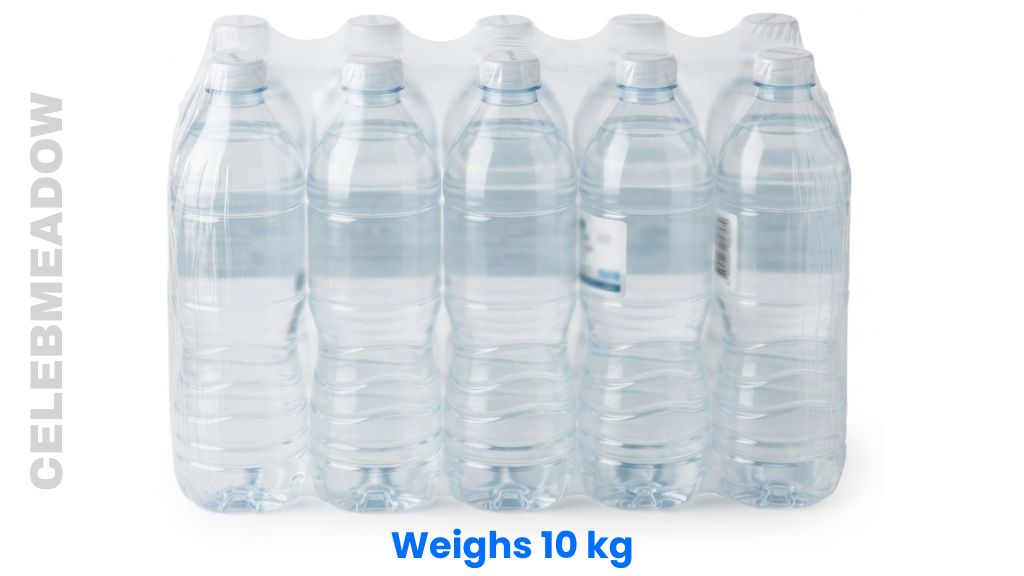
Ten standard 1-liter bottles of water weigh exactly 10 kg — not approximately, exactly — because the metric system was built around water.
One milliliter of pure water weighs one gram. One liter weighs one kilogram. This relationship is the foundation the metric system was designed on, which makes this the most scientifically precise reference on the entire list. The plastic bottles add negligible weight.
The practical insight here is about distribution. Ten bottles in a shrink-wrap pack, pressed against your chest, spread the load across your arms and torso — far more comfortable than the same weight hanging from one hand. This is exactly why emergency water storage planning matters: ten bottles sounds manageable until you realize they need a shelf rated for at least 10 kg of static load, not just casual storage.
- Key measurement: 10.0 kg / 22.05 lbs
3. A Large Bag of Wheat Flour
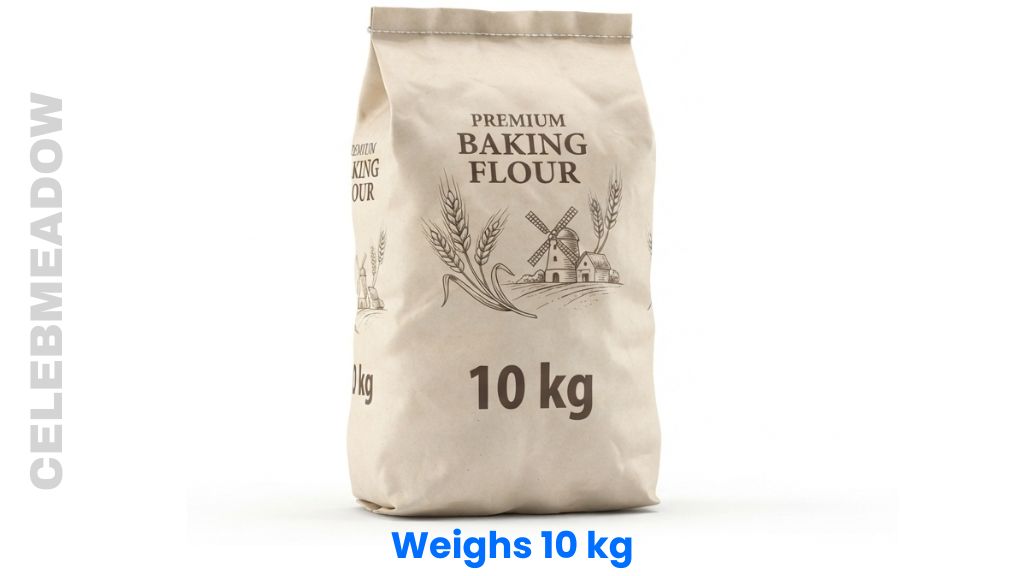
A standard large retail bag of wheat flour weighs exactly 10 kg — but it teaches you something the rice bag doesn’t: how shifting mass changes perceived weight.
Fine powder settles as you tilt or move the bag. The center of gravity constantly drifts. Your wrists make small corrections with every step, which is why a flour bag feels harder to carry than a rigid block of the same weight. Bakers who handle this size regularly develop a very specific grip strength just from pouring and lifting it.
There’s a structural lesson here too. Flour bags are taller than they are wide, making them top-heavy. Set one upright on a shelf without support and it can slowly lean and fall. This is a common reason home bakers transfer flour to wide-base containers — not just for freshness, but because the bag’s own shape makes storage unstable at this weight.
- Key measurement: 10.0 kg / 22.05 lbs
4. A Large Bag of Potatoes
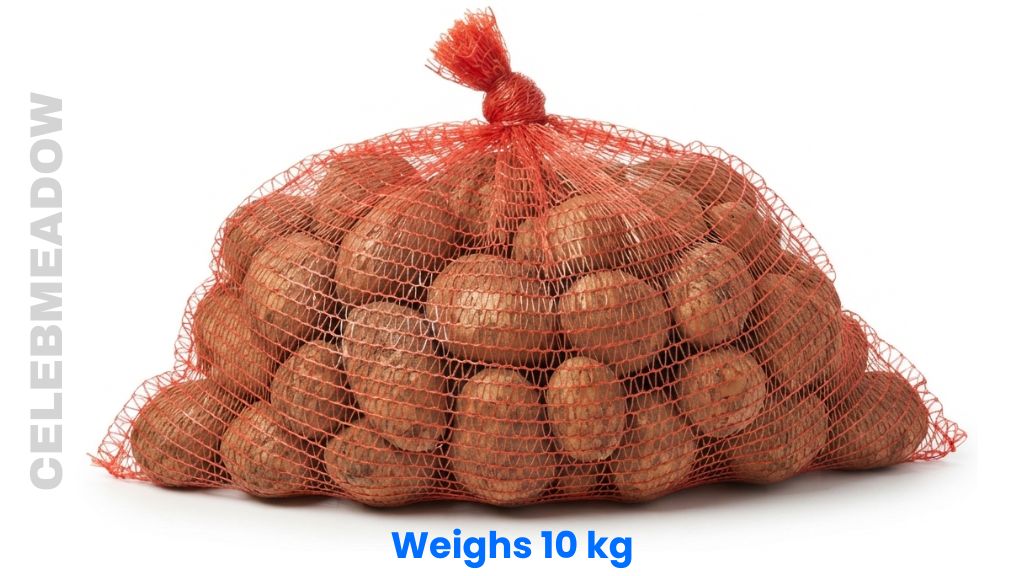
A standard large mesh bag of raw potatoes weighs exactly 10 kg — and it exposes a problem no other object on this list does: the grip.
Every other item here has a handle, a flat base, or a shape that lets you distribute the load. The potato mesh bag has none of that. You grab a gathered twist of netting at the top, and all 10 kg concentrates into a small area of your fingers. Within 30 seconds, your grip gives out before your arms do.
This is why produce logistics engineers standardized this weight — it’s the maximum load that field workers can practically handle through a single-handed grip during sorting and stacking. For home shoppers, it’s a quiet reminder that how you hold something matters as much as how much it weighs. A trolley or tote bag removes the grip problem entirely.
- Key measurement: 10.0 kg / 22.05 lbs
5. Five 2-Liter Bottles of Soda
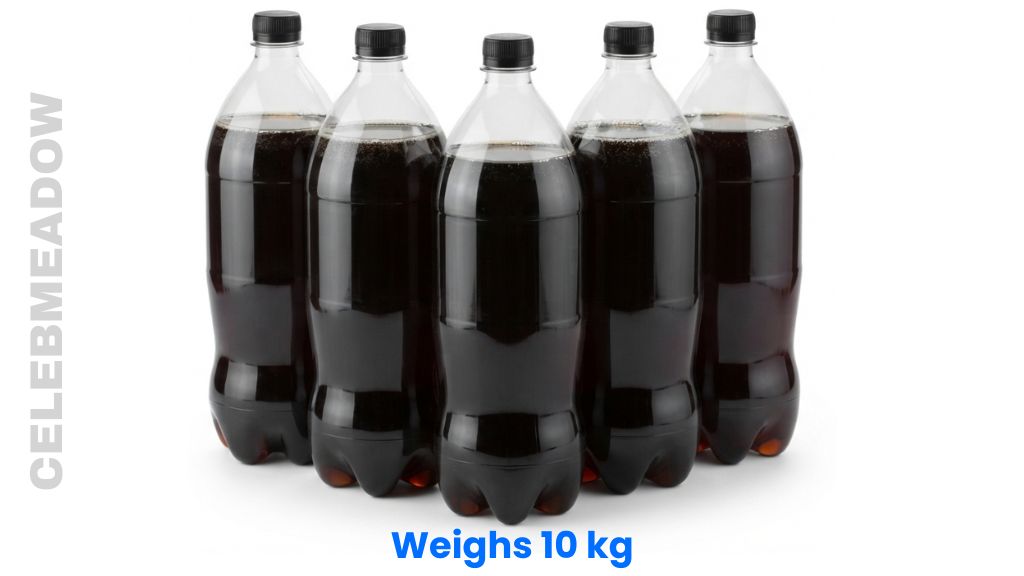
Five standard 2-liter soda bottles weigh commonly around 10.4 kg together — close enough to 10 kg that the difference is undetectable by hand.
The 2-liter bottle became a global packaging standard because it’s the largest size most adults can comfortably grip with one hand, and it fits standard refrigerator door shelves. The liquid inside is slightly denser than water because of dissolved sugars and carbonation, which is why five of them push slightly past 10 kg.
The real-world problem this creates: thin plastic grocery bags. They’re not rated for this load. Five bottles in a single bag is a common reason bags split at checkout. Split the bottles across two bags — not because the weight is dangerous, but because the concentrated load on a single bag handle exceeds what the plastic was designed to bear.
- Key measurement: ~10.4 kg / ~22.9 lbs
6. A Standard 10 kg Dumbbell

A cast-iron or rubber-coated gym dumbbell marked 10 kg weighs exactly 10 kg — and it’s the only object on this list engineered specifically to make you feel every gram.
The shape is intentional. Short, compact, symmetrical. There’s nowhere for the mass to spread, no awkward balance point, no shifting center of gravity. The weight sits dead-center in your palm. This design is why the 10 kg dumbbell is used as a fitness benchmark — a single-arm curl or lateral raise at this weight gives you a direct, unambiguous read on your current strength.
Clinically, 10 kg is also a common threshold in physical therapy. Patients rebuilding shoulder or elbow strength after injury often work up toward this weight over weeks. Reaching it single-handed signals meaningful functional recovery. That context makes this dumbbell more than a gym prop — it’s a measurable milestone.
- Key measurement: 10.0 kg / 22.05 lbs
7. A Large Bag of Dry Dog Food
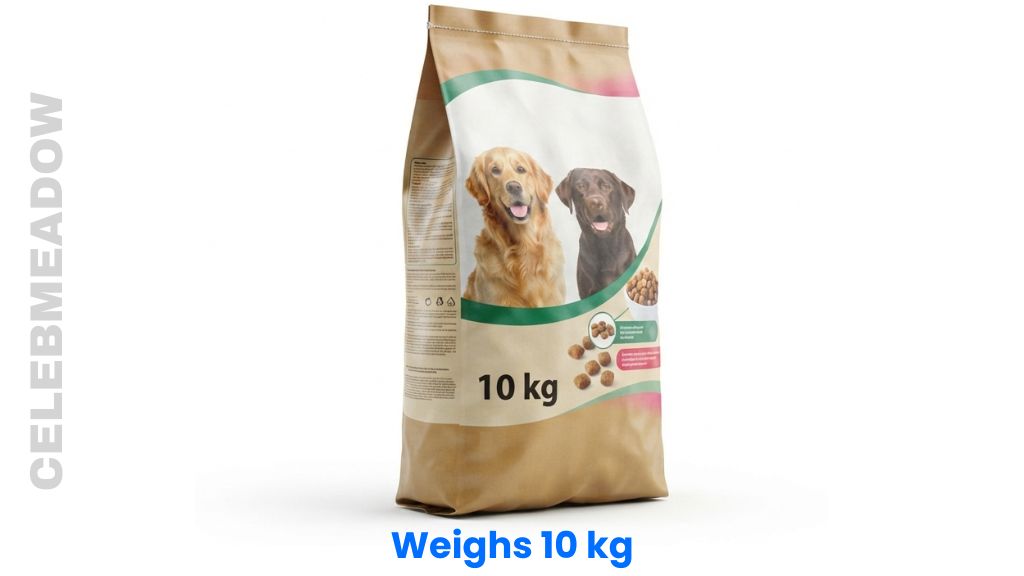
A standard large retail bag of dry dog food weighs exactly 10 kg — designed to serve a medium-to-large dog for roughly two to three weeks.
The bag is tall, floppy, and has no rigid structure. Unlike a sack of rice or flour, it bends against your body as you carry it, which causes the weight to sag and shift unpredictably with each step. Pet owners who haul this bag upstairs regularly know the exact moment their forearm grip starts to slip — usually around the third or fourth step.
There’s a storage angle most people miss: this bag doesn’t stack well. Its floppy sides mean it can’t support another bag on top without deforming. Stacking two of them on a pantry shelf is unstable. A rigid plastic bin that you pour the kibble into solves both the grip problem and the storage problem — and keeps the food fresher.
- Key measurement: 10.0 kg / 22.05 lbs
8. An Entry-Level Road Bicycle
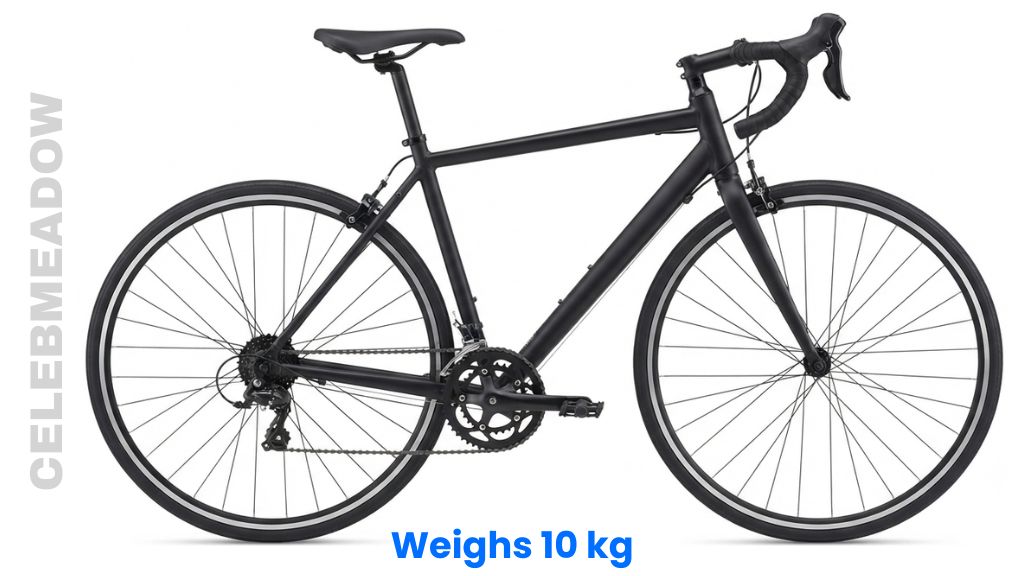
An entry-level adult road bicycle with an aluminum frame commonly weighs around 10 kg — and it’s the most spatially deceptive object on this list.
The bike looks large. It takes up more space than any other item here. But spread across two wheels, a frame, handlebars, and a saddle, 10 kg becomes strangely manageable when you’re riding it. The problem is when you stop riding and start lifting — carrying it up apartment stairs, hoisting it onto a rear car rack, or hauling it through a narrow gate.
The weight sits at this level because aluminum is the material cost floor for durable frames. Carbon fiber frames drop the weight to 7–8 kg but cost dramatically more. Budget manufacturers can’t go lighter without raising prices beyond their market. So 10 kg is where physics and price intersect. When you lift a budget bike by the top tube, that moment of genuine effort is the clearest signal of where that engineering compromise lands.
- Key measurement: ~10.0 kg / ~22.05 lbs
9. An Adult Shiba Inu Dog

A healthy adult male Shiba Inu commonly weighs around 10 kg — but unlike every inanimate object on this list, this weight actively resists you.
Living weight doesn’t cooperate. A Shiba Inu in your arms tenses, leans, shifts, and pushes off — sometimes all at once. Your core and arms make constant micro-adjustments that no bag of rice or dumbbell ever demands. This is why most people feel that carrying an animal is harder than carrying an equal weight of groceries, even though the number is identical.
The breed was developed to hunt in Japan’s steep, rocky mountains — compact, dense, and muscular. That physique means a Shiba Inu feels heavier than it looks. This has a direct airline implication: many carriers set their in-cabin pet allowance (including carrier) at 8–10 kg total. A Shiba Inu at 10 kg, plus even a lightweight soft carrier, typically pushes past the cabin limit — which catches owners off guard at check-in.
- Key measurement: commonly around 8–11 kg / 17.6–24.3 lbs
10. Two Gallons of Paint

Two standard 1-gallon cans of water-based latex wall paint weigh commonly around 10 kg combined — and the delivery method makes this one of the most physically unpleasant ways to carry this weight.
Paint is heavy because of titanium dioxide, the dense white pigment used in almost all wall paints. It’s far heavier than the water it’s suspended in, which is why paint always feels heavier than you expect when you first pick up a can. One gallon sits at roughly 5 kg; two puts you at the 10 kg mark.
The wire handle on a gallon can is the real problem. It concentrates all that load into a thin metal strip pressing against your fingers, with zero padding. Within a short walk, the wire starts to cut. Professional painters use bucket carriers or hook their fingers through both handles simultaneously to spread the contact area. This is the kind of practical, body-level knowledge that comes from handling this weight in its most uncomfortable form.
- Key measurement: ~10.0 kg / ~22.05 lbs
11. An Adult Beagle

A healthy adult Beagle commonly weighs around 10 kg — and where the Shiba Inu taught you about active resistance, a calm Beagle teaches you about relaxed dead weight.
A relaxed or sleeping Beagle goes completely limp in your arms. No pushing off, no tension — just warm, compact, boneless weight pressing down. This is the feeling vets sometimes call “dead weight compliance,” and it’s genuinely harder to hold than a tense animal of the same mass because your arms get no help from the object itself.
The Beagle was bred compact and deep-chested for endurance hunting through dense brush. That build — low center of gravity, short limbs, solid core — means the weight is concentrated in the torso. Pick one up and most of the mass is in your forearm, not spread across outstretched limbs. This matters practically for crate sizing and medication dosing: at 10 kg, a Beagle sits at a standard weight class that vets use as a clean reference point for calculating treatments.
- Key measurement: commonly around 9–11 kg / 19.8–24.3 lbs
12. Four Reams of A4 Paper
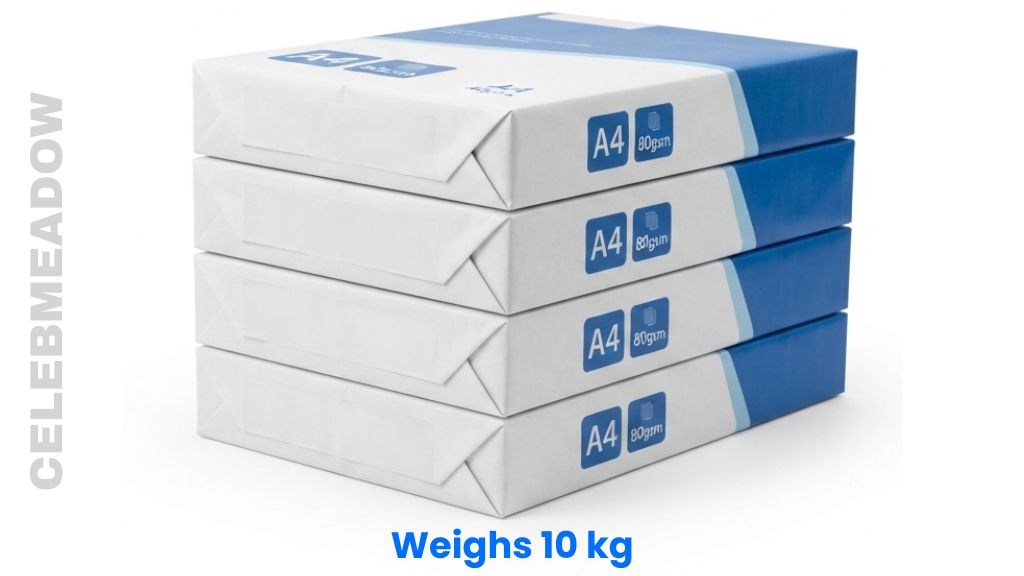
Four standard reams of 80gsm A4 printer paper weigh exactly 10 kg — and the math behind it is precise enough to be used as a calibration reference.
A single A4 sheet at 80 gsm weighs exactly 5 grams. A ream is 500 sheets. That’s 2.5 kg per ream. Four reams: 10.0 kg exactly. This derives from the ISO 216 international paper standard, not estimation. No other object on this list lets you verify the 10 kg figure this cleanly without a scale.
The feel is unlike anything else here. Paper stacks don’t give, flex, or shift. Four reams is a solid, rigid block. Pressing your hand on top feels like pressing on compressed concrete. This static, unyielding quality makes it a useful office shelf test: if a storage shelf bows under four reams, it will bow under any other 10 kg load you place on it. Use it as a structural test before loading heavier items.
- Key measurement: 10.0 kg / 22.05 lbs
How to Picture 10 kg Without a Scale
Two methods that work without any equipment:
Method 1 — The backpack test. Fill a daypack with ten 1-liter water bottles and put it on. Walk around for five minutes. That sustained pressure across your shoulders, building gradually, is 10 kg distributed over a large surface area. It feels manageable at first. By minute five, your posture shifts forward slightly. That shift is your body telling you the weight is real.
Method 2 — The grocery hold. Next time you’re at a supermarket, pick up a large bag of rice or flour without putting it in your trolley. Just hold it at your side, one hand, and walk to the next aisle. Don’t switch hands. The moment you want to switch — or feel the grip starting to fail — is the moment 10 kg announces itself honestly. Most people last about 45 to 60 seconds before switching.
The difference between these two methods matters. The backpack spreads 10 kg across your whole upper body. The grocery hold concentrates it into one arm. Same weight. Completely different physical experience. That gap explains why a 10 kg travel bag feels fine on your back but brutal in your hand at the airport.
10 kg Compared to Similar Weights
| Weight | In Grams | Compared to 10 kg |
| 6 kg | 6,000 g | 40% lighter |
| 8 kg | 8,000 g | 20% lighter |
| 10 kg | 10,000 g | ← You are here |
| 12 kg | 12,000 g | 20% heavier |
| 15 kg | 15,000 g | 50% heavier |
| 20 kg | 20,000 g | Double the weight |
Common Questions About 10 kg
How heavy is 10 kg in pounds and ounces?
10 kg equals 22.05 pounds, or 22 pounds and roughly 0.8 ounces. In stone (common in the UK and Ireland), that’s 1 stone and 8.05 pounds. The conversion is fixed: 1 kilogram always equals 2.2046 pounds.
Is 10 kg heavy to carry?
For most healthy adults, yes — with one hand, over any distance longer than a minute or two. It sits at the upper edge of comfortable single-arm carrying. Distributed in a backpack, most adults manage it without strain for 20–30 minutes. Shape and grip type matter as much as the number: a compact dumbbell at 10 kg is far easier to hold than a floppy potato mesh bag at the same weight.
Is 10 kg heavy for a woman?
Context matters here. In a gym setting, a 10 kg dumbbell is a moderate working weight for exercises like rows, Romanian deadlifts, or goblet squats — not a beginner weight, but well within normal training range. For groceries, most women carry 10 kg without difficulty over short distances. The challenge increases with object shape and carry duration, not the number itself.
How heavy is 10 kg luggage?
A 10 kg bag is near or at the limit for most airline cabin luggage policies, which typically range from 7 to 10 kg depending on the carrier. For checked baggage, 10 kg is well under the standard 20–23 kg allowance. The practical airport issue is that 10 kg hand luggage, carried for a long terminal walk without wheels, becomes genuinely tiring — which is why most travelers use wheeled cabin bags for anything approaching this weight.
How can I measure 10 kg without a scale?
The most accurate method: collect ten full 1-liter water bottles. Their combined weight is exactly 10 kg, no estimation involved. Alternatively, find any large retail bag of rice, flour, or dry dog food — most standard large bags are sold in exactly 10 kg sizes and are labeled on the packaging.
What is 10 kg in lbs and oz precisely?
10 kg = 22 pounds and 0.74 ounces (22.046 lbs total). For quick mental math: multiply kilograms by 2.2 for pounds. So 10 × 2.2 = 22 lbs. The 0.05 lb remainder is small enough to ignore in everyday situations.
How does 10 kg compare to 5 kg in practice?
The number doubles, but the physical experience doesn’t simply double — it multiplies. At 5 kg, most people can carry one-handed for several minutes without fatigue. At 10 kg, the same task starts causing grip and shoulder fatigue within about one minute. The jump from 5 to 10 kg is one of the more noticeable weight transitions in everyday life, which is why gym programs typically add weight in smaller increments rather than jumping straight from one to the other.
The wire handle of a paint can cutting into your fingers. A floppy dog food bag sagging against your leg on the stairs. Four reams of paper sitting like a solid block on a shelf. None of these feel like “22 pounds” — they feel like effort, grip failure, and posture shifts. That’s what 10 kg actually is. Not a number. A physical negotiation between the object and your body.
Read More Measurements Guides:

I’m Cherry Sin, and I write clear, practical guides that help people understand everyday measurements and sizes. I focus on turning numbers into easy mental pictures using familiar objects and real-life situations. At Celebmeadow, I write guides that explain measurements in a simple, visual way.