You just ordered something online. The listing says it weighs 12 kg. Now you’re wondering — can I carry this alone? Will my shelf hold it? That number by itself tells you almost nothing useful. 12 kg equals 26.4 pounds, or roughly 1 stone 12 pounds if you’re used to British measurements. That’s a weight most adults can lift, but it will feel noticeably heavy after a few seconds. This article walks you through ten real objects at that weight so the number finally makes physical sense.
How Much is 12 Kg? Quick Conversion Chart
| Unit | Value |
| Kilograms | 12 kg |
| Pounds | 26.46 lbs |
| Ounces | 423.3 oz |
| Grams | 12,000 g |
| Stone | 1 st 12.46 lbs |
10 Everyday Things That Weigh 12 kg
| Object | Category | Weight | Approximate or Exact |
| Medium Home Dehumidifier | Home Appliance | ~12 kg | Approximate |
| Large Crimson Sweet Watermelon | Produce | ~12 kg | Approximate |
| 24-Can Pack of Soda (355 ml) | Grocery | ~12 kg | Approximate |
| Two 6-Packs of 1L Water Bottles | Grocery | 12 kg | Exact |
| Twin-Pack Laundry Detergent Jugs | Household | ~11.6 kg | Approximate |
| Mid-Sized Countertop Microwave | Kitchen Appliance | ~12 kg | Approximate |
| Entry-Level Aluminum Road Bike | Sporting Goods | ~12 kg | Approximate |
| 100-Foot 12-Gauge Extension Cord | Tools | ~11.8 kg | Approximate |
| Portable Inverter Arc Welder | Trade Equipment | ~12 kg | Approximate |
| Compact Electric Push Lawn Mower | Garden Equipment | ~12.5 kg | Approximate |
1. Medium-Sized Home Dehumidifier
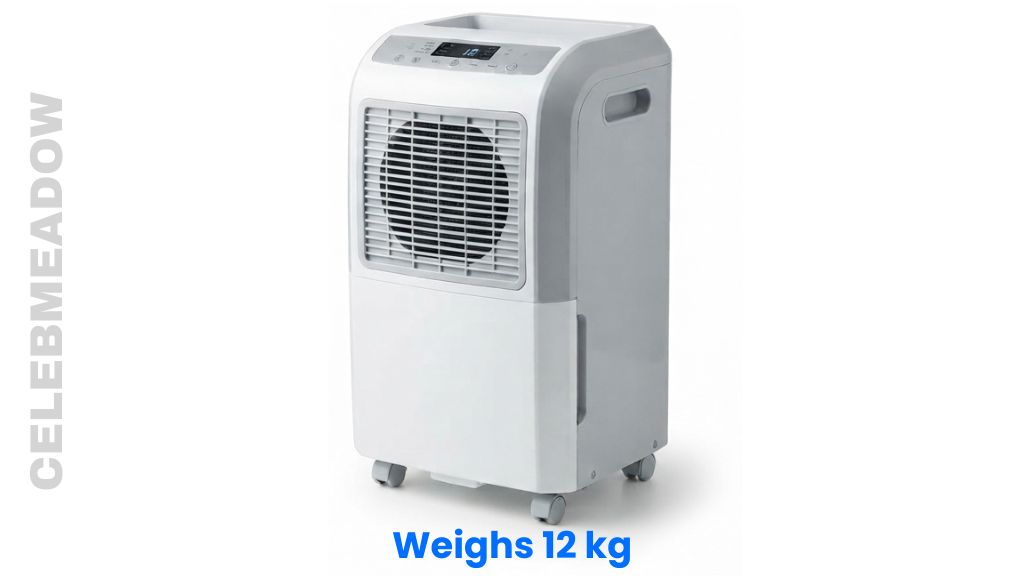
A standard portable dehumidifier rated for 20 to 30 pints of daily moisture removal commonly sits right at 12 kg when its water tank is empty.
The weight isn’t random. Inside that plastic shell sits a motorized compressor and copper condensing coils — the same basic technology that makes a refrigerator cold. Those metal components are dense by nature, and you can’t shrink them much without killing performance.
This is a weight that matters at home. Carrying the unit upstairs by its top handle is doable for most adults, but after one flight of stairs, your forearm will remind you it’s there. That’s exactly why manufacturers add bottom caster wheels — rolling it is always easier than lifting it. If you’re ever deciding whether to lug one to a different floor or roll it, that ~26-pound reality should make the answer clear.
Key measurement: ~12 kg / ~26.4 lbs
2. Large Crimson Sweet Watermelon

A fully grown large-variety watermelon — the Crimson Sweet or Jubilee type you find stacked at summer markets — commonly reaches 12 kg at peak ripeness.
Watermelons are more than 91% water by composition. The vine and outer rind are biologically built to hold roughly 11 to 13 liters of fluid before the skin stops pulling nutrients or starts splitting. That’s why large varieties cluster in this weight range naturally — it’s the fruit’s own structural ceiling.
Next time you’re at a grocery store, try lifting one of the big ones from the bottom bin with both hands. That careful, two-handed scoop you instinctively use? That’s 12 kg making the decision for you. It also explains why flimsy plastic bags and cracked refrigerator shelves are real risks when you bring one home.
Key measurement: ~12 kg / ~26.4 lbs
3. 24-Can Pack of Soda (355 ml Cans)

A full 24-count flat of standard North American soda cans, including the liquid, aluminum, and cardboard, commonly reaches the 12 kg range — especially in a double-stacked or twin 12-pack configuration.
The math is straightforward. Twenty-four cans at 355 ml each gives you about 8.5 liters of liquid. Add the weight of the aluminum cans themselves plus a thick cardboard flat, and you’re right at this weight class. Wholesale distributors settled on the 24-count format because it creates a perfectly balanced footprint on shipping pallets while staying within safe manual lifting limits for stockroom workers.
You’ve felt this before. That rigid, heavy tug on the thin plastic carry-handle when you grab a case from a warehouse store shelf — that’s 12 kg pulling on your fingers. It’s a surprisingly unforgiving weight when carried even a short distance.
Key measurement: ~12 kg / ~26.4 lbs
4. Two 6-Packs of 1-Liter Water Bottles
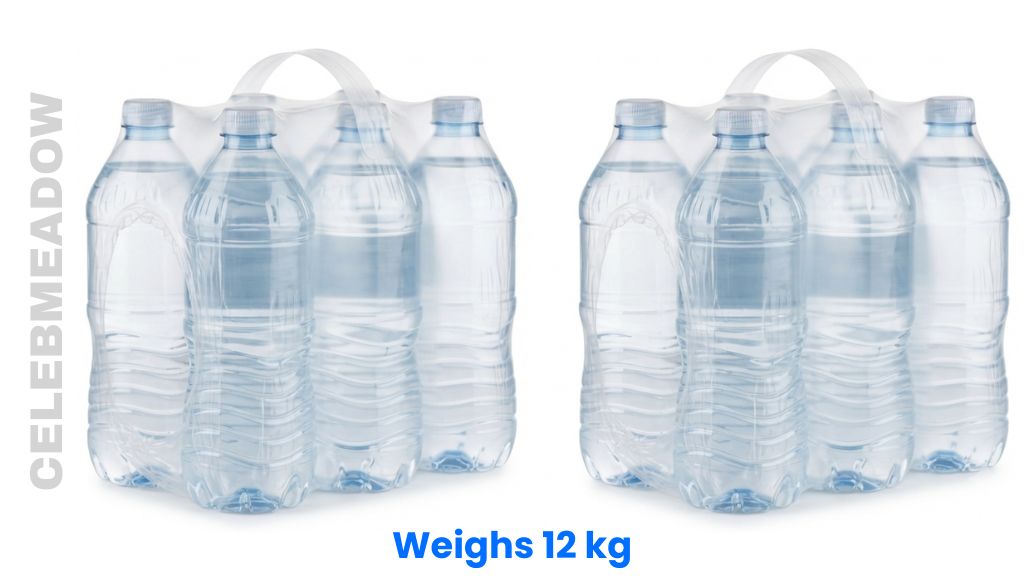
This is one of the cleanest examples on the list: one liter of water equals one kilogram, so two 6-packs of 1-liter bottles adds up to exactly 12 kg — no rounding needed.
Each 6-pack is arranged in a 2×3 grid inside thin plastic shrink-wrap. That layout keeps the bottles upright and distributes the load evenly for carrying. The six-liter limit per pack is deliberate — it’s roughly the maximum weight an average shopper can manage one-handed with just plastic film for a handle before the packaging risks tearing.
Try carrying both packs at once from your car to the kitchen. Most people make it, but their forearms are burning halfway up the driveway. That sensation is a very precise calibration of what 12 kg actually demands from your body.
Key measurement: 12 kg / 26.4 lbs (exact)
5. Twin-Pack of Large Liquid Laundry Detergent Bottles
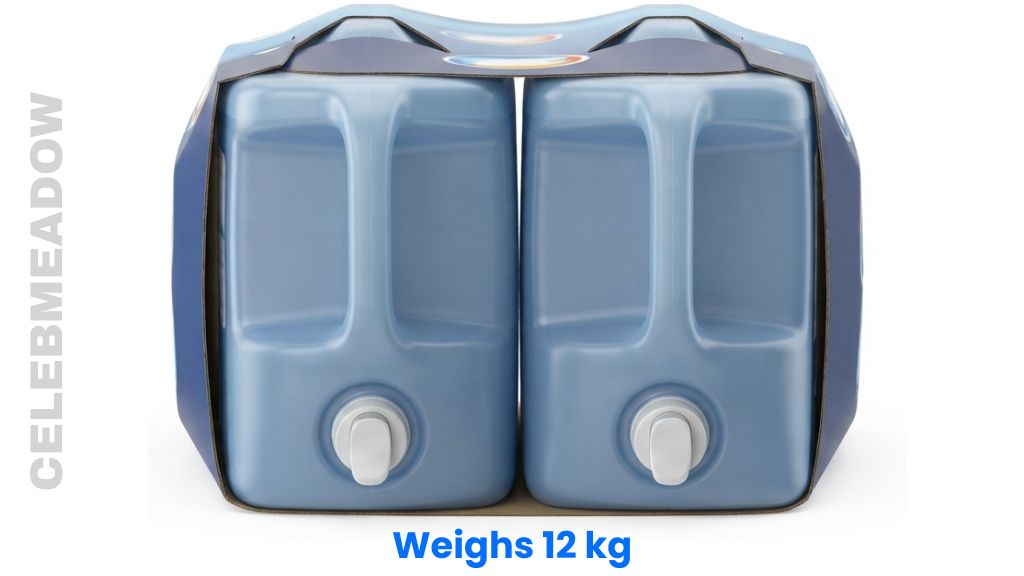
A warehouse-club twin-pack of extra-large liquid detergent jugs — the ones with the push-button dispensing spout — commonly weighs just under 12 kg when full and sealed.
Each jug holds roughly 5.5 kg of liquid. Pair two together with their thick HDPE plastic handles and structural caps, and you’re looking at about 11.6 kg total. Wholesale retailers bundle them this way because the combined volume covers roughly 300 laundry loads, maximizing value per trip. The downside is that these packs are top-heavy and awkward to grip.
Anyone who has wrestled one of these off a low supermarket shelf knows the feeling — a wide, slippery, unbalanced weight that doesn’t sit comfortably in your arms. If you’re ever wondering whether a floating wire rack can hold your backup supply, the answer is almost certainly no.
Key measurement: ~11.6 kg / ~25.6 lbs
6. Standard Mid-Sized Countertop Microwave
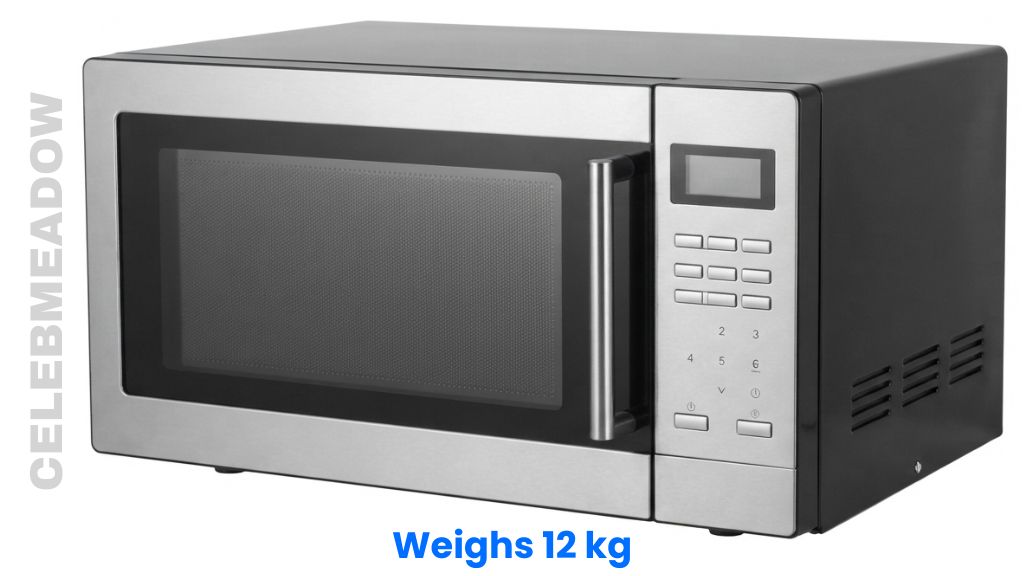
A typical mid-range countertop microwave with an interior capacity of 0.9 to 1.1 cubic feet commonly weighs between 11.5 and 12.5 kg.
Most of that weight lives in two components: the copper transformer and the magnetron tube. Both must be dense and heavily shielded because they’re converting high-voltage electricity into microwave radiation. You can’t use lightweight substitutes without creating a safety hazard, which is why even basic microwaves feel surprisingly heavy for their size.
Slide yours forward on the counter to clean behind it. That front-heavy, boxy resistance you feel — that’s the engineering reality of 12 kg loaded toward the door. This matters when you’re deciding between a rolling kitchen cart and a wall-mounted appliance shelf. Not every bracket that claims to hold a microwave has actually been tested at this weight.
Key measurement: ~12 kg / ~26.4 lbs
7. Entry-Level Aluminum Road Bicycle
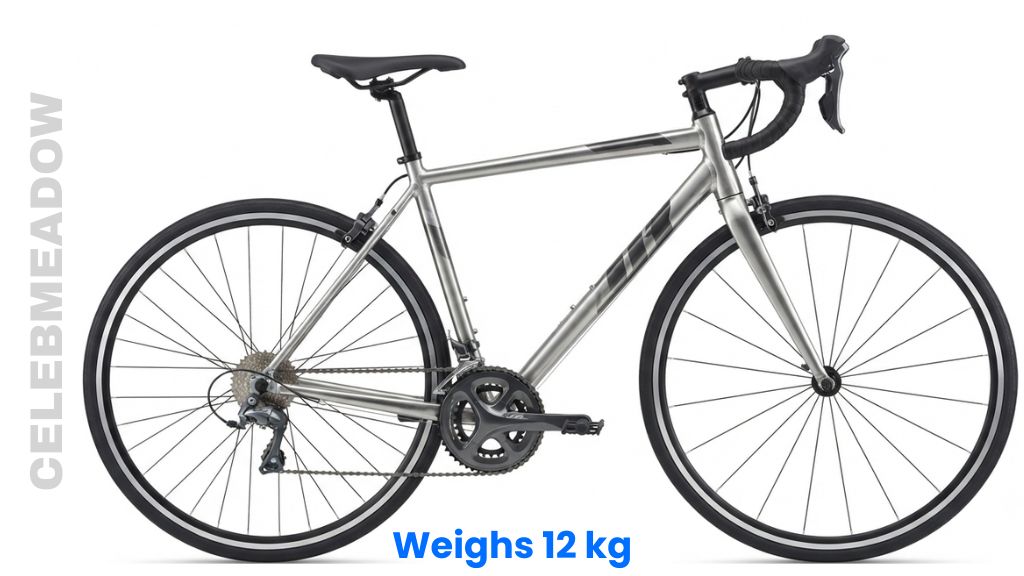
An adult aluminum-frame commuter or beginner road bike — complete with tires, pedals, gears, and a kickstand — commonly weighs around 12 kg fully assembled.
Elite carbon-fiber racing bikes can be half this weight. But carbon is expensive to produce. Aluminum tubing hits the right balance for everyday bikes: strong enough to handle rough roads and heavier riders, light enough to keep costs reasonable, and heavy enough that you definitely notice the difference when you’re not on it.
Grab the top tube of a bike and lift it off the ground to place it on a car rack. That’s a 12 kg object balanced horizontally in your hands with the weight distributed unevenly across its length. It’s manageable, but it’s not something most people want to carry up more than one flight of stairs regularly.
Key measurement: ~12 kg / ~26.4 lbs
8. 100-Foot 12-Gauge Extension Cord (Commercial Grade)

A professional outdoor extension cord that runs 100 feet and uses thick 12-gauge wiring commonly weighs just under 12 kg when coiled.
The weight comes from physics. Running a heavy electrical current across 100 feet of wire without dangerous heat buildup or voltage loss requires thick copper cores. Those copper cores are dense. Wrapping them in water-resistant vinyl insulation jackets adds more weight on top. Electrical safety codes don’t leave room to cut corners here.
Wrap this kind of cord around your forearm in loops and throw it over your shoulder — the way contractors carry it across a job site. The dense coil will compress your forearm noticeably and pull your shoulder down. That’s 11.8 kg distributed unevenly across your body, which is a very different experience from lifting a box of the same weight.
Key measurement: ~11.8 kg / ~26 lbs
9. Portable Inverter Arc Welding Machine
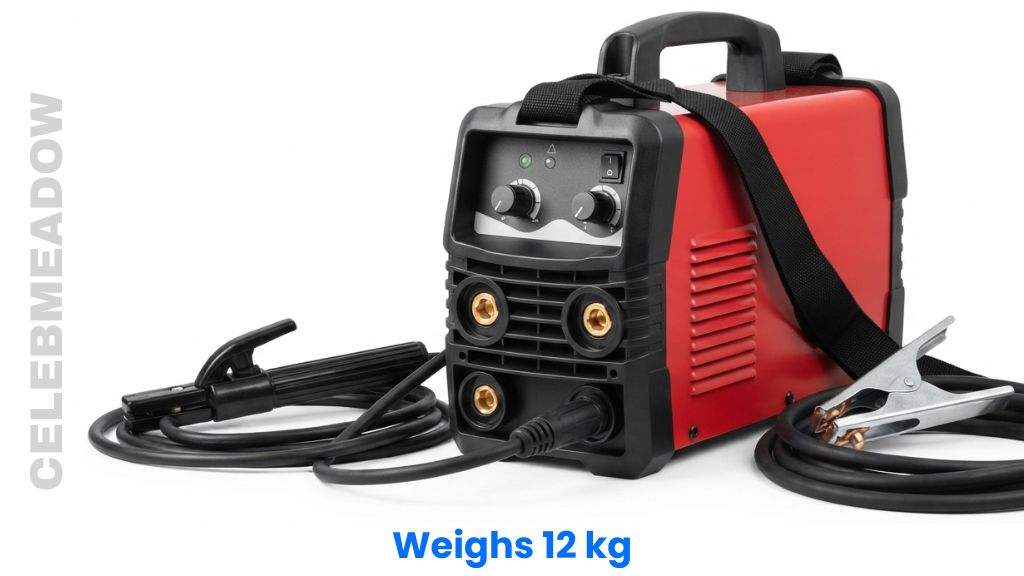
A modern compact inverter-style stick or TIG welder, bundled with its ground clamp and copper power leads, commonly weighs around 12 kg.
This wasn’t always possible. Traditional welding machines relied on massive iron transformers that weighed over 50 kg. Silicon inverter technology replaced those transformers with smaller, lighter components that do the same job. Engineers landed at roughly 12 kg because that’s the upper limit most workers can comfortably carry using a shoulder strap across an active job site.
Pick up a heavy metal toolbox or car battery and carry it across a parking lot. That’s the closest everyday sensation to moving one of these units. The weight is compact, rigid, and unforgiving — there’s nothing soft or flexible about it. Field technicians who carry these up ladders earn that weight.
Key measurement: ~12 kg / ~26.4 lbs
10. Compact Electric Push Lawn Mower
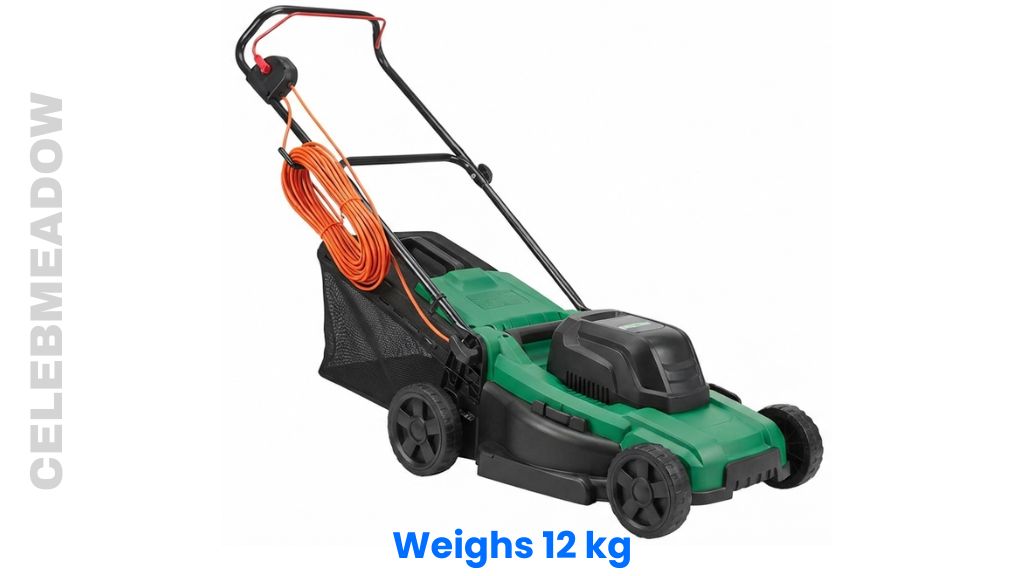
A corded electric walk-behind push mower with a composite plastic deck and mid-sized motor commonly sits around 12.5 kg when the clipping bag is empty.
Gas-powered mowers used to rely on heavy cast-iron decks for durability. The shift to composite plastic decks changed the math completely. Modern electric mowers shed that iron weight while gaining a motor that’s quieter and cheaper to run. The result is a machine that adults of most ages and sizes can push across a residential lawn without needing a self-propulsion system doing the work for them.
Try lifting the front wheels off the ground to clear a garden step — the way you have to when maneuvering around flower beds. You’ll feel the motor’s weight shift toward the back as you tilt it. That asymmetry is what makes 12.5 kg feel heavier than a simple box of the same weight. Single-handed trunk loading is possible, but most people use two hands for comfort.
Key measurement: ~12.5 kg / ~27.5 lbs
How to Picture 12 kg Without a Scale
The simplest method is to think about a full grocery run. When you carry two fully packed reusable grocery bags — one in each hand — and both feel genuinely heavy, you’re typically holding somewhere between 10 and 14 kg total. That middle zone is where 12 kg lives. It’s not light, but it’s not overwhelming either.
A second way to feel it: think about a toddler or small child around age 3 to 4. At that age, most children weigh between 14 and 17 kg, so 12 kg is just slightly less than picking one up. If you’ve ever held a young child for a few minutes and started feeling the strain in your forearms and lower back, you already have a very close physical memory of this weight.
The key thing to understand about 12 kg is that it sits right at the boundary between “comfortable to carry briefly” and “uncomfortable to carry any distance.” Most adults can lift it without difficulty, but switching it between hands or climbing stairs with it will remind you it’s there.
12 kg Compared to Similar Weights
| Weight | In Pounds | Compared to 12 kg |
| 8 kg | 17.6 lbs | 4 kg lighter |
| 10 kg | 22 lbs | 2 kg lighter |
| 12 kg | 26.4 lbs | ← This article |
| 14 kg | 30.9 lbs | 2 kg heavier |
| 16 kg | 35.3 lbs | 4 kg heavier |
| 24 kg | 52.9 lbs | Double the weight |
Common Questions About 12 kg
What is 12 kg in pounds?
12 kg equals 26.46 pounds. Multiply any kilogram value by 2.205 to get pounds. In British measurements, 12 kg is 1 stone and 12.46 pounds.
How heavy is 12 kg in grams?
12 kg equals 12,000 grams. One kilogram is always 1,000 grams — so just move the decimal three places to the right.
Is 12 kg heavy to carry?
It depends on the distance. Most adults can lift 12 kg without trouble, but carrying it more than a short distance gets tiring fast. Think of it as the weight where you start looking for wheels or a second hand.
What household item weighs exactly 12 kg?
Two 6-packs of 1-liter water bottles equals exactly 12 kg. One liter of water weighs one kilogram — so 12 bottles is 12 kg, no approximation needed.
How can I estimate 12 kg without a scale?
Grab two full 6-packs of 1-liter water bottles and hold one in each hand. That’s exactly 12 kg. No guesswork, no rounding — just water and simple math.
What is 12 kg in stones and pounds?
12 kg equals 1 stone and 12.46 pounds. One stone is 6.35 kg, so 12 kg clears that mark by about 5.65 kg, which converts to roughly 12 extra pounds.
How does 12 kg compare to 14 kg?
14 kg is 2 kg heavier — about 4.4 additional pounds. You’ll feel the difference clearly when carrying either weight at arm’s length, but less so when it’s just sitting on a shelf.
Next time someone hands you a box and says it weighs 12 kg, you’ll know immediately what you’re dealing with — something close to a full watermelon, a countertop microwave, or a loaded 24-pack of soda. That window between “I can handle this briefly” and “I need wheels or a second person” is exactly where 12 kg lives. The weight is real, it’s physical, and now you have the references to feel it before you ever pick it up.
Read More Measurements Guides:

I’m Cherry Sin, and I write clear, practical guides that help people understand everyday measurements and sizes. I focus on turning numbers into easy mental pictures using familiar objects and real-life situations. At Celebmeadow, I write guides that explain measurements in a simple, visual way.