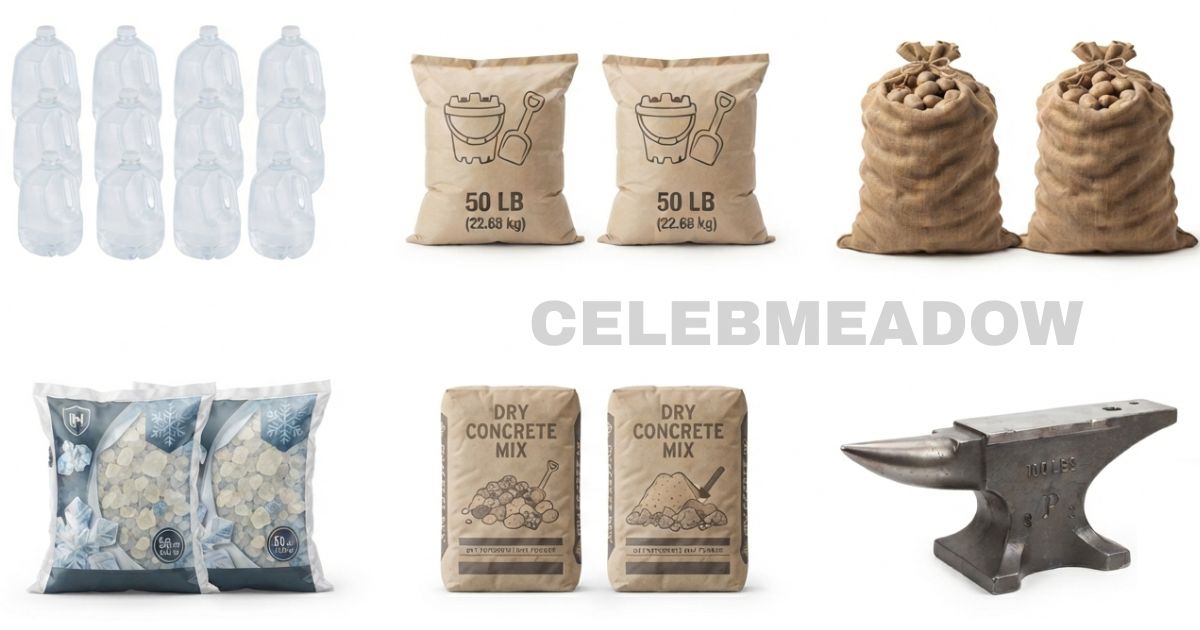
Trying to lift, ship, or move something but struggling to picture just how heavy 100 pounds really is? It’s one of those weights that sounds manageable until you’re actually standing in front of it. 100 pounds equals about 45.36 kilograms, or roughly 7 stone 2 pounds. The objects below will help you feel that number — not just read it.
How Heavy is 100 Pounds? Quick Conversion Chart
| Unit | Value |
| Pounds | 100 lbs |
| Kilograms | 45.36 kg |
| Grams | 45,359 g |
| Ounces | 1,600 oz |
| Stone | 7.14 st |
14 Real Things That Weigh 100 Pounds
| No. | Object | Category | Weight | Exact or Approximate |
| 1 | Recliner Chair | Furniture | ~105 lbs | Approximate |
| 2 | 12 Gallons of Water | Household / Liquids | 100.14 lbs | Exact |
| 3 | 20 Reams of Letter-Sized Paper | Office Supplies | 100 lbs | Exact |
| 4 | Two 50-lb Bags of Dog Food | Pet Supplies | 100 lbs | Exact |
| 5 | Heavy Punching Bag (100-lb) | Fitness Equipment | 100 lbs | Exact |
| 6 | Olympic Barbell + Two 25-lb Plates | Fitness Equipment | 95 lbs | Exact |
| 7 | 40-Gallon Gas Water Heater (Empty) | Home Appliances | ~100 lbs | Approximate |
| 8 | Solid Oak Dining Table (6-Person) | Furniture | ~100 lbs | Approximate |
| 9 | Two 50-lb Bags of Play Sand | Construction & Landscaping | 100 lbs | Exact |
| 10 | Two 50-lb Sacks of Potatoes | Food & Agriculture | 100 lbs | Exact |
| 11 | Two 50-lb Bags of Ice Melt | Home & Garden | 100 lbs | Exact |
| 12 | Two 50-lb Bags of Concrete Mix | Construction Materials | 100 lbs | Exact |
| 13 | 25 Red Clay Engineering Bricks | Construction Materials | ~100 lbs | Approximate |
| 14 | 100-lb Steel Anvil | Tools & Workshop | 100 lbs | Exact |
1. Recliner Chair
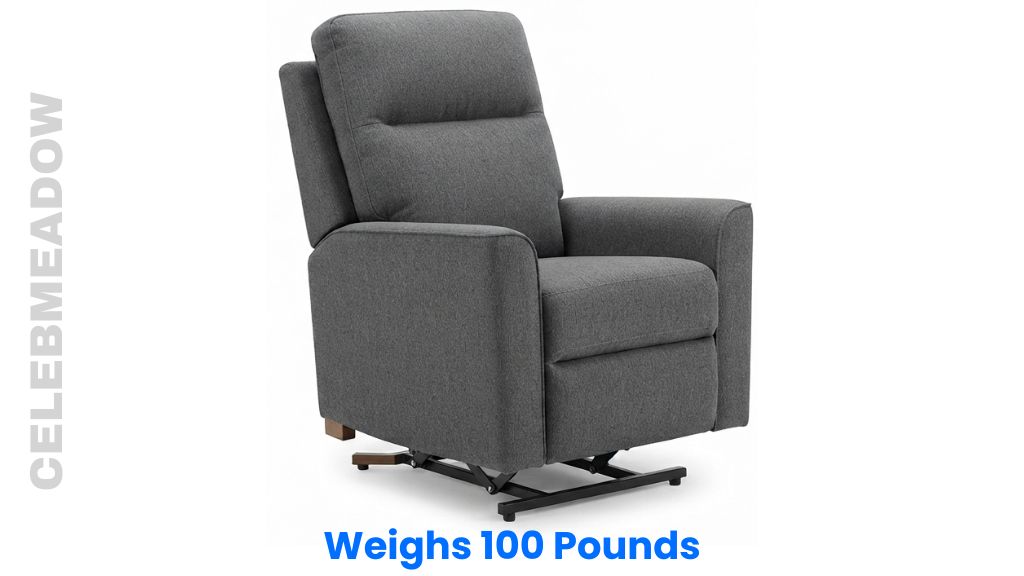
A typical residential recliner weighs commonly around 105 pounds — just slightly over the 100-pound mark.
That extra bulk isn’t random. Inside the padded exterior is a steel scissor mechanism, iron base rails, and a dense wooden frame — all built to hold a shifting adult body safely mid-recline. That internal structure is what drives the weight up before you’ve even added the foam and fabric.
Next time you’re helping someone move and you grab one end of a recliner, notice how it resists your pull — almost like it’s fighting back. That’s 100-plus pounds of tightly packed steel and hardwood in a deceptively compact shell.
- Key weight: ~105 lbs / ~47.6 kg
2. Twelve Gallons of Water

Twelve US gallons of water weighs exactly 100.14 pounds at room temperature.
Water weighs 8.34 lbs per gallon — always. That’s not an estimate; it’s basic physics. So 12 gallons hits almost perfectly at 100 pounds. Think of it as twelve of those plastic jugs you pull from the grocery shelf every week, lined up side by side.
You’ve already felt this weight before, just one jug at a time. That tugging in your wrist and fingers when you carry a single gallon from the car? Multiply that sensation by twelve and you’re holding 100 pounds of pure liquid. It’s also a helpful number if you’re planning a fish tank or any water storage setup — a 12-gallon tank full of water is nearly at your floor’s structural limit per square foot.
- Key weight: 100.14 lbs / 45.4 kg
3. Twenty Reams of Letter-Sized Paper
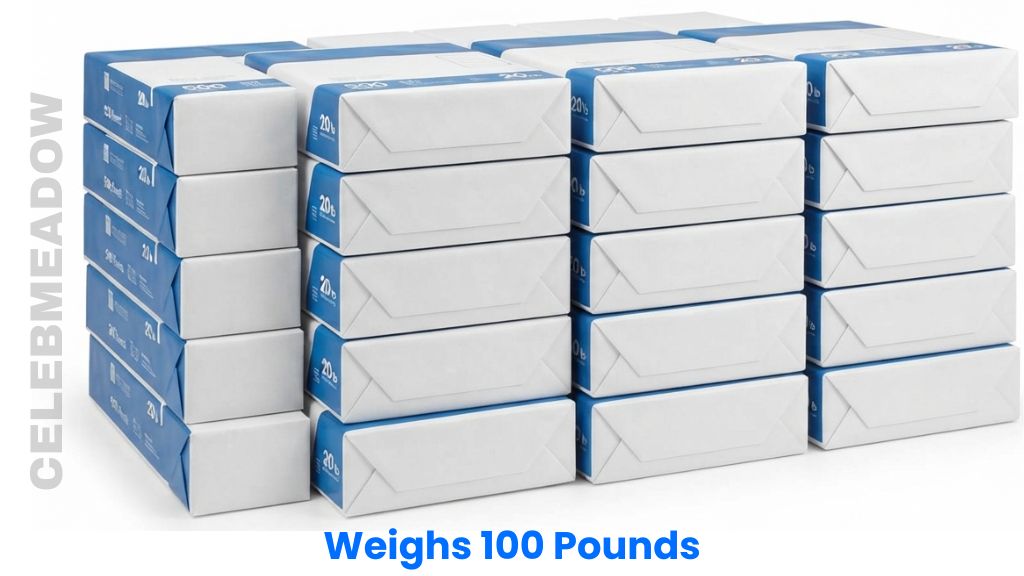
Twenty standard reams of 20 lb basis-weight letter paper adds up to exactly 100 pounds.
Each ream — that familiar brick of 500 sheets wrapped in plastic — weighs precisely 5 pounds. This isn’t accidental. Paper is manufactured to a strict commercial weight standard so that shipping costs, desk drawer limits, and printer tray capacities all stay predictable.
Pick up one ream from a supply room and feel how dense it is for its size. Now imagine stacking 20 of those on a shelf or loading them into your car. Two full cartons of copy paper — the kind delivered to offices — brings you right to 100 lbs. Most people are surprised how quickly paper weight adds up.
- Key weight: 100 lbs / 45.36 kg
4. Two 50-Pound Bags of Dog Food

Two large retail bags of dry dog food, each weighing 50 pounds, together hit exactly 100 pounds.
The 50-lb bag isn’t a random size — it’s a logistics decision. These bags are designed to stack cleanly on shipping pallets and sit within the safe lifting limit for a single warehouse worker. Two of them together doubles that load into exactly 100 pounds.
Anyone who owns a large dog has probably wrestled one of these bags at the store. The contents shift as you move — loose kibble rolling around inside the bag makes it feel alive in your arms. Now picture carrying two at once. That’s what 100 lbs feels like when the weight isn’t locked in place.
- Key weight: 100 lbs / 45.36 kg
5. A Heavy Punching Bag (100-lb Boxing Bag)
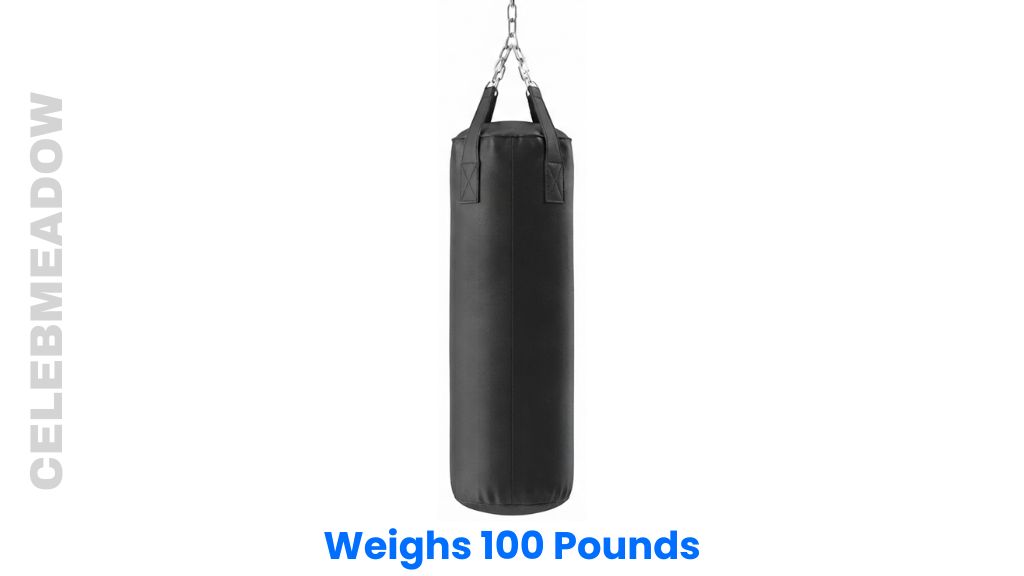
A standard commercial heavy bag used in boxing and Muay Thai training weighs exactly 100 pounds.
This weight is a deliberate engineering choice. At 100 lbs, the bag has enough mass to absorb a powerful strike without flying wildly — but not so much that it becomes immovable. It’s the sweet spot between resistance and control for adult athletes.
Walk into any gym and push the heavy bag with both hands. It moves, but barely — almost like leaning into a large, dense log. That stubborn resistance is 100 pounds of tightly packed filling working against you. If you’ve ever tried to stop a swinging heavy bag mid-motion with your forearms, you’ve already felt this weight firsthand.
- Key weight: 100 lbs / 45.36 kg
6. Olympic Barbell With Two 25-lb Plates
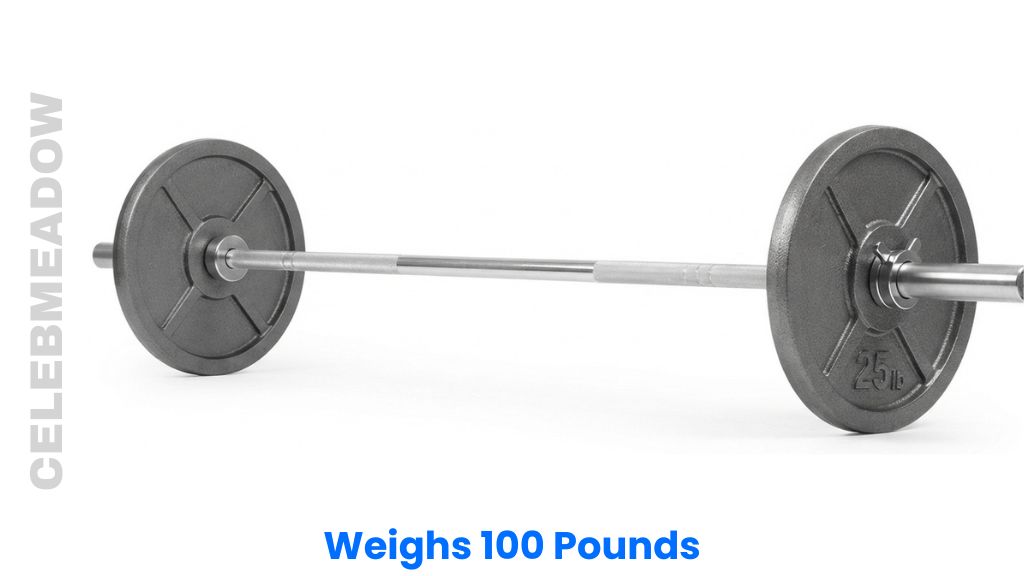
A standard 45-pound Olympic barbell loaded with one 25-lb plate on each side totals 95 pounds — just 5 pounds under the 100-lb mark.
The barbell itself is 45 lbs by a strict global standard. Each 25-lb plate is also a fixed weight class in fitness manufacturing. Together, the setup gives you a precise, repeatable load that athletes worldwide use as a benchmark.
Stand in front of a loaded barbell like this at any gym. Even if you don’t lift, you can feel the weight just by pressing down on one end. Five pounds short of 100 may not sound significant, but try adding one small 5-lb plate to each side — suddenly you’re exactly there. It’s a useful mental anchor because so many people have seen this setup.
- Key weight: 95 lbs / 43 kg
7. A 40-Gallon Gas Water Heater (Empty)
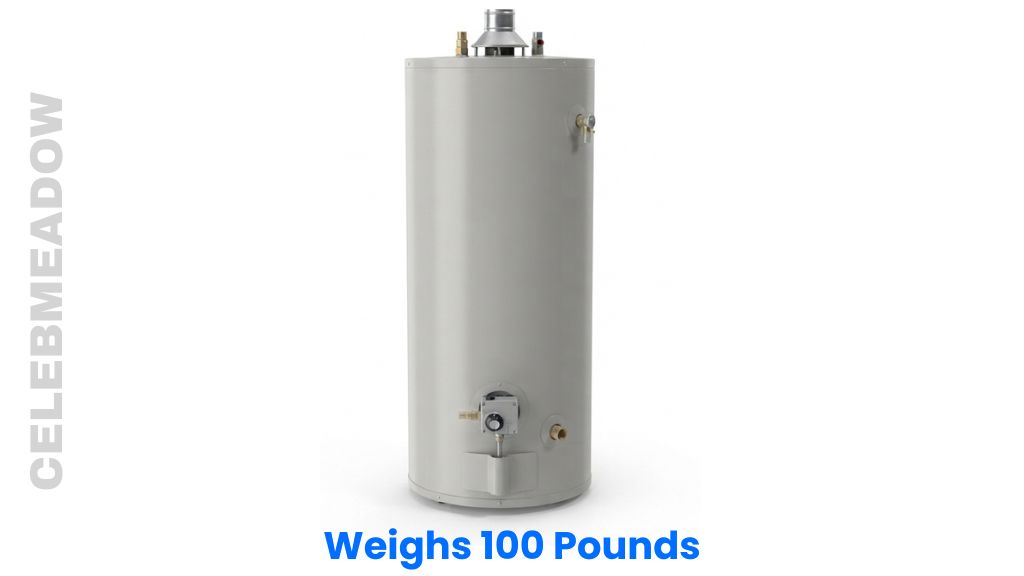
A typical 40-gallon residential gas water heater commonly weighs around 100 pounds straight out of the box, before any water is added.
That weight comes from layers of heavy components: a steel pressure cylinder inside, an internal flue pipe, dense foam insulation wrapped around it, and an outer steel jacket holding it all together. Each layer adds pounds. None of it is light. Brands vary, so the range sits roughly between 95 and 105 lbs depending on the model.
If you’ve ever watched a plumber maneuver one of these down a basement staircase, you’ve seen what 100 lbs looks like in an awkward, cylinder-shaped package. Tall, narrow, and hard to grip — it’s one of the most challenging 100-pound objects to move precisely because the shape fights you at every turn.
- Key weight: ~100 lbs / ~45.36 kg
8. A Solid Oak Dining Room Table (6-Person)
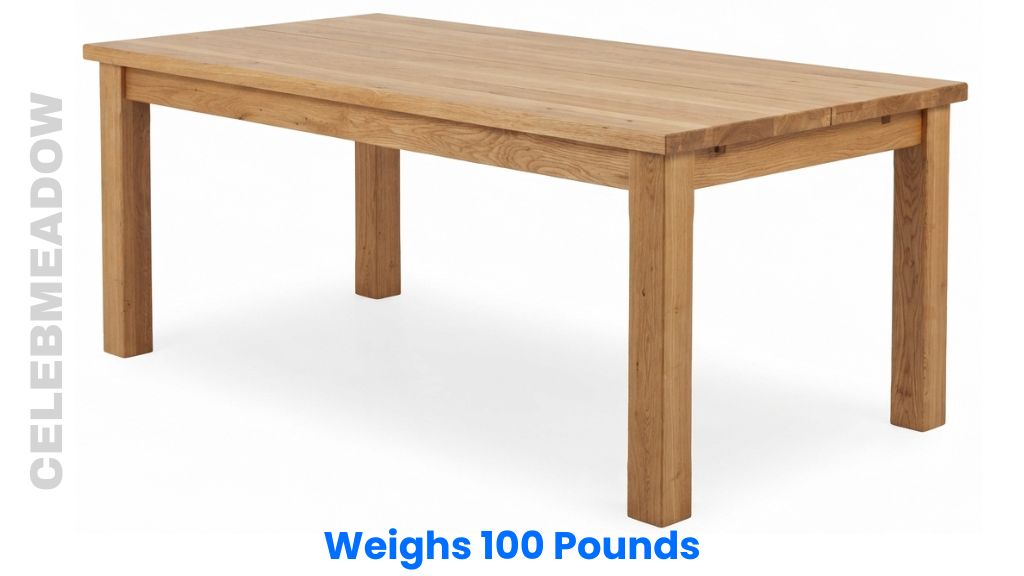
A standard solid oak dining table sized for six people weighs commonly around 100 pounds.
White oak is one of the densest hardwoods used in everyday furniture — roughly 47 pounds per cubic foot. Building a table surface thick enough to resist scratches and daily use at this size naturally uses close to two cubic feet of timber. Add four thick legs and you’re at 100 lbs without a single extra piece of hardware.
Think about the last time you helped slide a heavy wooden dining table to one side to clean underneath. One person can do it, but it takes genuine effort — and usually a screech across the floor. That resistance is solid oak doing what it’s built to do: stay planted.
- Key weight: ~100 lbs / ~45.36 kg
9. Two 50-Pound Bags of Play Sand
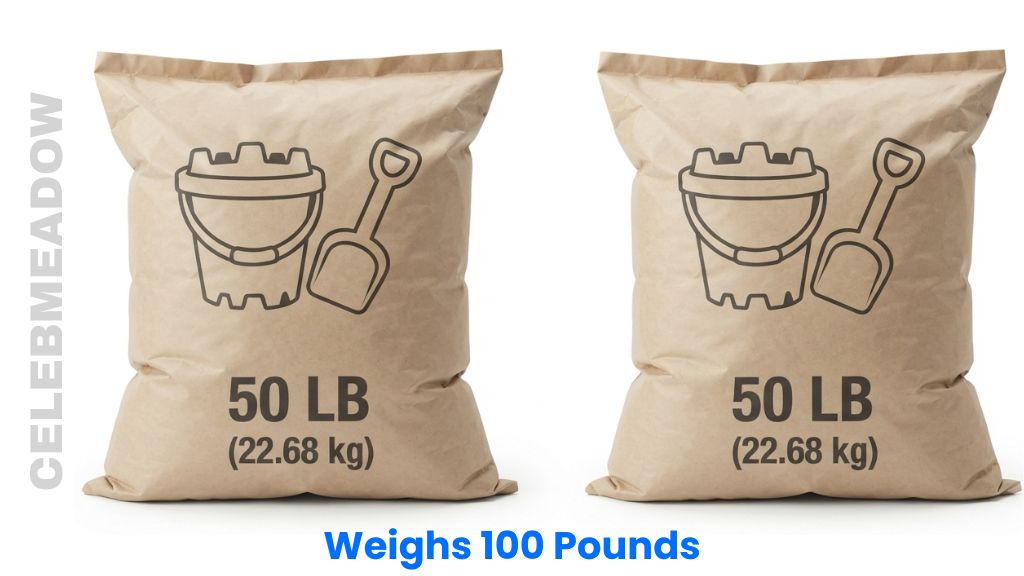
Two standard 50-lb bags of play sand from a garden center or hardware store equal exactly 100 pounds.
The 50-lb packaging size isn’t arbitrary. It matches single-person manual lifting recommendations and fits cleanly on standard shipping pallets. Sand is packed at this weight intentionally to keep handling safe at the retail level.
What makes sand feel heavier than it looks is how the weight distributes. Unlike a solid object, sand shifts inside the bag — the load moves as you move, which forces your muscles to constantly readjust. Hauling two of these play sand bags from your car to a backyard sandbox is a genuine full-body workout. At 100 lbs total, most people set them down at least once.
- Key weight: 100 lbs / 45.36 kg
10. Two 50-Pound Sacks of Potatoes

Two large commercial sacks of potatoes, each weighing 50 pounds, combine for exactly 100 pounds.
The 50-lb unit has been the standard wholesale size for root crops across agricultural supply chains for generations. It’s sized to fit into produce delivery vehicles cleanly and to allow a single worker to carry one sack at a time without mechanical help.
Potatoes create what farmers sometimes call “dead weight” — dense, lumpy, and completely unyielding. There’s no handle, no grip point, just a large sack of irregular shapes pressing against your arms. Try imagining lifting two of those at once. This is what 100 lbs feels like when none of it cooperates with your grip.
- Key weight: 100 lbs / 45.36 kg
11. Two 50-Pound Bags of Ice Melt

Two standard 50-lb bags of ice melt or rock salt equal exactly 100 pounds.
These bags are sized for commercial distribution efficiency and retail shelf limits. The coarse granule content inside — whether rock salt or chemical ice-melting crystals — packs tightly and weighs more than it looks.
Pick up one bag in a hardware store and notice the crunchy, shifting feeling inside. The granules settle as you tilt the bag, and the load moves with every step. At two bags combined, you’re at 100 lbs of dense, gritty, shifting weight — the kind that makes most people drag rather than carry.
- Key weight: 100 lbs / 45.36 kg
12. Two 50-Pound Bags of Concrete Mix

Two standard 50-lb bags of dry concrete mix — like Quikrete — add up to exactly 100 pounds.
This bag size is a construction industry standard. It’s calibrated to match a typical mixing wheelbarrow’s batch capacity and to allow manual handling on job sites without machinery. The paper bags hold the dry powder blend tightly, which gives the sack a rock-hard, completely rigid feel.
Unlike sand or dog food, concrete mix doesn’t shift. It feels more like lifting a solid block than a bag. That stiffness, combined with the weight, is what makes a single 50-lb sack feel surprisingly brutal on your lower back — and two of them is exactly 100 lbs of completely unforgiving load.
- Key weight: 100 lbs / 45.36 kg
13. Twenty-Five Red Clay Engineering Bricks
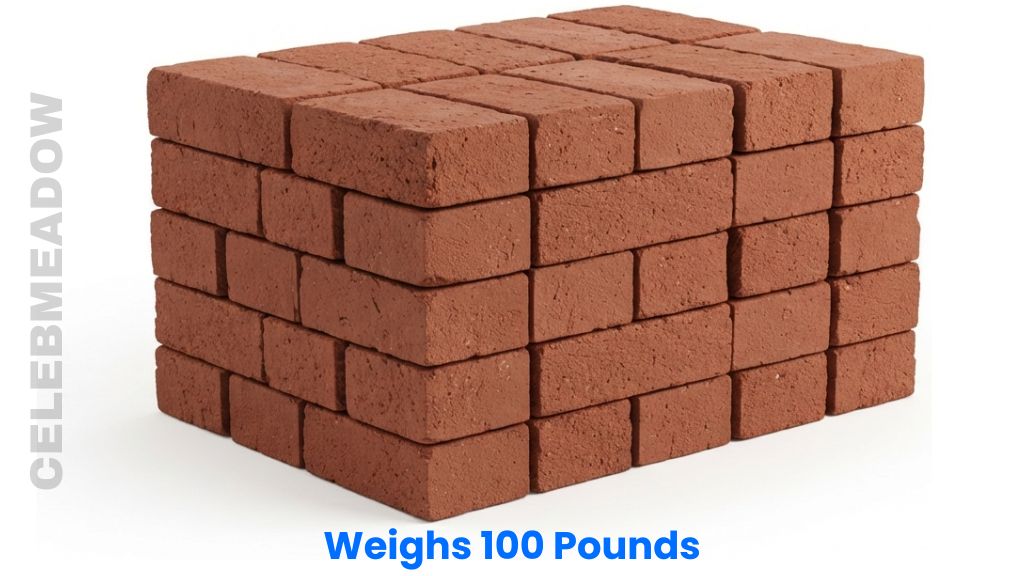
A stack of 25 standard red clay engineering bricks weighs commonly around 100 pounds, at roughly 4 pounds per brick.
The standard brick size — about 2¼” × 3⅝” × 8″ — is engineered to fit perfectly in a bricklayer’s hand. That grip-optimized size and the density of fired clay land each brick at approximately 4 to 4.3 pounds. Stack 25 of them and you’ve got just about 100 lbs.
You’ve probably picked up a single brick at some point — from a garden border, a construction site, or a home improvement store. Remember that compact, rough, concentrated weight in your palm? Now picture 25 of them. 25 bricks fit in a pile about knee-high, and the total weight would make most people grunt just getting them off the ground.
- Key weight: ~100 lbs / ~45.36 kg
14. A 100-lb Professional Steel Anvil
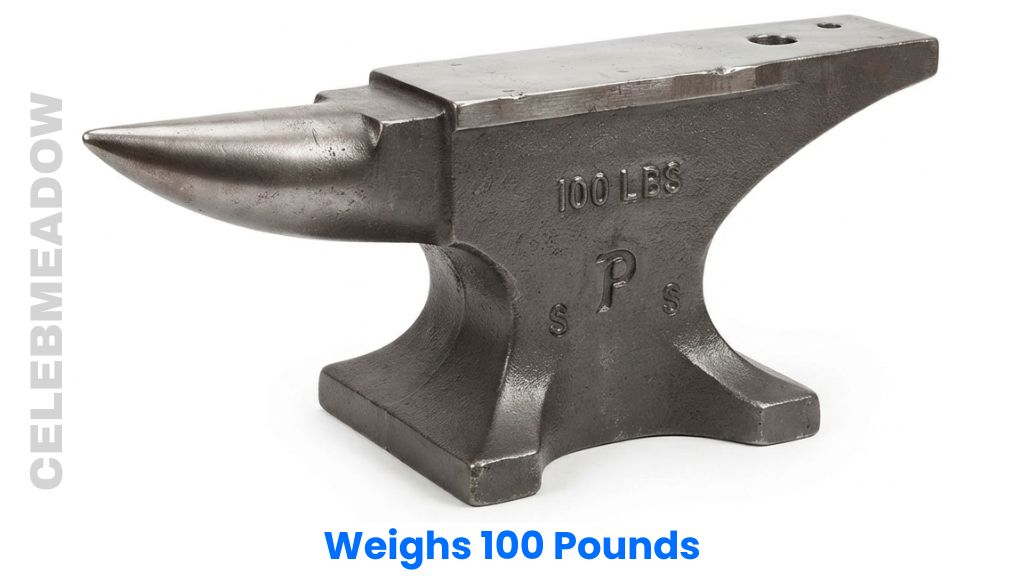
A 100-pound professional steel anvil is exactly that — 100 lbs of nearly solid forged iron in a surprisingly small package.
Anvils are manufactured to precise weight classes because mass directly affects performance. At 100 lbs, an anvil has enough inertia to absorb hammer blows and redirect energy back into the workpiece without sliding across the floor. Go lighter and it moves. Go heavier and portability suffers.
What makes the steel anvil such a powerful mental anchor for this weight is the disconnect between its size and its mass. It looks like something you could tuck under one arm — but picking one up is humbling. That compact, immovable density is exactly what 100 lbs of solid iron feels like when it’s not spread across a wide surface.
- Key weight: 100 lbs / 45.36 kg
How to Picture 100 Pounds Without a Scale
The most reliable way to feel this weight in your head is to start with something you’ve already carried. A single gallon of milk or water weighs about 8.3 lbs. Carry twelve of those at once — in both arms, straining at the wrists — and you’ve got 100 lbs. Most people can feel that mental image almost immediately.
Another method: think about the last time you helped move furniture. That recliner or solid wooden dining table that took two people to lift? That awkward, resisting mass that never seemed to budge the way you expected? You were working against about 100 pounds of real-world weight.
If you’ve ever been to a gym and pushed against a heavy punching bag, that’s your clearest single-object reference. At 100 lbs, it moves — but barely. It pushes back. That firm, dense resistance is exactly what this weight feels like in real life, whether it’s sand, water, furniture, or iron.
100 Pounds Compared to Similar Weights
| Weight | In Kilograms | Compared to 100 lbs |
| 60 lbs | 27.2 kg | 40% lighter |
| 80 lbs | 36.3 kg | 20% lighter |
| 100 lbs | 45.36 kg | ← You are here |
| 120 lbs | 54.4 kg | 20% heavier |
| 150 lbs | 68 kg | 50% heavier |
| 200 lbs | 90.7 kg | Double the weight |
Common Questions About 100 Pounds
How heavy is 100 pounds in kg?
100 pounds equals 45.36 kilograms. To convert, divide any pound value by 2.205. In stone, 100 pounds is about 7 stone 2 pounds.
Is 100 pounds heavy to lift?
Yes — for most adults, it is. Anything above 50 lbs is considered a two-person lift in most workplace safety guidelines. At 100 lbs, you need proper technique, a second person, or mechanical help.
What household items weigh close to 100 pounds?
A recliner chair (~105 lbs), a solid oak dining table (~100 lbs), and an empty 40-gallon gas water heater (~100 lbs) are three common household items that land right at this weight.
How can I estimate 100 pounds without a scale?
Grab a standard 1-gallon water jug — it weighs 8.3 lbs. Imagine carrying twelve at once. That’s 100 lbs. Or picture two 50-lb bags of concrete mix or dog food stacked together. Same weight, instantly tangible.
What is 100 pounds in grams?
100 pounds equals 45,359 grams. For quick mental math, think of it as roughly 45,000 grams or 45.36 kg.
The recliner that takes two people to carry, the twelve gallons of water your wrists can barely manage, the punching bag that shrugs off your hardest push — all of them are sitting right at 100 pounds. Once you’ve matched a real object to this weight, the number stops being abstract. You’ll feel it the next time you’re standing in a hardware store, a gym, or a furniture showroom — and you’ll know exactly what you’re dealing with.
Related More Measurement Guides:

I’m Cherry Sin, and I write clear, practical guides that help people understand everyday measurements and sizes. I focus on turning numbers into easy mental pictures using familiar objects and real-life situations. At Celebmeadow, I write guides that explain measurements in a simple, visual way.