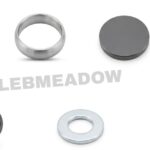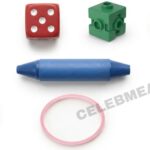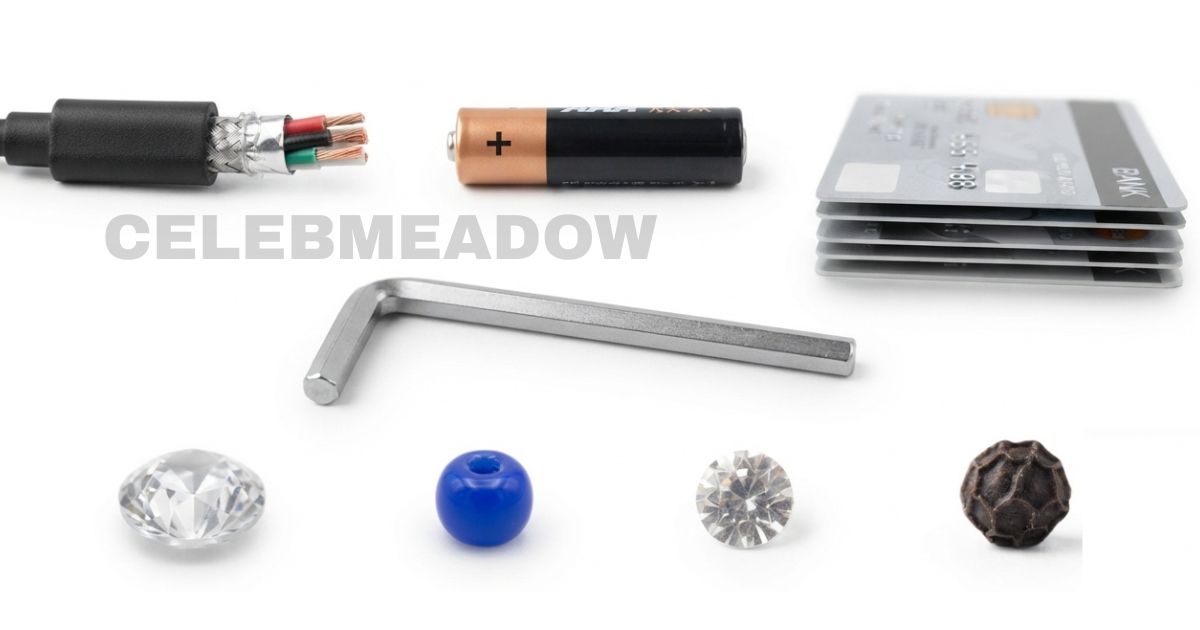
You’re looking at a product spec, a drill bit label, or a cable organizer listing — and it says 4mm. The number means nothing until you connect it to something real. 4mm equals 0.157 inches, or just under 5/32 of an inch, and 0.4 cm. It’s smaller than a pencil’s diameter but larger than a coin’s thickness. The 15 objects below turn that number into something your hands already recognize.
How Big is 4 mm? Quick Conversion Guide
| Unit | Value |
| Millimeters | 4 mm |
| Centimeters | 0.4 cm |
| Meters | 0.004 m |
| Inches (decimal) | ≈ 0.157 in |
| Inches (fraction) | ≈ 5/32 in |
| Feet | ≈ 0.013 ft |
15 Things That Are 4mm Big
| Object | Category | Measurement | Which Part | Exact or Approx |
| Smartphone Charger Cable | Tech | ~4.0 mm | Outer diameter | Approximate |
| AAA Battery Positive Terminal | Tech | 3.8–4.0 mm | Nub diameter | Approximate |
| Stack of 5 Credit Cards | Tech | ~3.81 mm | Combined thickness | Approximate |
| Glass Seed Bead (6/0) | Craft | 4.0 mm | Diameter | Exact |
| Flatback Rhinestone SS16 | Craft | 4.0 mm | Diameter | Exact |
| Craft Pipe Cleaner | Craft | 4.0 mm | Outer diameter | Exact |
| Macrame Cotton Cord | Craft | 4.0 mm | Diameter | Exact |
| Paracord 550 | Craft | 4.0 mm | Diameter | Exact |
| Dried Black Peppercorn | Nature | 4.0–5.0 mm | Diameter | Approximate |
| Apple Seed | Nature | 3.5–4.0 mm | Width | Approximate |
| 4mm Hex Key | Hardware | 4.0 mm | Across flats | Exact |
| Precision Screwdriver Bit Shank | Hardware | 4.0 mm | Shank diameter | Exact |
| Hex Socket 1/4″ Drive | Hardware | 4.0 mm | Inner opening | Exact |
| Standard Pop Rivet Body | Hardware | 4.0 mm | Shank diameter | Exact |
| 4mm PVC Hose | Hardware | 4.0 mm | Inner channel | Exact |
1. Smartphone Charger Cable
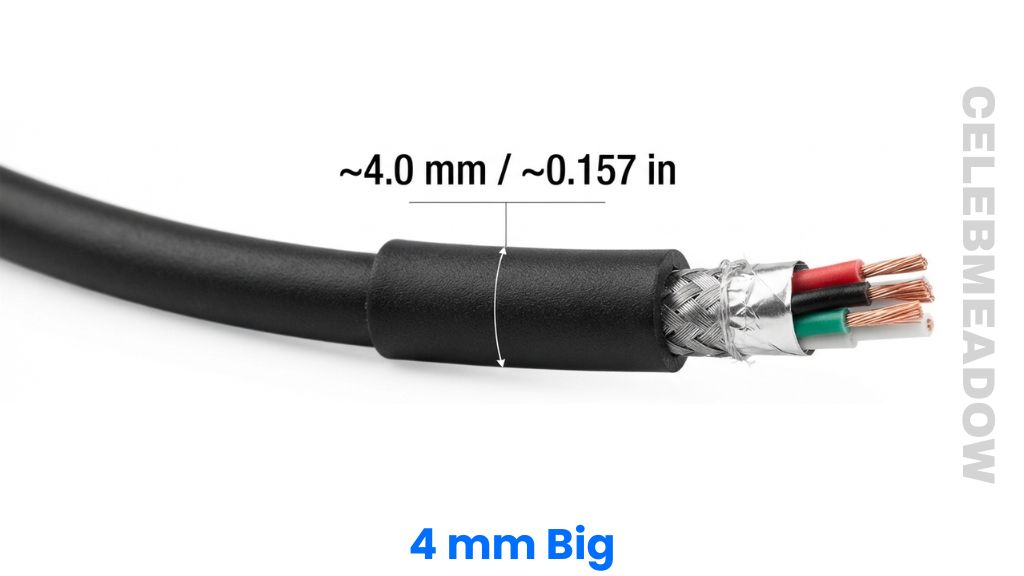
The rubber outer jacket on a standard USB charging cable runs commonly around 4.0mm thick — a size millions of people grip every single day without ever measuring it.
Cable manufacturers land on this diameter because it buries the copper wiring deep enough to survive daily bending near the connector, which is where cables fail first. Thinner and the insulation cracks within months. Thicker and the cable becomes stiff, awkward to coil, and genuinely annoying to use on a small desk.
This measurement has a practical side most people miss. If you’re threading cables through a desk grommet, a cord organizer hole, or a cable clip, the 4 mm outer diameter is your clearance number. A hole that fits your cable snugly is a 4–5mm hole — not a pencil-sized gap, not a finger-sized one.
- Key measurement: ~4.0 mm / ~0.157 in
2. AAA Battery Positive Terminal
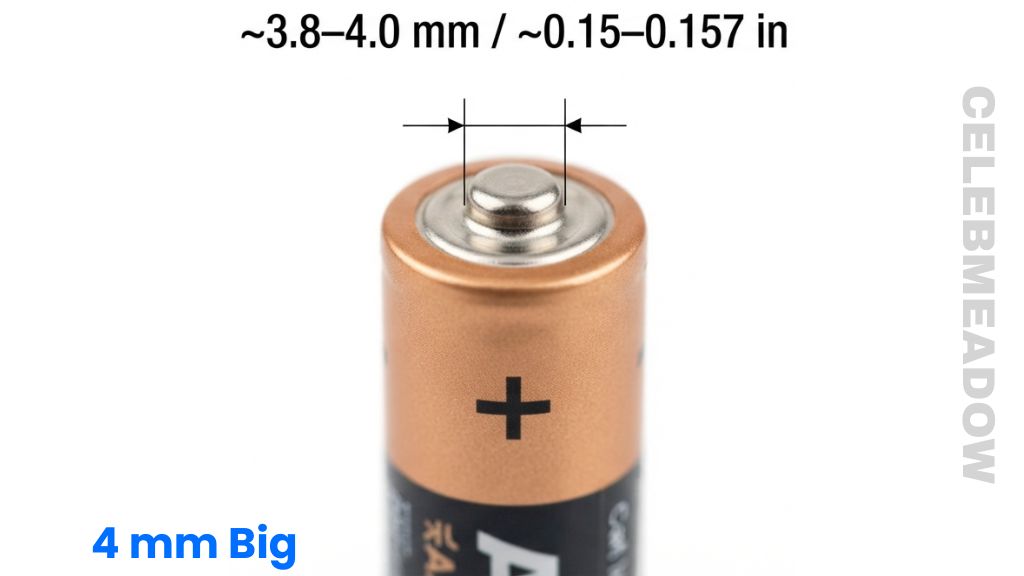
The small raised nub on the positive end of a AAA battery — the part that presses into the spring contact — measures commonly around 3.8 to 4.0mm wide, governed by IEC 60086-2 international standards.
That standardized diameter is what makes a generic drugstore battery work in a Japanese remote control or a German flashlight. The spring-loaded contacts in battery compartments worldwide are built to grip this exact width. Even 0.3mm too narrow and the battery rattles; too wide and it won’t seat at all.
Here’s what most people don’t think about: this is also why battery terminal corrosion causes such problems. Green or white buildup around a 4mm nub breaks the contact across the full diameter, not just at one point — which is why even light corrosion kills the connection completely.
- Key measurement: ~3.8–4.0 mm / ~0.15–0.157 in
3. A Stack of 5 Credit Cards
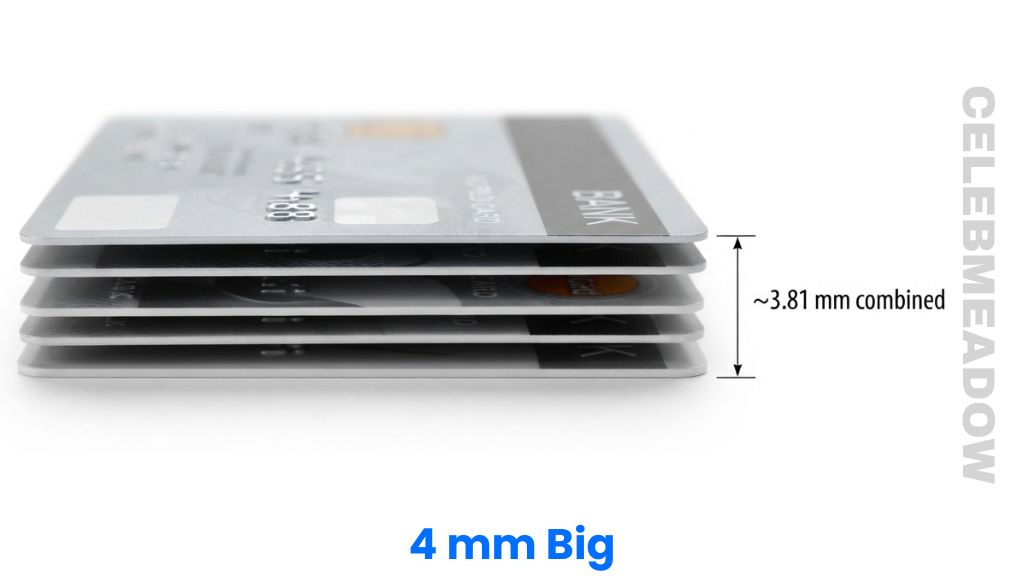
Stack five credit or debit cards flat and you get a combined thickness of about 3.81mm — a hair under 4 mm, and the most portable measuring reference you already own.
Every card worldwide is manufactured to exactly 0.762mm per the ISO/IEC 7810 ID-1 standard, because every ATM slot on earth is built to that spec. Five cards pressed together brings you within 0.2mm of 4mm — close enough for checking slot tolerances, grommet clearances, or gap widths in woodworking joints.
What makes this useful isn’t just the thickness. It’s that you can feel the stack compress slightly in your fingers and compare it directly against whatever gap you’re measuring. It’s tactile, immediate, and always in your pocket.
- Key measurement: ~3.81 mm combined / ~0.15 in
4. Glass Seed Bead — Size 6/0
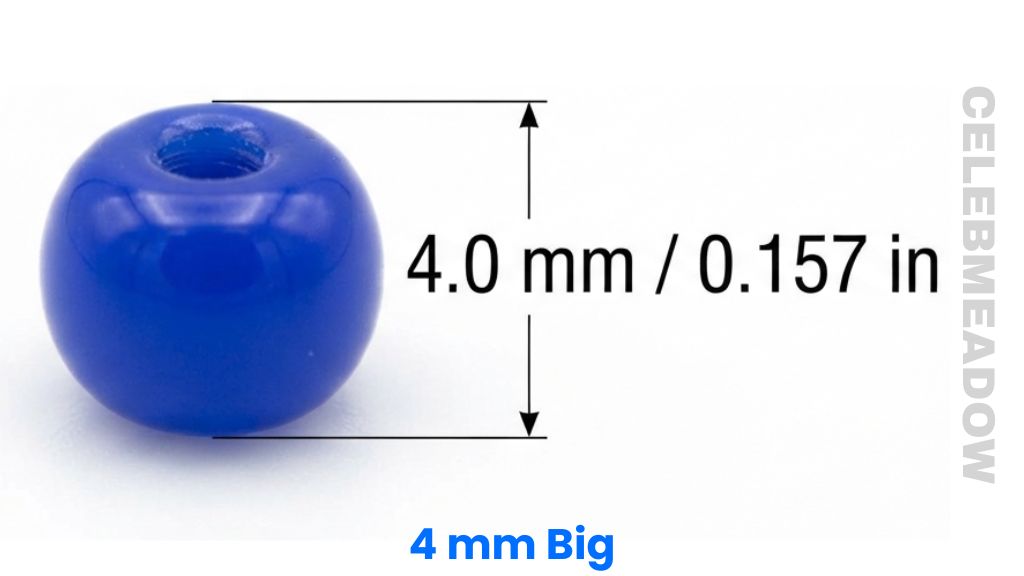
A size 6/0 glass seed bead measures exactly 4.0mm in diameter — one of the few everyday objects that hits this number precisely by design, not coincidence.
The bead industry standardized sizes so jewelry makers can calculate bead counts per inch of thread without measuring each bead individually. At 4 mm, a single bead is large enough to handle with fingernails, small enough to string efficiently, and visible enough to contribute to a pattern without overpowering it.
Hold one between your index finger and thumb. It’s round, smooth, and you can feel the edges clearly — but press lightly and it escapes. That slippery little sphere is your exact 4mm reference. It’s also why bead mats exist: a 4 mm bead on a hard surface rolls away immediately.
- Key measurement: 4.0 mm / 0.157 in
5. Flatback Rhinestone — SS16
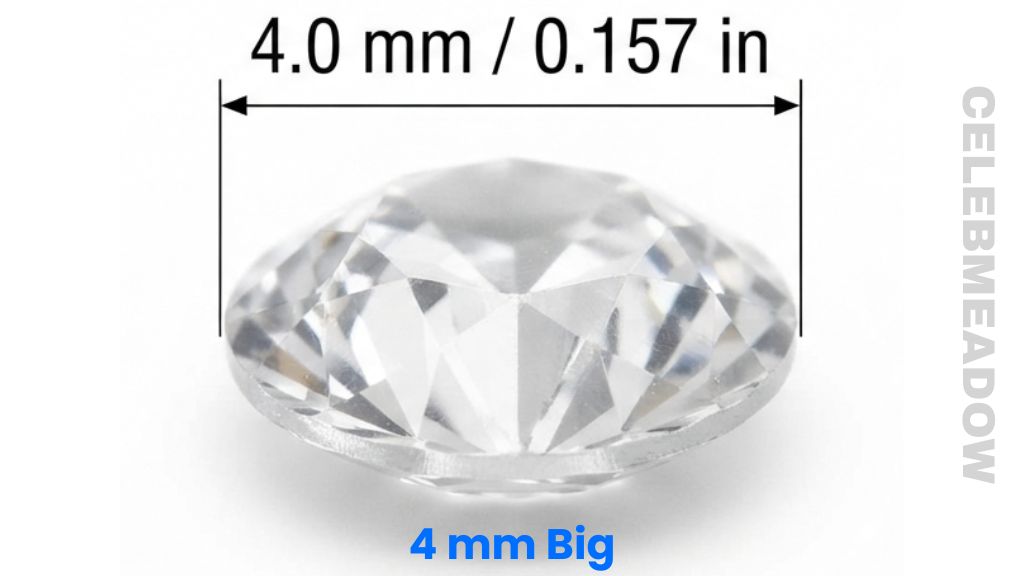
An SS16 flatback crystal measures exactly 4.0mm across, which is why this specific size dominates nail art, costume embellishment, and phone case decoration.
“SS” stands for stone size, a system designed so costume manufacturers and nail technicians can order in bulk and apply stones without measuring each one. The 4 mm diameter catches light visibly at performance distances — noticeable under stage lighting, not overbearing on a fingernail — which explains why SS16 outsells most other sizes in the professional nail industry.
The practical difference between this and the seed bead above: same diameter, completely different surface. One is matte and round; this is flat-backed with cut facets. Both are 4mm. That contrast shows how size and appearance are separate things entirely.
- Key measurement: 4.0 mm / 0.157 in
6. Craft Pipe Cleaner (Chenille Stem)
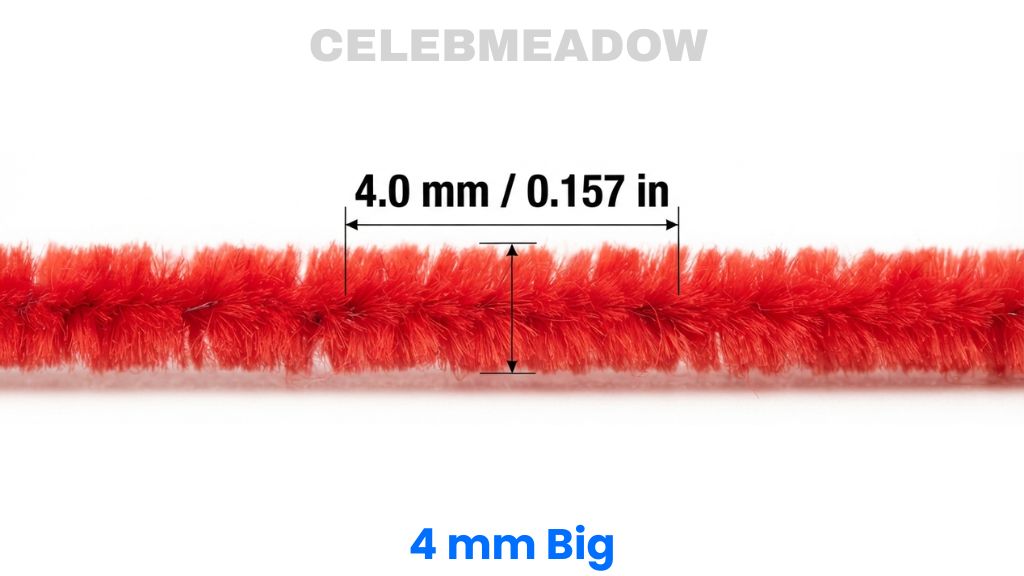
A standard craft pipe cleaner — also called a chenille stem — has an outer fuzzy diameter of exactly 4.0mm, a dimension set specifically so the wire core never pokes through the nylon pile.
The wire inside is much thinner. The 4 mm total diameter comes from the soft nylon fiber wound around it, which needs to be thick enough to keep the wire safely buried while remaining thin enough to thread through large craft beads and cardboard punch holes. School supply manufacturers didn’t arrive at 4mm randomly — it’s the minimum coverage that keeps the sharp wire core away from small fingers.
Run one across your lip. The fuzz registers as distinctly softer than anything else at 4mm — softer than the macrame cord below, worlds apart from the steel hex key. Same measurement, completely different sensory experience.
- Key measurement: 4.0 mm / 0.157 in
7. Macrame Cotton Cord
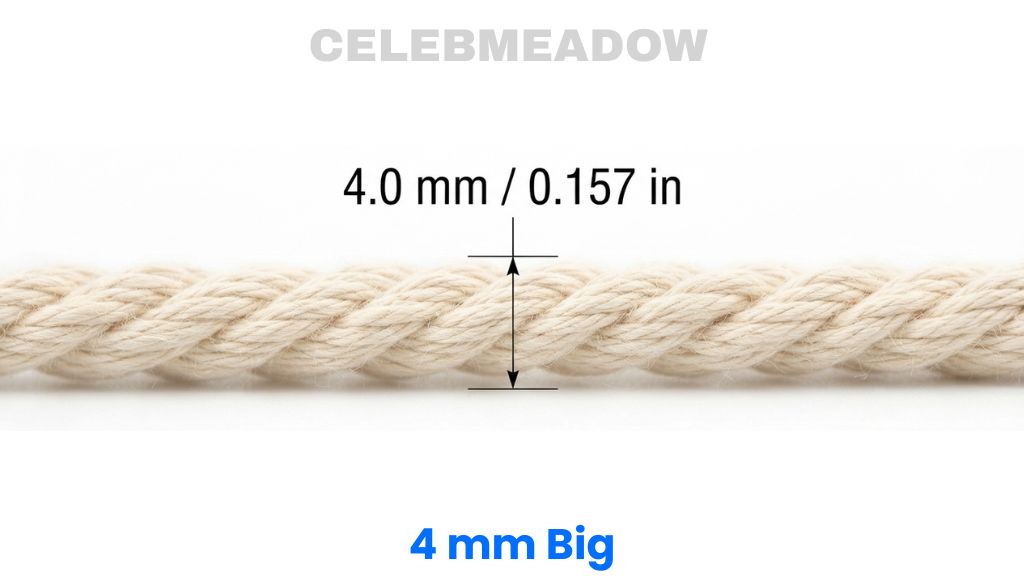
The 4.0mm diameter macrame cord is the craft industry’s structural standard — chosen because square knots tied at this thickness hold visual weight without requiring a vise grip to tighten.
Thinner cord produces knots that look delicate and are hard to see from a normal viewing distance. Thicker cord gets stiff and resists the repeated hand movement knotting requires over a long project. At 4mm, a knotted macrame panel reads clearly on a wall, holds a potted plant without stretching, and still flows through fingers comfortably during hours of work.
The twist pattern in cotton macrame cord at this diameter gives each strand just enough grip to lock knots in place without glue or heat — something finer cord and stiffer cord both fail to do reliably.
- Key measurement: 4.0 mm / 0.157 in
8. Paracord 550
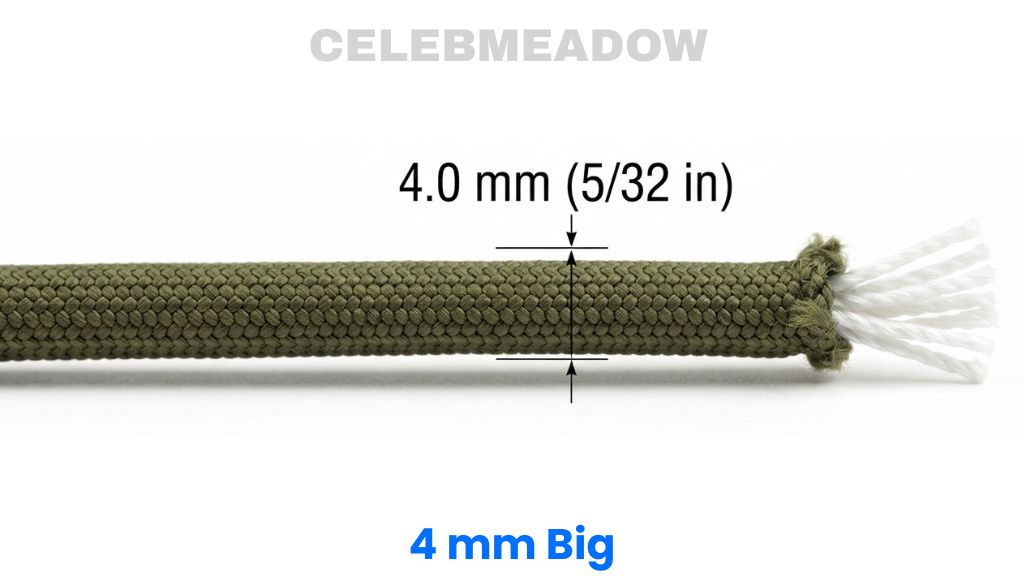
Paracord 550 measures exactly 4.0mm in diameter — a dimension locked by US Military Specification MIL-C-5040H and unchanged since it was designed for actual parachute rigging.
Inside that 4 mm nylon braid are seven inner strands, each triple-twisted. The outer sheath has to be exactly this diameter to feed through standard parachute hardware — D-rings and buckles built to accept 4 mm cord with zero slop and no binding under load. Today’s survival bracelets and camping uses inherit those dimensions directly.
Grip a taut length and compare it mentally to the macrame cord above. Both are 4 mm. But paracord is dense, firm, and almost plastic-feeling under tension — the macrame cord is soft and yielding. This is important when choosing cord for a functional task versus a decorative one.
- Key measurement: 4.0 mm (5/32 in)
9. Dried Black Peppercorn
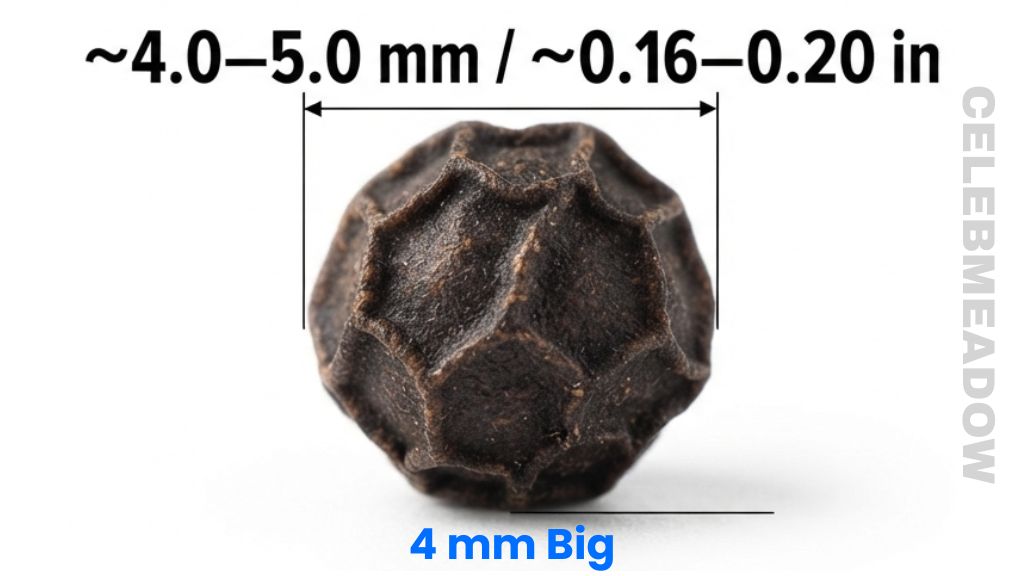
A dried whole black peppercorn sits commonly around 4.0 to 5.0mm across — and pepper mill manufacturers design their grinding mechanisms around this exact size range.
Agricultural grading screens sort dried Piper nigrum by passing them through mesh at specific diameters. The 4 mm grade is what most household mills expect. Oversized peppercorns — ones that dried unevenly or weren’t graded properly — are the reason mills seize up. The 4 mm size feeds into the grinding teeth at the right angle and pressure to crack cleanly without jamming.
Pour a few into your palm. Each wrinkled sphere is roughly the width of the gap between two adult fingernails pressed side by side. Notice how they feel heavier than you’d expect for their size — dried peppercorns are dense, and at 4 mm they concentrate that density into a very small sphere.
- Key measurement: ~4.0–5.0 mm / ~0.16–0.20 in
10. Fresh Apple Seed
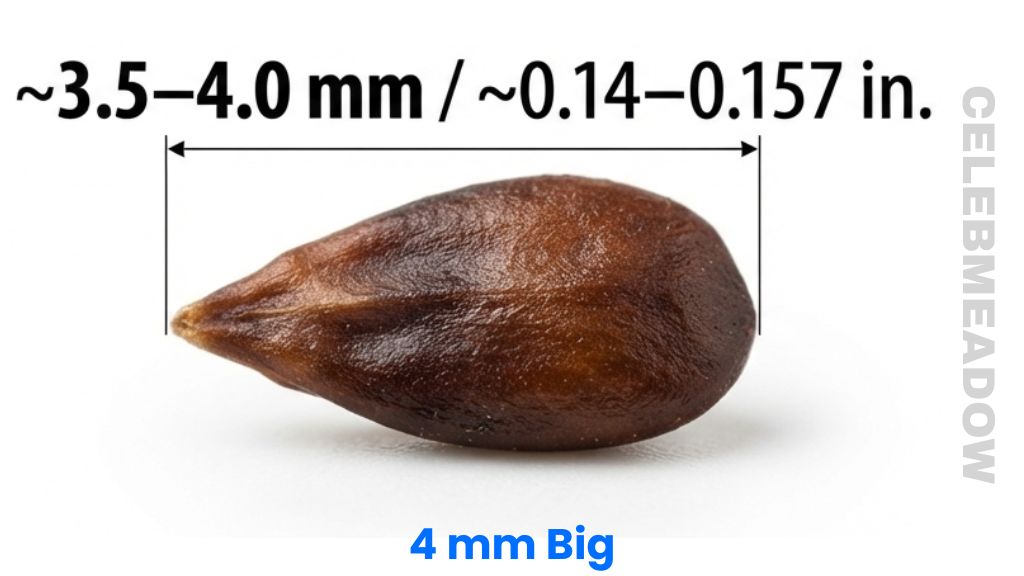
The width of an apple seed across its widest flat point runs commonly around 3.5 to 4.0mm — not by manufacturing precision, but by millions of years of biological design.
Apple seeds need to be small enough to survive passing through an animal’s digestive tract, but large enough to store sufficient nutrients for germination before the seedling can photosynthesize. That functional constraint produces a seed that lands right at 4 mm — a dark, slightly flattened teardrop with a pointed tip.
What’s worth noting here: this is the only object in this list where the 4 mm measurement was never planned by anyone. Every other item was engineered to this size. The apple seed arrived at it through biology alone — and it still matches precisely.
- Key measurement: ~3.5–4.0 mm / ~0.14–0.157 in
11. Standard 4 mm Hex Key
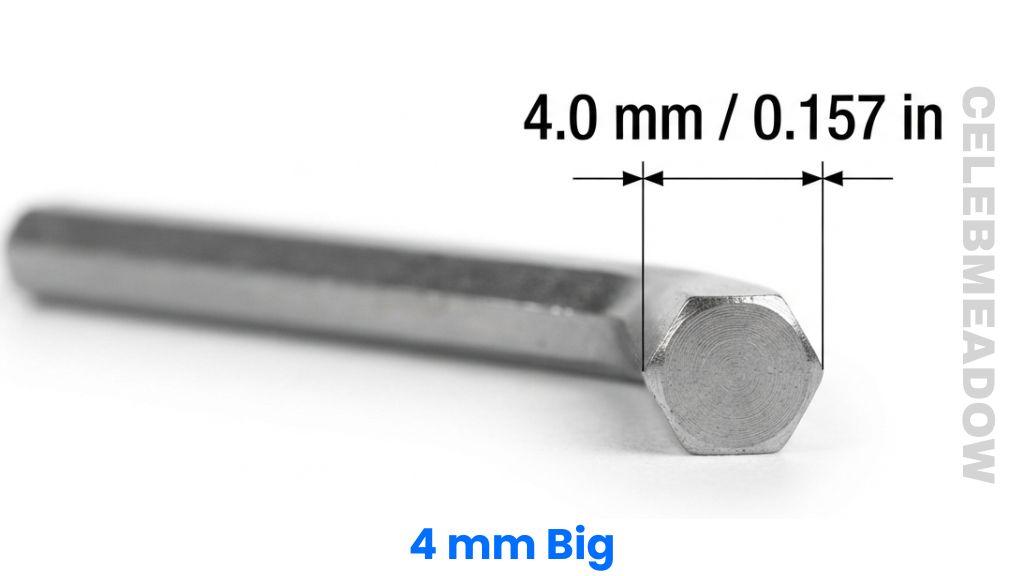
A 4mm hex key — often called an Allen wrench — measures exactly 4.0mm across the flat sides of its bar, per ISO 2936, and it’s engineered specifically to drive M5 socket head screws.
The fit between the key and screw socket has almost no tolerance. If the key were 0.2mm undersized, the corners would round off under torque — the most common way hex sockets get stripped. The ISO spec keeps the key and socket at matching dimensions so the full flat face of each hex side transfers force, not just the edges.
Most people have used this size without knowing it. If you’ve ever assembled flat-pack furniture that came with a small L-shaped wrench in the box, you’ve held a 4 mm hex key. It’s the most common size included in those kits precisely because M5 bolts are the standard fastener for furniture joints.
- Key measurement: 4.0 mm / 0.157 in
12. Precision Screwdriver Bit Shank
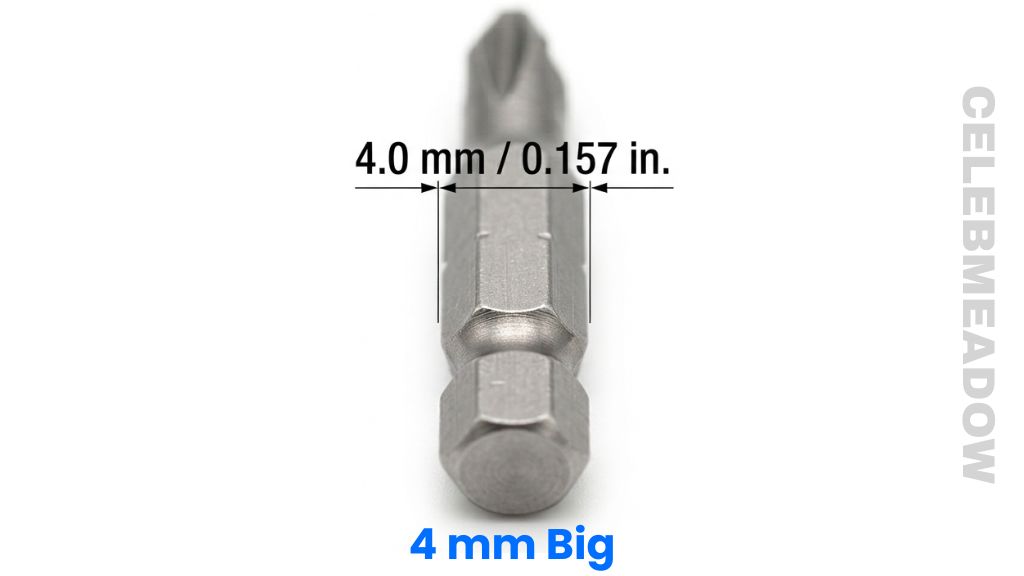
The hexagonal shank on a 4 mm precision insert bit measures exactly 4.0mm across the flats — a dimension that makes interchangeable driver systems mechanically possible.
If the shank varied even 0.3 mm, the bit would rock inside the chuck, and any rotational force would spin the shank rather than drive the screw. The 4 mm spec creates enough contact surface between shank and chuck to transmit torque cleanly even on stubborn micro-screws inside laptops or gaming controllers.
Compare this shank to the hex key: they’re the same 4 mm measurement across flats, but the hex key transfers torque through its full length while the bit transfers torque through a short locked segment. Same number, different mechanical logic entirely.
- Key measurement: 4.0 mm / 0.157 in
13. Hex Socket — 1/4″ Drive, 4 mm Opening
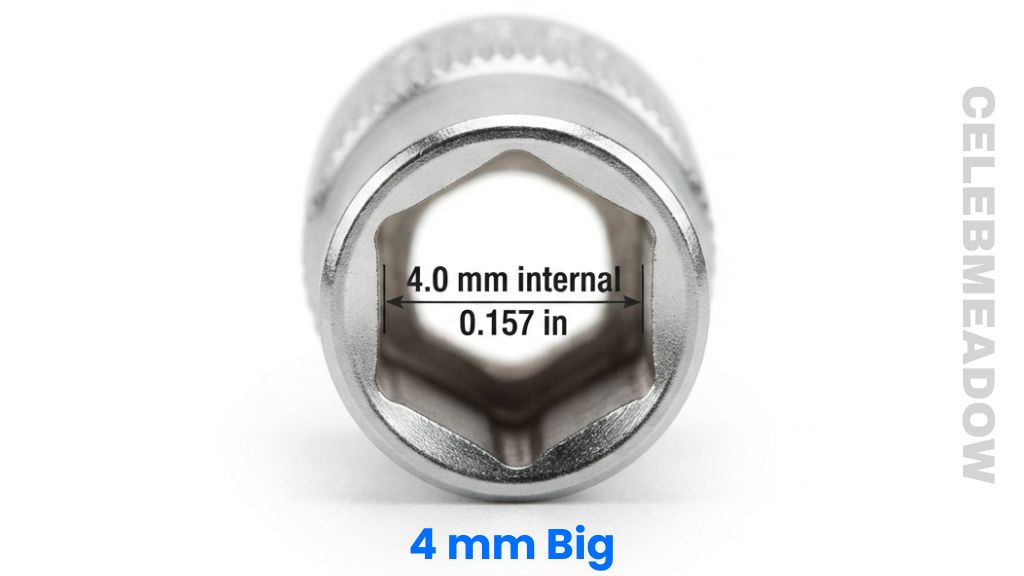
A 4mm socket on a 1/4-inch drive ratchet has an internal opening of exactly 4.0mm — one of the smallest sockets in any standard metric set, built for M2 hex bolts.
M2 bolts appear in places most home tools can’t reach: electronics enclosures, small engine bays, camera mounts, and precision machinery panels. The 4 mm socket is often the smallest in a set, and its internal opening is so narrow that it barely clears a standard pencil tip.
The distinction worth making: the outside of this socket is much wider than 4 mm — maybe 10–12mm. But the hole it grips is 4 mm. This is the only object in this list where the 4 mm measurement is an internal dimension rather than an external one, which changes entirely how you interact with it.
- Key measurement: 4.0 mm internal / 0.157 in
14. Standard Pop Rivet Body
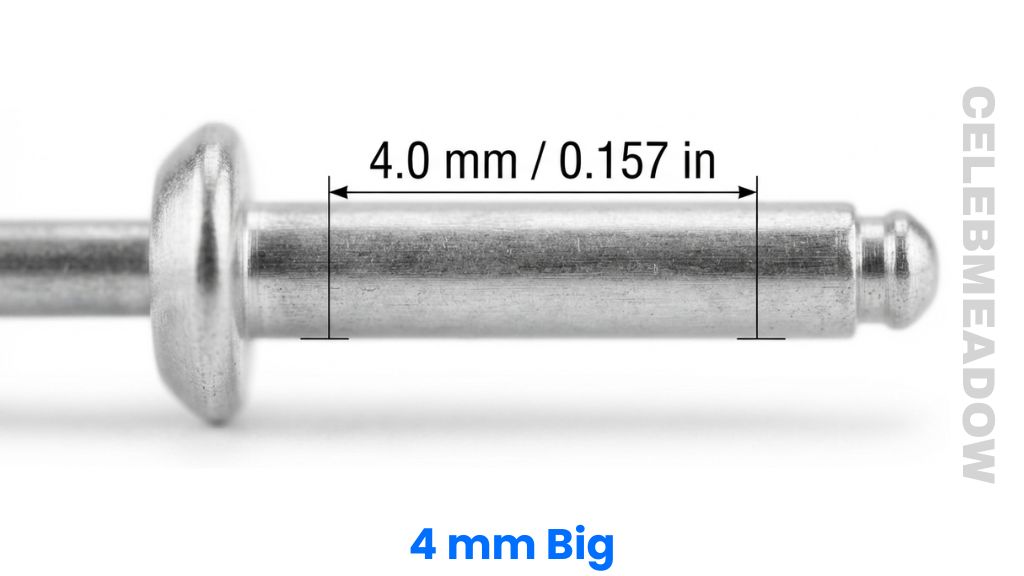
A standard pop rivet has a shank diameter of exactly 4.0 mm — and this number directly tells you what drill bit to use before you install it.
The pilot hole must match the rivet shank with almost no gap. Drill 3.5 mm and the rivet won’t enter the hole. Drill 4.5 mm and the rivet head won’t grip the sheet metal surface properly. Per DIN 7337 and ISO standards, the 4 mm body produces specific shear and tensile strength values, which is why structural applications specify rivet diameter alongside load ratings — they’re directly linked.
Most people encounter these securing aluminum gutters, downspouts, or metal storage panels. The rivet goes in looking like a thin cylinder. After the mandrel pulls through, it expands — but the 4 mm shank diameter is what controlled the hole size from the start.
- Key measurement: 4.0 mm / 0.157 in
15. Inner Diameter PVC Hose (4mm Bore)
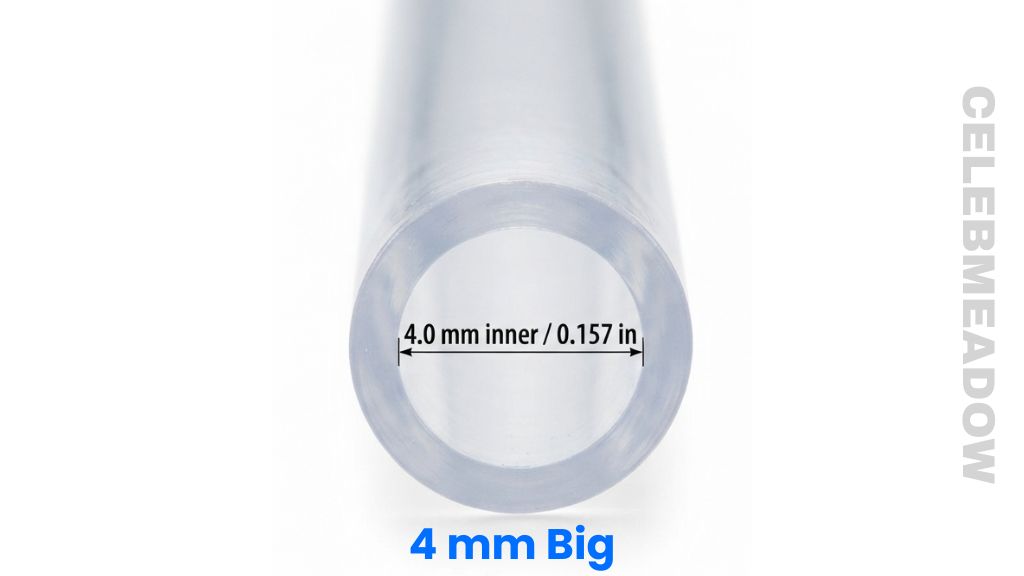
The inner channel of standard small-bore PVC tubing measures exactly 4.0 mm — and this internal diameter determines flow rate, pump compatibility, and fitting size all at once.
At 4 mm bore, a low-pressure aquarium pump can push air or water at the right volume without cavitating or building backpressure. Widen the bore to 6 mm and the pump loses pressure; narrow it to 2 mm and particulate clogs it within weeks. The 4 mm spec hits the fluid dynamics sweet spot for low-force systems — aquarium air lines, drip irrigation heads, medical oxygen delivery tubing, and automotive washer fluid lines all use this bore for this reason.
The outer wall of this tubing is thicker — usually 6–8mm total outer diameter. The 4 mm is the hollow space inside. Thread your fingernail into the end of one: it enters partway, but the 4 mm opening stops it before the first knuckle. That’s a more accurate body reference than most people expect.
- Key measurement: 4.0 mm inner / 0.157 in
How to Picture 4 mm Without a Ruler
The fingernail edge method is the fastest. The white free edge of a healthy adult fingernail — the part that grows past the fingertip — is typically about 1 mm thick at its edge. Line up four of those edges mentally in a row. That row spans approximately 4 mm. This works because fingernail thickness is surprisingly consistent across adults and doesn’t change based on geography or product availability.
For a physical check, use the coin edge comparison. A US penny is 1.52 mm thick. Three pennies stacked together reach about 4.56 mm — slightly over. Two pennies reach 3.04 mm — slightly under. The 4 mm target sits between two and three pennies. Most people can feel that gap difference in their fingers without needing to count fractions.
What these methods share: they use materials with fixed, standardized dimensions. A fingernail edge and a minted coin don’t vary the way craft supplies or food items do. For any task where being 0.5mm off matters — choosing a drill bit, fitting a grommet, ordering a replacement hose fitting — default to the coin method.
4 mm Size Compared to Similar Sizes
| Measurement | In cm | What It Looks Like |
| 2 mm | 0.2 cm | Roughly a penny’s edge seen end-on |
| 3 mm | 0.3 cm | Thickness of two stacked pennies |
| 4 mm | 0.4 cm | ← Target: charging cable outer diameter |
| 5 mm | 0.5 cm | A large dried peppercorn at its widest |
| 6 mm | 0.6 cm | Close to a standard wooden pencil’s diameter |
| 8 mm | 0.8 cm | Double 4mm — width of a standard shirt button hole |
Common Questions About 4 mm
How big is 4 mm in inches?
4mm equals approximately 0.157 inches, or 5/32 of an inch. On an imperial ruler, it falls between the 1/8-inch mark (3.175mm) and the 3/16-inch mark (4.76mm) — closer to 1/8 than to 3/16.
How thick is 4 mm on a ruler?
On a metric ruler, count four small tick marks past any centimeter line. Each small division is exactly 1mm, so four ticks lands at 4mm. On an imperial ruler, find 1/8 inch and move slightly to the right — that gap is where 4mm sits.
Is 4mm the same as 4 centimeters?
No. 4 mm equals 0.4 centimeters. One centimeter contains 10 millimeters, so 4 centimeters would be 40 mm — ten times larger. A 4 cm object is roughly the width of two adult fingers pressed side by side; a 4 mm object is much closer to the width of a pencil’s eraser tip.
How do I measure 4mm without a ruler?
Stack three pennies. That reaches about 4.56 mm — just slightly over 4 mm. Remove one penny and you’re at 3.04 mm — just under. The true 4 mm sits between those two references. For most practical tasks like checking a drill bit size or fitting a hose, the three-penny reference is close enough to guide a correct decision.
What is 4mm as a fraction of an inch?
The nearest standard fraction is 5/32 inch. It’s slightly larger than 1/8 inch (which is 4/32, or 3.175mm) and well short of 3/16 inch (which is 6/32, or 4.76mm). On a tape measure, 5/32 usually isn’t labeled — find the midpoint between the 1/8 and 3/16 marks.
What common objects are exactly 4 mm?
Several manufactured items hit this precisely: a size 6/0 glass seed bead, an SS16 flatback rhinestone, standard paracord 550, a 4 mm hex key across its flats, and a pop rivet shank. Objects that land approximately at 4mm include a USB cable’s outer jacket, a dried peppercorn, and a stack of five credit cards.
Why do so many different products share the 4 mm measurement?
Because 4 mm sits at a useful intersection of strength and smallness. It’s large enough to handle, thread, and grip by hand. It’s small enough to fit into compact hardware, fine jewelry, and tight mechanical tolerances. Standards bodies — ISO, IEC, DIN, and military spec writers — each arrived at 4 mm independently for their own engineering reasons, which is why it shows up across industries that have nothing to do with each other.
The cable on your phone charger, the rivet on a gutter seam, and the crystal on a costume — none of those designers knew the others existed. They all landed on 4 mm because the physics of gripping, flowing, fastening, and fitting keep pointing back to the same number. Once you see it in those three objects, you’ll start noticing 4 mm everywhere — and the measurement will never feel abstract again.
Related More Measurements Guides:

I’m Cherry Sin, and I write clear, practical guides that help people understand everyday measurements and sizes. I focus on turning numbers into easy mental pictures using familiar objects and real-life situations. At Celebmeadow, I write guides that explain measurements in a simple, visual way.