Forty acres shows up on land listings all the time, and most people freeze when they see it. A square plot of 40 acres measures 1,320 feet per side, covers 1,742,400 square feet total, and sits at roughly 0.0625 square miles. Those numbers mean nothing on their own. The eight comparisons below give that space a shape you can actually hold in your head.
Exactly How Big is 40 Acres? Quick Measurements
| Unit | Value |
| Acres | 40 |
| Square Feet | 1,742,400 sq ft |
| Square Meters | 161,874 sq m |
| Meters (per side) | ~402 m |
| Kilometers (per side) | ~0.402 km |
| Miles (per side) | ~0.25 miles |
| Hectares | ~16.19 ha |
8 Everyday Things That Show How Big is 40 Acres Really
1. Standard 12-Ounce Aluminum Soda Cans
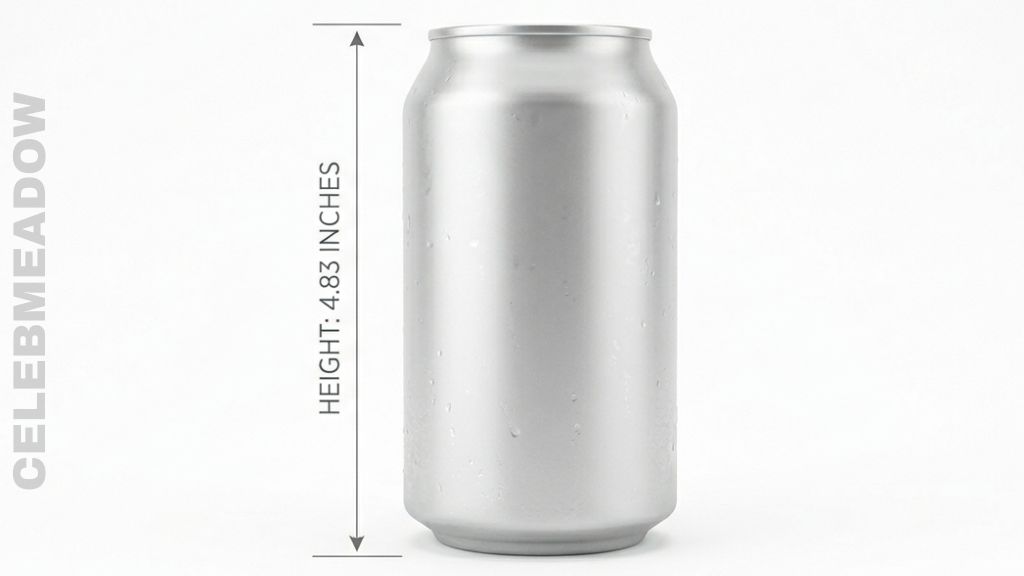
Pick up a cold soda can. It stands 4.83 inches tall — a height chosen because it fits a human hand perfectly, loads efficiently onto shipping pallets, and packs tightly on store shelves without wasted space. Now imagine stacking roughly 3,280 of those cans in a single unbroken tower. That tower reaches approximately 1,320 feet — the full length of one side of a 40-acre square.
The reason this comparison works is body memory. You’ve held hundreds of these cans. You know the exact height without measuring. Multiplying that familiar object by 3,280 stretches your sense of distance in a way raw acreage never does.
Key measurement: 3,280 cans × 4.83 inches ≈ 1,320 feet (~402 meters) — one side of a 40-acre square.
2. Standard School Buses
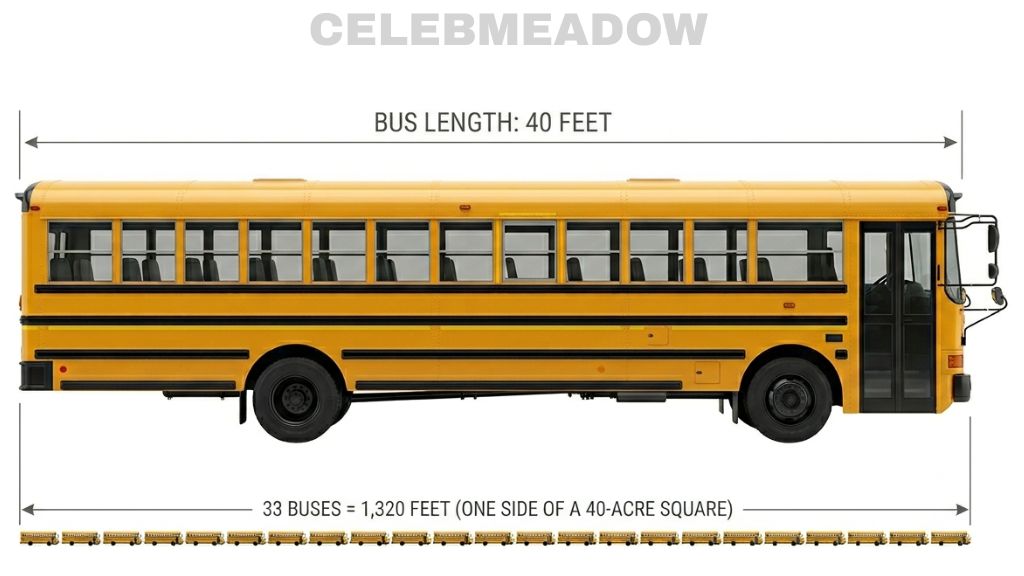
A standard Type D transit-style school bus is 40 feet long — a length set by state transportation departments to carry 72 to 84 students safely while still fitting within legal highway lane widths and tight neighborhood turns. Line up exactly 33 of them, nose to tail, and you’ve covered one complete side of a 40-acre plot.
Most drivers know that trapped-behind-a-school-bus feeling. That bus feels long. Thirty-three of them in a row is a line you’d notice from a distance and still not see the end of clearly. That’s one edge of this land. The same distance runs on all four sides.
Key measurement: 33 buses × 40 feet = 1,320 feet (~402 meters) — one side of a 40-acre square.
3. Semi-Truck Trailers (53-Foot Dry Van)
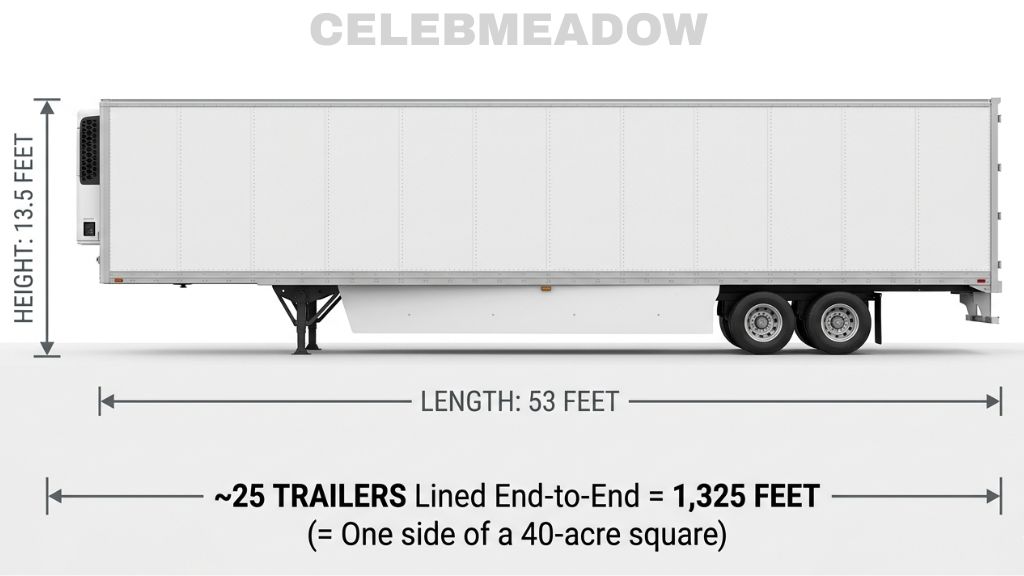
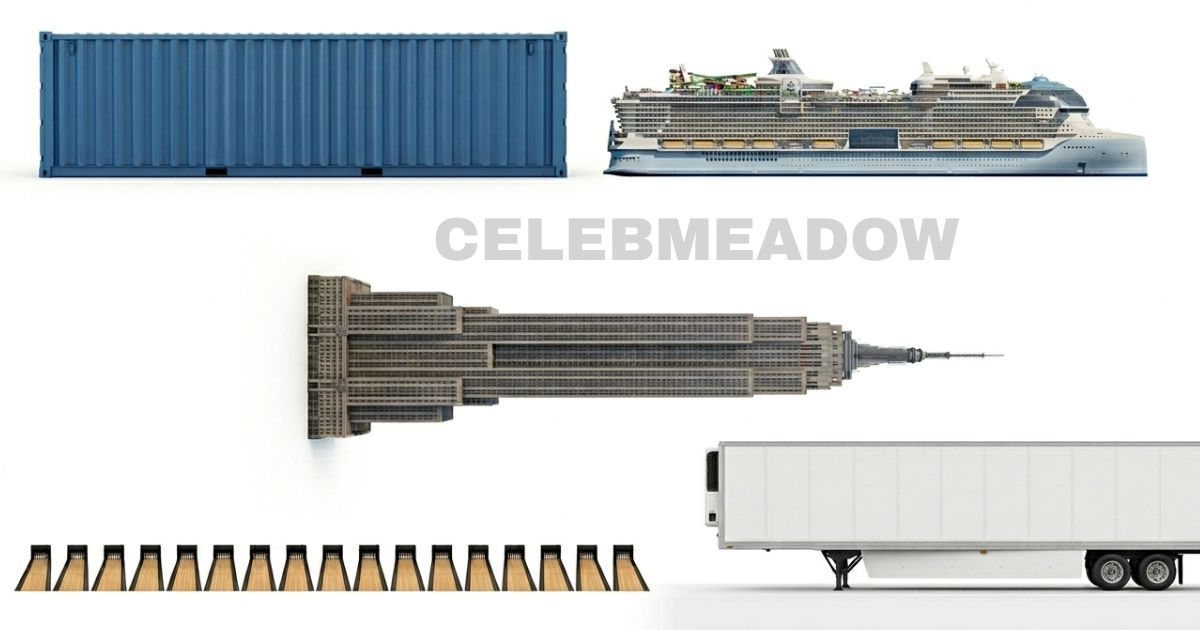
The 53-foot dry van trailer is the longest single commercial trailer the US Department of Transportation allows on interstate highways without a special oversized permit. That ceiling exists because longer trailers can’t safely navigate standard interchange ramps or dock into conventional warehouse bays. Roughly 25 of them lined end to end stretch approximately 1,325 feet — within 5 feet of one full side of a 40-acre boundary.
Passing one of these on the highway always takes longer than expected. At highway speed, a semi pulls alongside and just keeps going. Twenty-five in a row occupies roughly the same length as several loaded freight trains. If you’ve watched a long truck maneuver into a loading dock, you understand how that scale registers physically — and 40 acres holds that distance on every side.
Key measurement: ~25 trailers × 53 feet ≈ 1,325 feet (~404 meters) — within 5 feet of one side of a 40-acre square.
4. Olympic-Sized Swimming Pools
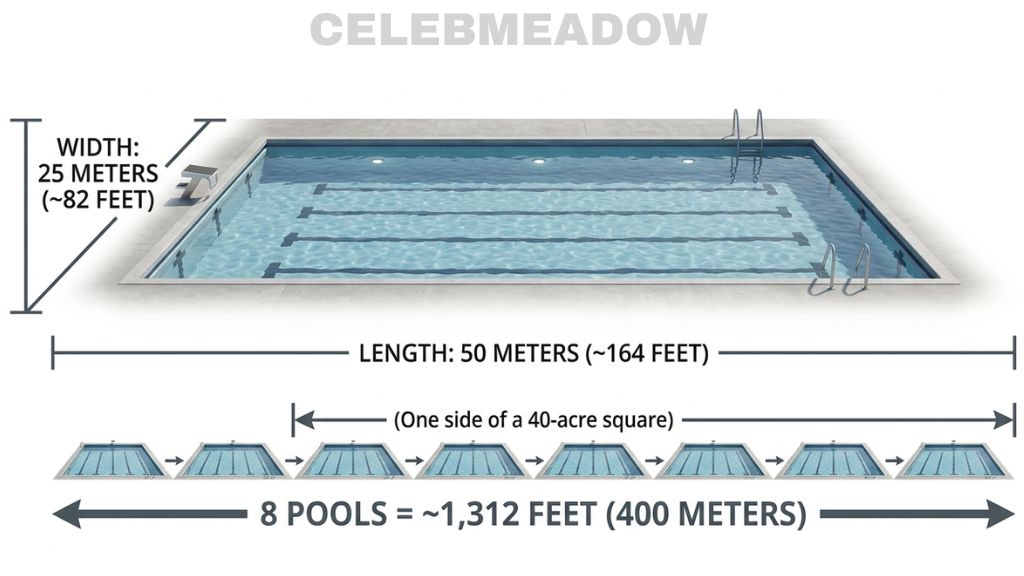
An Olympic pool runs 50 meters — a length set by World Aquatics to give athletes a universal competitive distance where a record in one country carries the same weight as one broken anywhere else on Earth. Place 8 of those pools in a straight line and they stretch approximately 1,312 feet, just 8 feet short of one side of a 40-acre square.
Standing at the edge of a single Olympic pool, staring down a lane toward the far wall, most people feel genuinely small. Eight of those pools laid end to end — with no walls, no turns — is the kind of open distance that changes how a person moves through it. That’s the scale of one boundary line of this plot.
Key measurement: 8 pools × 164 feet ≈ 1,312 feet (~400 meters) — about 8 feet shy of one side of a 40-acre square.
5. Bowling Lanes
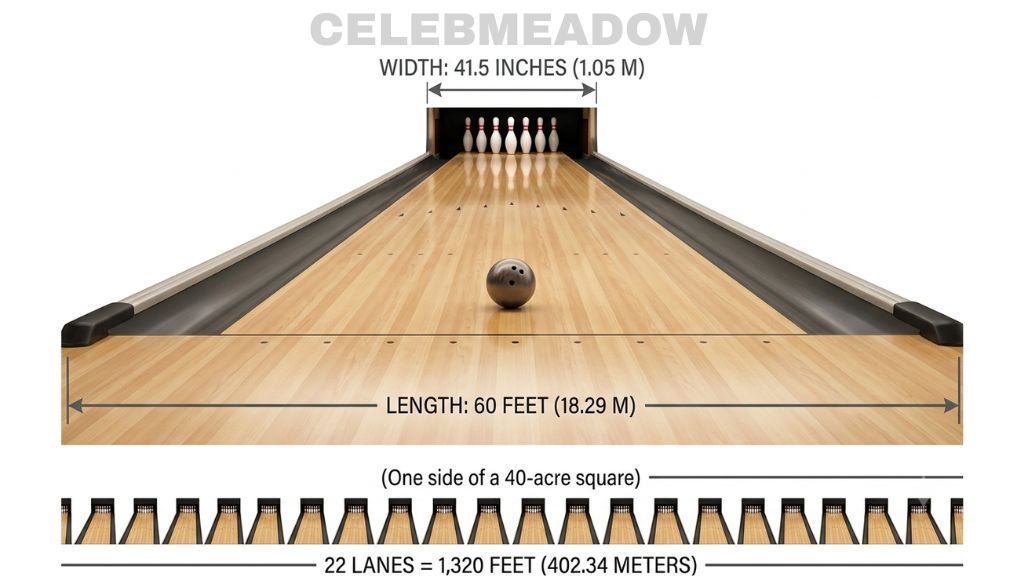
A regulation bowling lane measures exactly 60 feet from the foul line to the headpin — a distance locked in during the late 1800s to balance ball speed, lane oil friction, and the realistic accuracy of a human thrower. Shorten it and the game loses its challenge. Lengthen it and the physics stop making sense for casual players. String 22 of those lanes together and they hit exactly 1,320 feet, the precise side length of a 40-acre square.
That 60-foot lane leaves a specific memory. Most adults have stood at a foul line, stared toward distant pins, and felt the gap. That feeling of “it’s farther than it looks” — multiplied by 22 consecutive lanes — is a useful mental anchor for how far one edge of 40 acres actually runs.
Key measurement: 22 lanes × 60 feet = 1,320 feet (~402 meters) — exactly one side of a 40-acre square.
6. Empire State Building
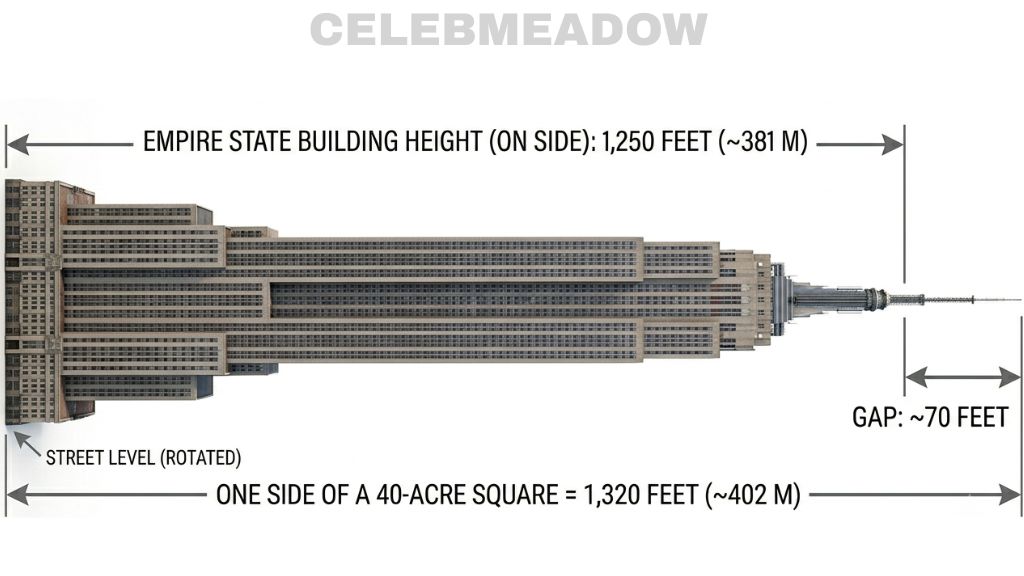
The Empire State Building’s roof deck sits 1,250 feet above the street — a height reached in 1930 during a competitive race to build the world’s tallest skyscraper. Every floor was engineered to pack maximum usable office space into a structure that could support its own weight at that scale. Laid on its side, the entire building would fall just 70 feet short of spanning one complete side of a 40-acre square.
That 70-foot gap is smaller than most people expect. One of the most famous structures on Earth — a building visible from miles away, featured in more movies than almost any other — nearly fits inside the width of a single boundary line of this land. That reframes what 40 acres means: it isn’t a modest farm plot. It’s a serious piece of ground.
Key measurement: Empire State Building roof = 1,250 feet (~381 m). One side of 40 acres = 1,320 feet (~402 m). Gap: ~70 feet.
7. Standard Cruise Ships (Icon of the Seas Class)
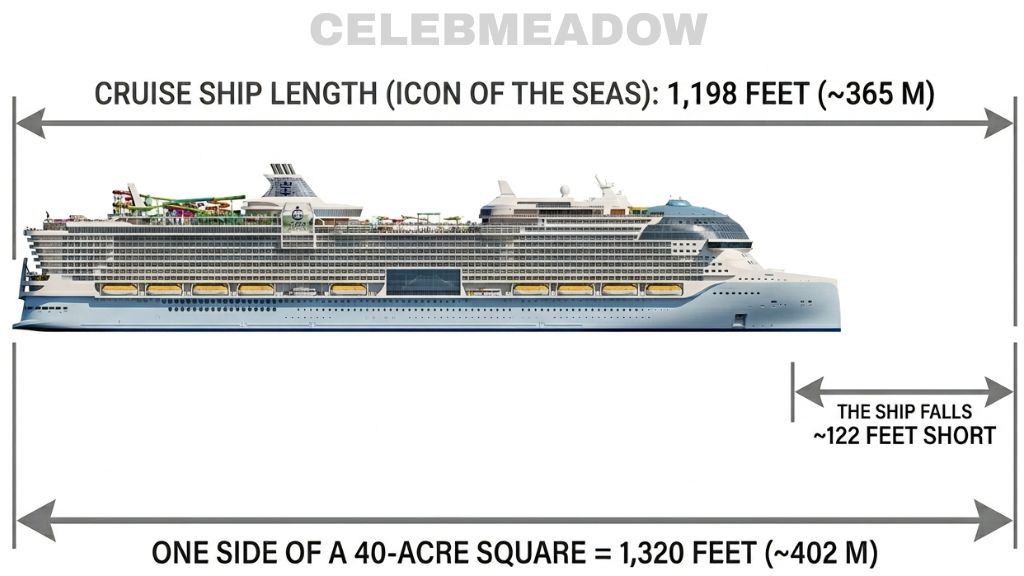
The Icon of the Seas stretches 1,198 feet from bow to stern — engineered to the absolute maximum size a vessel can reach and still float, maneuver safely, and dock at major international cruise ports. Go larger and the ship can’t enter the harbors it needs. That constraint means its length represents a real-world ceiling, not just an impressive number. It falls 122 feet short of one side of a 40-acre square.
A cruise ship this size carries thousands of passengers, multiple water parks, and restaurants across dozens of decks. Seeing one from a dock rewires your sense of what large means. Knowing that a land plot’s single boundary line is wider than that entire vessel makes the acreage feel grounded in something most people have actually witnessed.
Key measurement: Icon of the Seas = 1,198 feet (~365 m). One side of 40 acres = 1,320 feet (~402 m). The ship falls ~122 feet short.
8. Standard Shipping Containers (20-Foot TEU)
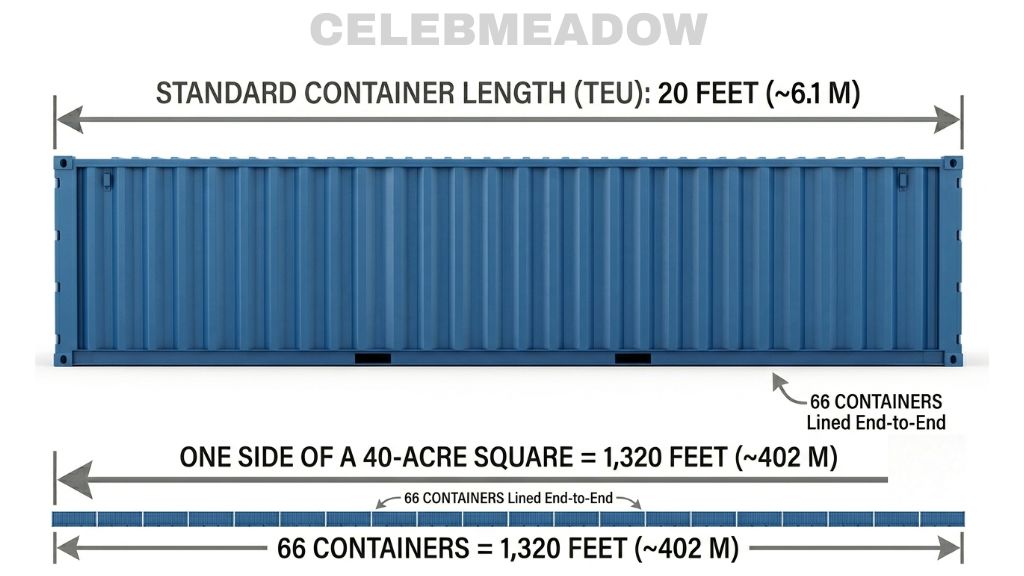
The standard 20-foot TEU container is exactly 20 feet long — a dimension agreed upon by global trade bodies in the 1960s so that one container could lock onto an ocean freighter, transfer to a rail car, and load onto a semi-truck without any modification. That single universal size made modern global trade physically workable. Line up exactly 66 of these containers and they reach precisely 1,320 feet, one complete side of a 40-acre square.
Sixty-six containers is a real cargo train segment. At a busy port, you can watch that many move through a terminal in minutes. Laid flat across open land in a single line, they stretch far enough that perspective starts to compress the far end into something small and distant. That visual compression — that sense of things shrinking at the far end — is exactly what 40 acres feels like from the ground.
Key measurement: 66 containers × 20 feet = 1,320 feet (~402 meters) — exactly one side of a 40-acre square.
More Post: 21 Inches Long: 13 Real-Life Things That Are 21 Inches Long or Big
How to Picture 40 Acres Without a Ruler
Walking speed is the most reliable body-based method. A comfortable walking pace covers roughly 4 to 5 feet per second. At that rate, crossing one 1,320-foot side of a 40-acre square takes about 4 to 5 minutes of steady walking. If you’ve ever walked several long city blocks and started to feel it in your legs, that’s the distance you’re dealing with on each edge alone.
A second method uses your eyes instead of your legs. On a clear, flat day, the average person can resolve a standing human figure at roughly 1,000 feet. At 1,320 feet — the boundary of a 40-acre plot — that figure blurs into a small, uncertain shape at the outer edge of comfortable recognition. If you’re looking across an open field and can barely make out someone standing at the far end, you’re looking at a distance close to one side of 40 acres.
40 Acres Compared to Similar Land Sizes
| Land Size | Square Feet | Compared to 40 Acres |
| 10 acres | 435,600 sq ft | 4× smaller |
| 20 acres | 871,200 sq ft | 2× smaller |
| 40 acres | 1,742,400 sq ft | ← this size |
| 80 acres | 3,484,800 sq ft | 2× larger |
| 100 acres | 4,356,000 sq ft | 2.5× larger |
| 160 acres (1 sq mile / 4) | 6,969,600 sq ft | 4× larger |
Common Questions About 40 Acres
How big is 40 acres in feet?
A square plot of 40 acres measures 1,320 feet on each side, giving a total area of 1,742,400 square feet. That side length — 1,320 feet — is also known as a quarter mile, the same distance as one lap around a standard running track.
How big is 40 acres in miles?
Forty acres covers 0.0625 square miles. Each side of a square 40-acre parcel is 0.25 miles, or a quarter mile. In metric terms, that’s about 402 meters per side, or roughly 0.16 square kilometers total.
Is 40 acres a lot of land?
Context shapes the answer. For a residential neighborhood, 40 acres is an enormous amount — most home lots measure a fraction of one acre. For commercial farming, it’s a modest working parcel; many grain or cattle operations span several hundred acres to be viable. The land feels expansive when you stand on it, but its practical scale depends entirely on what it’s meant to produce.
How big is 40 acres compared to football fields?
A standard American football field, including both end zones, covers about 1.32 acres. That means 40 acres holds roughly 30 full football fields. If you’ve sat in stadium stands and felt how long the field stretches between end zones, picture 30 of those arranged across open ground — that’s the area you’re working with.
How big is 40 acres in soccer fields?
A regulation FIFA soccer pitch ranges between 1.5 and 2 acres depending on its exact dimensions. At a midpoint estimate, roughly 20 to 25 full pitches fit within 40 acres. A large sports complex with four or five pitches grouped together still covers only a fraction of what 40 acres represents.
Realated More Measurements Guides:
Thirty-three school buses stretched end to end barely reaches one side. The world’s largest cruise ship doesn’t span it. Once those images land, 40 acres stops being an abstract number and starts feeling like what it actually is — a wide, open, serious piece of land that takes real time to cross on foot.

I’m Cherry Sin, and I write clear, practical guides that help people understand everyday measurements and sizes. I focus on turning numbers into easy mental pictures using familiar objects and real-life situations. At Celebmeadow, I write guides that explain measurements in a simple, visual way.