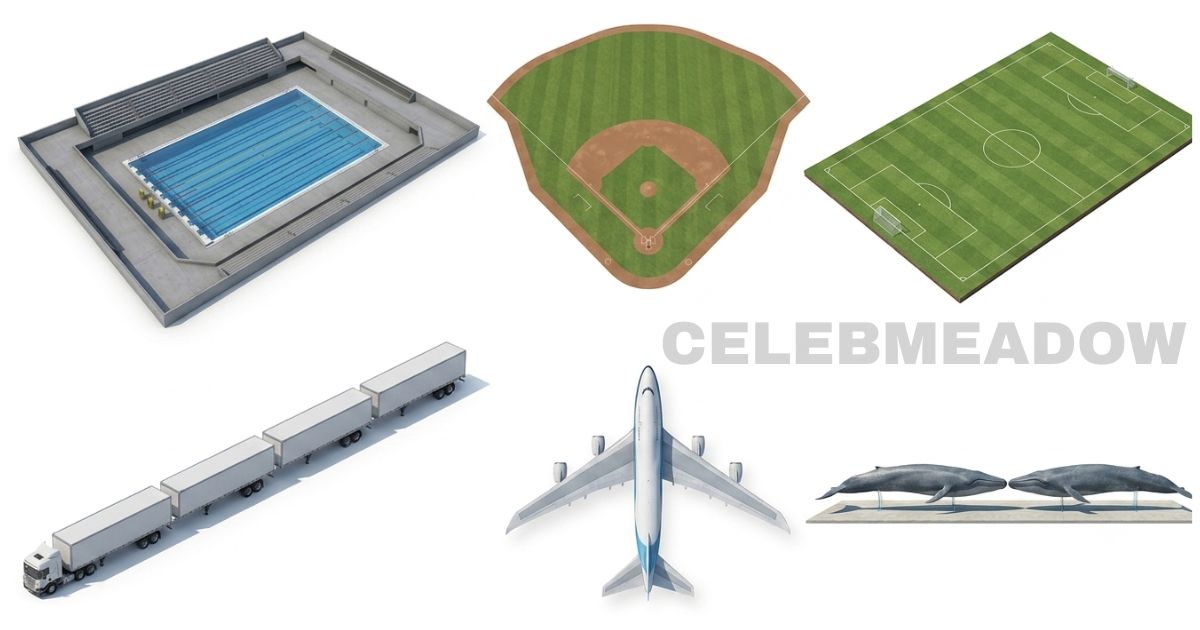
You’re looking at a land listing. It says “1 acre.” The number sits there, and your brain does nothing useful with it.
One acre equals 43,560 square feet — a square plot roughly 208 feet on each side, or about 4,047 square meters (0.405 hectares).
That’s the conversion. What an acre actually looks like in the real world is what the rest of this piece is for.
Exactly How Big is an Acre? Quick Measurements
| Unit | Value |
| Square feet | 43,560 sq ft |
| Square yards | 4,840 sq yd |
| Square meters | 4,047 sq m |
| Hectares | 0.405 ha |
| Square miles | 0.0015625 sq mi |
| Approximate dimensions | 208.7 ft × 208.7 ft / 63.6 m × 63.6 m |
10 Real-World Things That Show You How Big is 1 Acre
| Object | Type | Measurement |
| Olympic swimming pool facility | Area | ~43,000 sq ft / ~3,995 sq m |
| Baseball field | Linear | ~210 ft / ~64 m |
| Soccer field width | Linear | 210 ft / ~64 m |
| 20-story building (laid flat) | Linear | ~210 ft / ~64 m |
| 4 semi-truck trailers end-to-end | Linear | ~212 ft / ~64.6 m |
| 2 blue whales nose to tail | Linear | ~200–210 ft / ~61–64 m |
| Boeing 747-8 wingspan | Linear | 224 ft 5 in / ~68.4 m |
| Regulation skatepark | Area | ~40,000–45,000 sq ft / ~3,716–4,181 sq m |
| Leaning Tower of Pisa (tipped over) | Linear | 183–186 ft / ~56–57 m |
| White House footprint | Area | ~43,500 sq ft / ~4,042 sq m |
1. Olympic Swimming Pool Facility
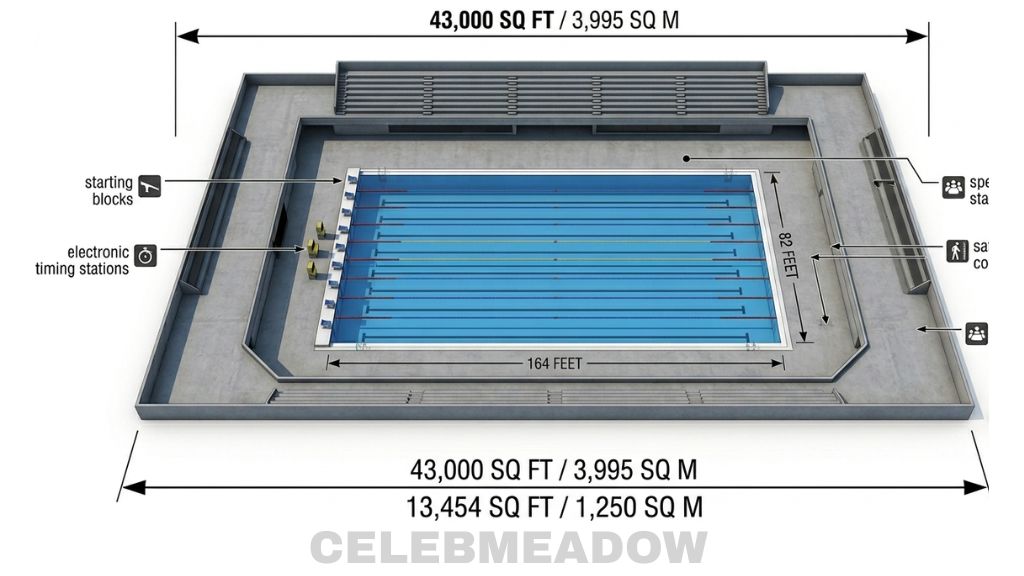
The water surface of a regulation Olympic pool covers around 13,454 square feet — just the water, nothing else. What pushes the total to nearly one acre is everything surrounding it: the timing equipment stations, safety corridors, drainage channels, and spectator staging areas that competition rules require. That full facility footprint lands at roughly 43,000 square feet, almost exactly 1 acre.
World Aquatics (formerly FINA) fixes the pool at 164 feet long by 82 feet wide so every competitor in every lane races the same measured distance. The deck space around it isn’t padding — it’s calculated to keep electronic timing equipment within operational range and allow crowds to move safely. No two of those elements are optional.
For anyone planning a community athletic center, this is a useful anchor: one acre buys the aquatic venue, not just the pool.
Key measurement: ~43,000 sq ft / ~3,995 sq m (total facility footprint)
2. Professional Baseball Field — Home Plate to Shallow Outfield
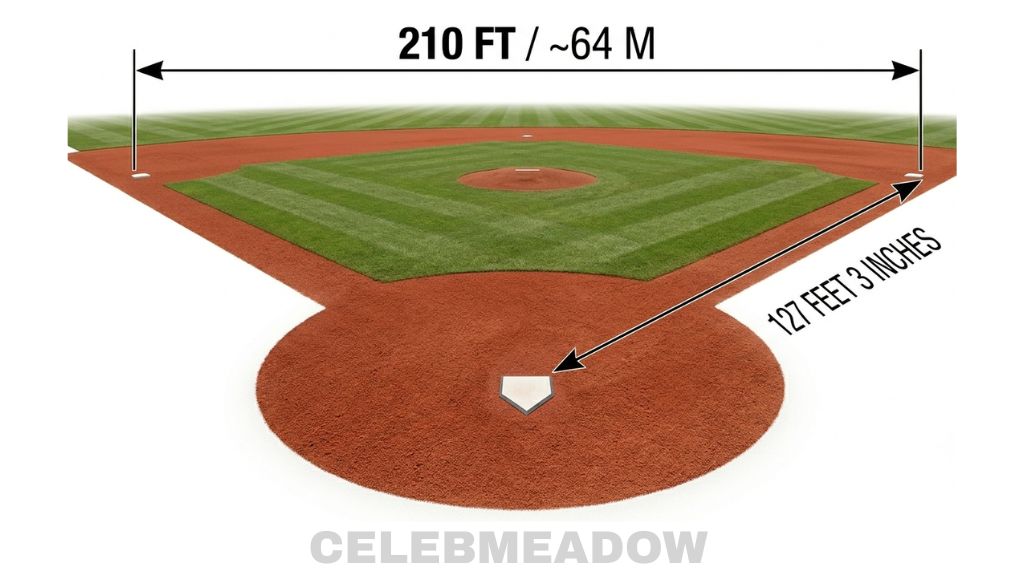
Walk from home plate straight toward center field. Stop at the point where the infield dirt gives way to the outfield grass — that’s roughly 210 feet. That single distance is a clean, straight-line reference for the width of a 1-acre square plot. You don’t need the whole stadium. Just that one stretch of ground tells your brain what 208 feet feels like in real life.
Major League Baseball didn’t arrive at these measurements by feel. The base paths were designed around a specific balance: a thrown ball traveling at full velocity should give a baserunner exactly enough time to make the play competitive. Second base sits 127 feet 3 inches diagonally from home plate — that spacing cascades into every other dimension on the field, including the 210-foot line to the outfield grass.
Key measurement: ~210 ft / ~64 m (home plate to shallow outfield grass)
3. Standard Soccer Field — Side to Side
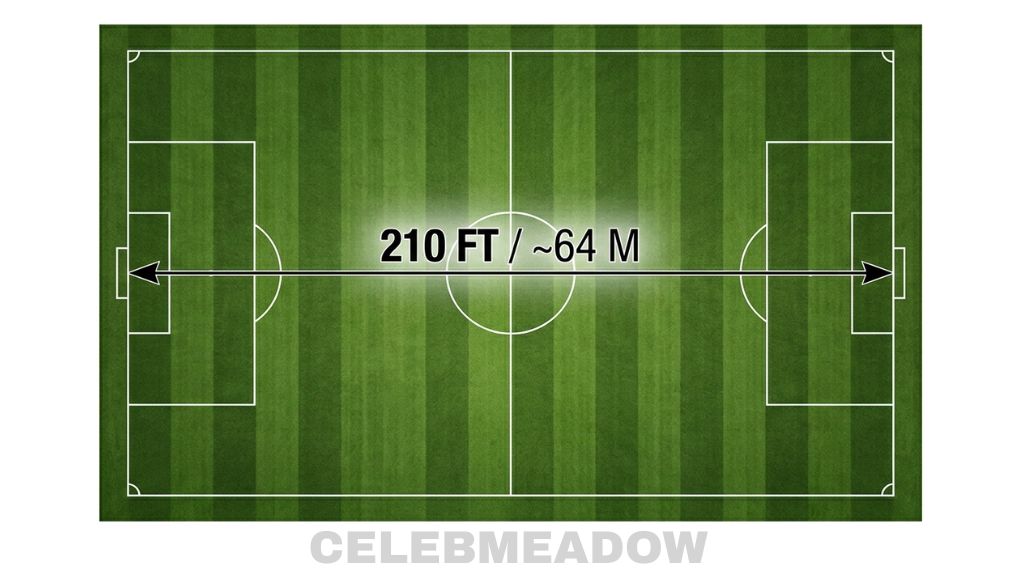
Now rotate 90 degrees from the baseball example — instead of looking down a field, you’re looking across one. The regulation width of a professional soccer pitch used in top-level competition, such as the English Premier League, is 210 feet (70 yards) from one touchline to the other.
The International Football Association Board set this width after testing what 11 players need to actually use the full tactical width of the field. Narrower and the game compresses into the center. Wider and a single midfielder physically cannot cover enough ground. The 210-foot standard is the balance point between those two failure modes.
The key distinction from the baseball comparison: that one showed a forward-distance reference; this shows a lateral one. The acre’s edge reads differently depending on which direction you’re standing.
Key measurement: 210 ft / ~64 m (sideline to sideline)
4. A 20-Story Building — Laid Flat
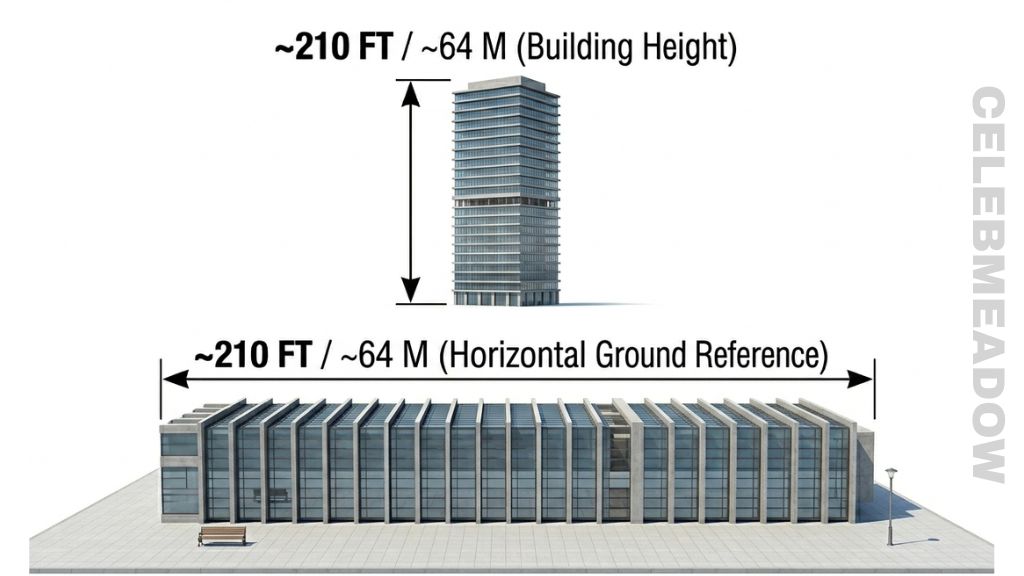
A 20-story building stands roughly 210 feet tall. Structural engineers allocate about 10.5 feet per floor — 8 to 9 feet for the interior ceiling, the rest absorbed by the concrete floor slab and the overhead space carrying HVAC ducts and electrical runs. Twenty floors at that rate lands just above 200 feet.
Tip that building onto its side in your mind. The height becomes a ground distance, and that ground distance is one edge of your acre. This works as a mental tool because most people have a strong intuitive sense of how tall a 20-story city building looks. The trick is flipping the orientation — vertical familiarity becomes horizontal understanding.
Urban planners use this height reference for crane clearance calculations and shadow studies. The same number that defines the skyline also defines the land.
Key measurement: ~210 ft / ~64 m (building height used as horizontal ground reference)
5. Four Semi-Truck Trailers End-to-End
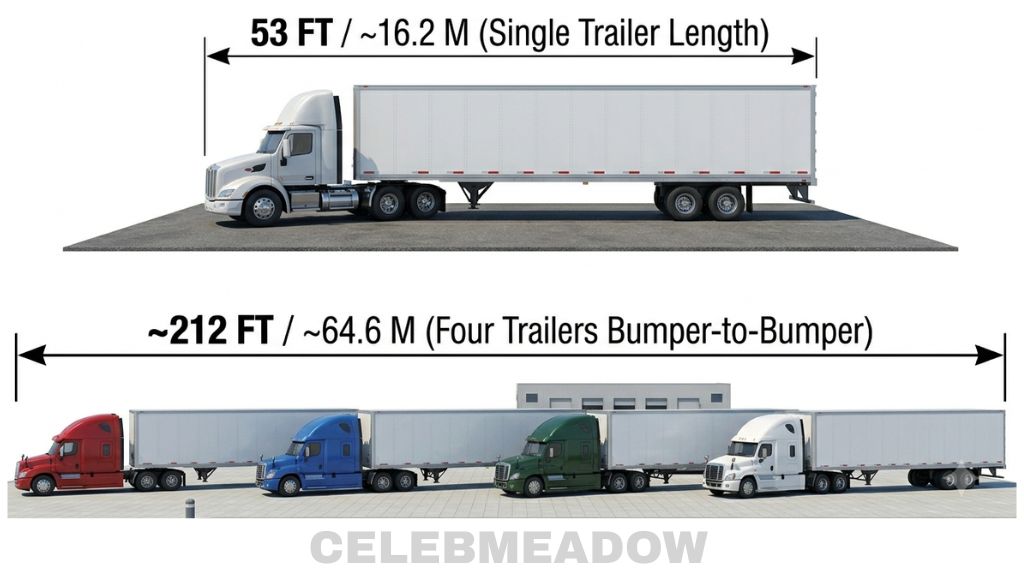
A standard commercial freight trailer is 53 feet long — the legal maximum on U.S. interstate highways without requiring a special oversize permit. That limit was chosen because 53 feet maximizes cargo volume while still clearing standard highway on-ramp turning geometry. Four of those trailers parked nose-to-tail covers 212 feet.
The previous three objects all gave you a line to walk or imagine. This one gives you a string of familiar objects to count. Four trucks you can hold in mind at once. You’ve seen these rolling on the highway; you know roughly how long one looks. Four of them in a row is 1 acre’s edge, and unlike a building or a sports field, this comparison travels — a logistics manager can use it to mentally check a warehouse driveway on a Tuesday morning.
Key measurement: ~212 ft / ~64.6 m (four 53-foot trailers bumper-to-bumper)
6. Two Blue Whales Nose to Tail
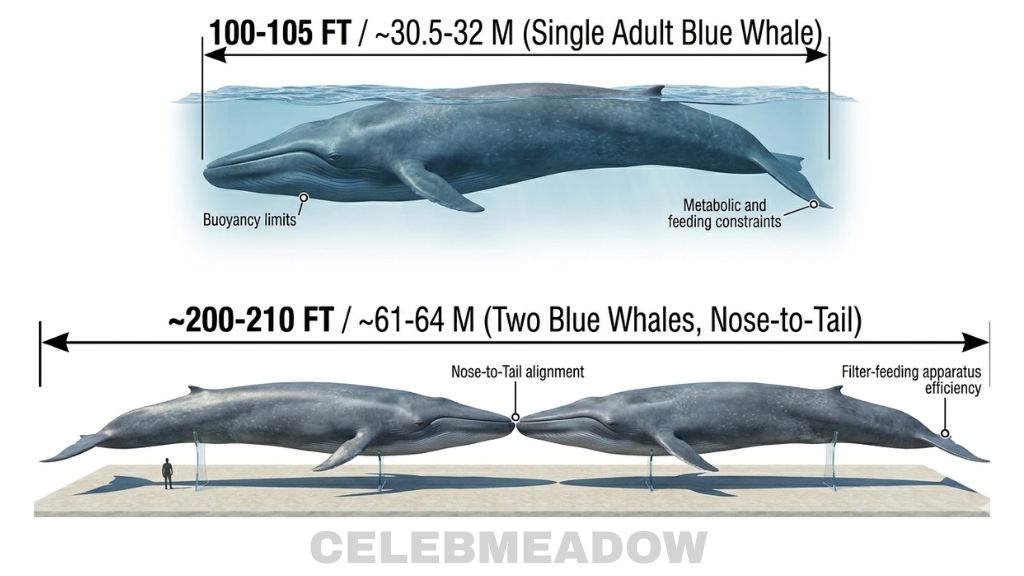
A single adult blue whale typically reaches 100 to 105 feet from snout to tail fluke. Place two adults nose to tail and the combined length falls between 200 and 210 feet. Blue whales don’t grow longer than this because ocean buoyancy, metabolic demands, and the mechanics of filter-feeding through krill swarms impose biological hard limits. The animal is already at the edge of what water can support.
Where the sports field and truck examples feel practical and grounded, this one works differently — it reframes the acre as a biological scale. Two of the largest creatures that have ever lived on Earth barely span one edge of a parcel that a real estate listing might describe as a small residential lot. That contrast carries its own kind of clarity.
Key measurement: ~200–210 ft / ~61–64 m (two adult blue whales combined)
7. Boeing 747-8 Wingspan
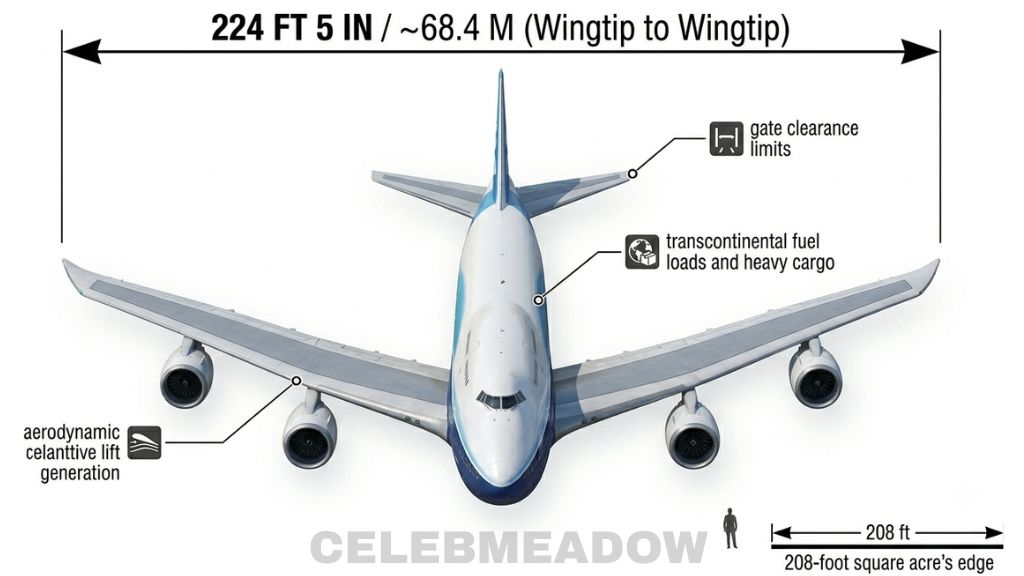
The Boeing 747-8 has a wingtip-to-wingtip measurement of exactly 224 feet 5 inches — about 16 feet wider than a square acre’s edge. That precision matters here: this is the only object in this list that exceeds the 208-foot mark rather than landing on it. The wider span makes it more useful as a ceiling reference. If you’re standing somewhere and the Boeing’s wingspan would comfortably fit, you’re looking at slightly more than one acre’s width.
That wingspan was calculated to generate enough aerodynamic lift for transcontinental fuel loads and heavy cargo while keeping the aircraft just within the gate clearance limits used at major international airports. Go wider and the 747 can’t operate at most hubs. The engineering constraint that makes the plane viable also happens to set it just above the acre mark.
Key measurement: 224 ft 5 in / ~68.4 m (wingtip to wingtip)
8. A Regulation Skatepark
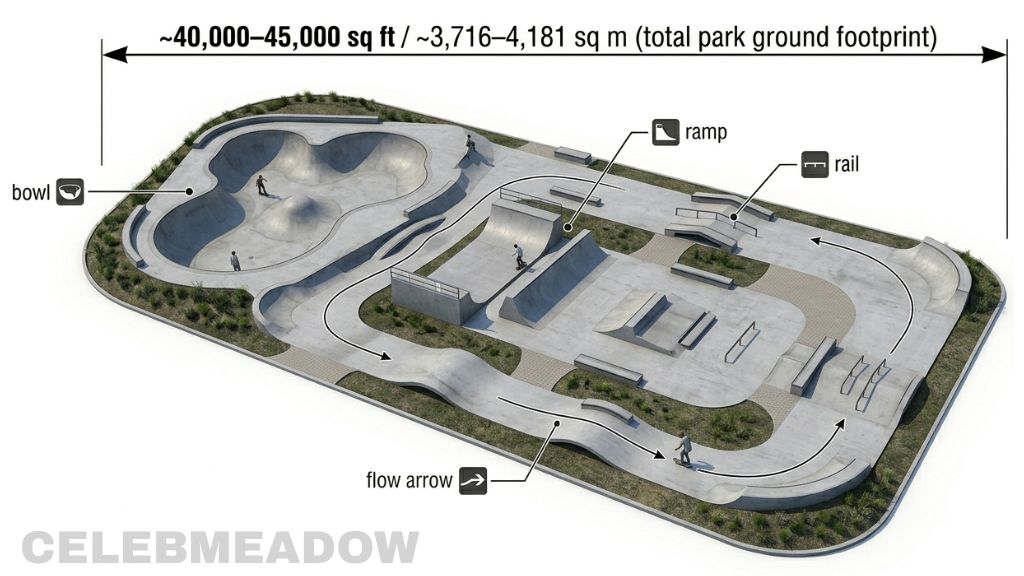
A properly designed municipal skatepark — concrete bowls, a half-pipe, street-style rails, and open rolling sections — typically covers 40,000 to 45,000 square feet of ground. The 43,560 square foot mark of one acre lands right in that range.
Modern skatepark design requires what planners call “flow lines”: uninterrupted paths where a rider can carry speed from one feature to the next. Compress the space below 40,000 square feet and features crowd dangerously close together. Push past 45,000 and the park feels disconnected, with too much dead space between features.
One acre is the practical design sweet spot — tested across hundreds of built parks in cities across the U.S. and Europe. Unlike every previous example in this article, which showed you one edge of an acre, this one shows you the full area: total usable ground, not just one side.
Key measurement: ~40,000–45,000 sq ft / ~3,716–4,181 sq m (total park ground footprint)
9. The Leaning Tower of Pisa — Tipped Over
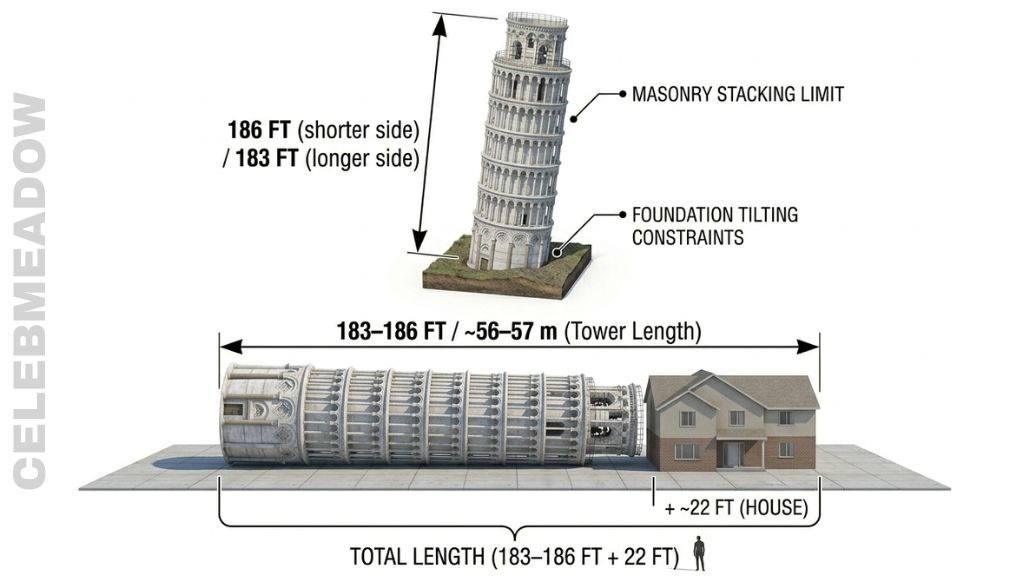
The Leaning Tower stands about 186 feet on its shorter compressed side and 183 feet on the other — the famous tilt creates a small height difference between the two. Neither measurement quite reaches the 208-foot edge of an acre, which makes this comparison useful in a specific way: it shows you what just under that distance looks like.
The tower was built as a medieval bell tower, and its height was capped by two constraints working against each other. Twelfth-century masonry could only stack unreinforced stone so high before the structure became unsafe. Below the foundation, unstable alluvial soil began shifting almost before construction finished — that’s the tilt.
The building couldn’t have grown taller even if the engineers had wanted it to. Standing the tower alongside an acre edge, you’d need to add roughly 22 more feet to reach the corner. A mid-size house placed end-to-end with the tower would make up the difference.
Key measurement: 183–186 ft / ~56–57 m (base to tip, depending on side measured)
10. The White House Footprint
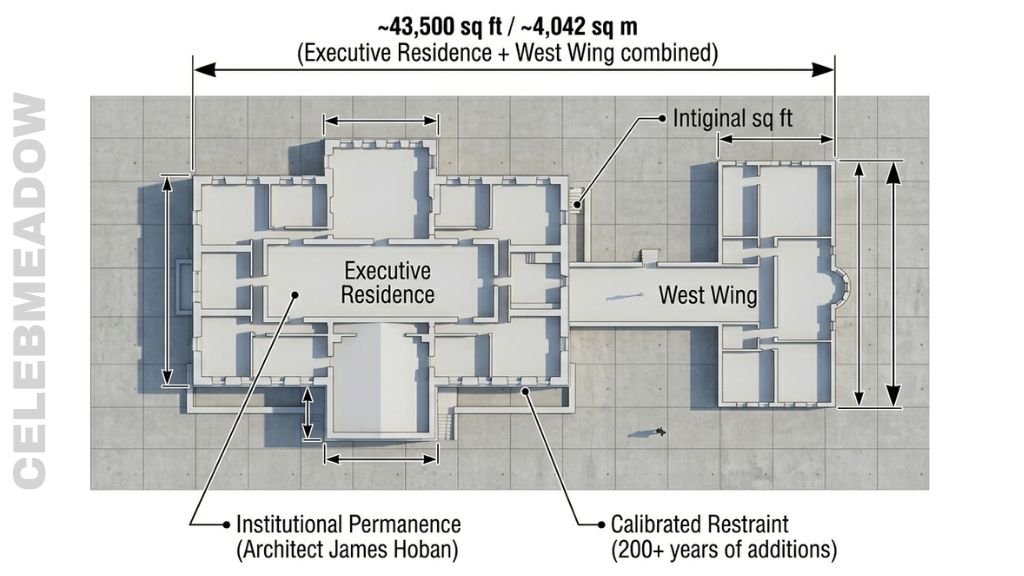
The combined building footprint of the White House Executive Residence and the West Wing totals roughly 43,500 square feet — within 60 square feet of a full acre. This is the second area comparison in this list (alongside the skatepark), and it works differently because the building is recognizable from a single image. Most people can picture the White House from above. That mental image now carries a precise measurement.
Architect James Hoban designed the original residence in the 1790s at a scale intended to project institutional permanence. The structure had to feel significant without dwarfing a democratic republic’s public spaces. That calibrated restraint — held across 200 years of additions — happens to land almost exactly on the acre mark.
One acre is large enough to house the most recognized building in American politics. It’s also small enough that a single residential street in most U.S. cities contains multiple lots of that size.
Key measurement: ~43,500 sq ft / ~4,042 sq m (Executive Residence + West Wing combined)
How to Picture 1 Acre Without a Ruler
The most reliable body-based method is your walking pace. An average adult covers about 2.5 feet per step. One side of a square acre is roughly 208 feet — count out 83 normal steps in a straight line and you’ve just walked one edge. Turn 90 degrees and repeat on all four sides, and you’ve traced the boundary of your plot with nothing but your feet.
A second method uses a car. One acre’s edge is about 0.04 miles. Drive at a crawl along a straight stretch, watch the odometer tick from 0.00 to 0.04, and stop. That distance is 208 feet. It sounds almost too short when you see it from a moving car — which is exactly why an acre surprises most people who haven’t walked one.
1 Acre Compared to Similar Land Areas
| Area | Square feet | Compared to 1 acre |
| 0.25 acre | 10,890 sq ft | One quarter of an acre |
| 0.5 acre | 21,780 sq ft | Half an acre |
| 1 acre | 43,560 sq ft | Your reference size |
| 2 acres | 87,120 sq ft | Double an acre |
| 5 acres | 217,800 sq ft | About 5× an acre |
| 1 hectare | 107,639 sq ft | Roughly 2.47 acres |
Common Questions About 1 Acre
How many square feet is 1 acre?
One acre equals exactly 43,560 square feet. That number stays fixed regardless of the shape of the land — a square plot, a long rectangle, or an irregular boundary all contain the same 43,560 square feet if they measure one acre.
How big is 1 acre compared to a football field?
A full American football field, including both end zones, is about 48,000 square feet. That’s roughly 10 percent larger than one acre. An acre fits inside a football field — it just doesn’t fill it completely.
What does 1 acre look like on a map or in real life?
A square acre measures about 208 feet on each side. You can see clearly from one end to the other. It’s large enough to feel open but small enough to walk across in under a minute.
How can I measure 1 acre without tools?
Count 83 normal walking steps in a straight line. That’s one 208-foot edge of a square acre. Repeat on all four sides and you’ve traced the full boundary.
How big is 1 acre compared to a house?
Most urban residential lots run between 0.1 and 0.25 acres. One acre is three to ten times larger than a typical city home site. In suburban areas, it’s enough for a house, a large yard, a driveway, and a garden with room to spare.
Related More Measurements Guides:
Two images from this article tend to stick: the full skatepark footprint — 40,000 to 45,000 square feet of flowing concrete — and the combined White House footprint, 43,500 square feet of 200-year-old neoclassical structure. Both land within a few hundred square feet of a single acre. Walk 83 steps in a straight line and you’ve covered one edge of the same measurement. The number that looked abstract in a property listing is the same ground you’ve just stepped across.

I’m Cherry Sin, and I write clear, practical guides that help people understand everyday measurements and sizes. I focus on turning numbers into easy mental pictures using familiar objects and real-life situations. At Celebmeadow, I write guides that explain measurements in a simple, visual way.