You’re standing in the kitchen holding a recipe that calls for 12 oz of something — and your scale is nowhere to be found. So how much is 12 oz, really? It’s 340 grams, roughly 0.75 pounds, and about 1½ cups of water by volume. That’s a weight you’ve almost certainly held in your hand before, many times, without realizing it. The nine objects below will make it click instantly.
How Much is 12 oz? Quick Conversions Table
| Unit | Value |
| Ounces | 12 oz |
| Pounds | 0.75 lb |
| Grams | 340.2 g |
| Kilograms | 0.34 kg |
| Milliliters (water) | 354.9 ml |
| Cups (water) | 1.5 cups |
9 Everyday Things That Weigh 12 Ounces
| Object | Category | Weight | Exact or Approximate |
| Three sticks of butter | Kitchen/Dairy | 12.0 oz (340.2 g) | Exact |
| 12 oz bag of coffee beans | Grocery | 12.0 oz net (340 g) | Approximate |
| 1½ cups of pure water | Liquid/Kitchen | 12.52 oz (355 g) | Exact |
| 1 cup of honey | Kitchen/Pantry | ~12.0 oz (340 g) | Approximate |
| 12 oz of dry pasta | Grocery/Pantry | 12.0 oz net (340.2 g) | Approximate |
| 60 US quarters | Currency/Coins | 12.0 oz (340.2 g) | Exact |
| 150 US dimes | Currency/Coins | 12.0 oz (340.2 g) | Exact |
| Two 6 oz cans of tomato paste | Pantry/Canned | 12.0 oz net (340.2 g) | Approximate |
| Single 12 oz boxing glove | Sports/Athletic | 12.0 oz (340.2 g) | Exact |
1. Three Standard Sticks of Butter
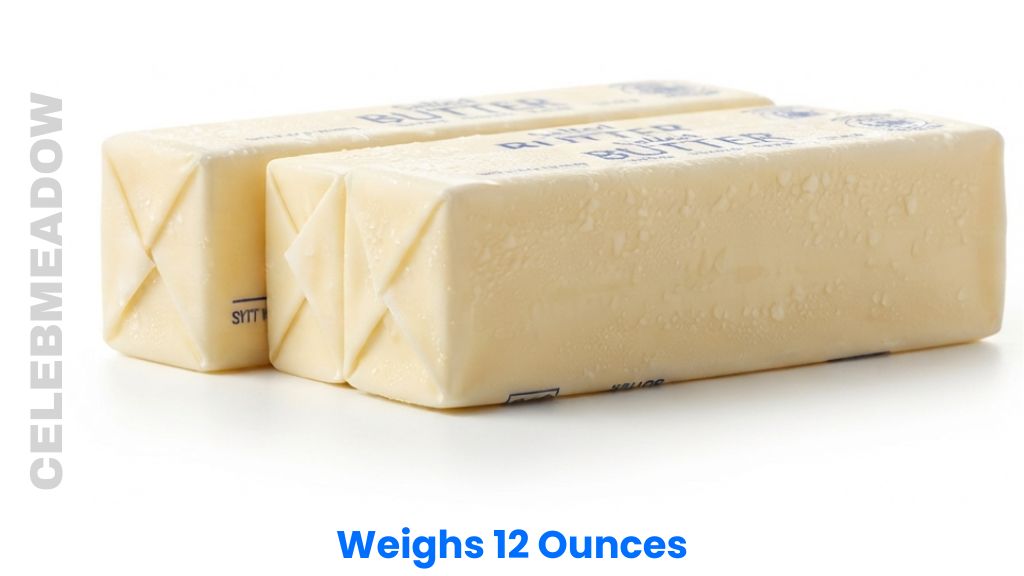
Three standard sticks of butter weigh exactly 12 oz (340.2 g) — no estimation needed.
This is one of the cleanest mental anchors for 12 oz that exists in any kitchen. US dairy law mandates that a 1 lb butter package contains four equal sticks, each landing at a precise 4 oz. Pull three of those out of the fridge box and you have your 12 oz right there, cold and solid in your palm.
What makes butter especially useful as a reference is the feel. Cold butter from the fridge has a distinct, firm density — not soft, not hollow. Pick up those three sticks bundled together and you’ll notice a reassuring, compact heaviness. Next time a recipe calls for 12 oz of something dense, that cold block sensation is exactly the weight you’re targeting.
Key measurement: 12 oz / 340.2 g
2. A 12-Ounce Bag of Coffee Beans
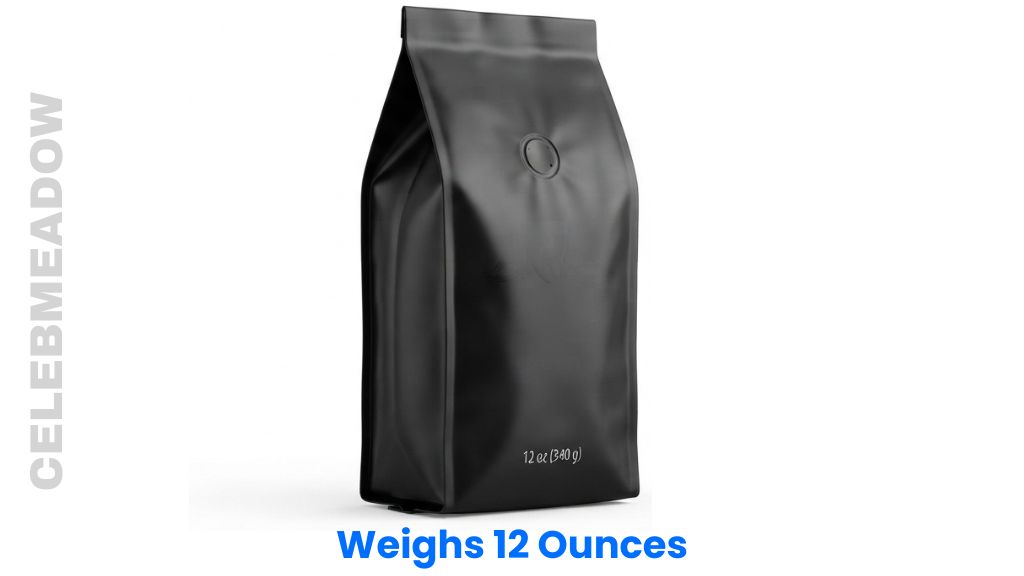
A standard 12 oz retail coffee bag holds exactly 12 oz (340 g) of beans — the packaging itself adds a small fraction on top.
Coffee roasters didn’t always sell bags this size. For decades, a pound was the norm. As specialty coffee costs climbed over the past twenty years, roasters quietly dropped the standard retail size to 12 oz so quality beans could stay at a price most people would actually pay. The bag you’re now grabbing at the grocery store was shaped by economics, not accident.
Hold one fresh, unopened bag by its sides and squeeze slightly. There’s a shifting, slightly pressurized feel from the trapped CO₂ inside — freshly roasted beans off-gas through that valve on the front. It’s flexible but surprisingly substantial. That’s what 12 oz of coffee feels like: a bag with weight and presence, but still fits easily in one hand.
Key measurement: 12 oz net / 340 g
3. One and a Half Cups of Pure Water
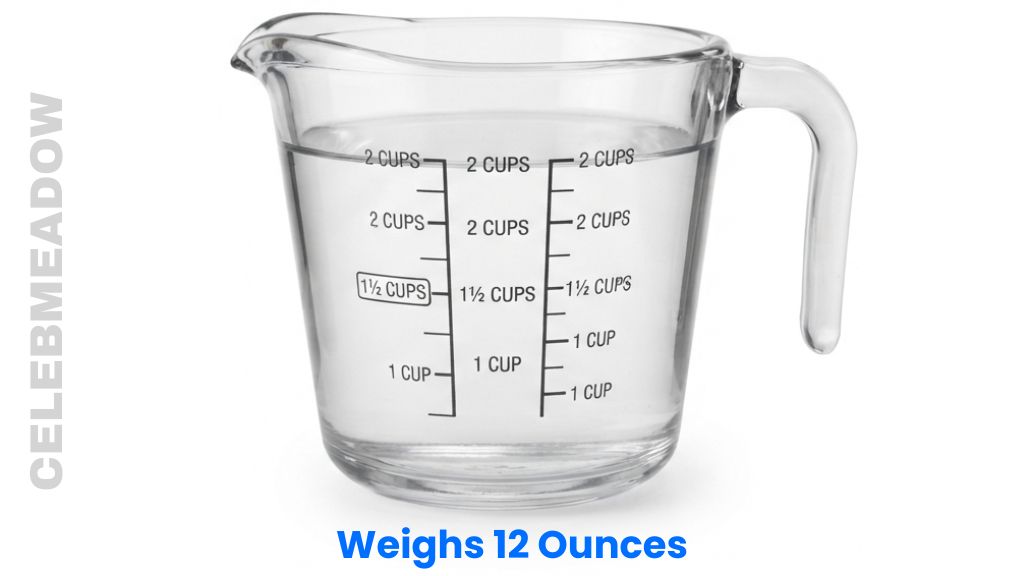
One and a half cups of water weigh exactly 12.52 oz (355 g) — a near-perfect match for 12 oz by mass.
Water plays by strict physics rules. One fluid ounce of water weighs 1.043 oz of mass — not exactly one-to-one, which trips people up when converting recipes. So 12 fl oz of water weighs just slightly more than 12 oz by weight. Close enough for most kitchen uses, but worth knowing if you’re baking with precision.
Pour water to the 1½ cup line in a glass measuring cup and lift it. That slight, clean slosh — liquid moving inside a container — is one of the most universally familiar sensations of weight humans experience daily. You probably replicate this movement every morning when you fill a glass. If 12 oz of water feels this light and manageable, that’s your baseline for the measurement.
Key measurement: 12.52 oz / 355 g (1½ cups of water)
4. One Cup of Honey
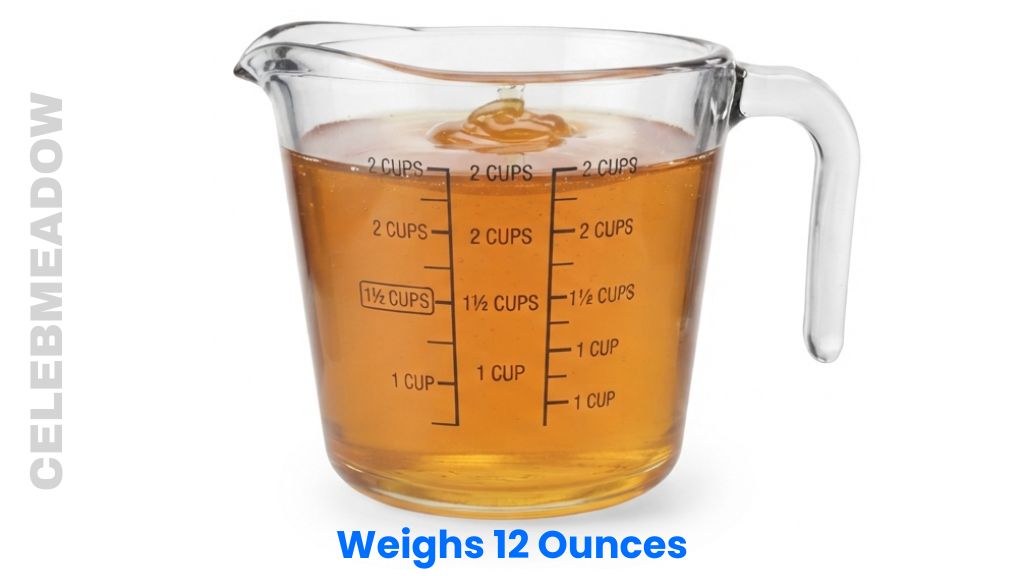
One cup of honey weighs commonly around 12 oz (340 g), depending on moisture content — noticeably heavier than a cup of water.
Here’s something that surprises most people: a cup of honey weighs nearly 50% more than a cup of water. Bees drive the nectar dehydration process down to roughly 17–18% water content, which creates a sugar density that makes the liquid thick, slow-moving, and heavy. That’s not a recipe quirk — it’s biology.
This matters in baking. When a recipe says substitute honey for sugar, you can’t swap cup-for-cup and expect the same result — the weight difference alone throws off your ratios. Scoop a full cup of honey and feel how the measuring cup resists being lifted compared to a cup of water. That dense, slow-to-move weight, sitting low and still in the cup, is what 12 oz of a very concentrated liquid actually feels like.
Key measurement: ~12.0 oz / ~340 g (1 cup of honey)
5. A 12-Ounce Package of Dry Pasta
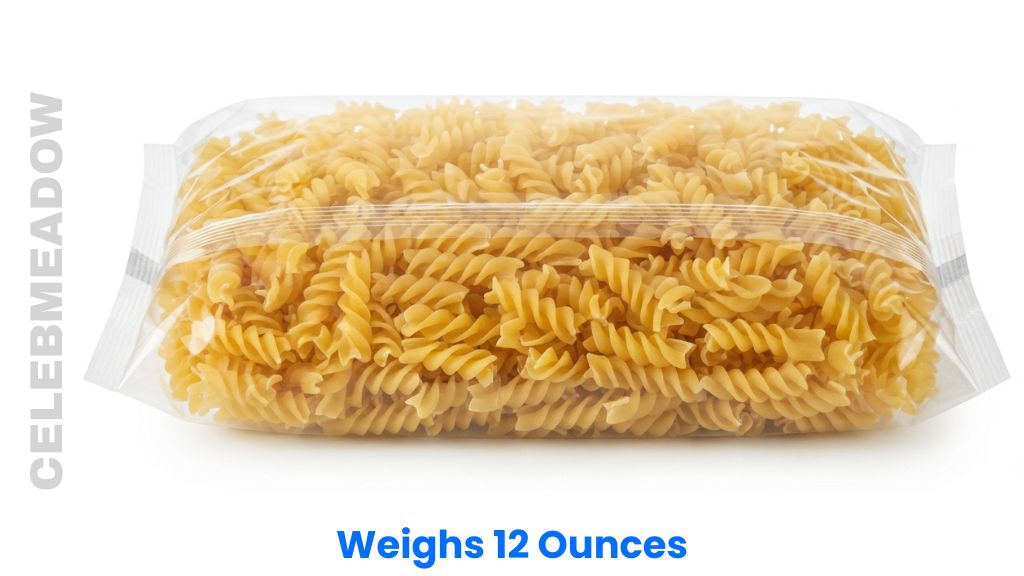
A standard retail bag of dry pasta typically contains 12 oz (340.2 g) net weight — and that size was designed to feed exactly six people.
Food manufacturers landed on 12 oz of pasta not by guessing but by math. The USDA defines one dry pasta serving as 2 oz, so a 12 oz bag covers six servings cleanly. Pick it up at the store and you’re holding a package that was engineered around a dinner table, not a warehouse shelf.
The feel of a dry pasta bag is completely unlike anything else on this list. Shake it slightly — there’s that familiar rattling, hollow clatter of rigid shapes shifting inside thin plastic. The weight is spread evenly across the flat bag, so it feels lighter than it is until you compare it to the butter sticks or the coins. Still, at 12 oz, it’s the kind of weight that fills a grocery bag just enough to notice.
Key measurement: 12 oz net / 340.2 g
6. Sixty US Quarters
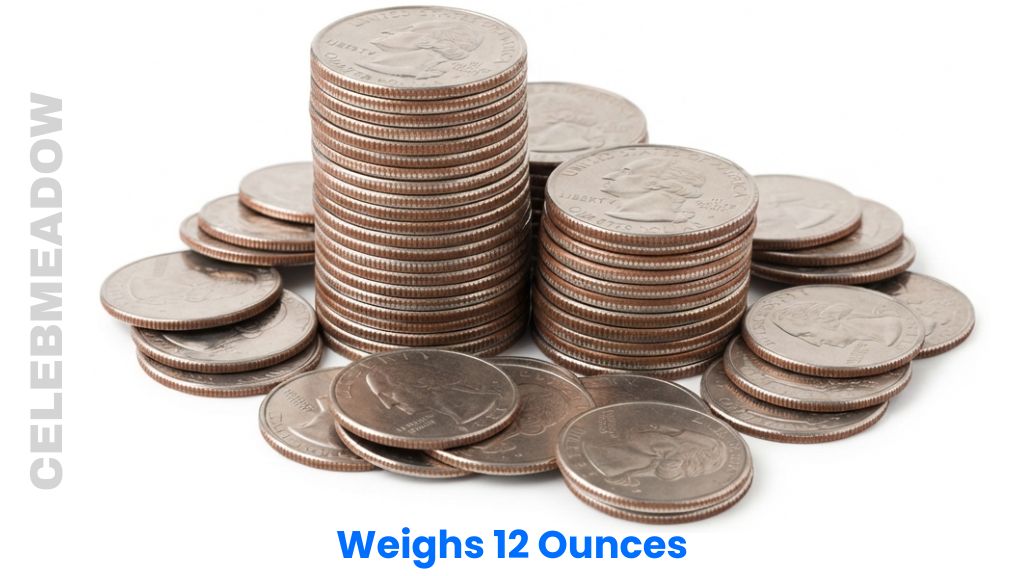
Sixty US quarters weigh exactly 12 oz (340.2 g) — each quarter is precisely 5.670 grams by federal law.
The weight of a US quarter isn’t a manufacturing estimate — it’s written into federal law under the Coinage Act of 1965. The copper-nickel composition and physical dimensions are locked in, which is why 60 quarters will always land at exactly 340.2 grams. No rounding, no variance.
Sixty quarters is one full bank roll (40 coins) plus half of another. Cup that in your hands and you’ll feel dense, clinking metal with real mass — not the light jingle of a few coins, but the heavy, deliberate weight of a fistful of money. It’s the kind of pocket change that strains a jacket pocket. If you’ve ever carried a parking meter’s worth of quarters across a parking lot, you’ve felt something close to 12 oz.
Key measurement: 12 oz / 340.2 g (60 × 5.670 g quarters)
7. One Hundred and Fifty US Dimes
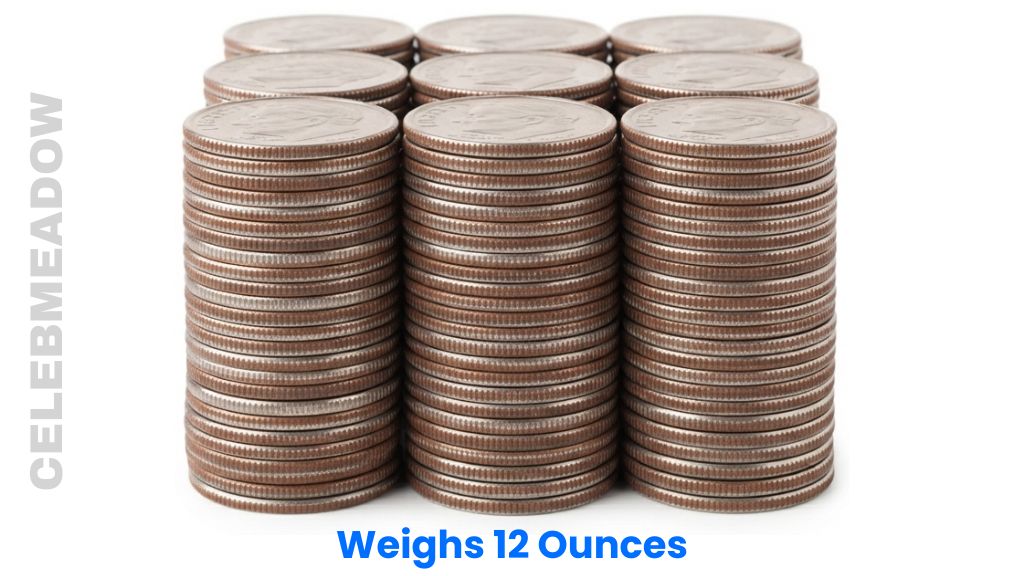
One hundred and fifty dimes weigh exactly 12 oz (340.2 g), with each dime fixed at 2.268 grams.
Same federal law, completely different experience. Where 60 quarters feel chunky and loud, 150 dimes feel almost unnervingly smooth and dense. Dimes are the thinnest, lightest US coin — but stack 150 of them and you’ve got the same 12 oz of metal in a much smaller, tighter mass.
Cupped in your palms, this many dimes almost feel like a solid metallic object rather than individual coins. The edges press together. The pile barely moves. If you’ve ever emptied a full dime section from a change jar, you’ve had a version of this feeling — small coins, huge collective weight. It’s a great reminder that 12 oz doesn’t require size. It just requires density.
Key measurement: 12 oz / 340.2 g (150 × 2.268 g dimes)
8. Two Standard 6-Ounce Cans of Tomato Paste
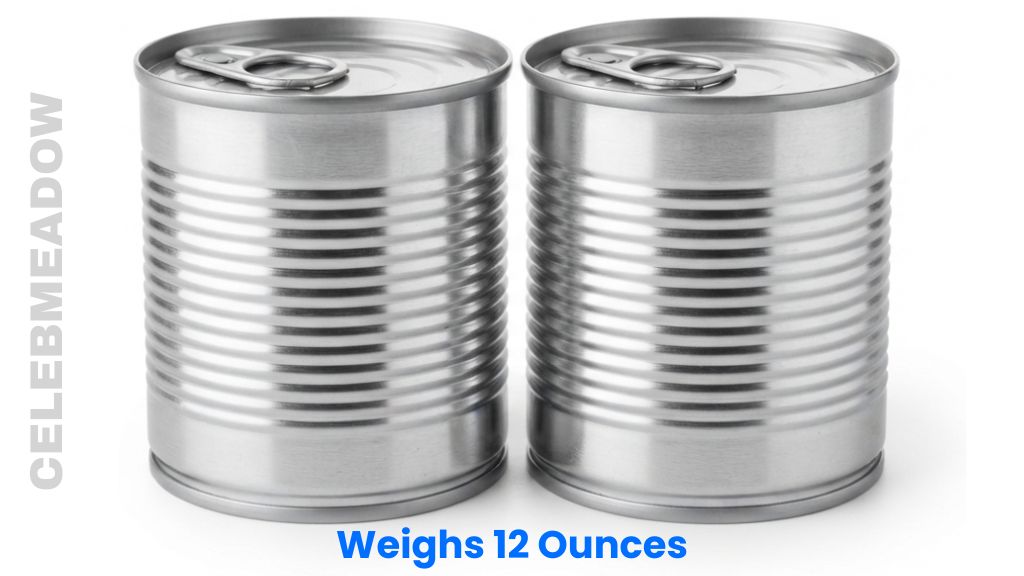
Two standard 6 oz tomato paste cans hold a combined net weight of 12 oz (340.2 g) — the cans themselves add extra weight on top.
The 6 oz tomato paste can is one of the more unusual sizes in any grocery aisle. It exists because traditional pasta sauces and stews call for that exact amount — enough to thicken a large pot without overwhelming it. So manufacturers built a dedicated mini-can just for this one job. Two of them together give you your 12 oz of paste.
Hold two of these small cans side by side in one hand. They’re stubby, cool, and unexpectedly solid. The contents are so dense and thick that these tiny cans have almost no give at all — no slosh, no rattle, just firm weight. They barely take up space, yet they’re heavier than you’d guess just by looking at them. That small-but-heavy feeling is a useful way to understand how 12 oz can be much more compact than you’d expect.
Key measurement: 12 oz net / 340.2 g (two cans combined)
9. A Single 12 oz Premium Leather Boxing Glove
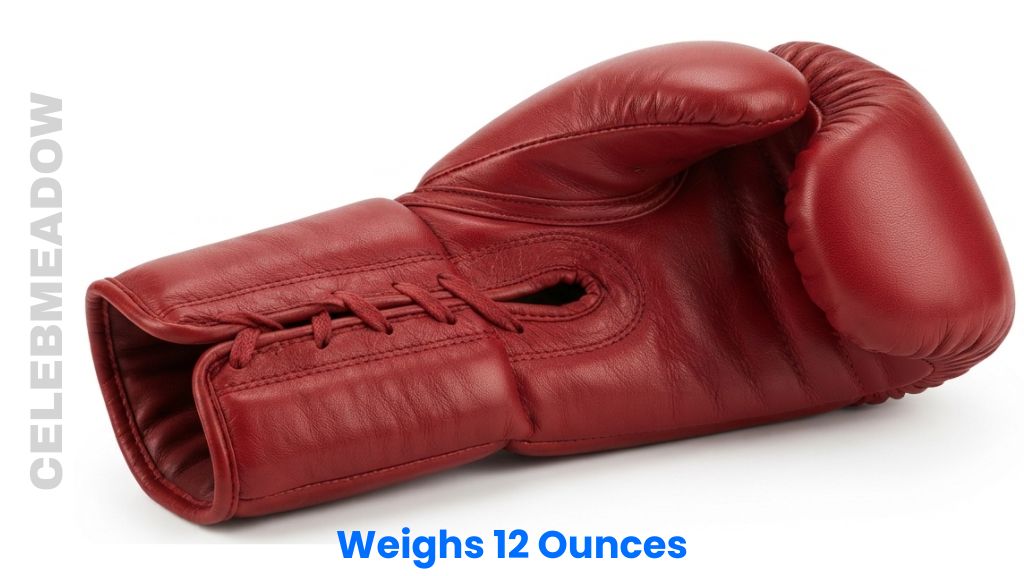
A single 12 oz boxing glove weighs exactly 12 oz (340.2 g) — the number stamped on the glove isn’t a size label, it’s a precise weight specification.
This is the only object on this list that wears its weight as a name. Boxing gloves are categorized strictly by mass — 10 oz, 12 oz, 14 oz, 16 oz — because athletic commissions worldwide use glove weight to control how much padding sits between one fighter’s fist and another person’s head. A 12 oz glove is a recognized standard for training, light sparring, and competition at certain weight classes.
Pick one up and feel how the weight sits differently than anything else here. It’s front-heavy, padded, and the mass is concentrated at the knuckles. Worn on your fist, you barely notice 12 oz. Held by the wrist in one bare hand, the glove suddenly feels awkward and purposeful. It’s a strange, instructive version of 12 oz — the same number as three butter sticks, but distributed in a way that changes how your body processes the weight entirely.
Key measurement: 12 oz / 340.2 g (single glove)
How to Picture 12 Ounces Without a Scale
The fastest way to feel 12 oz in your hand right now: grab your smartphone. Most modern phones land between 6 and 7 oz. Stack two of them mentally — that’s still not quite 12 oz, but you’re very close. Now imagine one more small object added on top, like a TV remote or a thick paperback. That layered, modest weight is 12 oz.
The Pocket/Hand Check: Empty your pockets. A typical US wallet with a few cards and some cash weighs around 3–4 oz. A set of house keys adds another 2–3 oz. Pile in a few quarters and a phone? You’re well past 12 oz and probably feeling it. Twelve ounces is the point where a jacket pocket starts to pull slightly — just enough to notice when you walk.
The Kitchen/Pantry Check: Walk to your fridge and pull out one stick of butter. That’s 4 oz. Now picture three of them stacked — that’s your 12 oz. You can also pour water to the 1½ cup line on any standard measuring cup. Lift it by the handle. That weight in the glass, clean and still, is a near-perfect 12 oz by mass.
12 Ounces Compared to Similar Weights
| Weight | In Grams | Compared to 12 oz |
| 8 oz | 226.8 g | 4 oz lighter (two butter sticks) |
| 10 oz | 283.5 g | 2 oz lighter |
| 12 oz | 340.2 g | ← This is your target |
| 14 oz | 396.9 g | 2 oz heavier |
| 16 oz (1 lb) | 453.6 g | 4 oz heavier (one full butter block) |
| 24 oz | 680.4 g | Double the weight of 12 oz |
Common Questions About 12 Ounces
How many cups is 12 oz?
For water, 12 fl oz equals 1.5 cups. For heavier liquids like honey, 1 cup already weighs around 12 oz by mass. Always check whether your recipe means fluid ounces or weight ounces — they’re not the same thing.
How much is 12 oz in grams?
Twelve ounces equals 340 grams. If a product label reads 340 g, you’re holding a 12 oz item.
Is 12 oz the same as 12 fl oz?
No. 12 oz is a weight measured on a scale. 12 fl oz is a liquid volume measured in a cup. They’re different units. For water, 12 fl oz weighs 12.52 oz on a scale — close, but not identical.
How much is 12 oz of water in ml?
Twelve fluid ounces of water equals 354.9 ml — just under 355 ml. Pour to the 355 ml line on a metric measuring cup and you’re there.
What household item weighs 12 oz?
Three butter sticks from a standard 1 lb box. A sealed 12 oz coffee bag. A dry pasta package from any grocery store. All sit right at 12 oz and are likely already in your kitchen.
How do I measure 12 oz without a scale?
Fill a measuring cup to the 1.5 cup line for liquids. For butter, pull three sticks from a four-stick pound box. For packaged goods, just read the label — most coffee and pasta bags are sold in 12 oz quantities.
How much is 12 oz in pounds?
Twelve ounces equals 0.75 pounds — three-quarters of a pound. Sixteen ounces makes one full pound, so 12 oz sits at the three-quarter mark.
Three sticks of cold butter in your hand. A sealed bag of coffee beans pressed against your palm. Sixty quarters clinking in a fistful. These aren’t just examples — they’re weight anchors your hands already know. At 340 grams, 12 oz is lighter than a full pound but heavier than most people guess when they first hear the number. The next time a recipe, a shipping label, or a product tag says 12 oz, you’ll have something real to reach for — not a formula, just a feeling you’ve had a hundred times before.
Related More Measurements Guides:

I’m Cherry Sin, and I write clear, practical guides that help people understand everyday measurements and sizes. I focus on turning numbers into easy mental pictures using familiar objects and real-life situations. At Celebmeadow, I write guides that explain measurements in a simple, visual way.