You’re trying to mail a small package, measure something without a scale, or just wrap your head around a number on a nutrition label — and “50 grams” means absolutely nothing to you. That’s a fair problem. How much is 50 grams, really? It’s about 1.76 ounces, which is roughly 0.11 pounds. It fits in your palm without effort. Think of it as the weight of something small, solid, and light — like a handful of coins or a fresh egg cracked open. The 16 objects below will make that weight feel real and familiar.
How Much is 50 Grams? Quick Measurements
| Unit | Value |
| Grams | 50 g |
| Ounces | 1.76 oz |
| Pounds | 0.11 lb |
| Kilograms | 0.05 kg |
| Milligrams | 50,000 mg |
16 Everyday Things That Weigh 50 Grams
| # | Object | Category | Weight |
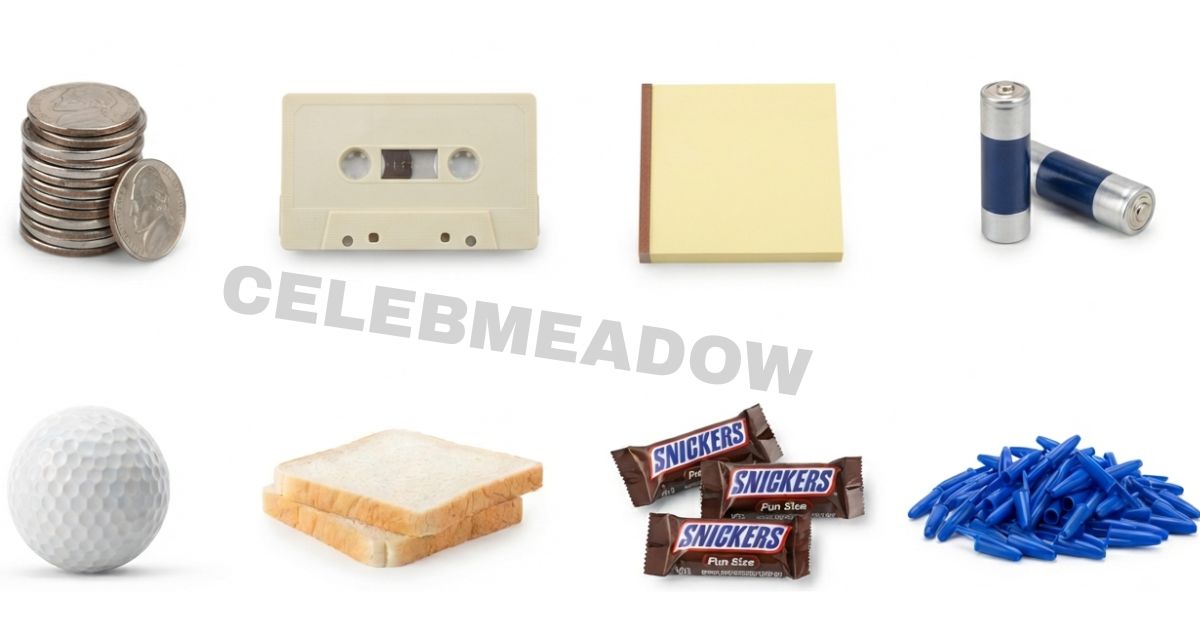
| 1 | Ten US Nickels | Currency | 50.00 g / 1.76 oz |
| 2 | C60 Audio Cassette Tape (in case) | Media & Electronics | 48–50 g / 1.69–1.76 oz |
| 3 | 100-Sheet Pad of 3×3 Post-it Notes | Office Supplies | 47–50 g / 1.66–1.76 oz |
| 4 | One Medium Egg (no shell) | Food | ~50 g / 1.76 oz |
| 5 | Ten Sheets of A4 Printer Paper | Office Supplies | 49.9 g / 1.76 oz |
| 6 | Two AA Alkaline Batteries | Electronics | 46–48 g / 1.62–1.69 oz |
| 7 | A Standard Golf Ball | Sports & Recreation | Max 45.93 g / 1.62 oz |
| 8 | Two Slices of White Sandwich Bread | Food | 45–52 g / 1.59–1.83 oz |
| 9 | Two Kraft American Cheese Singles (wrapped) | Food | 45–48 g / 1.59–1.69 oz |
| 10 | Three Snickers Fun Size Bars | Food | 45–51 g / 1.59–1.80 oz |
| 11 | Travel-Size Lotion Bottle (1.7 oz) | Personal Care | 50–53 g / 1.76–1.87 oz |
| 12 | Half a Stick of US Butter | Food | ~50 g / 1.76 oz |
| 13 | 28 Regular Potato Chips | Food | ~50 g / 1.76 oz |
| 14 | Small Incandescent Light Bulb | Household | 45–50 g / 1.59–1.76 oz |
| 15 | Whole Medium Chicken Egg (with shell) | Food | 53–55 g / 1.87–1.94 oz |
| 16 | Fifty BIC Pen Caps | Office Supplies | 50.0 g / 1.76 oz |
1. Ten US Nickels
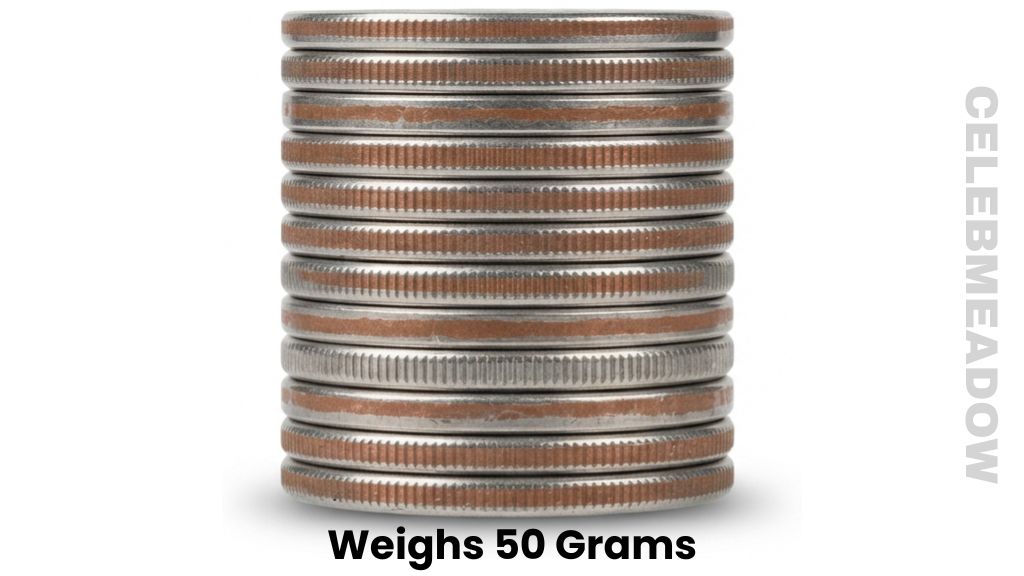
Ten standard US nickels weigh exactly 50.00 grams — making them the single most reliable DIY calibration tool for any kitchen or postal scale.
Each nickel is struck at exactly 5.000 grams by law. That’s not a coincidence — the US Mint controls this weight to the milligram so vending machines, coin sorters, and electronic counters can identify real currency from fakes without human help. Stack ten in your hand right now and you’ll feel a satisfying, cold, dense weight that sits still in your palm without shifting.
This is the gold standard trick for checking if your scale is broken. Set it to zero, place your ten nickels, and it should read exactly 50g. If it doesn’t, your scale needs recalibrating. No special weights required.
Key measurement: Exactly 50.00 g / 1.76 oz
2. A Standard C60 Audio Cassette Tape (In Its Case)
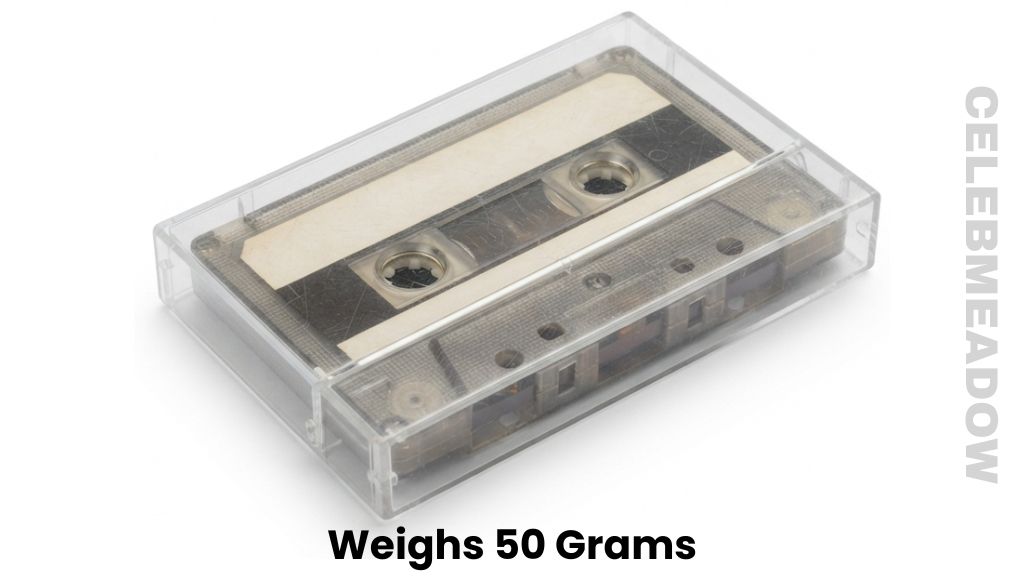
A classic C60 cassette tape stored inside its original hard plastic case commonly weighs around 48 to 50 grams.
The weight comes from a balance of engineering decisions made during the peak of analog audio. The plastic shell had to be light enough for a shirt pocket, yet rigid enough to protect the magnetic tape from warping inside a hot car or crowded backpack. Manufacturers during that era worked within tight shipping crate math — lighter units meant more product per box, which meant lower freight costs.
Pick up any old cassette case and you’ll feel exactly this weight. It’s light, slightly hollow-sounding when tapped, and sits flat across the palm. If you’re shipping vintage cassette collections, this weight tells you your postage cost almost to the gram.
Key measurement: Commonly around 48–50 g / 1.69–1.76 oz
3. A Standard Pad of 3×3 Post-it Notes (100 Sheets)
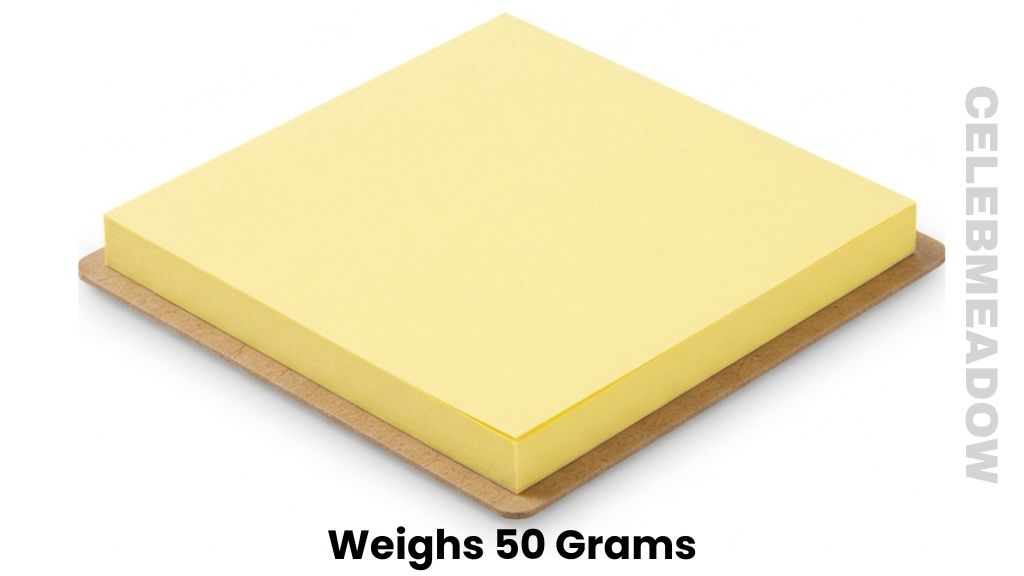
A fresh, unused 100-sheet pad of standard square sticky notes — with the brown cardboard backing — typically weighs around 47 to 50 grams.
The weight comes from the paper stock itself, which is manufactured at 74 gsm (grams per square meter). That’s a deliberate spec. Too light and the adhesive layer causes pages to curl or misfeed during machine cutting. Too heavy and pads become expensive to ship by the pallet. The cardboard backing adds almost nothing to the weight — it’s there for structural support, not mass.
Grab a full, untouched sticky note pad from your desk. That slightly dense, papery heft is almost exactly 50 grams. People overlook this one constantly, but it’s one of the most tactile and intuitive references you can hold.
Key measurement: Commonly around 47–50 g / 1.66–1.76 oz
4. One Medium Chicken Egg (Out of the Shell)
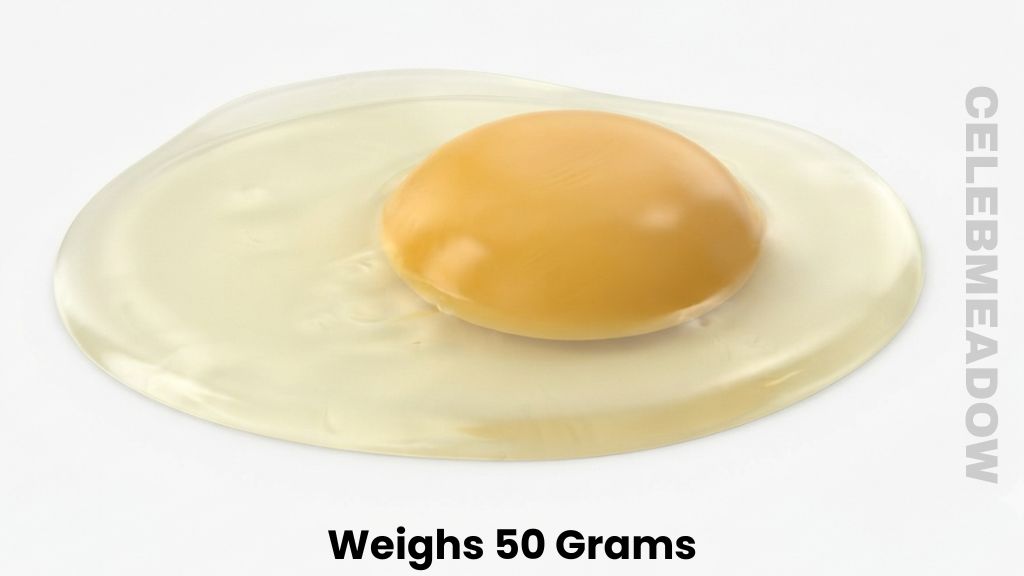
The liquid contents of one medium chicken egg — white and yolk combined, shell removed — commonly weigh around 50 grams.
Eggs are sized and sold by total weight, including the shell. Crack a medium egg open and the shell accounts for roughly 5 grams on its own. What’s left — the wobbling, translucent white and golden yolk — is right at 50 grams. This is why high-precision baking recipes written by pastry chefs specify egg weights instead of counts. Two “medium” eggs from different farms can differ enough to ruin a soufflé if you’re not weighing them.
Crack an egg into a bowl next time you cook and remind yourself: that slippery, lightweight liquid pool is sitting right at 50 grams. It’s more weight than it looks.
Key measurement: Commonly around 50 g / 1.76 oz (liquid contents only)
5. Ten Sheets of Standard A4 Printer Paper
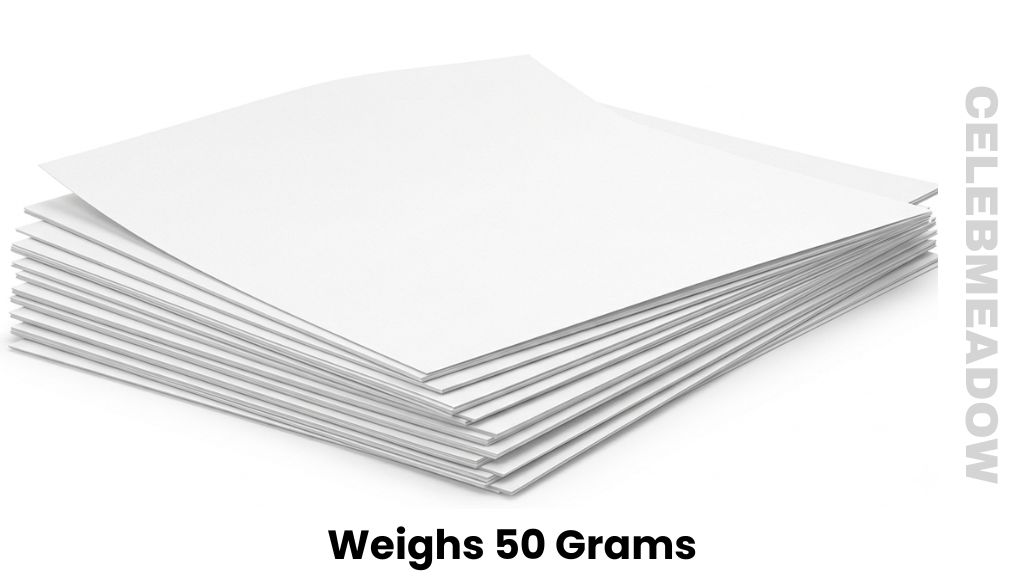
A loose stack of exactly ten sheets of standard 80 gsm A4 copier paper weighs almost precisely 50 grams.
This is one of the most mathematically clean references on this list. Standard office paper is manufactured at 80 grams per square meter. An A4 sheet is exactly 1/16th of a square meter, making each single sheet 4.99 grams. Multiply by ten and you land right at 49.9 grams. Printer paper weights aren’t arbitrary — ISO 216 sets these standards globally so sheets feed through laser printers at the same speed and tension without jamming.
Pull ten sheets from your printer tray. Hold them flat in one hand. They feel almost weightless — floppy, papery, barely there — yet that stack is sitting just under 50 grams. It’s a great reminder of how quickly thin layers add real mass.
Key measurement: Exactly ~49.9 g / 1.76 oz
6. Two Standard AA Batteries
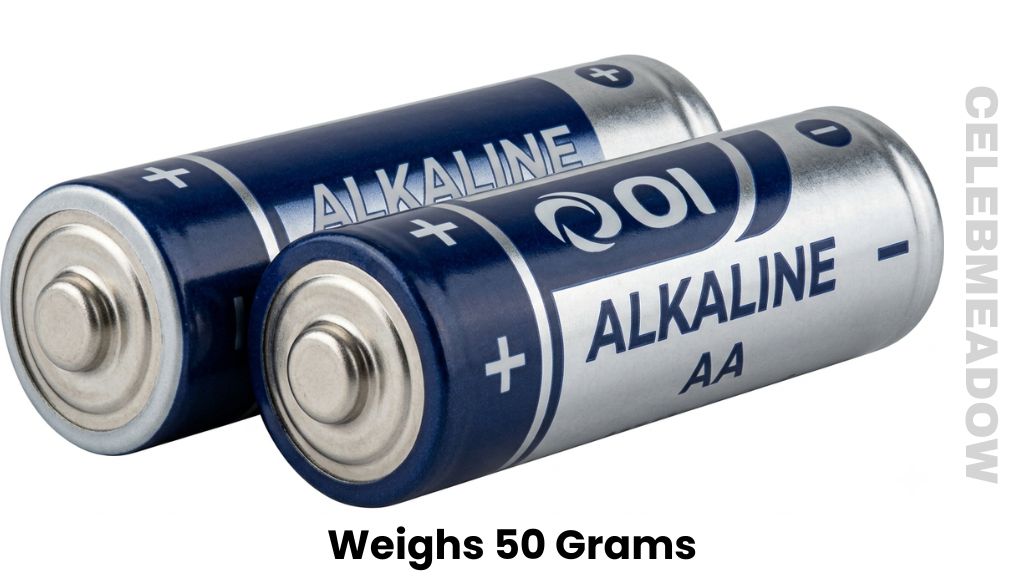
A pair of standard AA alkaline batteries together typically weigh around 46 to 48 grams — close enough to 50 grams to use as a quick hand-feel reference.
The weight of a single AA battery is almost entirely determined by its steel casing and internal zinc/manganese dioxide chemistry. The casing has to be thick enough to contain gas pressure during discharge without cracking, but thin enough to fit inside universal battery compartments with exact tolerances. Different brands land in slightly different weight ranges depending on their internal formulas, which is why Energizer and Duracell datasheets list ranges rather than fixed numbers.
Grab two AA batteries from your remote control right now. Roll them in your palm. That cool, smooth, dense metal feel — both of them together — is your 50-gram reference point. Anyone who’s swapped batteries in a flashlight knows this weight by instinct.
Key measurement: Commonly around 46–48 g / 1.62–1.69 oz
7. A Standard Golf Ball
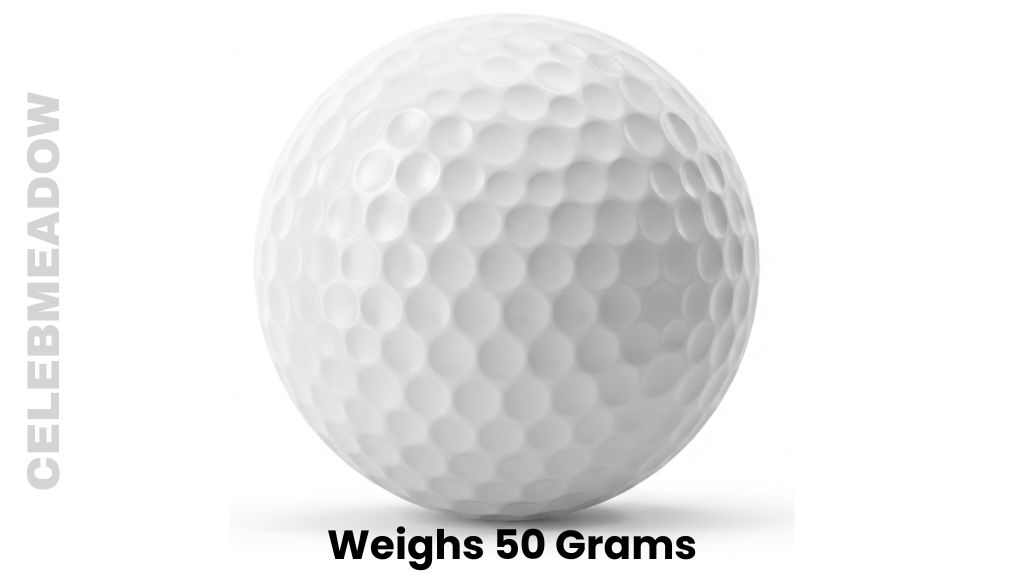
A regulation golf ball has a strict maximum weight of 45.93 grams — just under 50 grams, and one of the most tightly governed weights in professional sport.
The USGA and R&A (the two international governing bodies of golf) lock this weight in the official Rules of Golf. Go even slightly over 45.93 grams and a ball gains aerodynamic advantages — it flies differently off the clubface, holds a flatter trajectory in wind, and can cover measurably more distance. A heavier ball would make professional tournaments impossible to fairly judge. Most premium balls come in between 45.5 and 45.9 grams, sitting right at the edge of the legal limit.
Pick up a golf ball and squeeze it. Rock-hard, dense, slightly heavier than it looks for its size. It’s a compact, satisfying weight — and a useful everyday reference for something that sits a gram or two under 50 grams.
Key measurement: Maximum 45.93 g / 1.62 oz
8. Two Slices of Commercial White Sandwich Bread
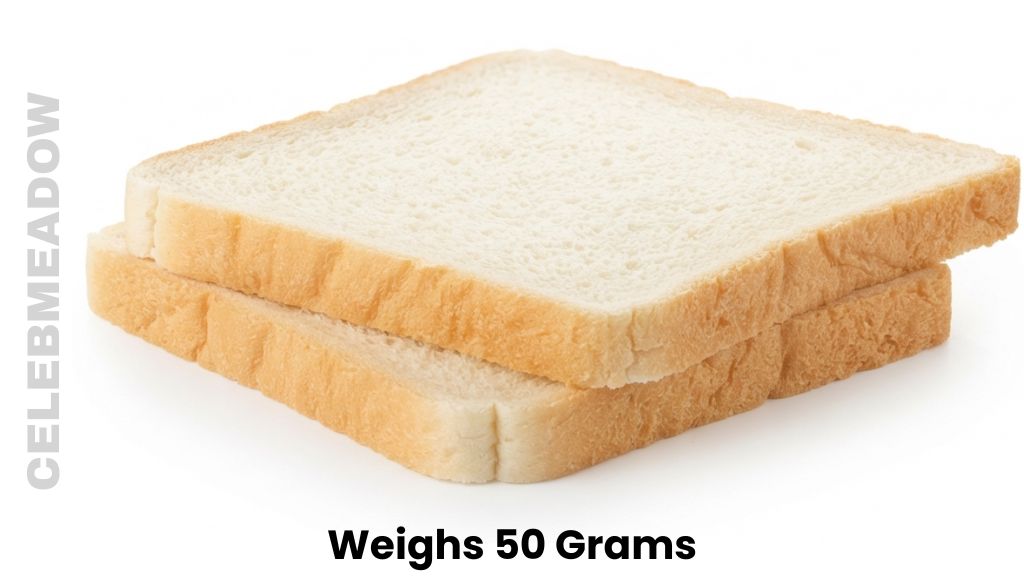
Two standard slices of pre-sliced white sandwich bread from a grocery bag typically weigh around 45 to 52 grams together.
Bread weight is set by industrial baking molds and automated slicing machines calibrated to a standard pan size and dough proofing time. The weight of each slice determines how many carbohydrates, calories, and nutrients appear on the nutrition label — so commercial bakeries can’t vary this much without facing regulatory issues. Moisture loss between baking day and purchase date can shave a gram or two off each slice, which is why there’s a small range rather than a fixed number.
Hold two slices of bread in your hand. Light, soft, almost nothing — yet those two floppy squares are sitting right at the 50-gram mark. It’s one of the best examples of how something can feel nearly weightless while still registering real mass on a scale.
Key measurement: Commonly around 45–52 g / 1.59–1.83 oz
9. Two Kraft American Cheese Singles (Wrapped)
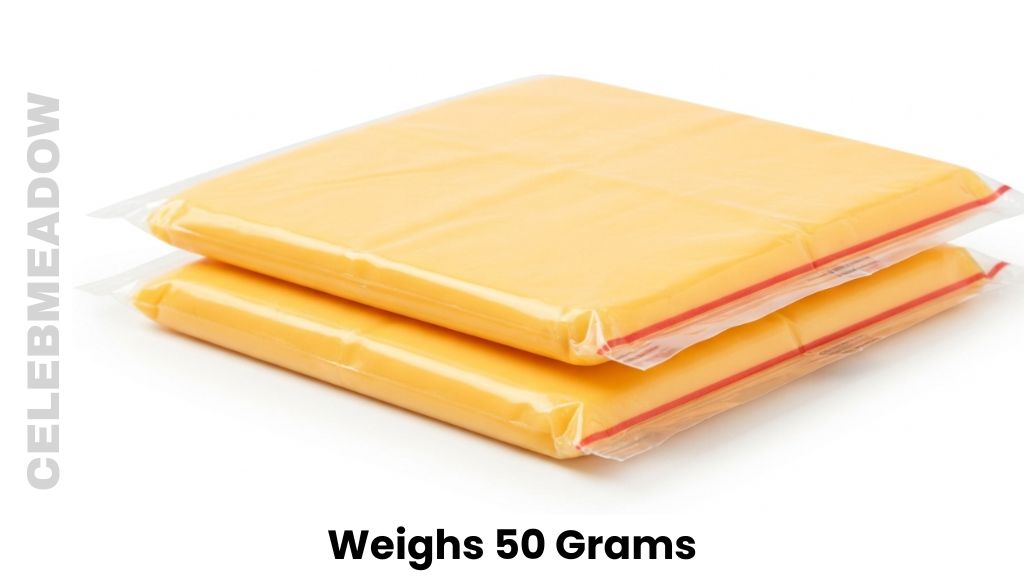
Two individually wrapped American cheese slices — including the clear plastic film — typically weigh around 45 to 48 grams combined.
Each processed cheese slice is manufactured at exactly 21 grams per the FDA’s commercial portion standards. Fast food chains depend on this consistency — a quarter gram difference per slice becomes thousands of dollars in cost variance across millions of sandwiches. The clear plastic wrapper adds a fraction of a gram per slice, pushing two wrapped slices toward the 50-gram neighborhood.
Peel two slices from a pack and hold them. They’re thin, flexible, slightly cool, and almost slip through your fingers. Barely there. That almost-nothing feeling is 45 to 48 grams — proof that 50 grams is genuinely featherlight.
Key measurement: Commonly around 45–48 g / 1.59–1.69 oz
10. Three Snickers Fun Size Bars
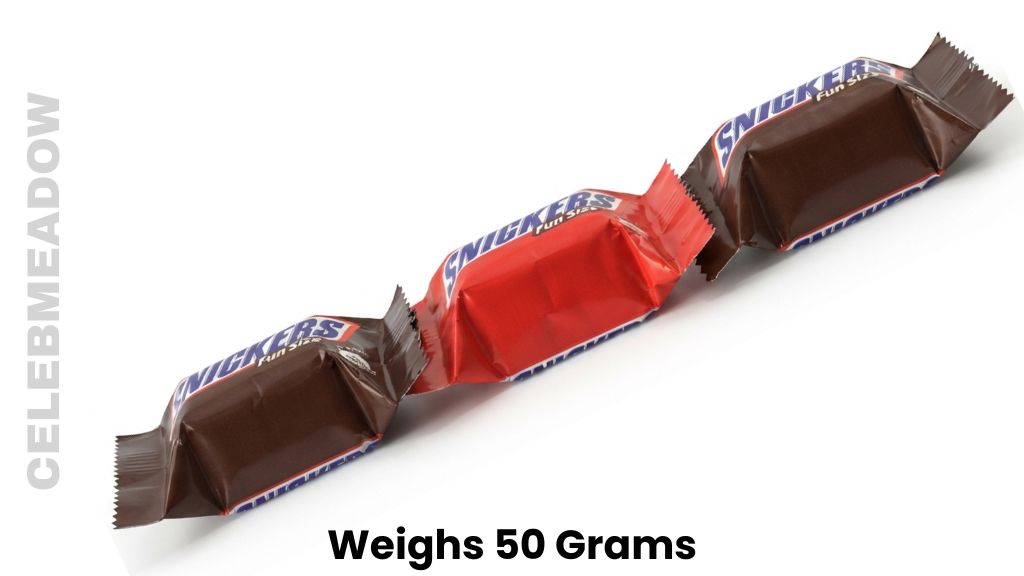
Three unopened Snickers Fun Size bars together commonly weigh around 45 to 51 grams, depending on minor batch variations.
Mars engineered the Fun Size format for one specific purpose: calorie-controlled snack portions that could be dumped by the hundreds into automated Halloween multi-pack bags without jamming the machinery. Each bar runs between 15 and 17 grams, which puts three of them right in the 50-gram range. The individual wrappers contribute almost nothing to the total weight.
Line three Fun Size bars end-to-end in your hand. They barely cover your palm. Three small candy bars — each the size of a large thumb — and you’re already at 50 grams. It’s a great way to understand just how light this weight really is.
Key measurement: Commonly around 45–51 g / 1.59–1.80 oz
11. A Travel-Size Bottle of Lotion (1.7 oz)
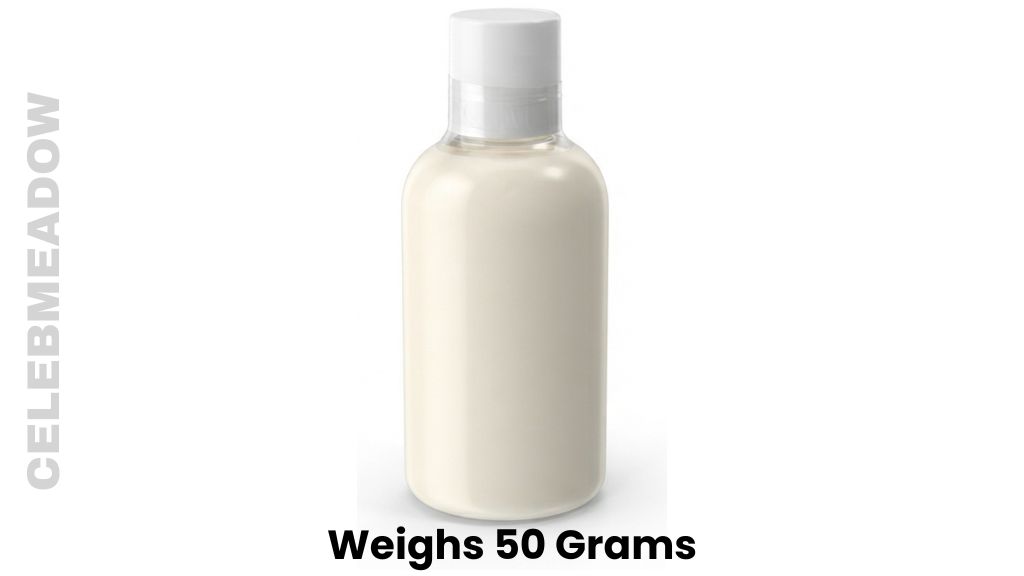
A brand-new, sealed travel-size bottle of lotion at 1.7 fluid ounces typically weighs around 50 to 53 grams — bottle and all.
This specific container size exists because of TSA liquid rules, which cap carry-on liquids at 3.4 ounces (100ml) per container. The 1.7-ounce size became a standard drugstore travel size because it fits TSA guidelines while still being useful for a short trip. A water-based lotion weighs very close to water — about 1 gram per milliliter — so 50ml of lotion plus a thin plastic bottle lands right at 50 grams.
Next time you pack a toiletry bag, pick up one of these small bottles and feel the weight. Full, slightly squishy, palm-sized. It’s the kind of thing you toss in a bag without thinking — and it’s sitting right at the 50-gram mark.
Key measurement: Commonly around 50–53 g / 1.76–1.87 oz
12. Half a Stick of Butter (US Standard)
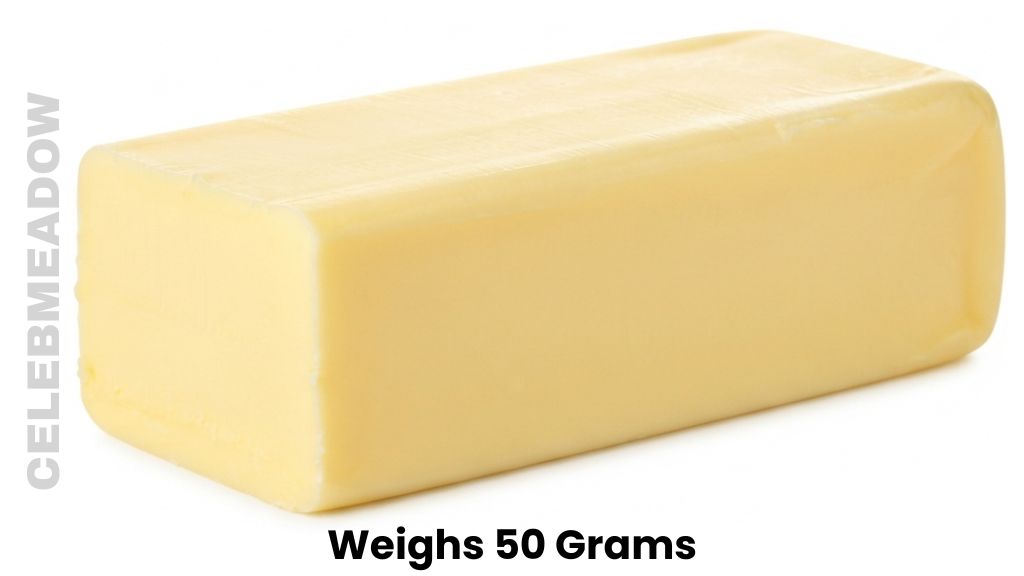
Cutting a standard US butter stick slightly past the halfway point — just under 4 tablespoons — gives you approximately 50 grams of solid butter.
A full American butter stick weighs exactly 113.4 grams (4 ounces). That number comes from US agricultural laws that historically regulated dairy in fractions of a pound. Half a stick lands at 56.7 grams, so you’d slice just slightly under the halfway mark to hit 50 grams. Most butter wrappers print tablespoon guides right on the paper — use those lines.
Cut a cold stick of butter just past the middle and hold that block in your fingers. Dense, cold, greasy, solid — it pushes back against your grip. That firm little cube is 50 grams of pure fat. It’s one of the most intuitive weight references in any kitchen.
Key measurement: Approximately 50 g / 1.76 oz (sliced slightly before the midpoint)
13. Twenty-Eight Regular Potato Chips
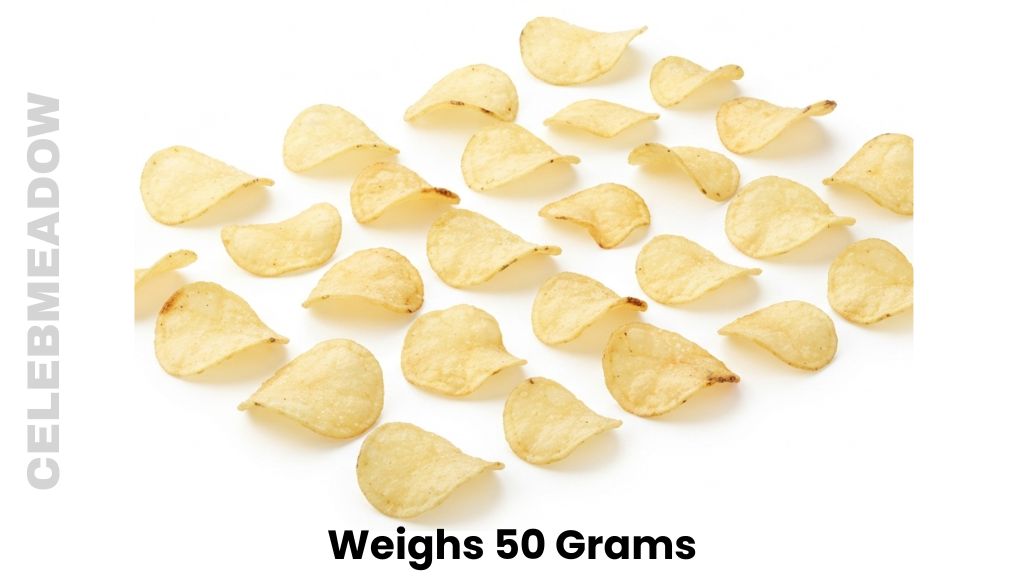
A count of 28 standard thin potato chips commonly weighs around 50 grams — roughly 1.7 standard single-serve snack bags.
A standard individual bag of chips like Classic Lays is typically 28 grams (1 oz), which equals one serving. Double that — 28 chips — and you’re close to 50 grams. The bags are filled and sealed by weight, not chip count, using nitrogen-flushed automated machines that measure to the gram for nutrition label compliance.
Spread 28 chips across your palm. They barely fit. They’re fragile, paper-thin, and nearly floating. Yet that delicate pile of crunch is 50 grams. It shows perfectly how surface area and air space can make something feel lighter than it actually registers on a scale.
Key measurement: Commonly around 50 g / 1.76 oz
14. A Small Incandescent Light Bulb
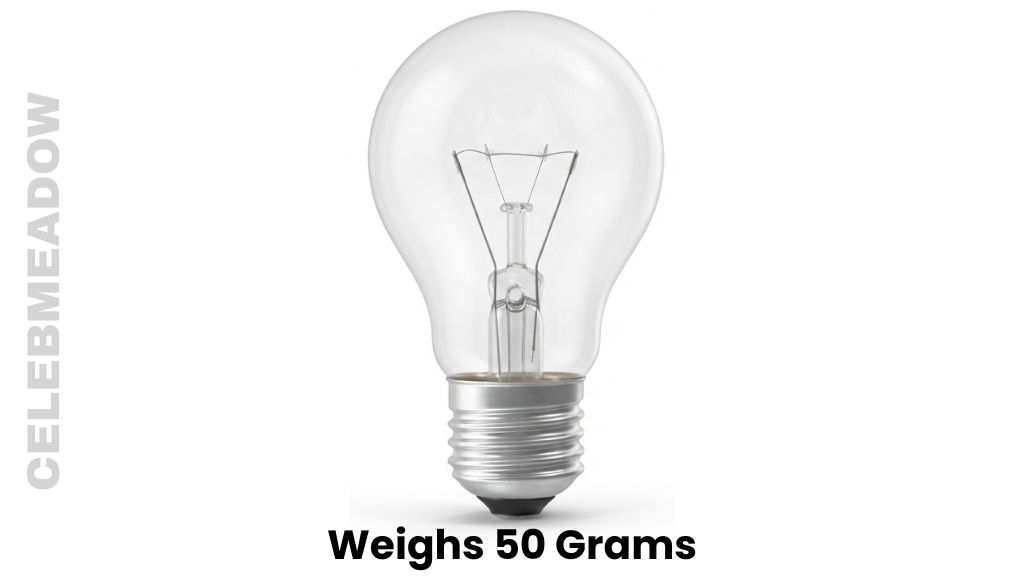
A classic glass screw-in household light bulb commonly weighs around 45 to 50 grams — surprisingly light for its size.
Old-style incandescent bulbs were designed to be as light as possible. Ceiling sockets and lamp fixtures use ceramic or thin metal fittings that can crack or fatigue under repeated stress. A heavy bulb torques the socket every time you screw it in. So manufacturers kept the glass envelope thin and the aluminum base minimal, landing the finished product just under 50 grams. Modern LED equivalents can run heavier because they include plastic heat sinks that incandescents never needed.
Hold a classic bulb by its base and feel how hollow it seems. The glass shell takes up most of the space, but there’s almost nothing inside. A big object that weighs almost nothing — that’s the 50-gram range in physical form.
Key measurement: Commonly around 45–50 g / 1.59–1.76 oz
15. A Whole Medium Chicken Egg (With Shell)
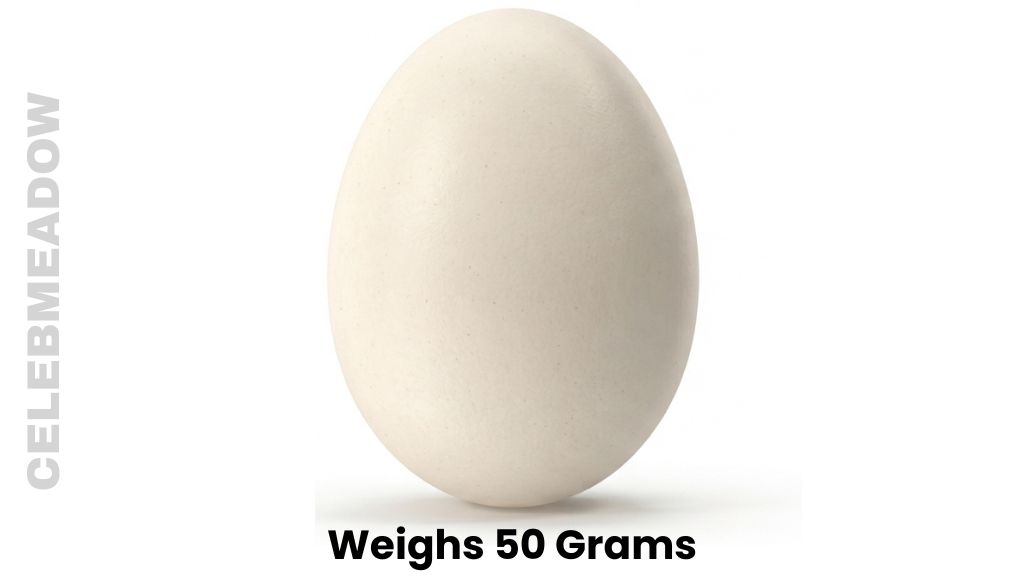
A single raw medium egg with the shell still on typically weighs around 53 to 55 grams — just slightly over 50 grams.
Commercial egg grading is done by weight, not size. Machines in packing facilities weigh each egg as it rolls down a conveyor and route it into the correct carton — small, medium, large, extra-large — based entirely on grams. A medium egg must average between 53 and 55 grams per USDA classification. Crack it open and the shell alone accounts for about 5 grams, which brings the edible content back down to right around 50.
Hold a medium egg from your fridge in one hand. Fragile, smooth, slightly cool, with a fluid weight that shifts when you tilt it. That delicate object is sitting just over 50 grams — a perfect upper anchor for this weight range.
Key measurement: Commonly around 53–55 g / 1.87–1.94 oz
16. Fifty BIC Pen Caps
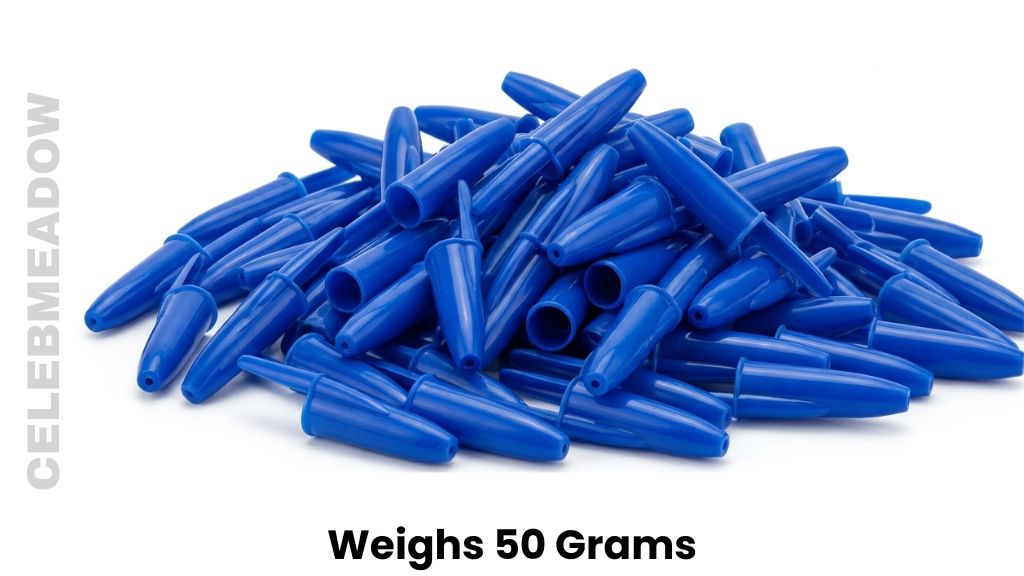
Exactly fifty standard BIC Cristal pen caps weigh precisely 50.0 grams — because each cap is injection-molded to exactly 1.0 gram.
This isn’t a coincidence. BIC’s manufacturing process uses tightly controlled polypropylene plastic volumes to keep per-unit material costs predictable at enormous scale. Each cap also includes a small ventilation hole — not for airflow, but to meet international choking hazard safety regulations for products used around children. That hole is engineered into the mold itself, shaving exactly the right amount of plastic to hit the 1-gram target.
Collect 50 pen caps — from a cup on your desk, a junk drawer, or a stationery box — and pile them in your hand. It’s surprisingly satisfying. A small mountain of plastic that weighs exactly as much as ten nickels. It’s also a sharp visual for how micro-precision at scale adds up to a perfectly round number.
Key measurement: Exactly 50.0 g / 1.76 oz
How to Picture 50 Grams Without a Scale
The easiest mental anchor for 50 grams is a single coin stack. Ten US nickels in your hand is exactly this weight — no guessing, no estimation. Feel the density of that small metal column. That cold, still, satisfying weight that doesn’t shift or wobble is 50 grams to the decimal. Once you’ve felt that, you have a permanent reference point you carry in your pocket.
If coins aren’t handy, think about a fresh pad of sticky notes or a cracked egg in a bowl. Both land right at 50 grams and both feel almost surprisingly light for what they are. That’s the key insight about this weight — 50 grams is genuinely featherlight. It sits in your palm without pulling your hand down. You could hold it for hours without noticing it.
A useful secondary method: close your eyes and imagine holding a small travel lotion bottle, brand new and full. That slightly squishy, palm-fitting little container — the kind you toss into an airport security tray without a second thought — is sitting right at 50 grams. If something you’re estimating feels heavier than that bottle, it’s probably over 50 grams. Lighter, and it’s under.
50 Grams Compared to Similar Weights
| Weight | In Grams | Compared to 50 g |
| 1 US nickel | 5 g | 10× lighter |
| 1 AA battery | ~24 g | About half |
| 50 grams | 50 g | ← This weight |
| 1 large egg (with shell) | ~60 g | 20% heavier |
| 1 standard golf ball + 1 nickel | ~51 g | Nearly equal |
| 100 grams | 100 g | Exactly double |
Common Questions About 50 Grams
How much does 50 grams weigh in pounds?
50 grams equals 0.11 pounds, or 1.76 ounces. That’s well under a quarter pound.
What household items weigh 50 grams?
Ten US nickels, a 100-sheet Post-it pad, ten sheets of A4 paper, a cracked medium egg, and a travel lotion bottle all land right at 50 grams.
What weighs 50 grams to calibrate a scale?
Use ten US nickels. Each nickel is exactly 5.000 grams by US Mint law, so ten together hit precisely 50.00 grams every time.
How many quarters weigh 50 grams?
You’d need about 8.8 quarters — so 9 quarters puts you just over at 51 grams. Nickels are a cleaner choice since ten of them land exactly on 50 grams.
Is 50 grams the same as 50 ml?
Only for water. 50 ml of water = 50 grams. Other liquids like oil, milk, or honey have different densities, so their ml and gram values won’t match.
What is 50 grams in cups?
It depends on the ingredient. Water is roughly ¼ cup. Flour is closer to ⅓ cup. Sugar sits near ¼ cup. Always weigh for accuracy — cups vary too much by ingredient.
How do I measure 50 grams without a scale?
Stack ten US nickels — that’s exactly 50 grams. For food, a cracked medium egg or a fresh Post-it pad both come within a gram or two.
Ten nickels in your palm. A cracked egg in a bowl. A travel-size lotion bottle tossed in a bag. These three things live in almost every home — and all of them are telling you exactly what 50 grams feels like every day. It’s lighter than most people expect, smaller than it sounds, and completely manageable once you have a real object to tie it to. Next time you see 50 grams on a label or a shipping form, you’ll know exactly what you’re holding.
Related More Measurements Guides:

I’m Cherry Sin, and I write clear, practical guides that help people understand everyday measurements and sizes. I focus on turning numbers into easy mental pictures using familiar objects and real-life situations. At Celebmeadow, I write guides that explain measurements in a simple, visual way.