You’re following a recipe and it asks for 4 ounces of something — but your kitchen scale is buried in a cabinet. Or maybe you’re at the grocery store, trying to eyeball produce without a bag scale. Knowing how much is 4 ounces in real-world terms makes these moments much easier. Four ounces equals 113.4 grams, 0.25 pounds, or roughly 118 ml of liquid. Once you connect the number to objects you already hold every day, the weight clicks instantly.
Quick Conversions Guide: How Much is 4 Ounces?
| Unit | Value |
| Ounces | 4 oz |
| Pounds | 0.25 lb |
| Grams | 113.4 g |
| Kilograms | 0.113 kg |
| Milliliters (water) | ~118 ml |
| Tablespoons (water) | ~8 tbsp |
| Cups (water) | 0.5 cup |
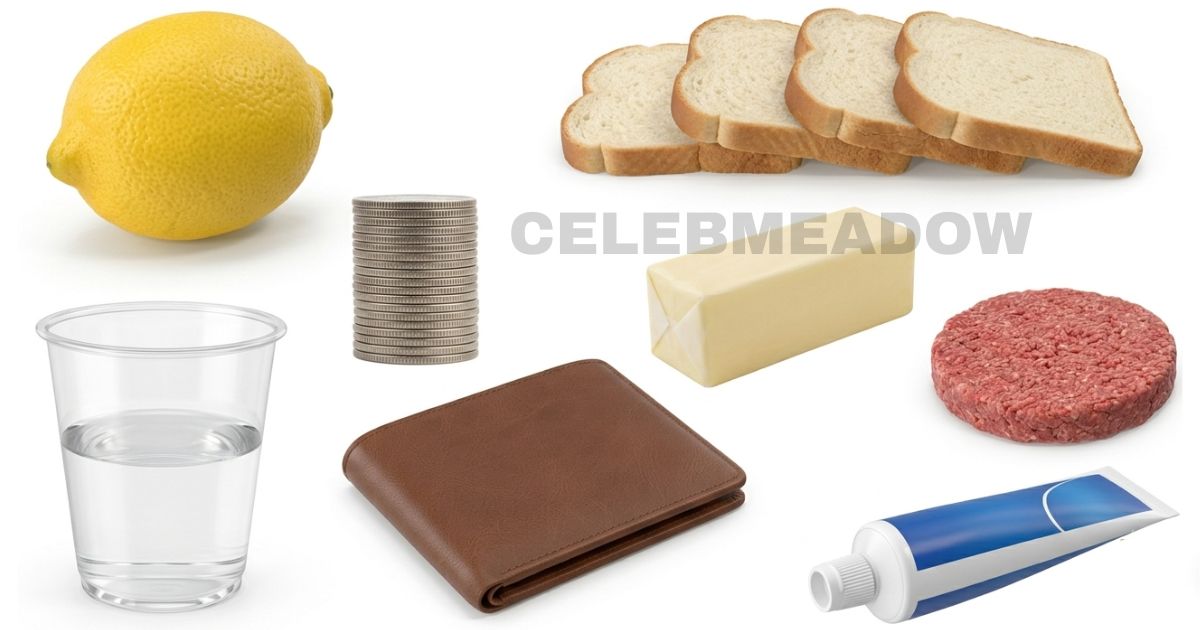
14 Everyday Things That Weigh 4 Ounces
| Object | Category | Weight |
| A Lemon | Fruit | ~4 oz |
| Two Large Chicken Eggs | Food | ~3.5–4 oz |
| Four Slices of Sandwich Bread | Food | ~4 oz |
| Quarter of a Standard Bread Loaf | Food | ~4 oz |
| One Stick of Butter | Dairy | Exactly 4 oz |
| Quarter-Pounder Burger Patty | Meat | Exactly 4 oz (raw) |
| Half-Cup of Water in a Plastic Cup | Liquid | ~4.17 oz |
| Standard Bar of Bath Soap | Hygiene | ~3.75–4 oz |
| Tube of Colgate Toothpaste (4 oz) | Hygiene | ~4.3 oz total |
| Leather Bi-Fold Wallet (empty) | Accessory | ~3.5–4 oz |
| Twenty US Quarters | Currency | Exactly 4 oz |
| Deck of Playing Cards (in box) | Recreation | ~3.4–3.8 oz |
| Two Tennis Balls | Sports | ~4 oz |
| Apple iPhone 13 Mini | Technology | 4.97 oz |
1. A Lemon
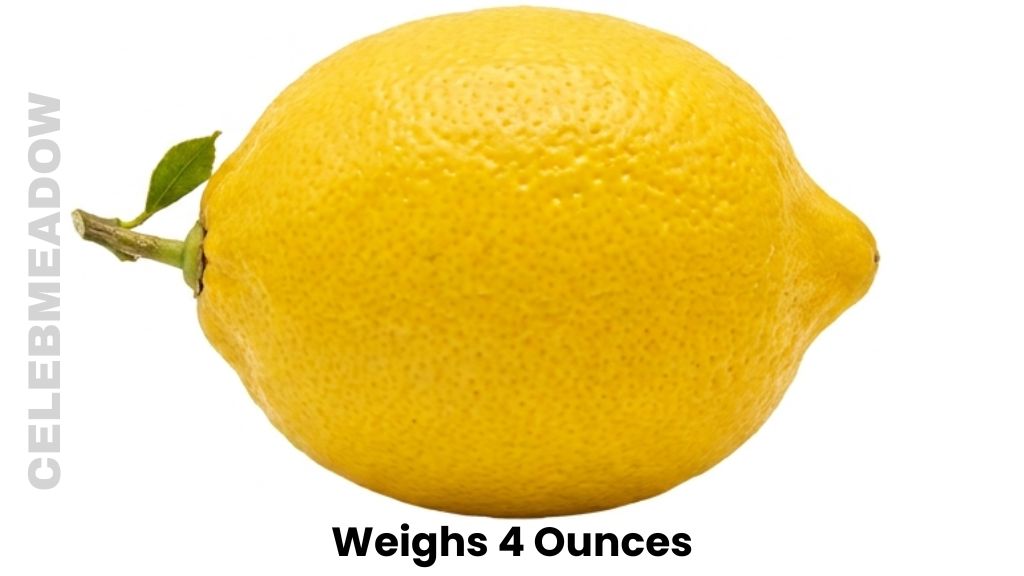
A medium, fresh lemon from any grocery store commonly weighs right around 4 ounces.
This isn’t a coincidence. Agricultural distributors sort citrus fruit into consistent size grades before it ever reaches a supermarket bin. The goal is clean, uniform packing — so the lemons you see in neat displays are already pre-selected to land in that 3.8 to 4.2 oz window.
Pick up one lemon next time you’re cooking. That firm, slightly bumpy weight sitting in your palm? That’s your 4 oz anchor. It’s one of the most practical references when you’re buying produce by the piece and trying to estimate unit weight without a scale.
- Key measurement: ~4 oz / ~113 g
2. Two Large Chicken Eggs
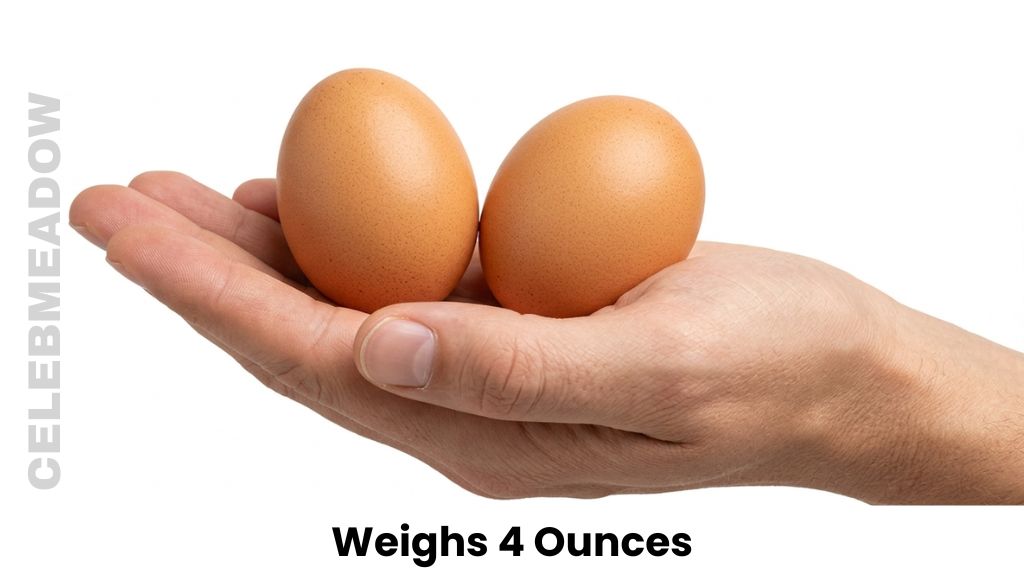
Two whole large eggs held together in your hand weigh commonly around 4 ounces total.
The USDA grades “large” eggs by the dozen — a standard carton must hit a minimum of 24 ounces per dozen. That works out to roughly 1.8 to 2.0 oz per individual egg, so two together land right at the 4 oz mark.
Cup both eggs in your palm the next time you’re baking. The smooth, cool, fragile oval shape is completely familiar — and now it’s your mental weight calibration tool too. Bakers who do this often stop reaching for their scale when a recipe calls for a small ingredient portion close to 4 oz.
- Key measurement: ~3.5–4 oz / ~99–113 g
3. Four Slices of Sandwich Bread
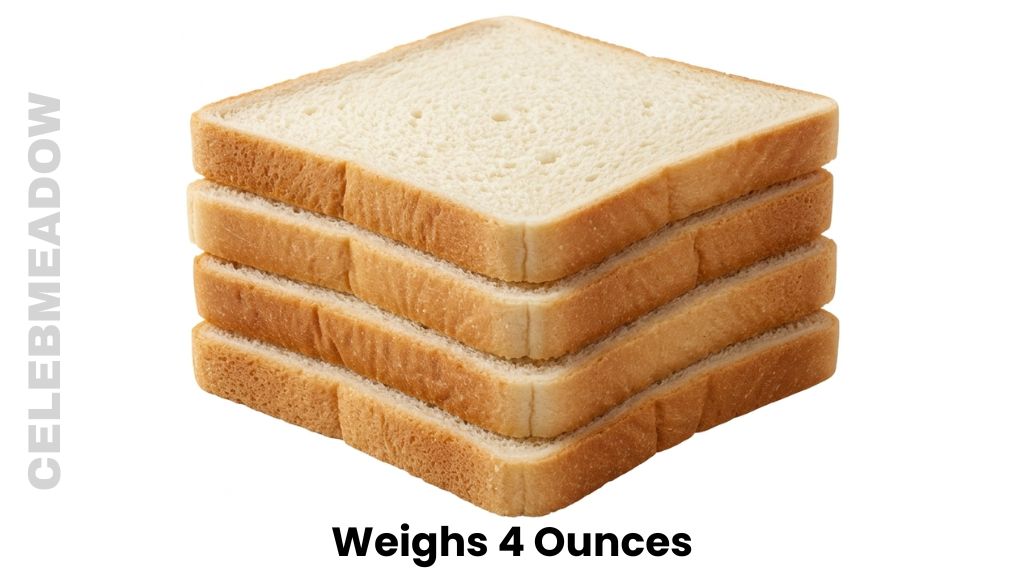
Four slices of standard mass-produced sandwich bread weigh commonly around 4 ounces total.
Industrial bread slicers are calibrated to cut uniform loaves into equal slices — each one landing at about 1 ounce. This isn’t accidental; it’s deliberate portion engineering that lets nutrition labels stay consistent across millions of loaves.
Grab four slices right now and hold them loosely in one hand. They’re almost comically light — airy, dry, with barely any downward pull. That near-weightless feeling is what 4 oz of low-density food actually feels like, which is useful when you’re tracking carbohydrate servings without a food scale.
- Key measurement: ~4 oz / ~113 g
4. A Quarter of a Standard Bread Loaf
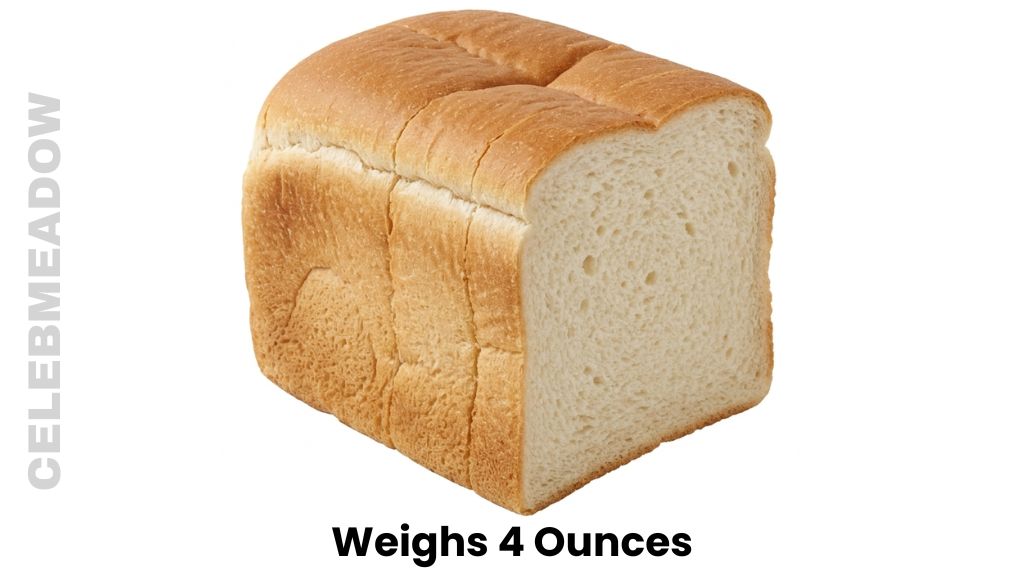
One quarter of a standard 1-pound sandwich loaf is commonly around 4 ounces.
Most mass-market sandwich loaves are baked and sold at a uniform 16-ounce (1 lb) weight. Simple math: 16 ÷ 4 = 4 oz per quarter. Bread manufacturers hit this weight consistently because retail grocery buyers demand uniformity for shelf pricing.
Visually, imagine tearing your loaf into four roughly equal sections lengthwise. That single portion — maybe 4 to 5 slices depending on how thick the loaf is cut — is your 4 oz block. It’s a surprisingly useful portioning trick when you’re prepping food for a week and don’t want to weigh everything individually.
- Key measurement: ~4 oz / ~113 g
5. A Standard Stick of Butter
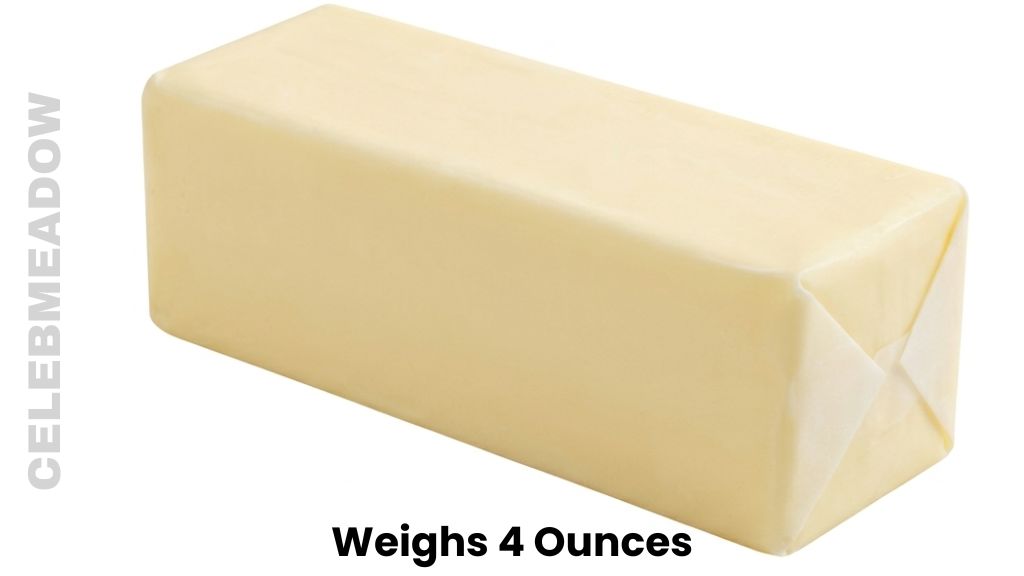
A single stick of butter weighs exactly 4 ounces — no estimation needed.
US dairy law standardizes a full pound of butter into four equal quarter-pound sticks, each wrapped individually. Every American baking recipe that calls for “one stick of butter” is calling for precisely 4 oz (113.4 g). The wrapper even has measurement markings printed on it for slicing.
Pull a cold stick of butter from your fridge right now. It has a firm, dense, rectangular block feel — cool to the touch, with a slight resistance when you press your thumb into it. That solid, compact weight in your hand? That’s the gold standard for 4 oz. It’s the most reliable real-world reference in any kitchen.
- Key measurement: Exactly 4 oz / 113.4 g
6. A Small Quick-Service Hamburger Patty (Quarter-Pounder)
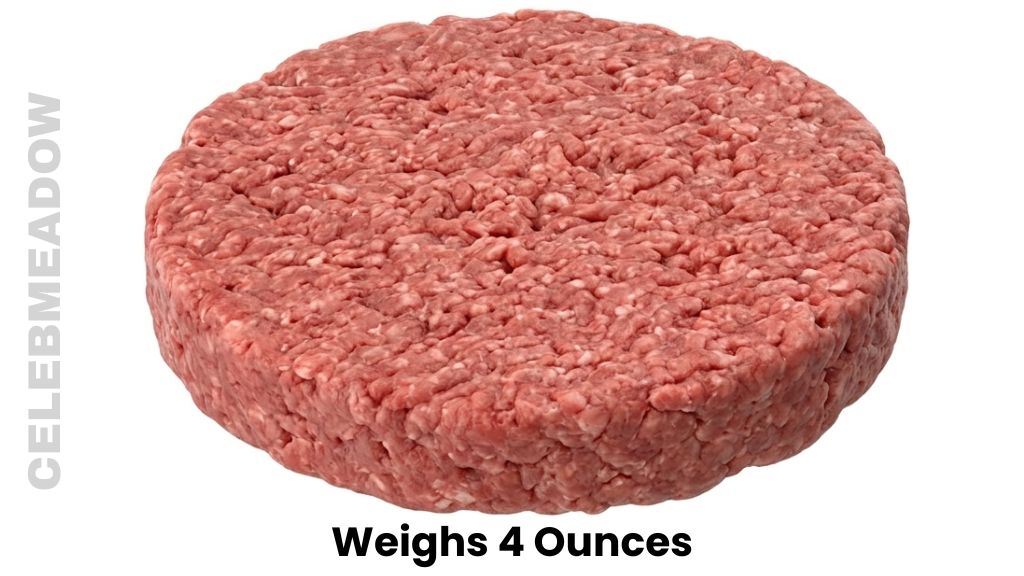
The raw beef patty in a Quarter Pounder weighs exactly 4 ounces before it hits the grill.
Fast food chains established this as an industry standard for portion transparency. “Quarter Pounder” literally means one quarter of a pound — which is exactly 4 oz of raw ground beef. The cooked weight drops slightly due to moisture loss, but the raw pre-cook weight is the standardized measure.
Picture the round, flat disc of beef before cooking: roughly 3 to 3.5 inches across and about ¾ inch thick. That’s your visual anchor for 4 oz of dense, protein-rich food. If you track protein intake or meal prep, this is one of the clearest single-serving references out there.
- Key measurement: Exactly 4 oz / 113.4 g (raw)
7. Half-Cup of Water in a Lightweight Plastic Cup
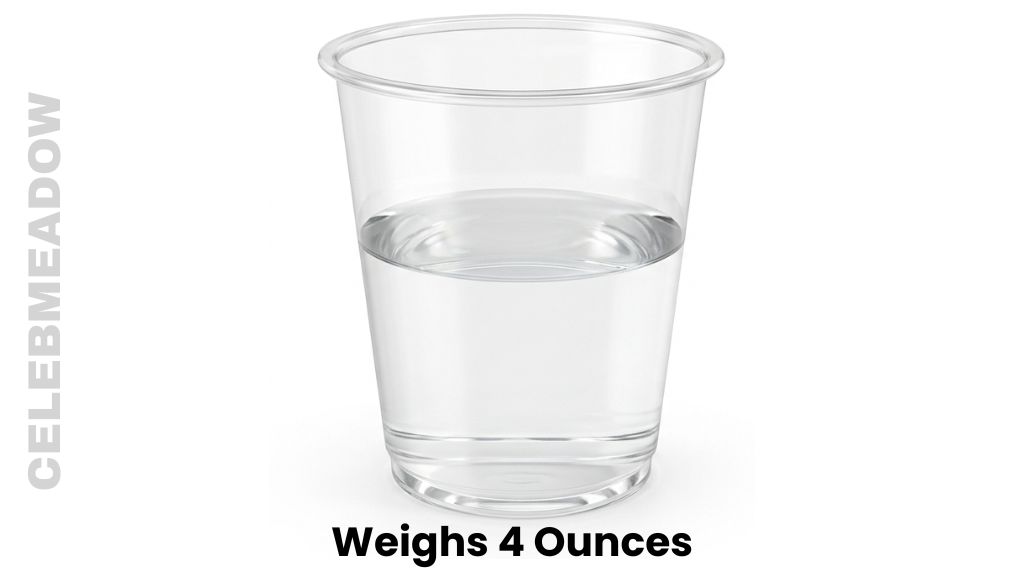
Half a cup of water in a thin disposable plastic cup weighs right at 4 ounces total.
This one is rooted in physics. Pure water has a density where 1 fluid ounce of volume equals almost exactly 1 ounce of weight. So 4 fluid ounces of water = 4 oz by weight. Add a feather-light plastic cup (around 0.1 oz) and you’re at roughly 4.17 oz total. This is also why 4 oz to cups conversion is exactly half a cup.
Fill a small disposable cup to the halfway mark. Hold it still and feel that gentle, shifting liquid weight pressing lightly into your palm. That subtle, fluid heaviness — not quite enough to feel heavy, but clearly there — is what 4 oz of water feels like. This is the most direct answer to “what does 4 oz of water look like“: it’s a half-cup.
- Key measurement: ~4.17 oz / ~118 ml / 8 tablespoons / 0.5 cup
8. A Standard Bar of Bath Soap
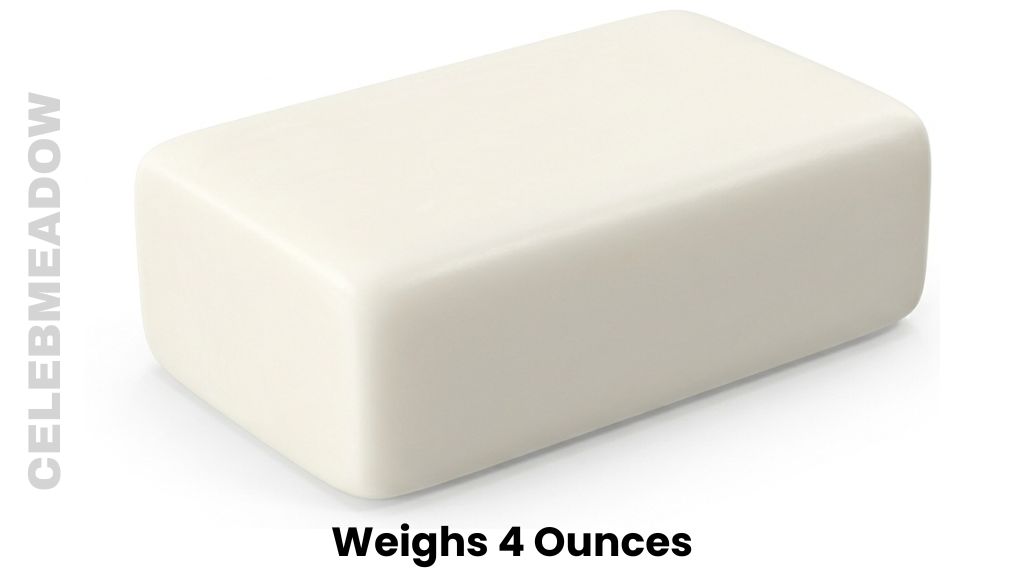
A fresh, unwrapped bar of standard body soap commonly weighs between 3.75 and 4 ounces.
Soap manufacturers landed on this size range deliberately. A bar this weight fits securely into a wet adult hand without slipping, which is a real ergonomic engineering target. Go too light and the bar feels cheap. Go too heavy and it becomes slippery and hard to grip under running water.
Unwrap a new bar of soap and rotate it slowly in both hands. It’s smooth, cool, slightly waxy, and dense for its size. Notice how it sits solidly in your palm without feeling heavy. That comfortable, grounded feel is your tactile reference for 4 oz of a uniform, high-density solid.
- Key measurement: ~3.75–4 oz / ~106–113 g
9. A Standard Tube of Colgate Toothpaste
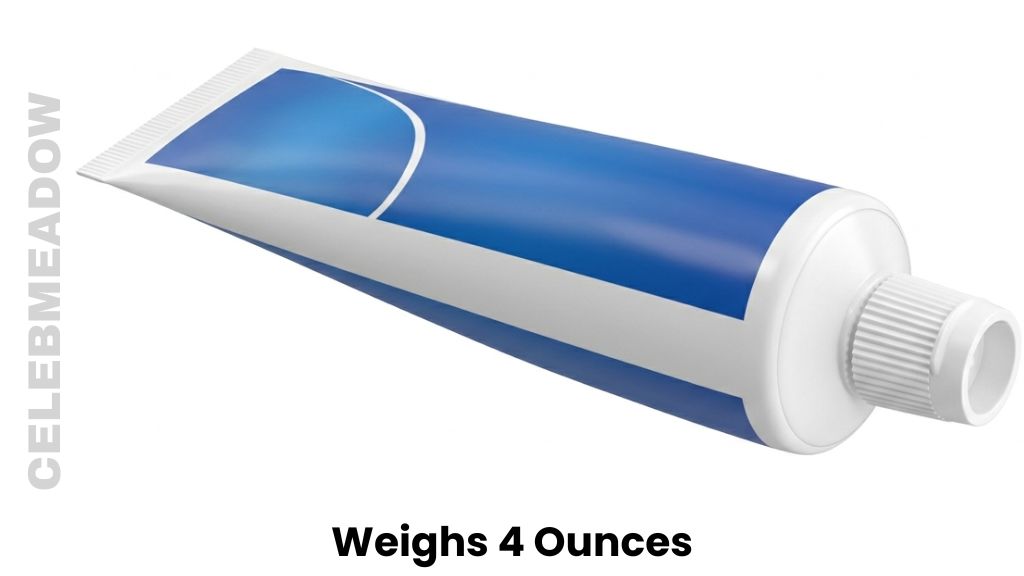
A standard 4-ounce net weight toothpaste tube — including the packaging — commonly totals around 4.3 ounces.
The tube itself (laminate plastic and the screw cap) adds roughly 0.3 oz on top of the 4 oz of paste inside. Manufacturers size the 4 oz tube to hold about a month’s worth of toothpaste for one person, and it’s the most common size found in travel sections and standard retail pharmacy shelves.
This one matters for a practical reason beyond kitchen use: the TSA’s carry-on liquid rule limits containers to 3.4 oz (100 ml) of liquid or gel. A standard 4 oz toothpaste tube is slightly over that limit. Knowing the weight helps travelers understand that the 3.4 oz restriction is about container volume — not total weight — but the physical size of a 4 oz tube is a clean airport bag reference.
- Key measurement: ~4.3 oz gross / 113 g net paste / ~121 g total
10. A Standard Leather Bi-Fold Wallet
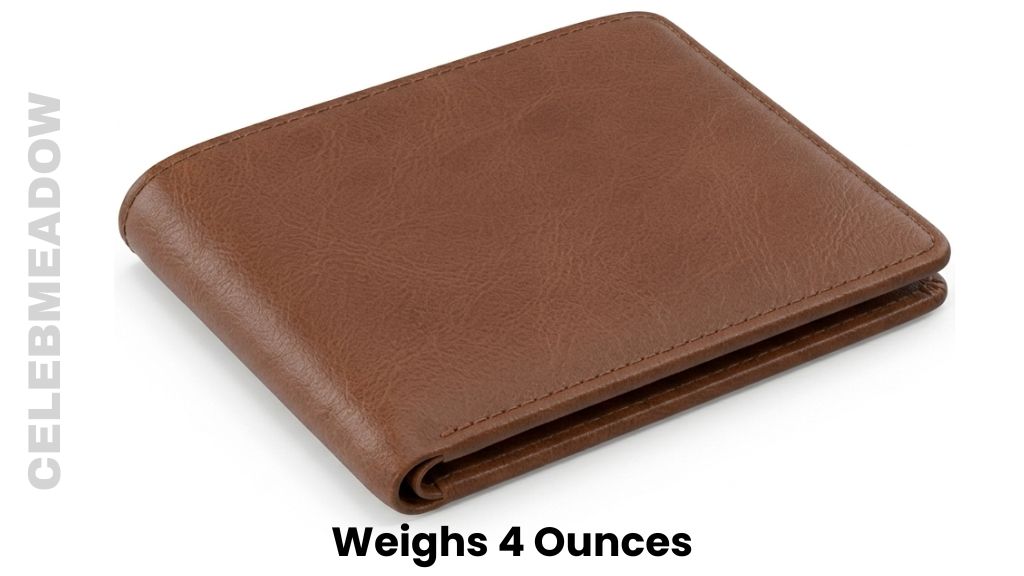
An empty genuine leather bi-fold wallet commonly weighs somewhere between 3.5 and 4 ounces on its own.
Leather accessory designers slice hides to specific millimeter thicknesses — thick enough for structural durability, thin enough that sitting on it doesn’t cause discomfort. That balance lands most standard men’s wallets right at the 4 oz baseline before you add a single card.
Grab your own wallet and take everything out — cards, cash, coins, all of it. What you’re left holding is the empty leather shell. That slim, smooth, quietly firm rectangle is your reference. It’s also a useful reminder that your everyday carry gets significantly heavier once loaded, which is exactly why EDC weight enthusiasts track the empty baseline first.
- Key measurement: ~3.5–4 oz / ~99–113 g
11. Twenty US Quarters
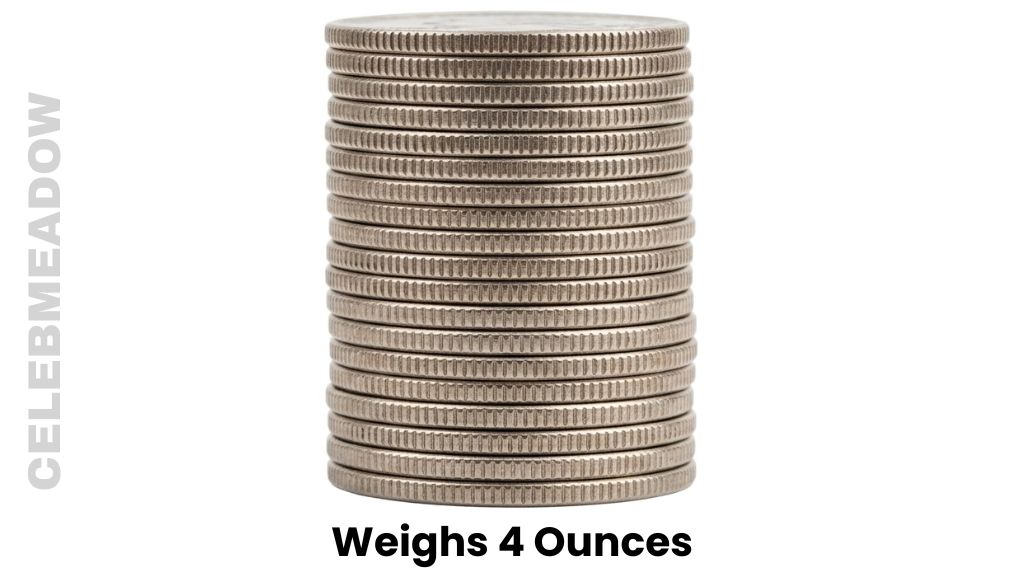
Twenty standard US quarters weigh exactly 4 ounces — this is one of the most precise references on this list.
The US Mint sets the weight of every quarter at exactly 5.67 grams by law. Twenty quarters × 5.67 g = 113.4 g = exactly 4 oz. A standard $5 bank roll of quarters contains exactly 40 coins, so half a roll is your perfect 4 oz coin weight.
Hold 20 quarters loosely in your cupped hand. The metallic, clinking, cool-to-the-touch heaviness of that pile is completely distinct from any other sensation on this list. Unlike bread or a lemon, coins feel dense and solid for their volume — which is why 20 quarters at 4 oz feels noticeably heavier than a stick of butter at the same weight.
- Key measurement: Exactly 4 oz / 113.4 g
12. A Standard Deck of Playing Cards (In Box)
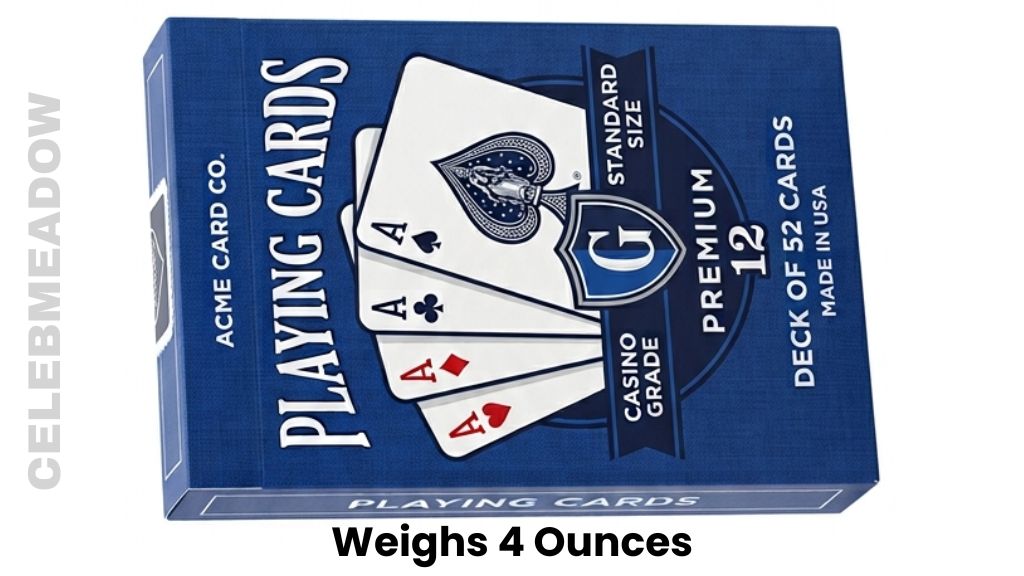
A full deck of playing cards in its box commonly weighs between 3.4 and 3.8 ounces — just slightly under 4 oz.
Major card manufacturers like Bicycle use standardized linen-textured paper stock cut to precise casino dimensions. The weight is engineered for consistent shuffling performance and structural lifespan across thousands of deals. The paper tuck box adds almost nothing.
Pick up a boxed deck and hold it flat in one hand. It’s a tight, rigid rectangle that feels denser than you’d expect for paper. It sits just a hair under 4 oz — which makes it a useful lower-bound reference. If something feels a bit lighter than a full stick of butter but still clearly “there” in your hand, you’re likely in the 3.5 to 4 oz range.
- Key measurement: ~3.4–3.8 oz / ~96–108 g
13. Two Tennis Balls
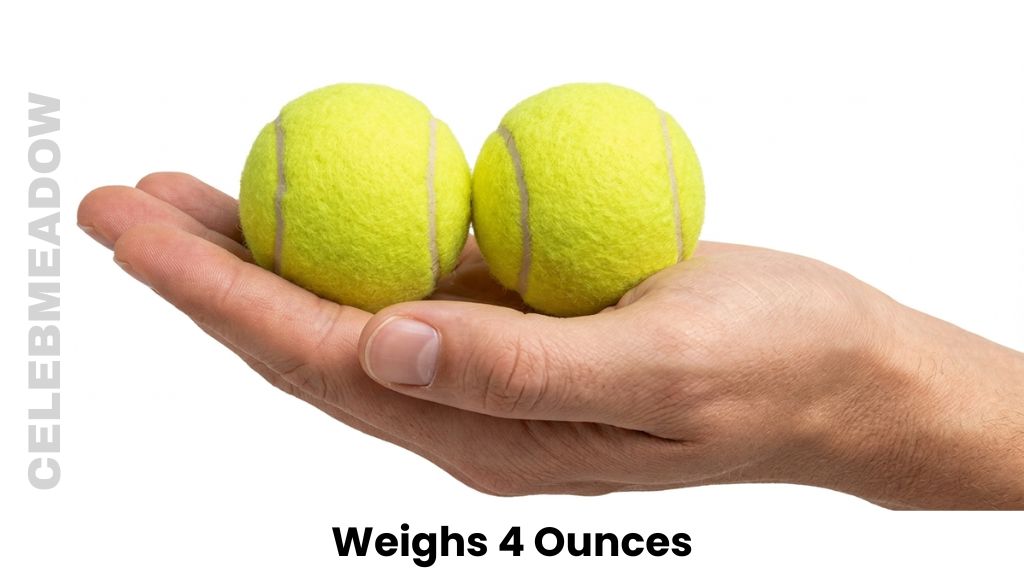
Two official tennis balls held together in your palm weigh commonly around 4 ounces total.
The International Tennis Federation mandates that a single approved tournament tennis ball must weigh between 56.0 and 59.4 grams. Two balls combined land between 112 g and 118.8 g — a range that straddles 4 oz (113.4 g) almost perfectly.
Cup two tennis balls together in one hand. They’re fuzzy, slightly pressurized, and want to roll against each other — the combined weight presses gently but clearly into your palm. The surface area is broad, which makes the weight feel more spread out than coins or butter. Same 4 oz, completely different tactile experience.
- Key measurement: ~3.95–4.19 oz / ~112–119 g
14. Apple iPhone 13 Mini
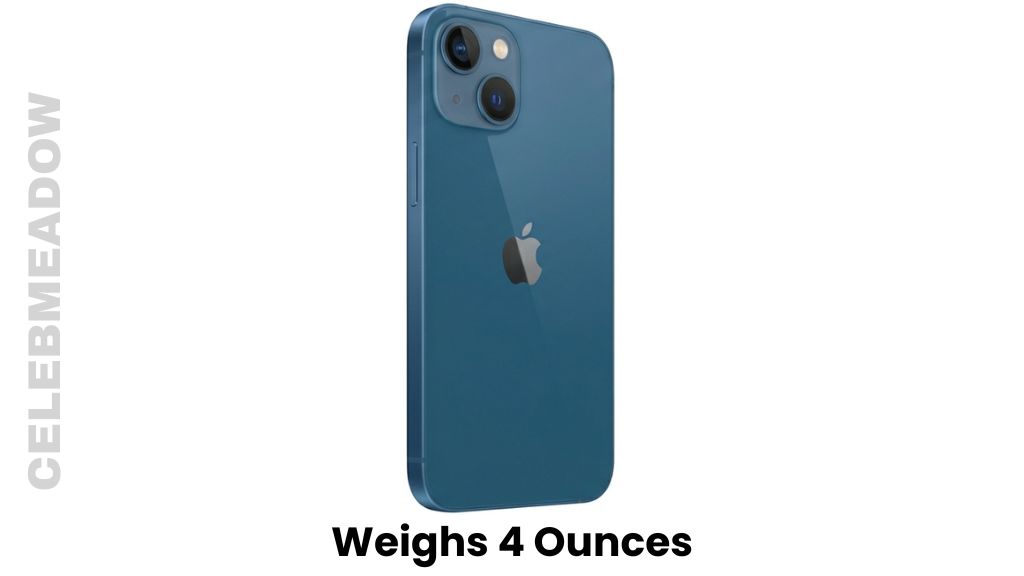
The iPhone 13 Mini weighs 4.97 ounces bare — just under 5 oz — making it a useful upper-bound reference for 4 oz.
Apple designed this phone specifically to stay under the 5 oz mark for single-handed comfort. The engineering balance between aluminum frame, glass front and back, and internal battery components was optimized to minimize hand fatigue during long use. It became the lightest modern iPhone in recent years because of it.
If you’re holding your iPhone 13 Mini right now, that familiar cool, rigid, glass-and-metal weight is about 1 oz more than your target. Mentally subtract just a bit — imagine removing a single poker chip’s worth of weight — and you’re holding 4 oz in your mind. It’s the clearest modern tech anchor for people who don’t own kitchen scales.
- Key measurement: 4.97 oz / 141 g
How to Picture 4 Ounces Without a Scale
The Pocket/Hand Check
Dig into your pocket or wallet right now. Twenty quarters is exactly 4 oz of metal — and most people either carry loose change or can picture a small fistful of coins. If you’re holding your phone, an iPhone 13 Mini is just under 5 oz. Four ounces feels like a phone without a case, minus just a small sliver of weight. That slight, deliberate pressure in your palm without any feeling of strain — that’s the zone.
The Kitchen/Pantry Check
Walk to your fridge and pull out a stick of butter. One full stick, still in its wrapper, is exactly 4 oz every time — no guessing, no approximation. It’s the single most reliable physical reference in any home kitchen. If you don’t have butter on hand, fill a measuring cup to the half-cup mark with water and hold it steady. That half-cup of water is 4 fluid ounces, and it weighs almost exactly 4 oz too. Both give you the same weight in completely different textures.
4 Ounces Compared to Similar Weights
| Weight | In Grams | Compared to 4 oz |
| 2 oz | 56.7 g | Half a stick of butter |
| 3 oz | 85 g | One large chicken egg + one small egg |
| 4 oz | 113.4 g | ← One stick of butter / 20 quarters |
| 5 oz | 141.7 g | iPhone 13 Mini |
| 6 oz | 170 g | A medium apple |
| 8 oz | 226.8 g | Two sticks of butter / half a pound |
Common Questions About 4 Ounces
How much is 4 ounces in grams?
Four ounces equals 113.4 grams. The fixed conversion is 1 oz = 28.35 g. Most nutrition labels round it to 113 g.
How many cups is 4 ounces?
For liquids, 4 oz = exactly half a cup (8 tablespoons). For dry ingredients, the cup volume changes based on density — flour, sugar, and rice all fill differently at the same weight.
How much is 4 ounces of water in ml?
Four ounces of water equals roughly 118 milliliters. It’s close to 120 ml but not exactly — a common mix-up when following metric recipes.
How can I measure 4 ounces without a scale?
Fill a measuring cup to the half-cup line for liquids. For solids, one stick of butter is exactly 4 oz. Two large eggs together are a close approximation.
Is 4 ounces the same as 4 fluid ounces?
Only for water. Fluid ounces measure volume; ounces measure weight. For water they nearly match. For honey, oil, or other liquids, the numbers differ.
What does 4 oz of water look like in a cup?
It sits at the half-cup mark on a measuring cup. In a regular drinking glass, it fills roughly one-third of the way up.
How much is 4 ounces in tablespoons?
Four ounces of liquid equals 8 tablespoons. Simple rule: 1 fluid ounce = 2 tablespoons, so 4 × 2 = 8.
A single stick of butter. Twenty quarters. Half a cup of water. Three completely different textures, densities, and everyday contexts — all landing at the same 4 oz mark. Weight is abstract until it lives in your hands. The next time a recipe, a shipping label, or a grocery run asks you to think in ounces, you’ll already have the answer sitting in your kitchen drawer or your back pocket.
Related More Measurements Guides:

I’m Cherry Sin, and I write clear, practical guides that help people understand everyday measurements and sizes. I focus on turning numbers into easy mental pictures using familiar objects and real-life situations. At Celebmeadow, I write guides that explain measurements in a simple, visual way.