You’re packing a bag, buying produce at the market, or helping your kid with a school project — and someone mentions “1 kilogram.” The number makes sense on paper, but it doesn’t feel like anything yet. 1 kilogram equals 1,000 grams, 2.20 pounds, or about 35.27 ounces. That’s the math. But the moment you pick up a full one-liter water bottle or grab a bag of sugar off a grocery shelf, that number suddenly becomes real in your hands.
How Much is 1kg? Quick Conversion Chart
| Unit | Value |
| Kilograms | 1 kg |
| Grams | 1,000 g |
| Pounds | 2.20 lbs |
| Ounces | 35.27 oz |
| Pounds + Ounces | 2 lbs 3.27 oz |
9 Everyday Things That Weigh 1 Kilogram
| Object | Category | Weight | Exact or Approximate |
| 1-Liter Plastic Bottle of Water | Drink | 1,021 g | Exact |
| 1 kg Bag of Granulated Sugar | Pantry | 1,007 g | Exact |
| 1-Liter Carton of Whole Milk | Dairy | 1,059 g | Exact |
| 1 kg Bag of Dry Long-Grain White Rice | Pantry | 1,004.5 g | Exact |
| Medium-Sized Pineapple | Fruit | ~1,000 g | Approximate |
| Six Medium Red Apples | Fruit | ~1,000 g | Approximate |
| 1 kg Cast Iron Dumbbell Plate | Fitness | 1,000 g | Exact |
| 1 kg Gold or Silver Bullion Bar | Finance | 1,000 g | Exact |
| Fully Grown Adult Male Guinea Pig | Animal | ~1,000 g | Approximate |
1. A 1-Liter Plastic Bottle of Water
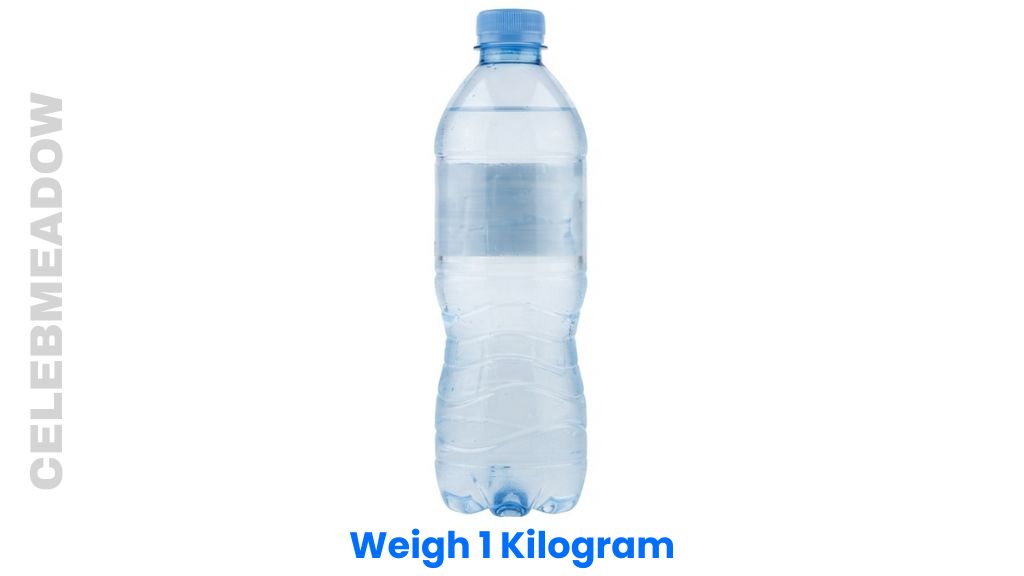
A filled 1-liter plastic water bottle weighs about 1,021 grams — just barely over 1 kg.
This is probably the cleanest mental anchor for 1 kg that exists. The reason it works so well goes back to how the metric system was originally designed — the kilogram was literally built around the mass of one liter of pure water. That’s not a coincidence. It was engineered that way on purpose.
Pick up a standard sealed water bottle right now. That familiar weight in your hand — not too heavy, not too light — is almost exactly 1 kg. Hikers use this fact constantly. When you’re planning a long trail and you know 1 liter of water equals roughly 1 kg, calculating how much your pack will weigh becomes simple arithmetic.
- Key measurement: ~1,021 g | ~2.25 lbs
2. A 1 kg Bag of Granulated Sugar (Paper Packaging)
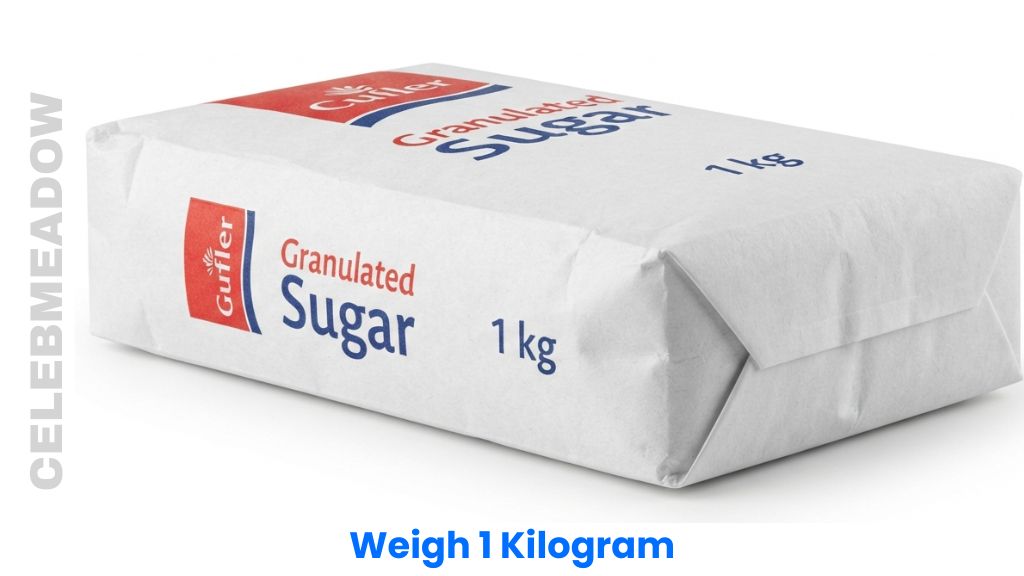
A standard 1 kg bag of granulated sugar weighs about 1,007 grams total — the bag itself adds just 7 grams.
Sugar bags feel different from water bottles, even at the same weight. The weight sits more evenly in your palm because dry crystals shift and pack tightly. That dense, compact feel is exactly why bakers use it as a mental unit — when you’re scaling a recipe up, a 1 kg sugar bag is a solid, familiar reference point.
Consumer packaging laws in most countries require manufacturers to meet or slightly exceed the labeled weight, which is why you’ll almost never find a 1 kg bag that comes in under. Grab one at any supermarket and you’ll feel how flat and heavy it sits in your hand. That flat-brick sensation? That’s your new image for 1 kg.
- Key measurement: ~1,007 g | ~2.22 lbs
3. A 1-Liter Carton of Whole Milk

A full 1-liter carton of whole milk weighs about 1,059 grams — slightly heavier than the same volume of water.
Most people don’t realize that whole milk is denser than water. It contains fat, protein, and minerals that push its density to about 1.03 grams per milliliter, which is why a liter of milk weighs a little more than a liter of water. It’s a small difference, but it’s real and measurable.
That cardboard gable-top carton you’ve grabbed out of the fridge since childhood? It weighs just under 30 grams on its own. Together with the milk inside, you’ve been casually lifting just over 1 kg every morning without thinking about it. This is one of those objects that makes 1 kg feel ordinary and completely unthreatening.
- Key measurement: ~1,059 g | ~2.33 lbs
4. A 1 kg Bag of Dry Long-Grain White Rice
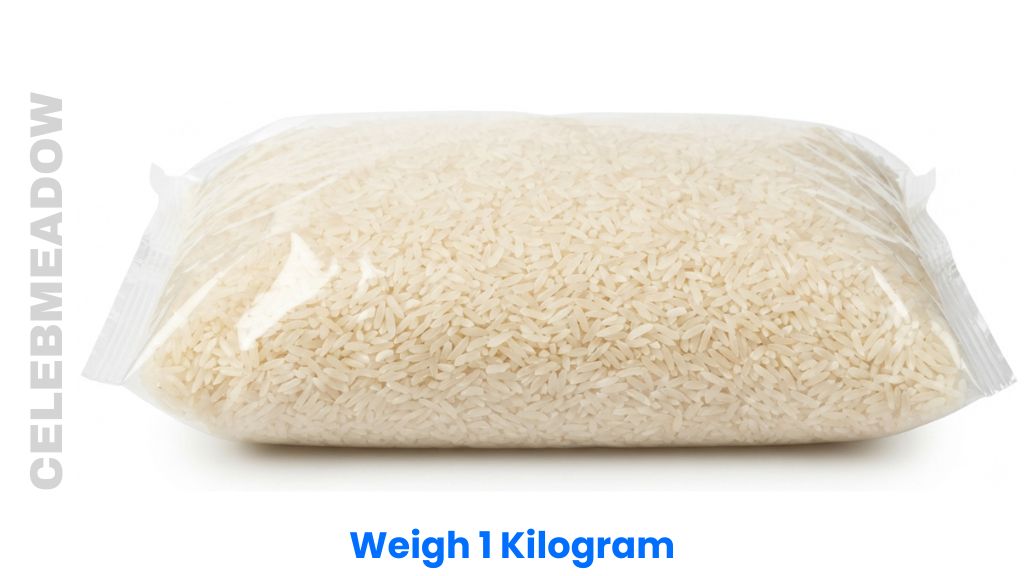
A standard 1 kg bag of dry white rice weighs about 1,004.5 grams — the thin plastic packaging adds almost nothing.
What makes a rice bag different to hold is the texture. The individual grains slide and shift inside, giving it a fluid, almost sloshing sensation despite being completely dry. It’s a distinctive weight memory that’s hard to forget once you’ve felt it.
Here’s something practical worth knowing: 1 kg of dry rice yields roughly 20 to 22 cooked servings. So when emergency preparedness guides recommend stocking rice by the kilogram, they’re working with this weight as their base unit. That single bag you buy at the store for a few dollars is doing more work than it looks.
- Key measurement: ~1,004.5 g | ~2.21 lbs
Related Post: What Weighs 1 Gram? 12 Common Things That Weigh 1 Gram
5. A Medium-Sized Pineapple
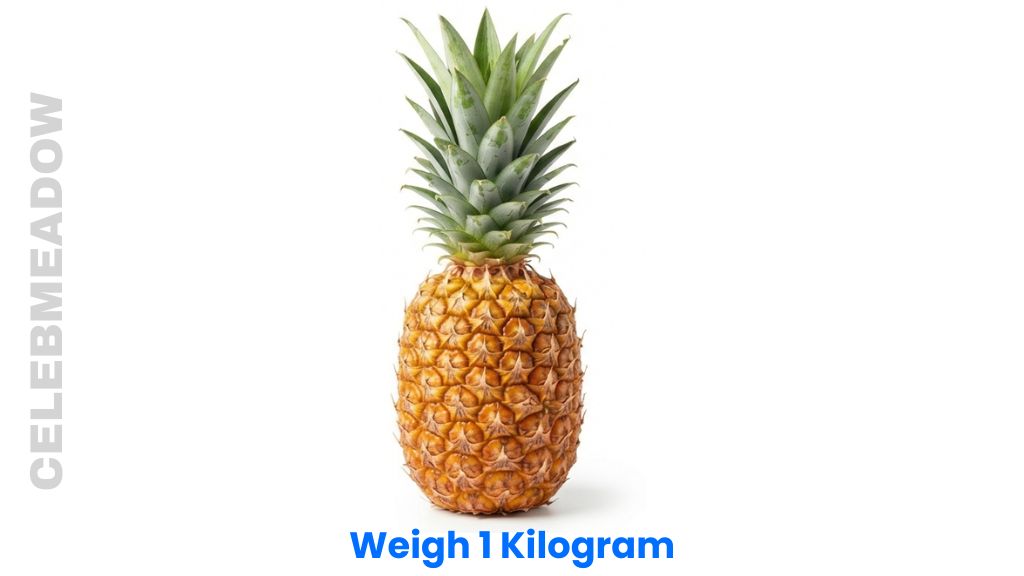
A commercially graded medium pineapple commonly weighs around 1 kilogram — the crown leaves are included in that weight.
Pineapples are graded by size during harvest. A mid-sized fruit — what stores label as a Size 10 or Size 12 — typically hits close to 1 kg. This isn’t a random target. Farmers and distributors use standardized sizing charts, and the median weight for this commercial grade sits right around the 1 kg mark.
Next time you’re at a fruit stall, pick up a pineapple and test its weight in your hand. A dense, heavy pineapple near 1 kg usually signals good juice content inside. A lighter one of the same size? It’s probably drier. Knowing 1 kg by feel can actually help you choose better fruit.
- Key measurement: ~1,000 g | ~2.20 lbs
6. Six Medium-Sized Red Apples

Six medium red apples together weigh commonly around 1 kilogram — each one averaging about 166 grams.
Commercially grown apples like Gala or Royal Gala go through size-sorting before they hit the shelves. Mid-size apples are deliberately bred and sorted to fit comfortably in one hand, which puts them right in that 160–170 gram range per apple.
Cup both your hands together and imagine holding six apples — that’s your visual. At a produce bin, if you’re picking loose apples without a scale, counting six medium-sized ones gives you a reliable kilogram estimate. It’s a simple, no-scale trick that actually works during grocery shopping.
- Key measurement: ~1,000 g | ~2.20 lbs
7. A 1 kg Cast Iron Dumbbell Weight Plate

A 1 kg cast iron dumbbell plate is manufactured to exactly 1,000 grams, within a strict tolerance of plus or minus 2%.
Cast iron plates exist in a 1 kg size specifically for beginners and rehabilitation patients. When someone is recovering from an injury, the difference between 0.5 kg and 1 kg matters enormously. Small, precise increments make safe progression possible — and this plate sits right at the starting end of that range.
Hold a 1 kg dumbbell plate and you’ll notice it feels solid and deliberate — noticeably heavier than a water bottle, but easy to lift and control with one hand. The weight is familiar to anyone who has ever browsed a sports shop or walked into a gym. It’s the most “honest” representation of exactly 1,000 grams you can find on a store shelf.
- Key measurement: 1,000 g | 2.20 lbs
8. A 1 kg Gold or Silver Bullion Bar
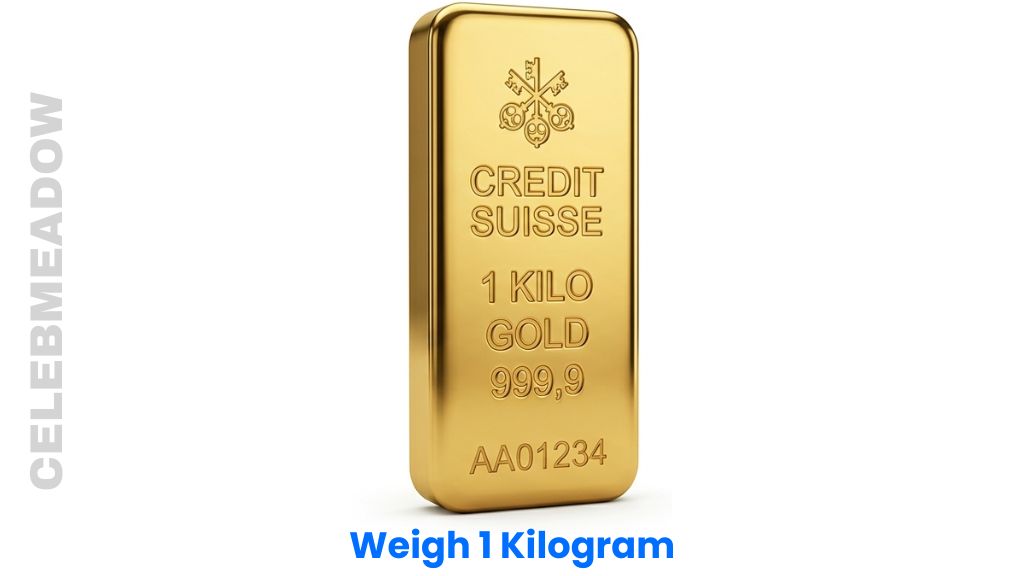
A 1 kg gold or silver bullion bar contains exactly 1,000 grams of 99.99% pure metal — and holds a surprisingly compact shape.
Here’s the fact that surprises people most: gold is over 19 times denser than water. A 1 kg gold bar isn’t the large brick you see in movies. It’s closer in size to an ordinary smartphone — compact, flat, and surprisingly small for how heavy it feels in your hand. The weight-to-size ratio is unlike almost anything else you’ll ever pick up.
Silver bars at 1 kg are slightly larger because silver is less dense, but still remarkably compact. This is one of the few objects where holding it would make you immediately re-calibrate your instincts about what 1 kg looks like. The financial world uses the 1 kg bar as a standard bullion trading unit — so this exact weight has been handled by banks and investors around the world for generations.
- Key measurement: 1,000 g | 2.20 lbs
9. A Fully Grown Adult Male Guinea Pig
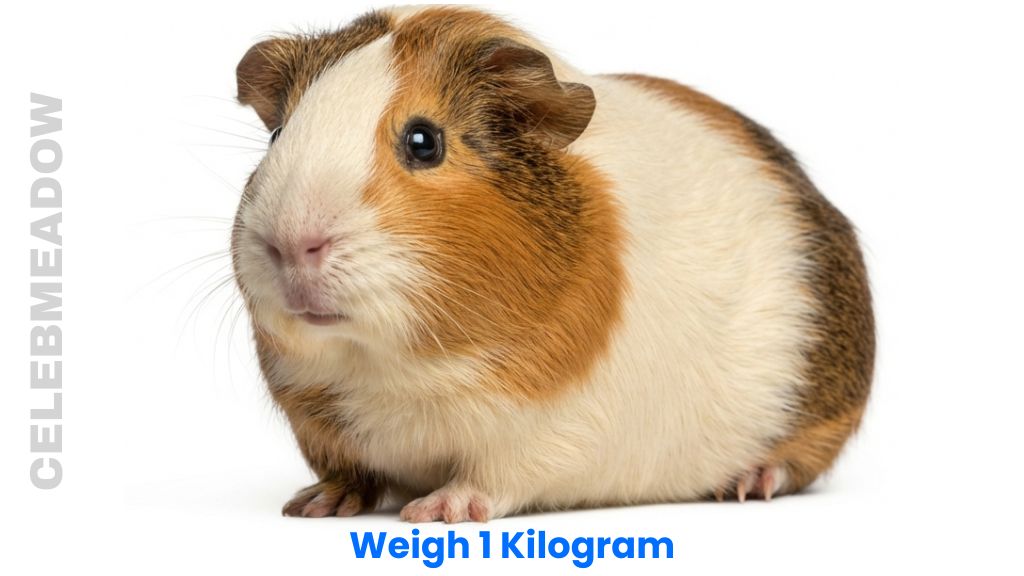
A healthy adult male guinea pig commonly weighs around 1 kilogram — making it one of the few living things that naturally matches this weight.
Guinea pigs (Cavia porcellus) reach their adult size between 12 and 14 months, and a healthy male typically settles right around the 1 kg mark. Veterinarians actually use body weight in kilograms to calculate medication dosages for small animals — so this number has real clinical importance, not just novelty.
If you’ve ever held a guinea pig, a small puppy, or a large plush toy, you’ve already felt approximately 1 kg. It’s a soft, manageable, two-handed weight. Not heavy enough to strain your arms, but noticeable enough to feel real. It’s a gentle reminder that 1 kg isn’t an abstract number — it’s the weight of something small and living that you can actually cradle.
- Key measurement: ~1,000 g | ~2.20 lbs
How to Picture 1 kg Without a Scale
The easiest way to feel 1 kg is to grab a full 1-liter water bottle from your kitchen or fridge. Hold it in one hand with your arm relaxed at your side. That’s it. No math, no guessing. Your body already knows this weight — you’ve lifted it hundreds of times without thinking about it. This is the single most reliable body reference for 1 kg.
A second method works well in a grocery store. Walk to the sugar or rice aisle and pick up a standard 1 kg retail bag — the kind with the weight printed right on the front. Let it rest flat in both palms for a few seconds. That compact, slightly dense feeling is your reference. Once you’ve felt it once, your hands tend to remember it.
If neither is available, try this: fill a medium-sized zip-lock bag with about two standard coffee mugs of water and seal it. It won’t be perfect, but it’ll get you close enough to understand the scale. 1 kg is a one-hand weight — comfortable, real, and not at all intimidating.
1 kg Compared to Nearby Weights
| Weight | In Grams | Compared to 1 kg |
| 500 g | 500 g | Half a 1 kg sugar bag |
| 750 g | 750 g | Three-quarters of a 1 kg water bottle |
| 1 kg | 1,000 g | Our target weight |
| 1.5 kg | 1,500 g | 1.5 × a liter of water |
| 2 kg | 2,000 g | Two full 1-liter water bottles |
| 2 kg (double) | 2,000 g | Two standard sugar bags side by side |
Common Questions About 1 kg
How much is 1 kg in pounds?
1 kilogram equals 2.205 pounds, or 2 pounds and about 3.27 ounces. Most people round this to 2.2 lbs for quick mental math. So if something weighs 5 kg, it’s roughly 11 pounds.
How much is 1 kg in grams?
There are exactly 1,000 grams in 1 kilogram. The prefix “kilo” means one thousand in the metric system, so a kilogram is literally a thousand grams. This is true for every kilogram, with no rounding needed.
What common household item weighs exactly 1 kg?
A standard 1 kg bag of granulated sugar or a sealed 1-liter water bottle are the two most reliable household references. Both are found in almost every home and grocery store, and both sit right at or very close to 1,000 grams.
What weighs 1 kg in a classroom?
A 1-liter carton of milk or a standard bag of rice are both common classroom-friendly references. Some science classrooms also keep 1 kg calibration weights or small cast iron plates for exactly this kind of demonstration.
How can I estimate 1 kg without a scale?
Pick up a full 1-liter water bottle — that’s your most accurate no-scale estimate. Alternatively, grab a standard retail bag of sugar or rice labeled “1 kg” from any grocery shelf. Both options put the real weight directly in your hands.
Is 1 kg heavy for a person to carry?
Not at all. 1 kg is a one-hand weight that most people can carry comfortably for long periods. A school backpack typically weighs 3–5 kg when filled, and gym bags often start at 2–3 kg before any equipment. By comparison, 1 kg feels light and easy.
How does 1 kg compare to a pound?
One kilogram is larger than one pound — it takes about 2.2 pounds to equal a single kilogram. So if you’re used to thinking in pounds, 1 kg is a little more than two standard sticks of butter placed together.
The next time someone mentions 1 kg, you don’t need a scale — you need a water bottle or a bag of sugar. Those two objects alone give you a precise, reliable feel for this weight. And if you ever pick up a guinea pig or a ripe pineapple, you’ll notice that same familiar heaviness in your palms. 1 kilogram is everywhere once you know what to look for.
Read More Measurements Guides:

I’m Cherry Sin, and I write clear, practical guides that help people understand everyday measurements and sizes. I focus on turning numbers into easy mental pictures using familiar objects and real-life situations. At Celebmeadow, I write guides that explain measurements in a simple, visual way.