You’re reading a product listing, a medical chart, or a hardware spec and it says 2mm. That number means almost nothing on its own. 2mm equals roughly 0.079 inches, which is just under one-tenth of a centimeter. It’s smaller than you probably think. This article gives you 14 real objects that are 2mm big, so you can lock that size into your head for good.
How Big is 2mm? Quick Conversion Chart
| Unit | Value |
| Millimeters | 2 mm |
| Centimeters | 0.2 cm |
| Inches | 0.0787 in |
| Feet | 0.00656 ft |
| Meters | 0.002 m |
14 Real-World Things That Are 2mm Big
| Object | Category | Measurement | Part Measured | Exact or Approximate |
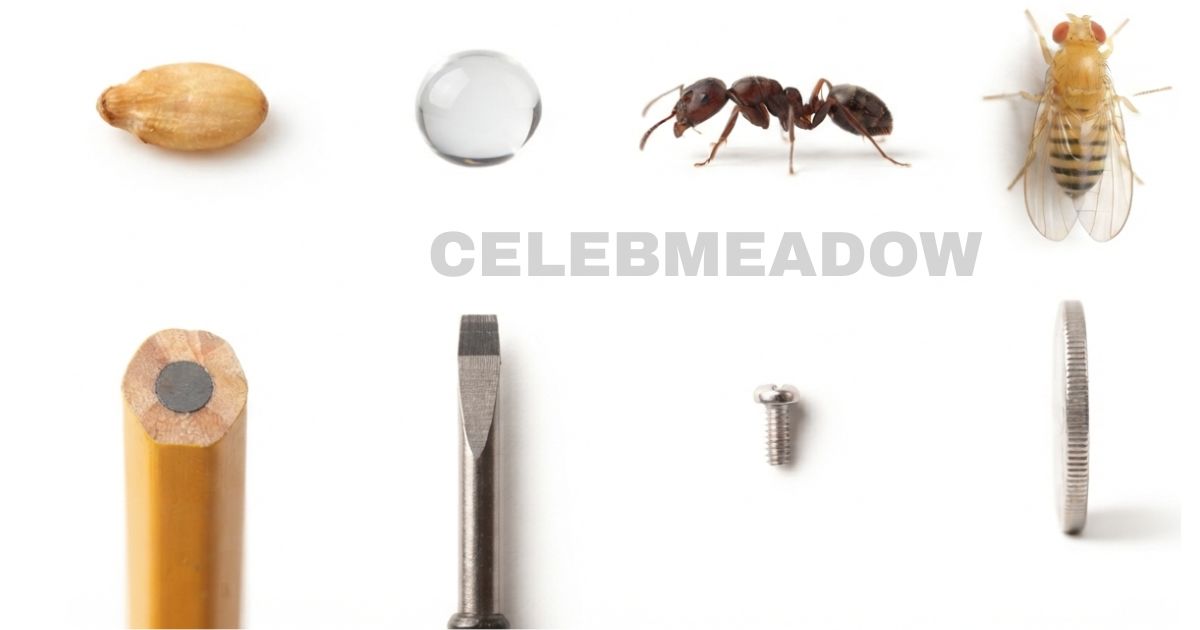
| Sesame Seed | Nature / Food | ~2 mm | Width | Approximate |
| Average Raindrop | Nature / Science | ~2 mm | Diameter | Approximate |
| Garden Ant | Biology | ~2 mm | Thorax Width | Approximate |
| Fruit Fly | Biology | ~2–2.5 mm | Body Length | Approximate |
| #2 Pencil Lead Core | Stationery | 2 mm | Diameter | Exact |
| Precision Screwdriver Tip | Tools | 2 mm | Blade Width | Exact |
| M2 Screw | Hardware | 2 mm | Shaft Diameter | Exact |
| Small Allen Wrench | Tools | 2 mm | Across Flats | Exact |
| US Nickel Edge | Currency | ~1.95 mm | Thickness | Approximate |
| Kitchen Cotton Twine | Cooking / Craft | ~2 mm | Diameter | Approximate |
| Leather Craft Cord | Crafting | 2 mm | Thickness & Width | Exact |
| Two Stacked MicroSD Cards | Technology | 2 mm | Combined Thickness | Exact |
| 20 Sheets Printer Paper | Office | ~2 mm | Combined Thickness | Approximate |
| Neoprene Cosmetic Pouch | Fashion / Craft | 2 mm | Material Thickness | Exact |
1. A Single Sesame Seed
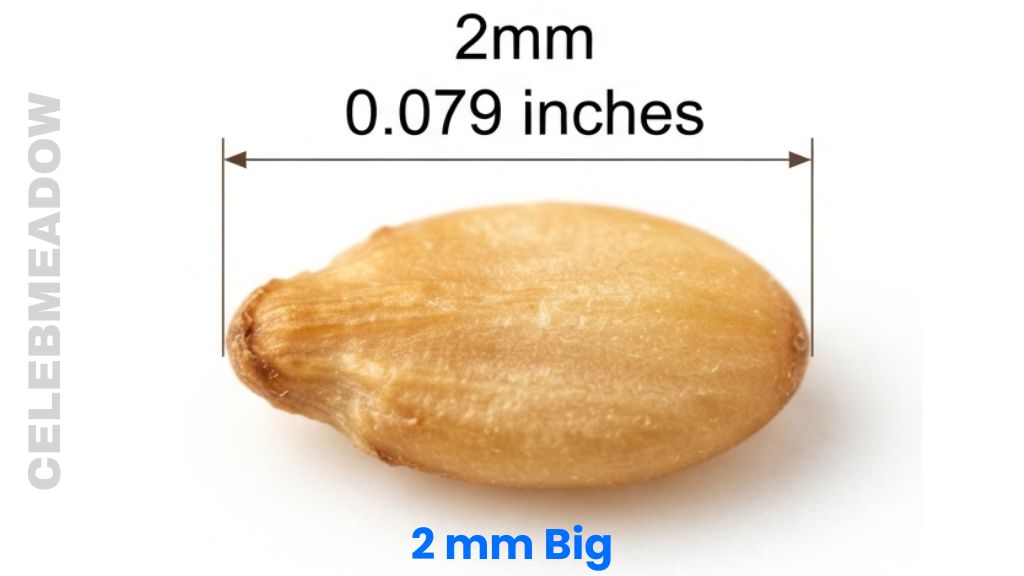
A sesame seed’s width sits commonly around 2mm making it one of the most grab-able size references in your kitchen right now.
Pick up any hamburger bun and you’ll see them scattered across the top. Each tiny oval is the result of the Sesamum indicum plant’s tightly controlled growth biology the seed only grows as wide as it needs to carry its oil and nutrients to the next generation. That’s why sesame seeds look almost identical no matter where in the world they come from.
Place one seed on your fingertip. That small oval width? That’s your 2mm anchor. Gardeners also use this mental image when setting seed-planter depths a reference point that’s always within reach, even when no ruler is handy.
- Key measurement: ~2mm / ~0.079 inches
2. Average Raindrop
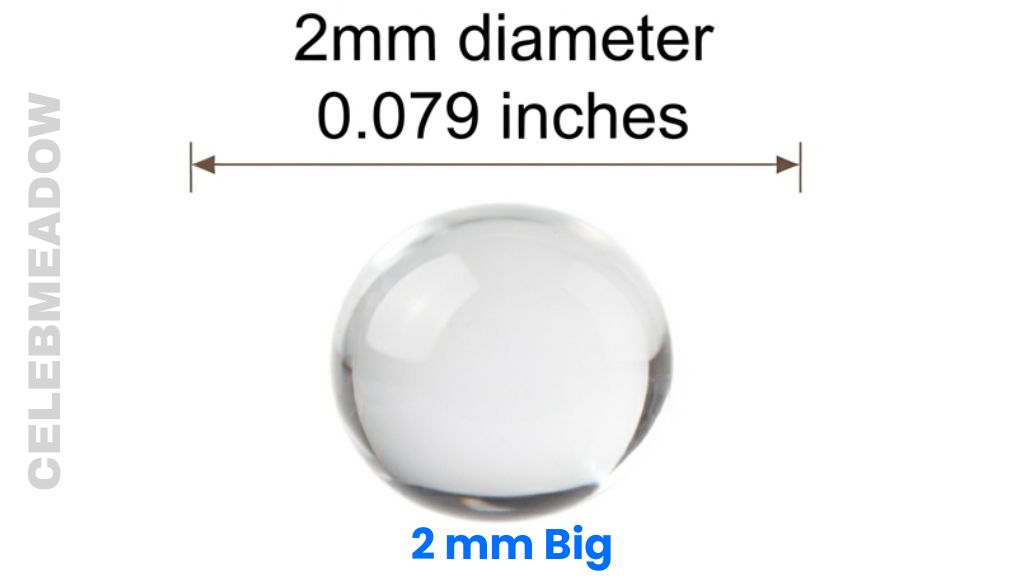
The diameter of an average raindrop is commonly around 2mm a fact that most people have seen but never thought to measure.
Atmospheric physics shapes a falling raindrop into a sphere. As air pushes against it from below, the drop flattens slightly, but its average diameter holds at roughly 2mm carrying a mass of about 5 milligrams. It’s a precise size that allows the drop to fall at a consistent speed without breaking apart mid-air.
Next time it rains, watch individual drops hit a window. The circular mark each one leaves that wet circle is roughly 2mm across before it streaks down. It’s a size you’ve seen thousands of times without realizing it had a number.
- Key measurement: ~2mm diameter / ~0.079 inches
3. Garden Ant
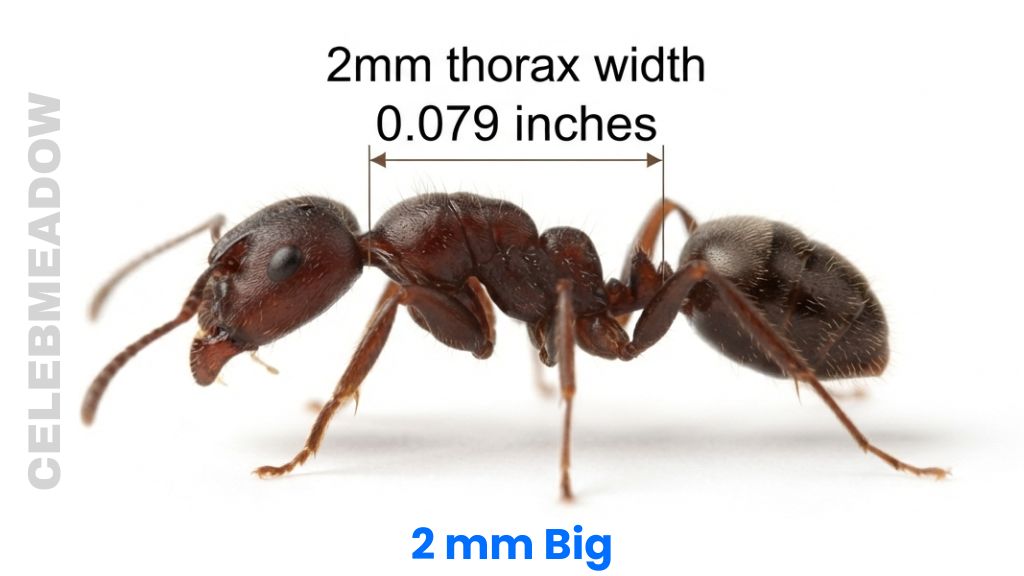
The thorax the middle segment of a common garden worker ant measures commonly around 2 mm wide.
Evolution settled on this size for a reason. An ant’s thorax connects its head to its abdomen and anchors all six legs. It needs to be wide enough to carry structural muscle, but compact enough that the ant can squeeze into soil gaps, under bark, and through cracks in pavement. Too wide, and it couldn’t navigate its environment. This is biology optimizing for survival.
Watch an ant cross a sidewalk and focus on just its middle section. That pinched, segmented center? You’re looking at roughly 2 mm of living machinery. It’s a surprisingly useful mental image for locking in the scale.
- Key measurement: ~2mm thorax width / ~0.079 inches
4. The Fruit Fly (Drosophila melanogaster)
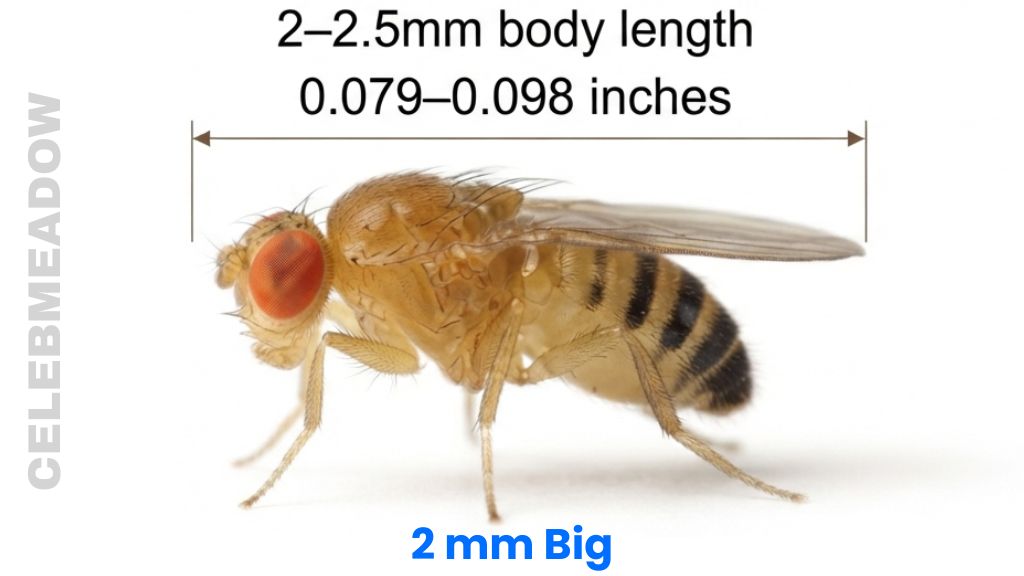
A fruit fly’s entire body from head to tail runs commonly between 2 mm and 2.5mm long.
This species has been studied in biology labs for over a century, and its size is well-documented. Its tiny frame is perfectly suited to its life: hovering near overripe fruit, slipping into narrow gaps, and breeding rapidly. The whole body length is barely longer than a sesame seed is wide.
Spot one near a fruit bowl and try to focus on just how long it is before it moves. That full body length you glimpse that’s your 2 mm scale. People who work in kitchen pest control use this mental image to identify whether what they’re seeing is a fruit fly or something larger.
- Key measurement: ~2–2.5mm body length / ~0.079–0.098 inches
5. #2 Pencil Lead Core
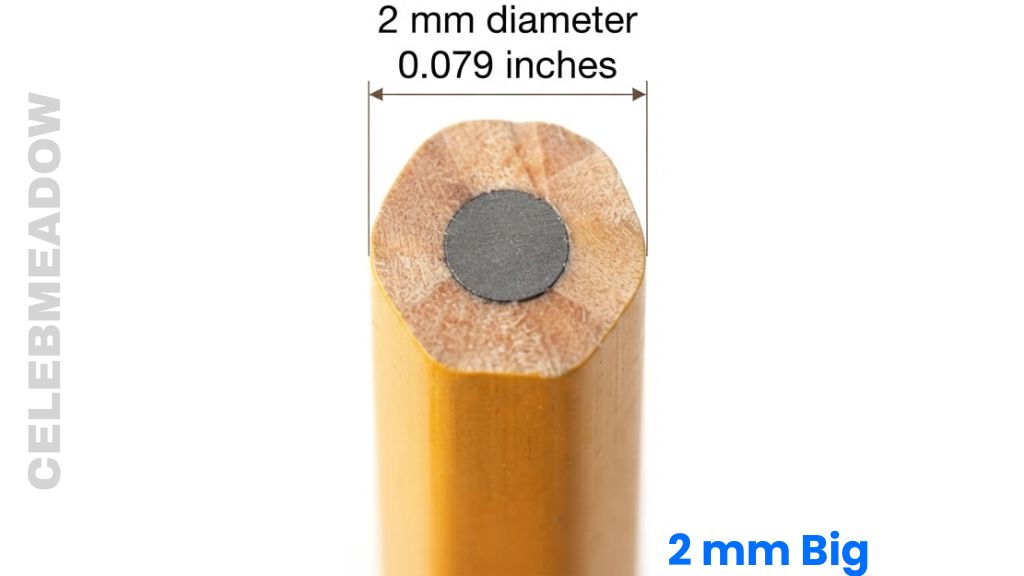
The graphite core inside a standard #2 pencil has an exact diameter of 2mm a number set by industrial manufacturing standards, not guesswork.
This measurement exists because wooden pencil hulls are produced at fixed sizes, and the HB graphite core must fit precisely inside without rattling or breaking during sharpening. Too thin and the tip snaps constantly. Too thick and the wood cracks when sharpened. The 2mm core is the engineering sweet spot for everyday writing.
Snap the tip off an old pencil or look at a freshly broken graphite core. That circular gray face staring back at you is exactly 2mm across. This also matters practically if you use heavy-duty mechanical drafting pencils, 2mm refills are a specific product category you’ll need to know by name.
- Key measurement: 2 mm diameter / 0.079 inches
6. Precision Screwdriver Flat-Head Tip
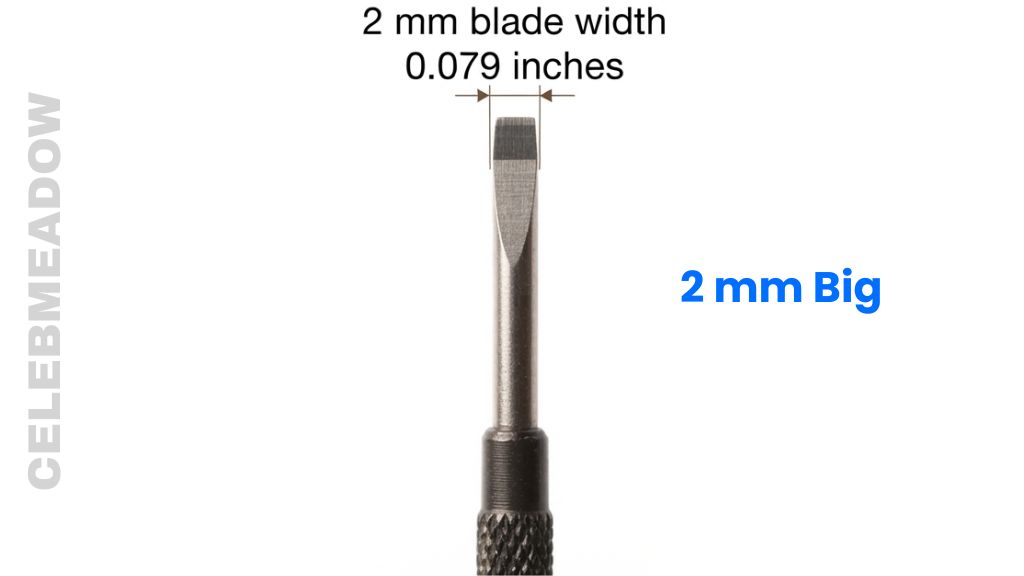
A 2 mm flat-head precision screwdriver has a blade width of exactly 2 mm the standard size for tightening the tiny screws on most eyeglass frames.
These micro-screwdrivers exist because consumer electronics and eyewear use fasteners far smaller than any standard household screwdriver can reach. The 2mm flat-head tip is the most common size in basic precision repair kits for exactly this reason it matches the screws on standard prescription glasses and many small battery compartments.
Hold the tip between two fingers. It barely spans the width of a fingernail groove. If you’ve ever tightened a loose glasses hinge, you’ve held a 2 mm blade and probably didn’t think to measure it. Now you have a direct tactile memory of the size.
- Key measurement: 2 mm blade width / 0.079 inches
7. M2 Screw
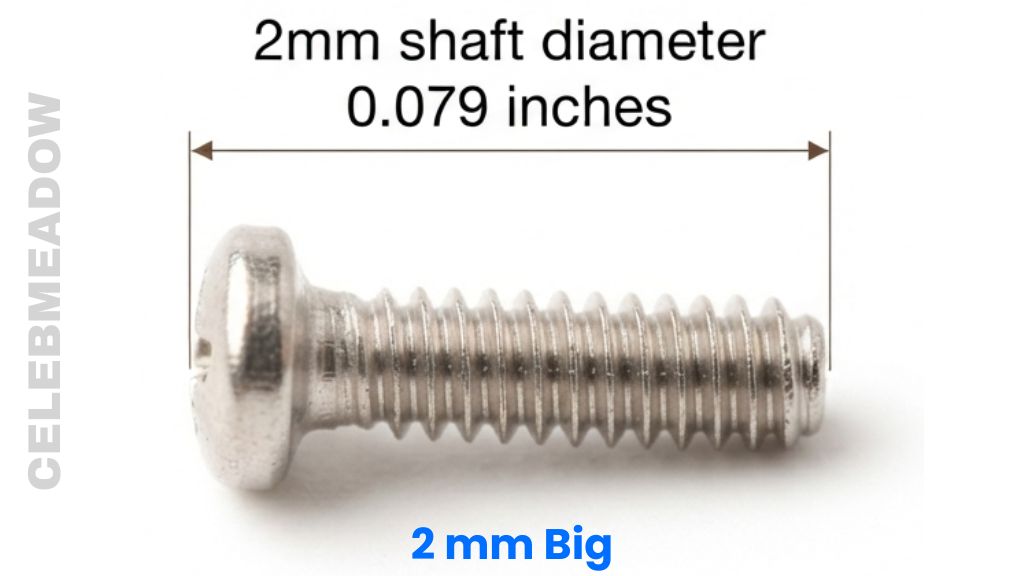
An M2 screw has a shaft diameter of exactly 2mm and it’s the screw holding together most of the small electronics in your home.
The “M” in M2 screw stands for metric, and the “2” is the shaft diameter in millimeters. This is a global standard. Laptop manufacturers use M2 screws to secure SSD drives, heatsinks, and circuit boards because the size offers enough grip without adding unnecessary bulk or requiring a large mounting hole.
If you’ve ever opened a laptop, seen a tiny silver screw near the SSD slot, and wondered how people don’t lose those things that’s an M2. The shaft is the width of a thick mechanical pencil lead. Lose one, and you need to know this number to find a replacement.
- Key measurement: 2mm shaft diameter / 0.079 inches
8. Small Allen Wrench / Hex Key
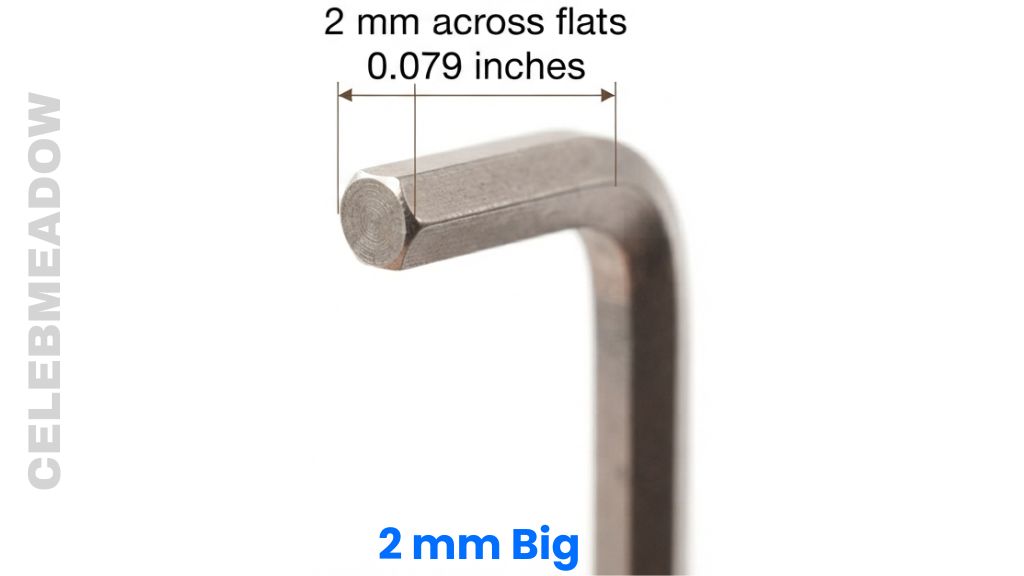
A 2 mm Allen wrench measures exactly 2 mm across its flat parallel sides the measurement that must be precise, or it slips and strips the bolt.
ISO standard 2936 dictates hex key dimensions because a tool that’s even 0.1mm off won’t seat correctly inside the socket. It’ll round out the bolt head, which means a ruined fastener and a half-assembled desk. The 2mm size is the smallest one commonly included in multi-packs that come with flat-pack furniture.
Dig through any IKEA tool packet and find the smallest L-shaped wrench. That’s likely a 2mm. Roll the short end between your thumb and index finger the flat faces you feel pressing against your skin are exactly 2 mm apart. It’s a size you’ve touched and probably thrown into a junk drawer at least once.
- Key measurement: 2 mm across flats / 0.079 inches
9. US Nickel Coin Edge
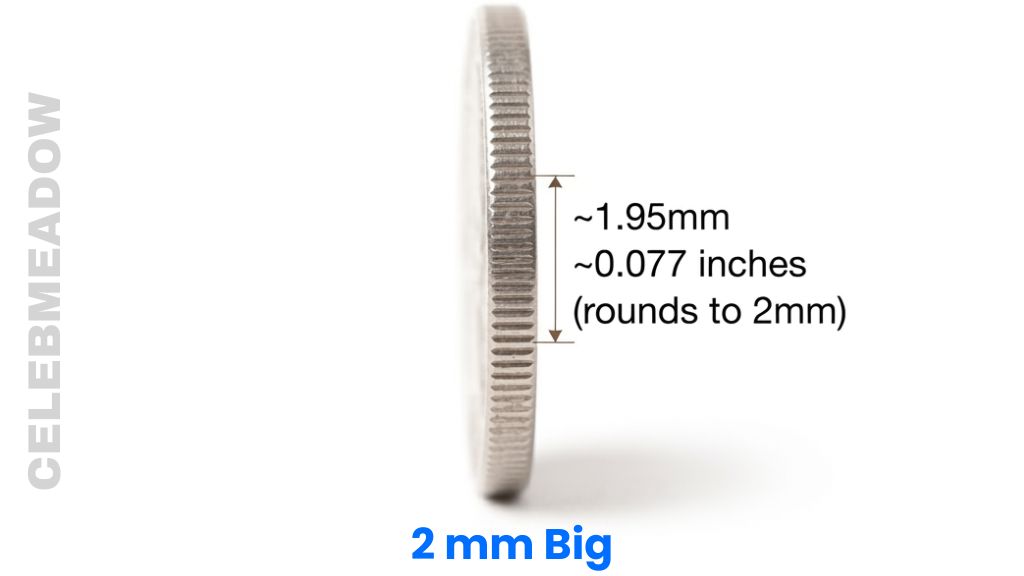
The edge of a US nickel is approximately 1.95mm thick close enough to 2mm that it’s one of the best pocket-sized references you’ll ever have.
The US Mint standardizes nickel dimensions down to thousandths of an inch so vending machines, coin sorters, and automated counters can identify coins by size alone. That consistency is the reason a nickel’s edge makes a reliable 2mm reference it doesn’t vary from coin to coin.
Pull a nickel from your pocket right now. Pinch the edge between your thumbnail and index finger. That gap between your fingers is approximately 2mm. It’s one of the most accessible ways to feel this measurement without any tools at all.
- Key measurement: ~1.95mm / ~0.077 inches (rounds to 2mm)
10. Heavy-Duty Kitchen Cotton Twine
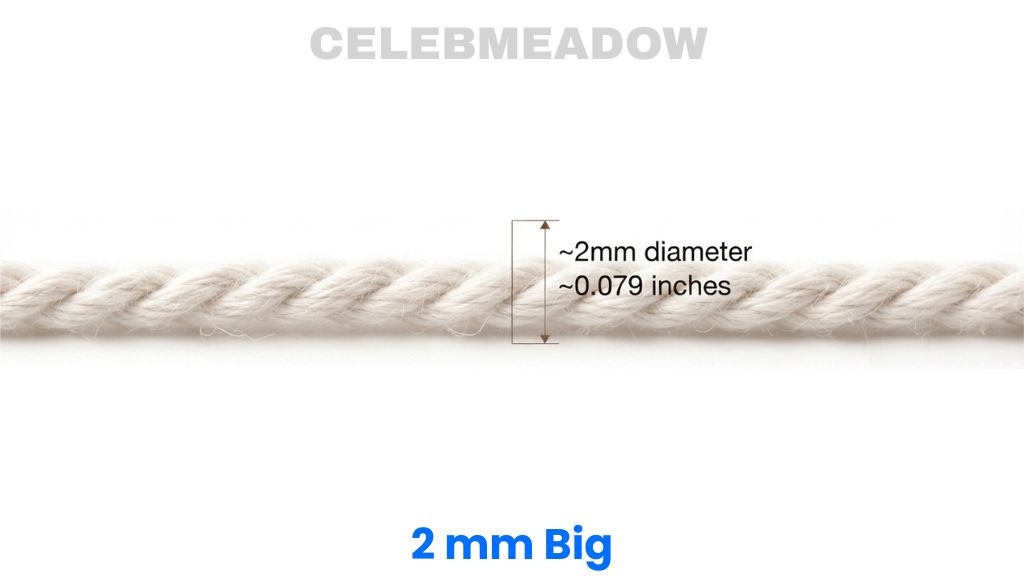
Kitchen cotton twine used for trussing meat runs commonly around 2 mm in diameter a thickness chosen specifically so it holds roasts together without cutting into the flesh.
Thinner twine would slice into the surface of meat during roasting. Thicker twine would leave visible marks and take too long to burn off at high oven temperatures. The 2 mm twisted cotton strand is a balance point that’s been standard in professional kitchens for decades.
Beyond cooking, this same diameter matters in crafting. Leatherworkers and bookbinders use 2mm twine as a thread gauge reference when selecting needle eye sizes. Pull a piece from a roll and lay it across your palm that round cord sitting in your hand is exactly 2mm thick from side to side.
- Key measurement: ~2mm diameter / ~0.079 inches
11. Leather Craft Cord
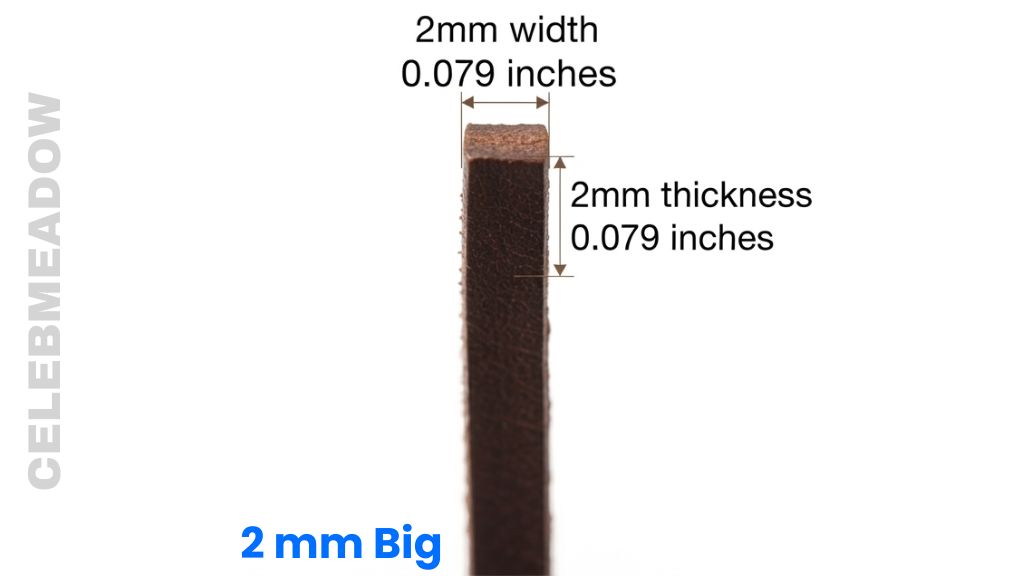
Flat leather craft cord is produced at exactly 2mm in both thickness and width a size chosen because it’s strong enough to carry small beads but flexible enough to knot by hand.
Leather cord at 2 mm sits in a sweet spot for jewelry making. Go thinner and it tears under the weight of metal charms. Go thicker and it becomes stiff, difficult to braid, and hard to thread through bead holes. Manufacturers standardize this size so beads are designed to match it.
Hold a thin leather bracelet cord next to your fingernail. The cord’s width is roughly the same as the white crescent at the base of your thumbnail. That crescent called the lunula is a natural 2mm guide that’s always on your hand.
- Key measurement: 2mm thickness and width / 0.079 inches
12. Two Stacked MicroSD Cards
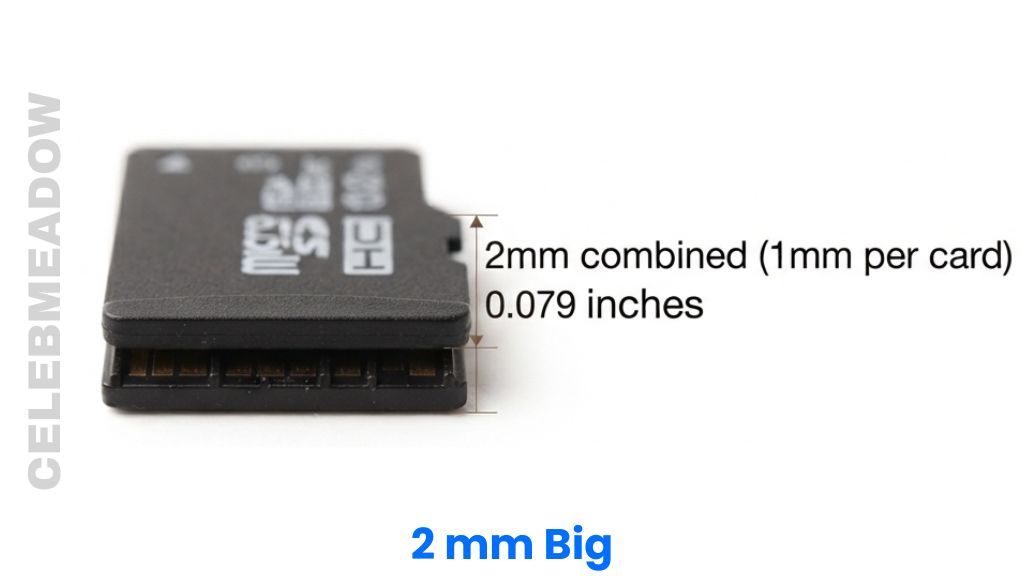
Two stacked microSD cards measure exactly 2 mm in combined thickness because each card is manufactured to an exact 1mm thickness by SD Association standards.
This precision isn’t accidental. MicroSD card trays inside phones and cameras are machined to accept one card at a fixed depth. If cards varied even slightly in thickness, they’d either rattle inside the tray or refuse to click in. The 1mm per card standard makes swapping storage between devices reliable worldwide.
Stack two microSD cards from different devices different brands, different storage capacities, different years of manufacture. They’ll measure the same. That combined 2mm stack is thinner than two sheets of cardboard. Hold it pinched between your fingers and you’ll understand just how small this measurement really is.
- Key measurement: 2mm combined (1mm per card) / 0.079 inches
13. 20 Sheets of Standard Printer Paper
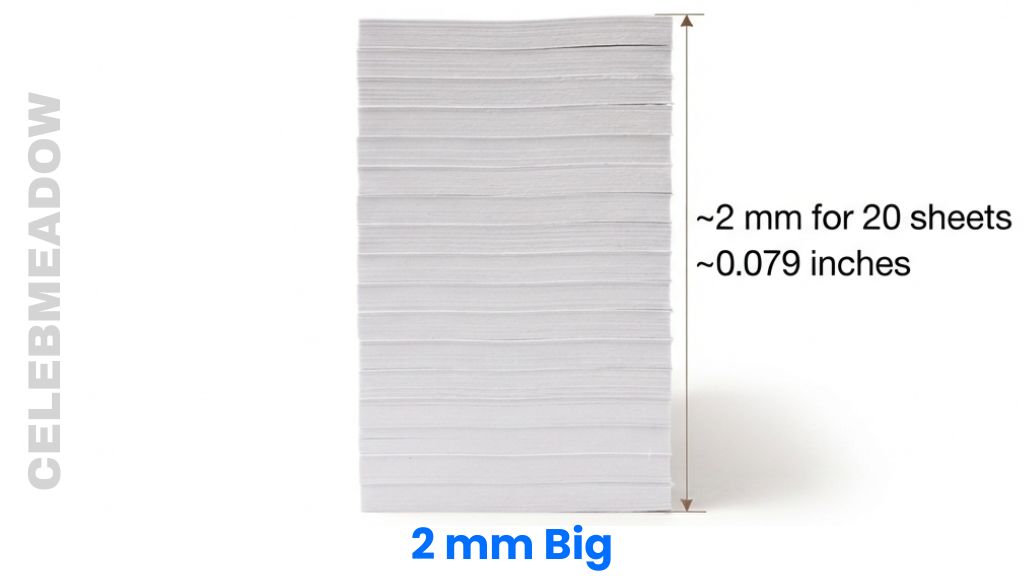
Stack 20 sheets of standard 20lb printer paper and the combined thickness comes to commonly around 2mm because each sheet measures approximately 0.1mm thick.
Paper mills control sheet thickness with extreme consistency because office printers, copiers, and binding machines are all calibrated for standard 20lb paper. A sheet that ran 0.15mm thick would jam constantly. The consistency that makes paper boring is exactly what makes it useful as a measurement tool.
This one requires no special objects. Go to any desk, grab 20 sheets of copy paper, and stack them. That small deck in your hand is approximately 2 mm tall. It’s the most accessible measurement check on this entire list and it works anywhere in the world.
- Key measurement: ~2 mm for 20 sheets / ~0.079 inches
14. Neoprene in a Small Cosmetic Pouch
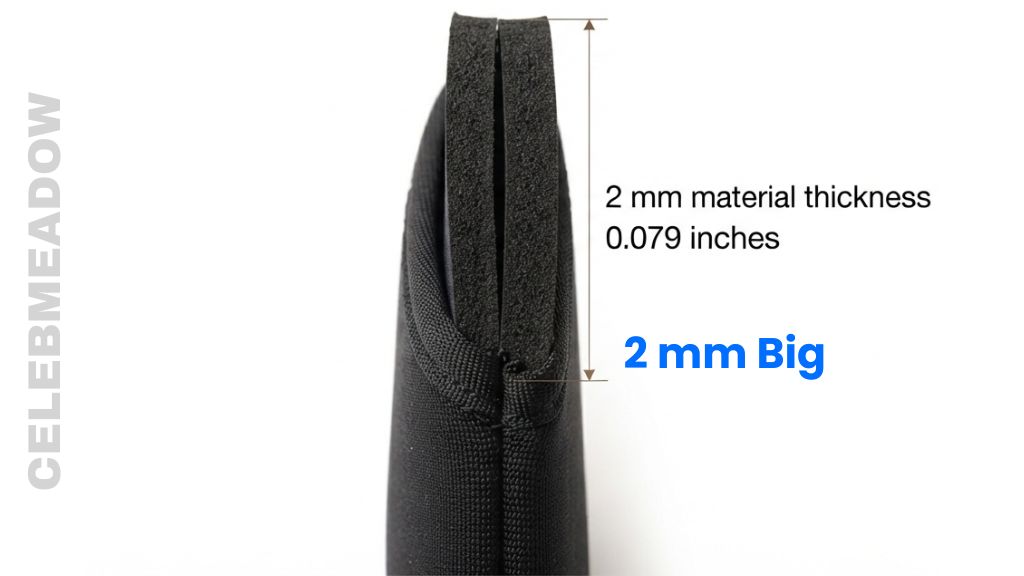
The neoprene wall of a small cosmetic or tech pouch is exactly 2 mm thick a material choice that keeps the bag soft and pliable rather than stiff or bulky.
At 2mm thickness, neoprene behaves more like a firm fabric than a foam panel. It absorbs light bumps, holds its shape, and stays flexible in cold temperatures which is why it’s used for everything from makeup bags to laptop sleeves. Thicker neoprene would make the pouch rigid and heavy. Thinner neoprene would offer almost no protection at all.
Squeeze the wall of any soft cosmetic pouch or padded phone case between your fingers. That slightly spongy, uniform thickness you feel? In most products of this type, that’s 2mm of neoprene. It’s a size reference you can find in almost any bag or accessory you already own.
- Key measurement: 2 mm material thickness / 0.079 inches
How to Picture 2 mm Without a Ruler
The Pinch Method: Hold a US nickel between your thumb and index finger at the edge. The gap your fingers feel is approximately 1.95mm essentially 2mm. A credit card is about 0.8mm thick, so two and a half stacked credit cards would match it. The nickel edge is easier because it’s a single, rigid object and the thickness registers immediately in your fingertips.
The Stack Method: Grab 20 sheets of any standard copy paper and press them together. That stack is roughly 2mm tall. You don’t need a ruler. You don’t need any special equipment. You just need a printer and a counter.
One more quick trick: look at your fingernail. The white lunula at the base that pale crescent near the cuticle is typically about 2mm wide on most adults. It’s always with you, and it calibrates surprisingly well against small measurements like this one.
2 mm Size Compared to Similar Sizes
| Measurement | In cm | Compared to 2mm |
| 0.5mm | 0.05 cm | 4× smaller — width of a human hair (thick strand) |
| 1mm | 0.1 cm | 2× smaller — thickness of one MicroSD card |
| 2mm | 0.2 cm | ← Target size |
| 3mm | 0.3 cm | 1.5× larger — common mechanical pencil lead (0.5mm tip housing) |
| 5mm | 0.5 cm | 2.5× larger — width of a standard pencil eraser |
| 4mm | 0.4 cm | Double of 2mm — thickness of two stacked nickels |
Common Questions About 2mm
How big is 2mm in inches?
2mm equals 0.0787 inches. As a fraction, that’s roughly 5/64 of an inch. On a ruler, it lands just before the 1/8-inch mark.
What does 2mm look like on a ruler?
On a metric ruler, 2mm is the second small tick mark from zero. On an imperial ruler, it falls just short of the 1/8-inch line. It’s a very short distance easy to miss at a glance.
Is 2mm bigger than 1mm?
Yes, exactly twice the size. One microSD card is 1mm thick. Stack two together and you have 2mm. Simple as that.
What household item is closest to 2mm?
The edge of a US nickel is approximately 1.95mm the closest everyday object you’ll find. Twenty sheets of standard printer paper stacked together also hit roughly 2mm.
How can I measure 2mm without a ruler?
Stack 20 sheets of regular copy paper. That pile is approximately 2mm tall. No tools needed. For precise work, a cheap digital caliper is your best option.
Is 2mm the same as 0.2 cm?
Yes. There are 10 millimeters in a centimeter, so 2mm and 0.2cm are the same distance just written differently.
Where does 2mm appear in everyday life?
Laptop screws, pencil graphite cores, cosmetic pouch walls, fruit flies, sesame seeds. Once you know the size, you’ll spot it constantly.
A sesame seed on a hamburger bun, the edge of a nickel between your fingers, and a stack of 20 sheets of copy paper those three images cover the same distance. Two millimeters is real, touchable, and everywhere once you know where to look. The next time a spec sheet throws this number at you, you’ll already have it placed.
Related More Measurements Guides:

I’m Cherry Sin, and I write clear, practical guides that help people understand everyday measurements and sizes. I focus on turning numbers into easy mental pictures using familiar objects and real-life situations. At Celebmeadow, I write guides that explain measurements in a simple, visual way.