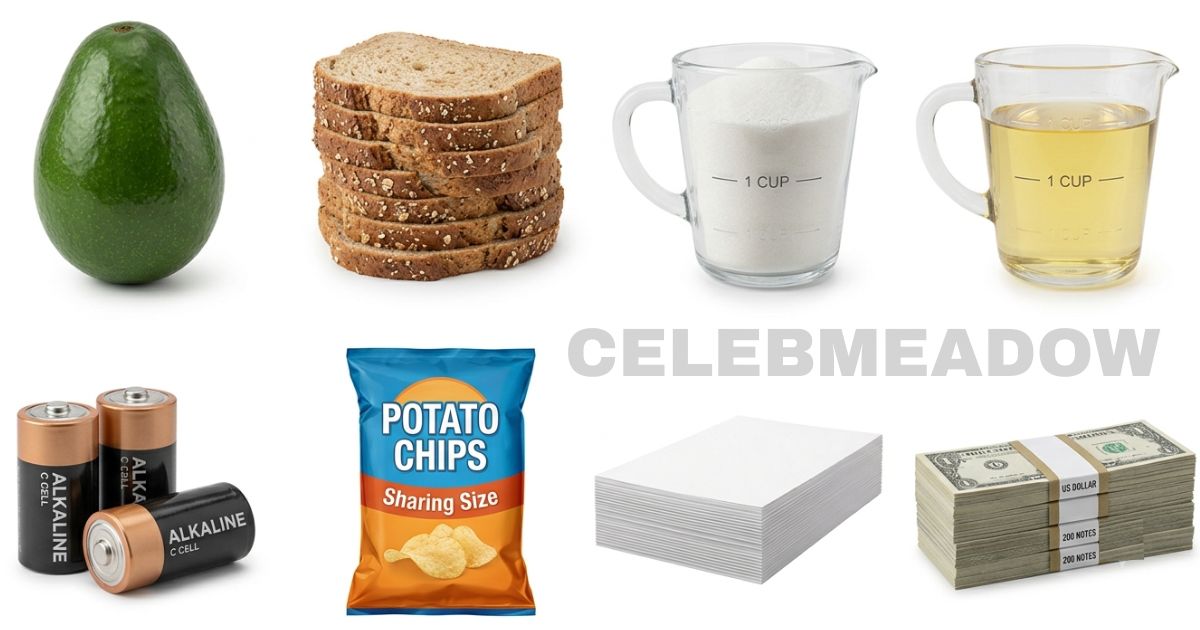
Trying to figure out how much is 7 ounces feels abstract until you connect it to something real. Seven ounces sits just under half a pound — it converts to roughly 198 grams, 0.44 pounds, or about 207 ml of water. It’s not heavy at all. Think of it as the weight that sits comfortably on your open palm without your arm getting tired. This guide uses 15 real, everyday objects to help you feel it instantly.
How Much is 7oz? Quick Conversions
| Unit | Value |
| Ounces | 7 oz |
| Pounds | 0.4375 lb |
| Grams | 198.45 g |
| Kilograms | 0.198 kg |
| Milliliters (water) | ~207 ml |
| Tablespoons | ~14 tbsp |
| Cups | ~0.875 cup |
15 Everyday Things That Weigh 7 Ounces
| Object | Category | Weight |
| Standard juice box | Food & Drink | ~7.3 oz |
| One cup of granulated sugar | Kitchen | 7.05 oz |
| Seven slices of whole-grain bread | Food | ~7 oz |
| Large Hass avocado | Produce | ~7 oz |
| Seven almond servings | Snack | ~7 oz |
| 7 oz bag of potato chips | Snack | ~7.3 oz |
| One cup of vegetable oil | Kitchen | ~7.7 oz |
| Medium coffee mug | Household | ~7 oz |
| Small notebook | Stationery | ~7 oz |
| 45 sheets of printer paper | Office | ~7.2 oz |
| 35 US quarters | Currency | 7 oz |
| Roll of nickels | Currency | 7 oz |
| Bundle of 200 dollar bills | Currency | 7 oz |
| Three C-cell batteries | Electronics | ~7 oz |
| A softball | Sports | 6.25–7 oz |
1. A Standard Juice Box (6.75 fl oz Size)
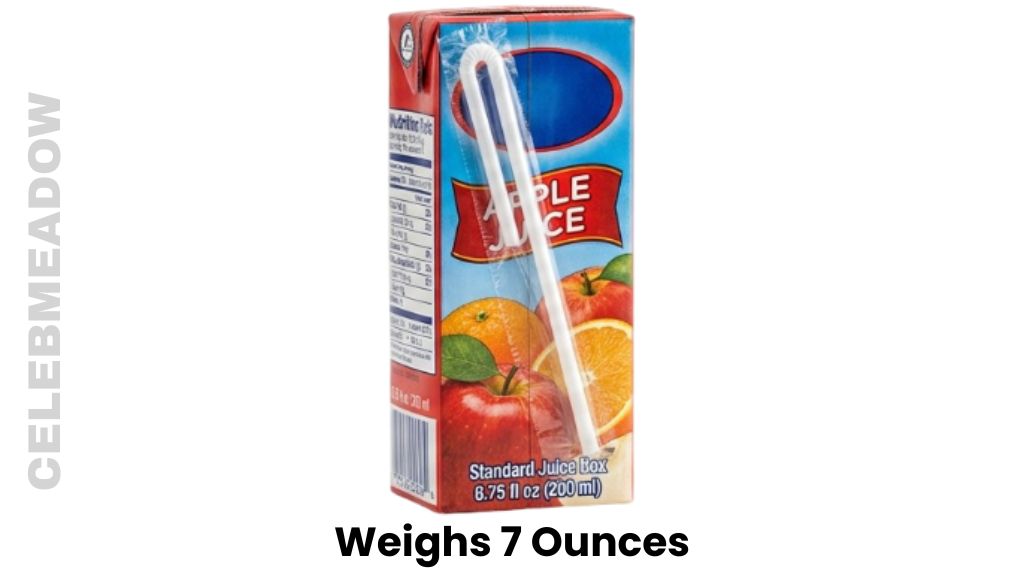
A full, unopened children’s juice box with the straw attached commonly weighs around 7.3 ounces.
That tiny rectangular box you toss into a school lunch bag? It’s practically a perfect 7-ounce reference. The weight comes from 200 ml of liquid inside, plus the cardboard, foil lining, and that little plastic straw tucked against the side.
Pick one up and hold it flat on your palm. It barely registers. That’s the point — it was designed so a child’s hand could carry it without effort. The empty, crushed version weighs almost nothing, which instantly shows you how much of that 7 ounces is just the liquid itself.
Key measurement: ~7.3 oz | ~207 g
2. One Cup of Granulated Sugar
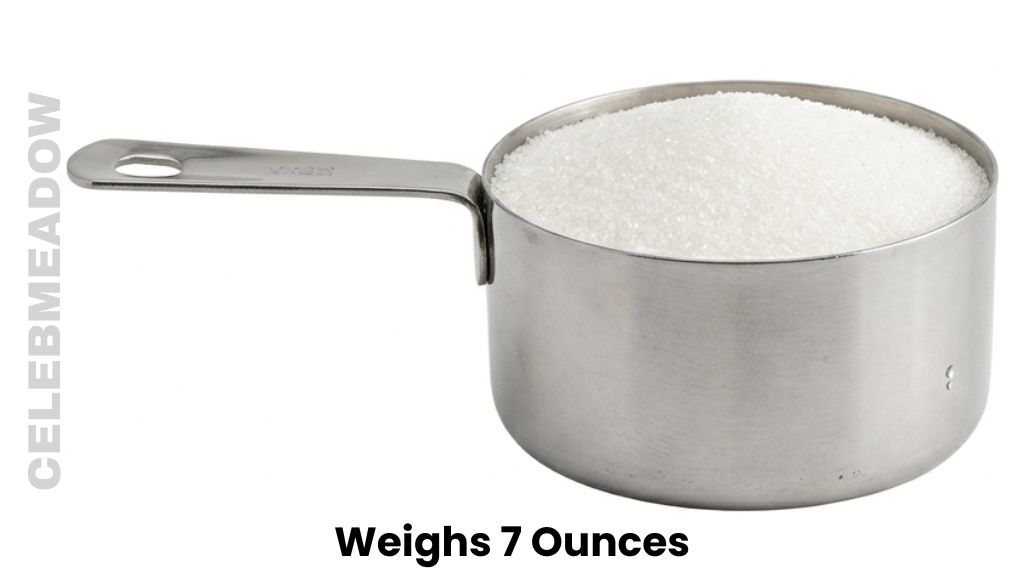
A single leveled cup of white granulated sugar weighs exactly 7.05 ounces by standard culinary measurement.
This one surprises a lot of people. Sugar is denser than it looks, so a cup of it feels heavier in your hand than a cup of flour would. The fine crystals pack together tightly, and that density is exactly why bakers use weight — not volume — when precision matters.
Scoop a full cup of sugar and hold the measuring cup still for a moment. You’ll feel a distinct, slightly-heavy pull in your wrist. That’s your 7-ounce reference right there, no scale needed. When a recipe calls for 7 oz of sugar and you only have a cup measure, you’re already covered.
Key measurement: 7.05 oz | 200 g
3. Seven Slices of Whole-Grain Bread
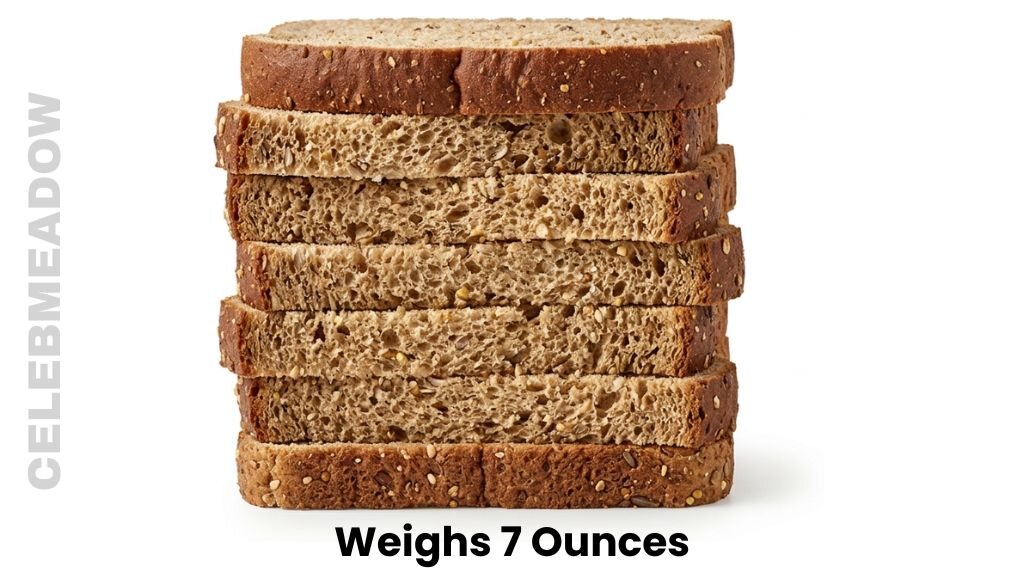
Seven standard slices of whole-grain bread from a commercial loaf typically weigh around 7 ounces combined.
Bread manufacturers slice their loaves to land at roughly one ounce per slice. This isn’t random — it lines up with nutritional labeling standards and helps consumers track carbohydrate and calorie intake per serving. Seven slices is almost exactly half of a standard store-bought loaf.
Stack them on your hand right now. They’re light, airy, and slightly squishy. Despite that soft feel, seven slices together carry a real, gentle weight — more than you’d expect from something so fluffy. It’s a great reminder that 7 ounces doesn’t have to feel dense or heavy.
Key measurement: ~7 oz | ~198 g
4. A Large Hass Avocado
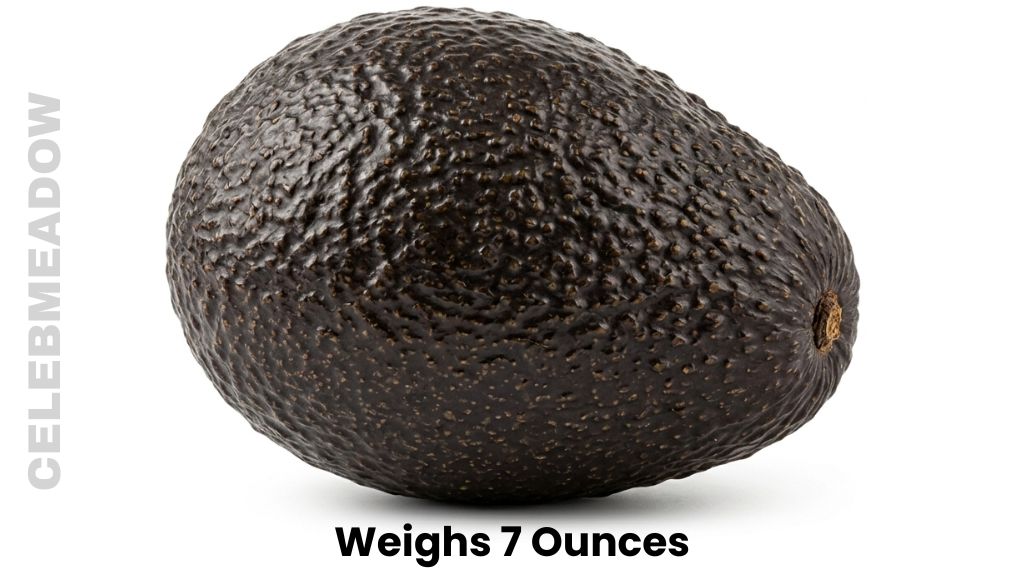
One large Hass avocado in its unpeeled, uncut state commonly weighs around 7 ounces.
This is the one most people have already held without realizing it. Every time you gently squeeze an avocado at the grocery store to check if it’s ripe, you’re essentially doing a 7-ounce weight check with your fingers. The thick, bumpy skin, dense flesh, and large pit all contribute to this consistent weight range.
Agricultural packing standards sort avocados by size and weight before they reach stores — so a “large” one almost always falls near that 7-ounce mark. It fits neatly in one palm and has a solid, organic heft to it that’s easy to recall.
Key measurement: ~7 oz | ~198 g
5. Seven Almond Servings
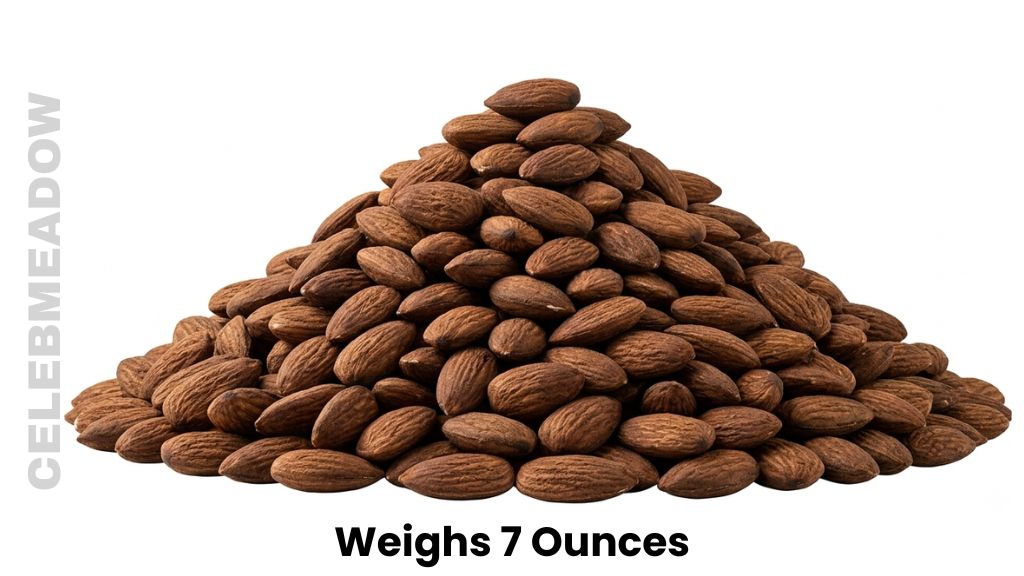
Seven standard one-ounce almond servings — about 161 individual nuts — weigh roughly 7 ounces altogether.
Health guidelines define one serving of almonds as 23 nuts, which lands at exactly one ounce. Stack seven of those servings together and you’ve got a small mountain of nuts that fills two cupped hands. The weight feels light for the volume, because almonds have a low density relative to their size.
If you’re a snacker or someone who tracks macros, this is a useful visual. Imagine seven small snack bags of almonds laid side by side — that combined weight is your 7-ounce reference. Light, dry, and slightly grainy to hold.
Key measurement: ~7 oz | ~198 g
6. A Standard 7 oz Bag of Potato Chips
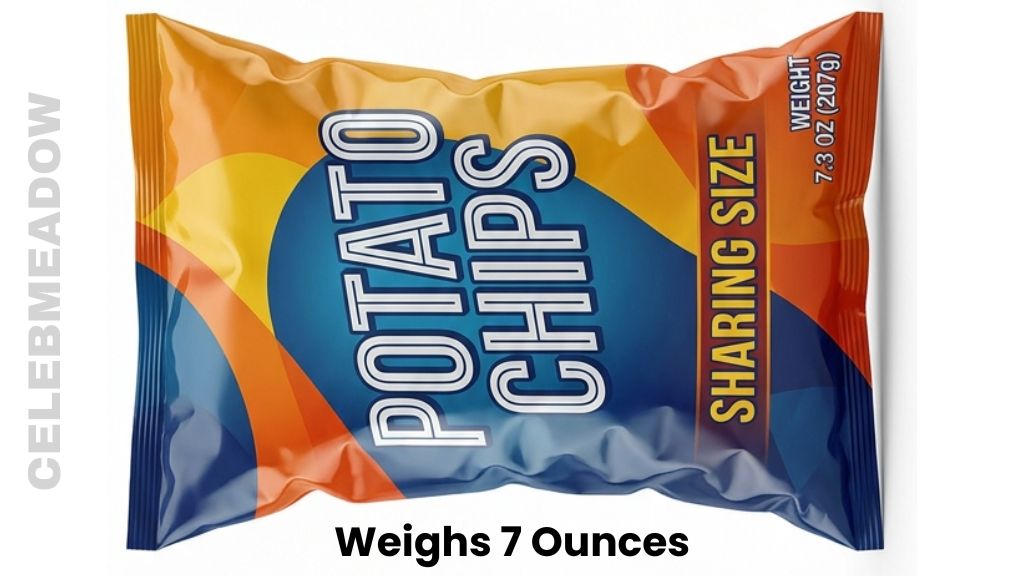
A standard medium retail bag of potato chips — the kind labeled as a sharing size — typically weighs around 7.3 ounces with the packaging.
This is one of the most deceptive weight references on this list. The bag is enormous. It crinkles loudly. It takes up a huge amount of shelf space. But hold it in one hand and you’ll feel almost nothing — just a light, airy, puffed-up pouch that carries a surprisingly small mass.
That’s because the chips themselves are thin, dried slices with most of their water removed. The bag is mostly air, by design, to protect the chips from crushing. When someone asks “how big is a 7 oz bag?” — it’s bigger than you’d expect by size, but lighter than you’d guess by weight.
Key measurement: ~7.3 oz | ~207 g
7. One Cup of Vegetable Oil
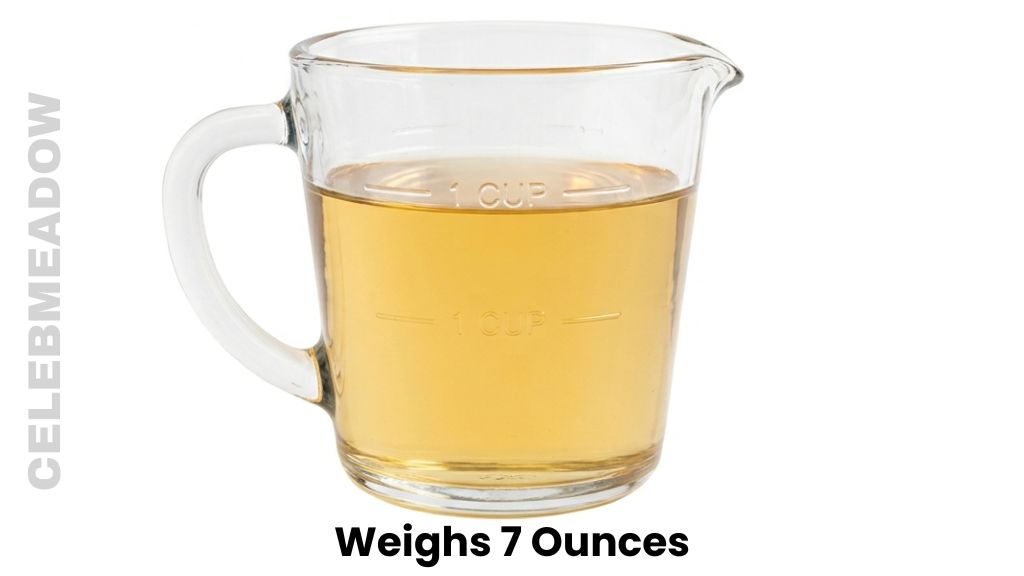
One full cup of vegetable oil weighs commonly around 7.7 ounces — just slightly over 7, but close enough to serve as a practical reference.
Oil is less dense than water. A cup of water weighs 8.3 ounces, but that same cup filled with oil comes in lighter at around 7.7 ounces. This is why bakers who convert between weight and volume need to adjust their numbers when switching from water-based liquids to fat-based ones.
Pick up a full liquid measuring cup of oil and pour it slowly. You’ll feel a viscous, sluggish pull — the heaviness isn’t from pure weight, it’s from the fluid resistance. It pours slower and clings to the cup walls. That sensation is your body’s way of registering “this is close to 7 ounces.”
Key measurement: ~7.7 oz | ~218 g
8. A Medium-Sized Coffee Mug
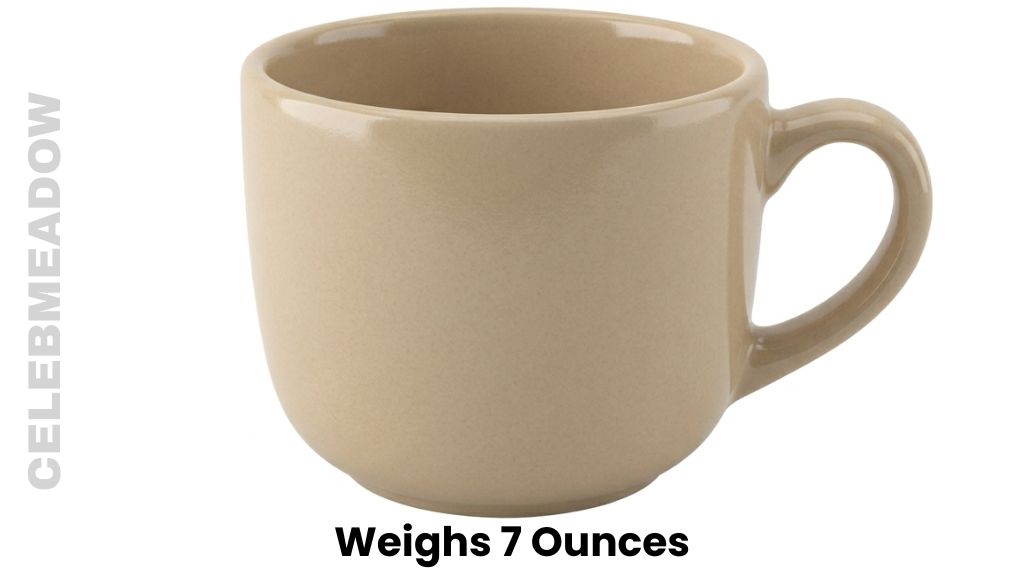
An empty medium ceramic coffee mug commonly weighs around 7 ounces, depending on how thick the clay walls are.
The weight of a mug isn’t accidental. Potters and manufacturers balance two competing needs: the walls must be thick enough to hold heat but light enough that one finger looped through the handle can lift it comfortably. Too light and it feels cheap. Too heavy and your hand tires quickly.
Grab your morning mug right now — before you pour anything in it. That smooth, solid, handled weight sitting in your palm is your 7-ounce baseline. Most people hold this object daily without thinking about it, which makes it one of the best mental anchors on this entire list.
Key measurement: ~7 oz | ~198 g
9. A Small Notebook
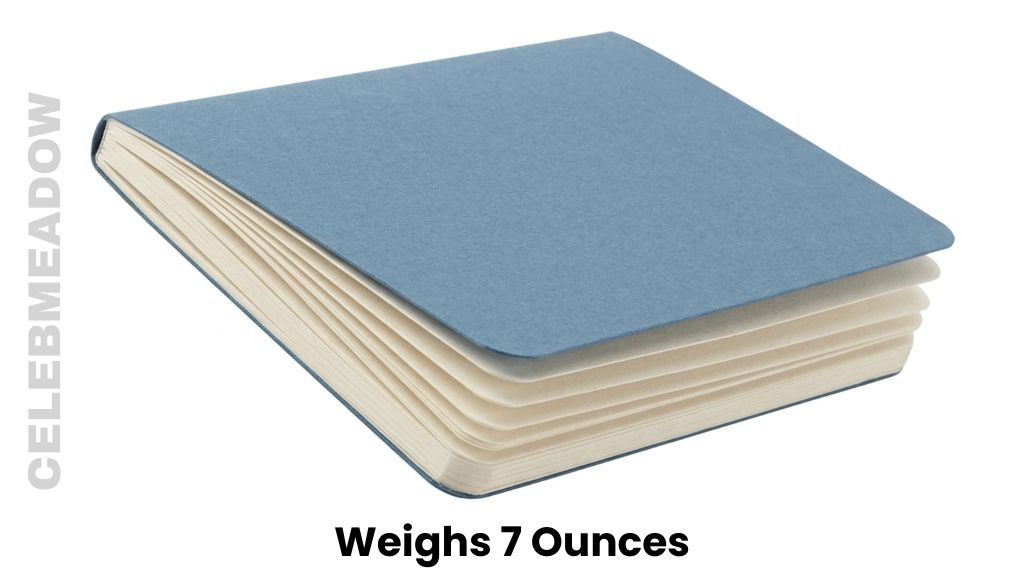
A pocket-sized notebook with a soft cardstock or vinyl cover typically weighs around 7 ounces.
Notebook manufacturers aim for a weight that sits invisibly in a jacket pocket or a small bag. If a notebook is too heavy, people leave it at home. If it’s too thin, it runs out of pages too fast. The sweet spot — a pad with enough sheets to last weeks but light enough to forget you’re carrying — lands right around 7 ounces.
Flip through the pages of a small journal. Feel the slight fan of air, the soft paper resistance. That whole bound pad in your hand, including the cover? That’s your weight. A clean, simple, paper-and-board 7-ounce feel.
Key measurement: ~7 oz | ~198 g
10. A Stack of 45 Sheets of Letter-Sized Paper
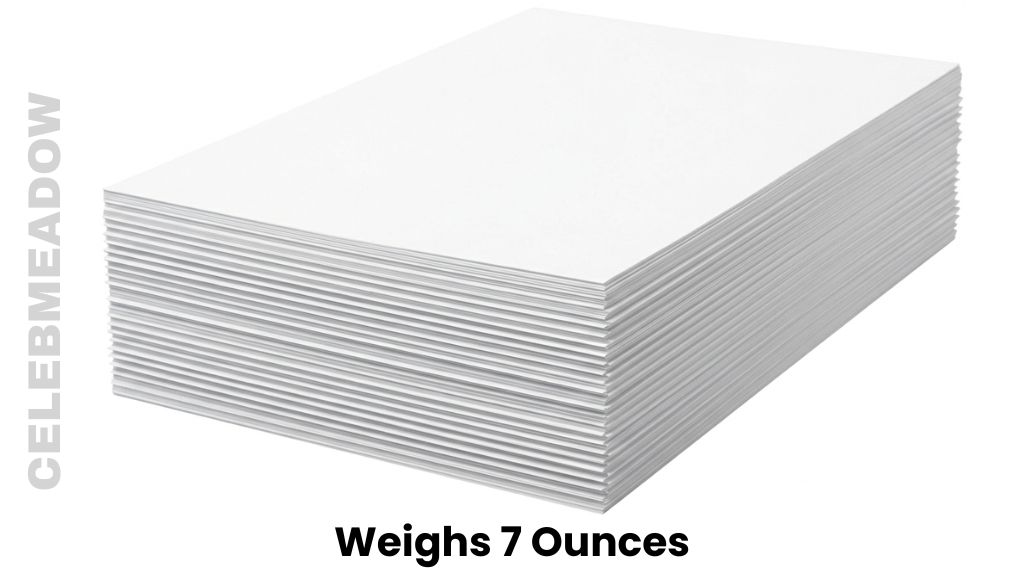
Exactly 45 sheets of standard 20 lb office printer paper weigh around 7.2 ounces.
Standard copy paper weighs 0.16 ounces per sheet. That number comes from the global printing industry’s bond paper specification — a carefully controlled standard that ensures consistent feeding through printers and copiers. Multiply 0.16 by 45 and you land at 7.2 ounces.
This is a genuinely useful reference for mailing. Before you stuff an envelope, think about whether your document has more or less than 45 pages. If it’s less, you’re under 7 ounces. If it’s more, you’re over. It’s a fast postal weight estimate without a scale.
Key measurement: ~7.2 oz | ~204 g
11. 35 US Quarters
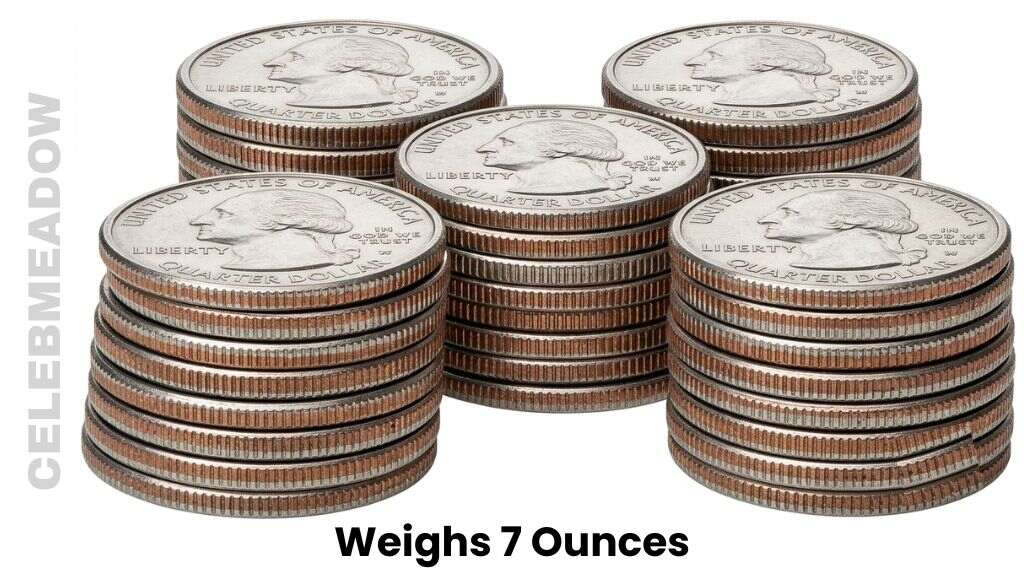
35 US quarter-dollar coins weigh exactly 7 ounces — this is one of the most precise references on this list.
The US Coinage Law specifies that every quarter must weigh 5.67 grams. No rounding, no variation — it’s a legally controlled manufacturing standard. Multiply that by 35 and you get 198.45 grams, which is as close to a perfect 7 ounces as you’ll find anywhere.
Cup 35 quarters in your hand right now. They shift against each other, cold and smooth, with a metallic density that feels very different from food or paper. This is why quarters are a classic tool for calibrating small digital scales — the weight is exact and repeatable.
Key measurement: 7 oz exactly | 198.45 g
12. A Roll of Nickels
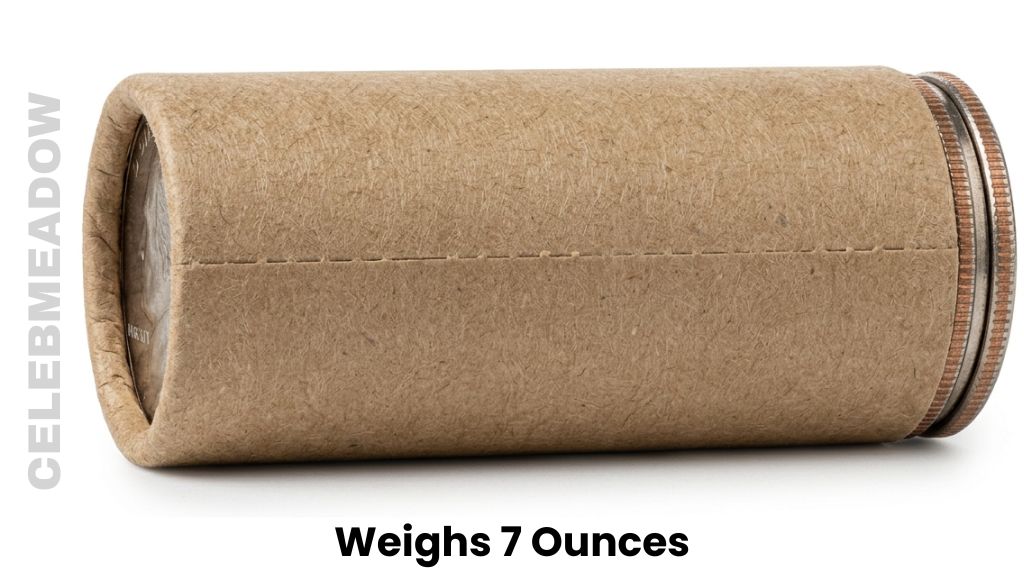
A standard bank roll of 40 nickels — worth $2.00 — weighs exactly 7 ounces, or 200 grams of coin.
US Mint regulations set every nickel at exactly 5.00 grams. A standard coin roll holds 40 nickels. The math is clean: 40 times 5 equals 200 grams, which is just barely over 7.05 ounces. The paper wrapper adds almost nothing.
Hold a nickel roll in your fist. It’s dense, compact, and cylindrical — a completely different feel than the same weight in bread or chips. The solid metallic mass in a small space is what makes coin rolls such a satisfying 7-ounce comparison. Laundromat regulars and retail workers know this feel by heart.
Key measurement: 7 oz | 200 g
13. A Bundle of 200 US Dollar Bills
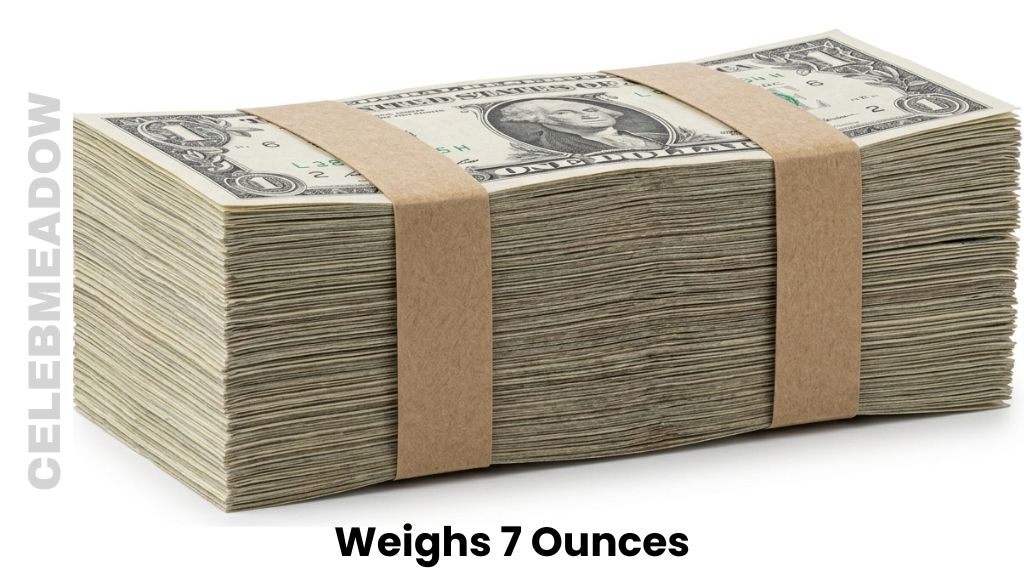
A bundle of exactly 200 US paper bills of any denomination weighs precisely 7 ounces.
Every US banknote — one dollar or one hundred — is printed on the same cotton-linen blend paper. The Federal Reserve mandates this. Each note weighs exactly 1.00 gram. Two standard bank straps of 100 bills each gives you 200 notes, which equals 200 grams.
This means a bundle of 200 one-dollar bills weighs the same as a bundle of 200 hundreds. The value is wildly different, but the physical weight is identical. That flat, slightly stiff, papery rectangle in your hands? Exactly 7 ounces.
Key measurement: 7 oz exactly | 200 g
14. Three C-Cell Batteries
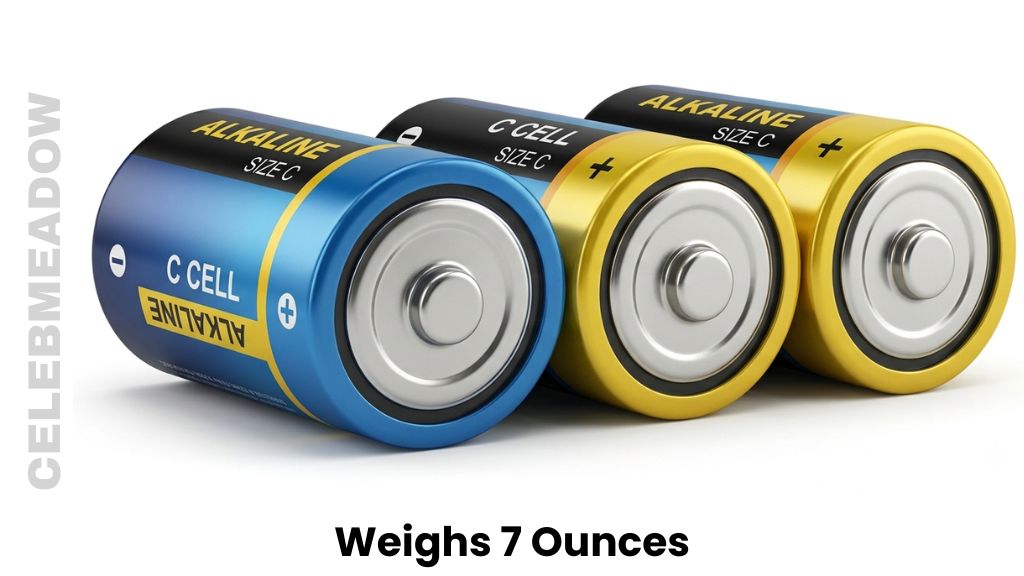
Three standard C-cell batteries held together typically weigh around 7 ounces in total.
Each C battery carries about 2.3 ounces on its own. That weight exists because of what’s packed inside: a steel casing, manganese dioxide, zinc, and enough electrolyte material to power mid-sized electronics like radios, lanterns, and larger toys. The casing has to be thick enough to prevent leaks but not so heavy it adds unnecessary bulk to devices.
Roll three C batteries together between your palms. They’re hard, smooth, dense cylinders with a satisfying metallic weight that feels solid despite their small size. Parents changing batteries in a large flashlight know this exact feeling.
Key measurement: ~7 oz | ~198 g
15. A Softball
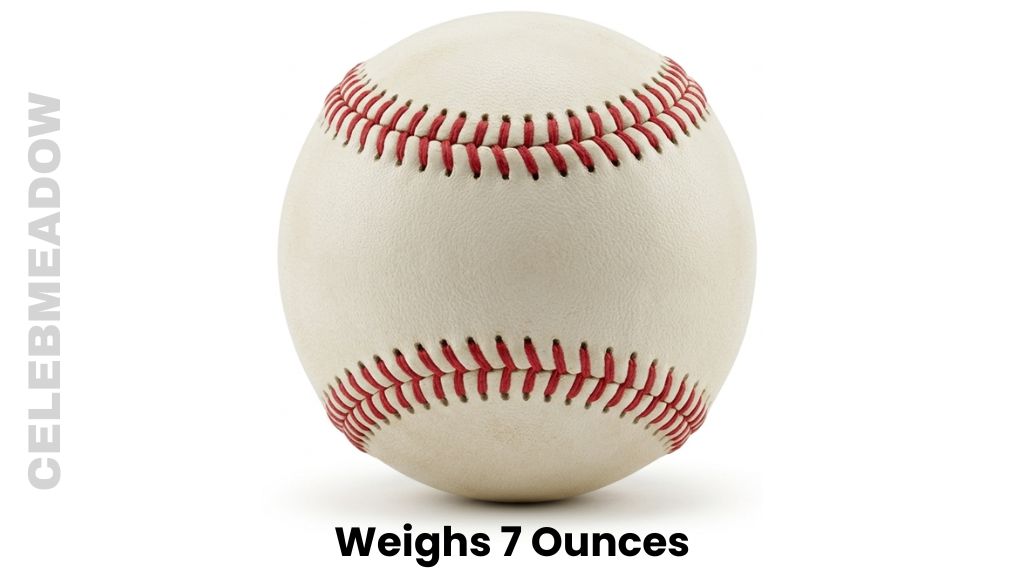
A regulation softball falls within a weight range of 6.25 to 7 ounces — making it one of the most natural 7-ounce references you can hold.
Governing bodies like USA Softball set strict weight limits for competition equipment. The range ensures that pitching velocities, bounce physics, and hitting dynamics stay predictable across all levels of play. A softball at the top of that range — 7 ounces — is a firm, tightly wound, stitched leather ball roughly the size of a large orange.
Grip one in your pitching hand. Your fingers spread wide, the leather stitching catches your fingertips, and the whole ball fills your palm completely. It’s the kind of weight that requires a deliberate throw — not a casual toss. If you’ve ever played gym class or backyard catch, this weight is already stored in your muscle memory.
Key measurement: 6.25–7 oz | ~177–198 g
How to Picture 7 Ounces Without a Scale
The easiest way to feel 7 ounces on the spot is to check your pockets. Pull out 35 quarters — or any combination of coins that adds up to 35 quarters in mass — and hold them loosely in one hand. The cool, shifting, metallic weight pressing against your palm is right at 7 ounces. No scale, no guessing.
The Pocket Check: Your smartphone likely weighs between 6 and 7 ounces. Hold your phone flat in one hand. If it feels light but present — not nothing, not heavy — that’s the 7-ounce zone. Most mid-size phones land just at or under this weight, making your own device a fast reference.
The Kitchen Check: Reach for your bag of granulated sugar. Scoop out one full, leveled US measuring cup. That cup of sugar in your hand is 7.05 ounces — as close to exact as you’ll get without a scale. It’s denser than it looks and heavier than a cup of flour, which is part of why this works so well as a reference.
7 Ounces Compared to Similar Weights
| Weight | In Grams | Compared to 7 oz |
| 4 oz | 113 g | About half of 7 oz |
| 5 oz | 142 g | A little less than 7 oz |
| 7 oz | 198 g | ← This article’s target |
| 9 oz | 255 g | About 30% heavier |
| 12 oz | 340 g | Nearly double |
| 14 oz | 397 g | Exactly double 7 oz |
Common Questions About 7 Ounces
How many grams is 7 ounces?
Seven ounces equals 198.45 grams. This conversion uses the international avoirdupois standard, where one ounce equals exactly 28.35 grams. For most cooking and everyday use, rounding to 198 grams is perfectly accurate.
How much is 7 ounces in cups?
Seven fluid ounces equals just under one cup — specifically 0.875 cups, or roughly 7/8 of a cup. For water or thin liquids, this is also close to 207 milliliters. Keep in mind that for dry ingredients like sugar, 7 ounces by weight is a different measurement than 7 fluid ounces of liquid.
How heavy is 7 ounces compared to a pound?
Seven ounces is 0.4375 pounds — just under half a pound. Since one pound equals 16 ounces, 7 ounces sits a little less than halfway there. A 7-ounce object feels genuinely light in the hand — comfortable to hold in an open palm for a long time without fatigue.
What household item weighs exactly 7 ounces?
A roll of 40 nickels weighs exactly 200 grams (about 7.05 oz) and is one of the most precise references available. Thirty-five US quarters also hit exactly 7 ounces by US Mint standards. Both are easy to find in most homes and give you a precise, repeatable reference.
How much is 7 oz in tablespoons?
Seven fluid ounces equals 14 tablespoons. Since 1 fluid ounce equals 2 tablespoons, the math is straightforward. This is a useful conversion when scaling down recipes that call for 7 oz of a liquid ingredient like oil or broth.
Is 7 ounces a lot of water to drink?
Not at all — 7 ounces is less than one standard cup of water (8 oz). Most reusable water bottles hold 16 to 32 ounces, so 7 ounces is roughly a third to a half of a small bottle. It’s about the volume of a children’s juice box.
How much is 7 ounces in ml?
Seven fluid ounces converts to approximately 207 milliliters. If you’re measuring 7 ounces of water specifically, you can also think of it as just over 3/4 of a standard 250 ml measuring cup.
The coffee mug sitting on your desk right now, an unopened juice box from the fridge, or a bundle of coins from your pocket — any one of these puts 7 ounces directly in your hand. Once you’ve felt it through something familiar, the number stops being abstract. Seven ounces is light, manageable, and easy to picture. You already know what it feels like — you just didn’t have a name for it.
Related More Measurements Guides:

I’m Cherry Sin, and I write clear, practical guides that help people understand everyday measurements and sizes. I focus on turning numbers into easy mental pictures using familiar objects and real-life situations. At Celebmeadow, I write guides that explain measurements in a simple, visual way.