Standing at the edge of a construction zone, a waterfront, or an open field, 500 feet is one of those distances that sounds big but stays blurry in the mind.
It equals 6,000 inches, 500 feet flat, or roughly 152.4 meters.
That’s not a short stroll — but it’s also not a mile. The fourteen real-world references below will lock that distance into your memory in a way no ruler ever could.
Exactly How Tall is 500 Feet? Quick Measurements
| Unit | Value |
| Inches | 6,000 in |
| Feet | 500 ft |
| Yards | 166.67 yd |
| Meters | 152.4 m |
| Centimeters | 15,240 cm |
| Millimeters | 152,400 mm |
| Kilometers | 0.1524 km |
| Miles | 0.0947 mi |
14 Real Things That Are 500 Feet Long or Tall
| Object | Measurement | Relation to 500 ft | Dimension |
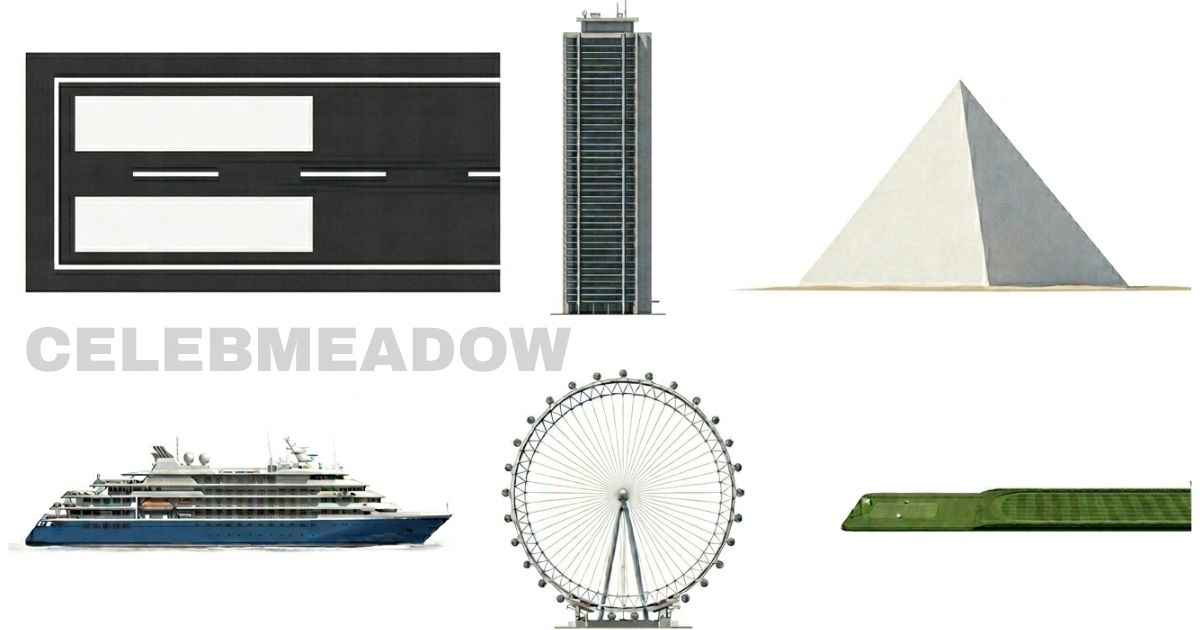
| Washington Monument | 555 ft | 55 ft taller than 500 ft | Height |
| 1.5 Football Fields | 540 ft | 40 ft over 500 ft | Length |
| 50-Story Building | ~500–600 ft | Lower end = 500 ft | Height |
| Great Pyramid of Giza | 481 ft | 19 ft shorter than 500 ft | Height |
| Small Cruise Ship | ~500 ft | Right at 500 ft | Length |
| FAA Runway Markings | 500 ft spacing | Exactly 500 ft | Length |
| Handysize Cargo Ship | ~420–550 ft | Midpoint ≈ 500 ft | Length |
| 2× Brooklyn Bridge Towers | 552 ft | 52 ft over 500 ft | Height |
| London Eye | 443 ft | 57 ft shorter than 500 ft | Height |
| Par 5 Fairway Landing Zone | ~500 ft | Right at 500 ft | Length |
| Statue of Liberty | 305 ft | 500 ft = 1.64× its height | Height |
| Soccer Field (FIFA) | 330–360 ft | 500 ft ≈ 1.4–1.5 fields | Length |
| 3.25× Space Shuttle Tank | 154 ft each | 3.25 tanks = 500 ft | Height |
| Space Needle | 605 ft | 105 ft taller than 500 ft | Height |
1. Washington Monument
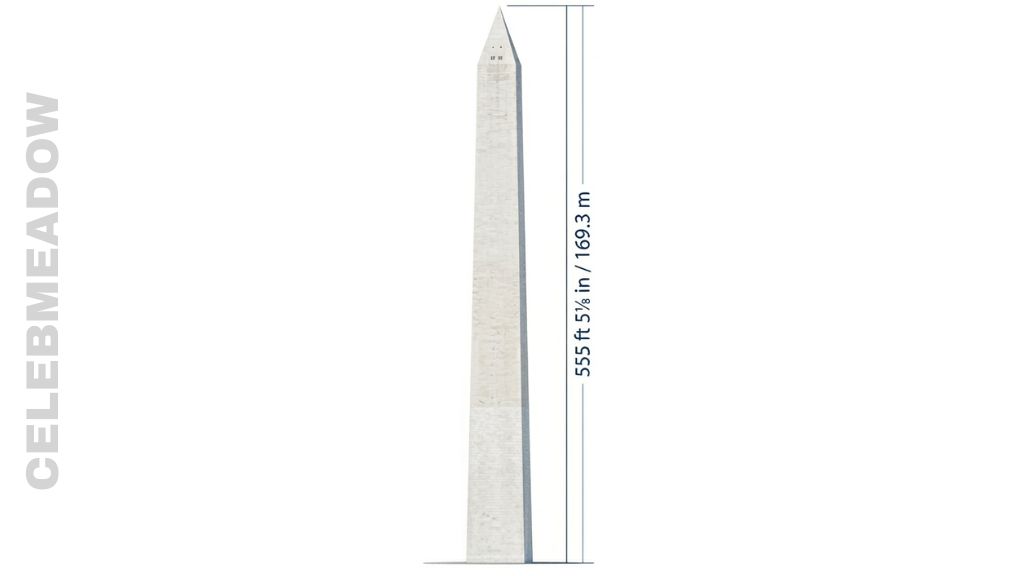
The Washington Monument was designed to be the tallest structure on Earth when it was completed in 1884 — and for a few years, it was. From the ground-level entrance to the aluminum tip, it measures exactly 555 feet and 5⅛ inches. To picture 500 feet, mentally peel off the top 55 feet. That’s roughly a five-story building worth of stone — gone. What remains still towers over nearly everything around it on the National Mall.
What makes this comparison so useful is that the Monument is a clean, vertical object. No angled roofline, no spire trickery. Just one straight column of white marble rising from flat ground. When you’re standing at its base, looking up feels almost disorienting. That’s 500 feet of height — real, verifiable, and unmistakable.
Key measurement: 555 ft 5⅛ in total height (500 ft = approximately the lower 90% of the structure) / 169.3 m
2. One-and-a-Half Football Fields
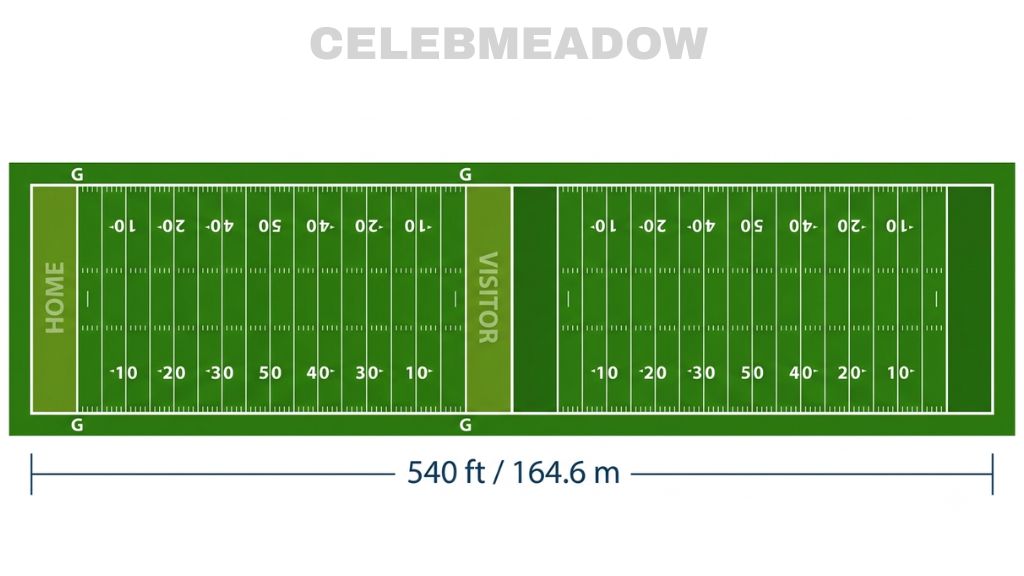
A regulation American football field, including both 10-yard end zones, runs 360 feet from goal line to goal line. Lay one and a half of those fields end to end and you get 540 feet — just 40 feet beyond the 500-foot mark. Most people have stood on or beside a football field at some point. That familiar stretch of green is your closest, most portable mental tool for this distance.
The reason this works so well is muscle memory. Your brain already knows how far a touchdown pass travels. It knows how long the walk from the bleachers to the end zone feels. Trim a tiny slice off one-and-a-half of those fields, and you’ve nailed 500 feet without a tape measure.
Key measurement: 1.5 fields = 540 ft / 164.6 m (500 ft ≈ 1.39 standard fields)
3. A 50-Story Building
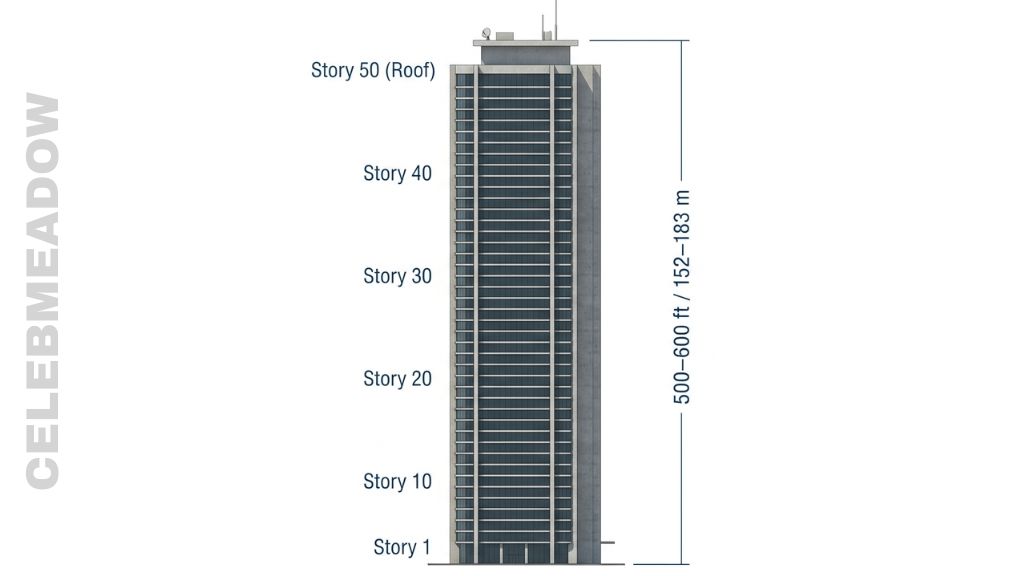
Every floor of a typical skyscraper isn’t just ceiling height. It includes the concrete structural slab, the space above the ceiling tiles where ducts and electrical conduits run, and the floor’s own thickness. Add all that up and each story runs between 10 and 12 feet. Stack 50 of those floors and you land commonly around 500 to 600 feet tall.
This matters when you’re booking a hotel room on the 40th floor and wondering whether the view clears nearby rooftops. It matters when a drone pilot needs to know if a building falls inside restricted airspace. A 50-story building is the urban answer to “how tall is 500 feet?” — you’ve probably looked up at one and not known you were staring at almost exactly this measurement.
Key measurement: Commonly around 500–600 ft / 152–183 m for a 50-story structure
4. The Great Pyramid of Giza (Original Height)
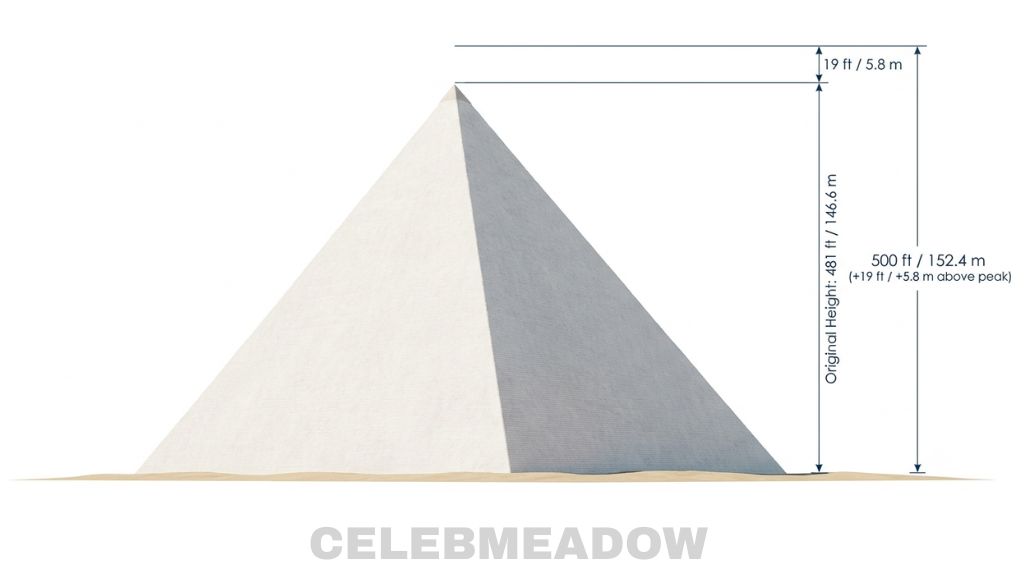
When the Great Pyramid was sealed shut around 2560 BCE, its limestone tip sat at 481 feet above the desert floor. That puts 500 feet just 19 feet above the original peak — roughly the height of a two-story house sitting on top of an ancient wonder. Centuries of erosion have since reduced it to about 455 feet, but the original figure is what engineers and historians use.
This comparison does something that modern buildings can’t: it collapses time. You’re not just measuring a distance — you’re connecting it to one of the most studied structures ever built. The pyramid took an estimated 20 years to construct. It was the tallest human-made structure on Earth for nearly 3,800 years. And 500 feet would have barely cleared it.
Key measurement: Original height 481 ft / 146.6 m (500 ft is roughly 19 ft taller)
5. A Small Cruise Ship
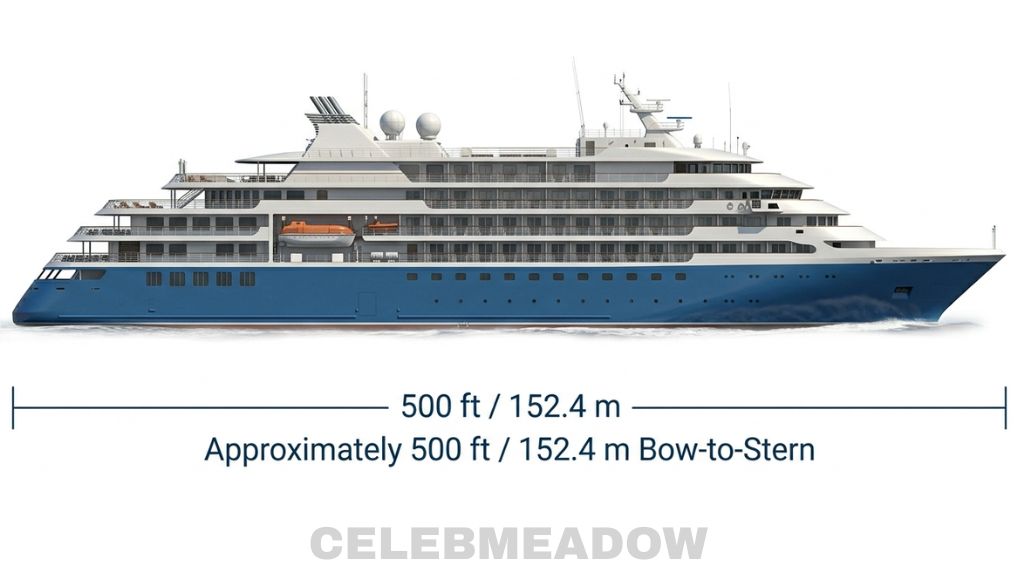
Not all cruise ships are floating cities. Smaller vessels — the kind that navigate tight ports in the Caribbean or the Norwegian fjords — measure right around 500 feet from bow to stern. Ships in this class were specifically built to fit within the old Panama Canal lock chambers, which capped out near 965 feet in length. Being 500 feet long wasn’t a coincidence; it was a design constraint.
If you’ve ever boarded one of these ships and walked its entire length on an outside deck, you’ve already paced 500 feet. That walk takes about two minutes at a casual pace. It’s longer than it sounds when you’re doing it in the wind with ocean on both sides.
Key measurement: Approximately 500 ft / 152.4 m from bow to stern for smaller cruise classes
6. FAA Runway Touchdown Zone Bar Spacing
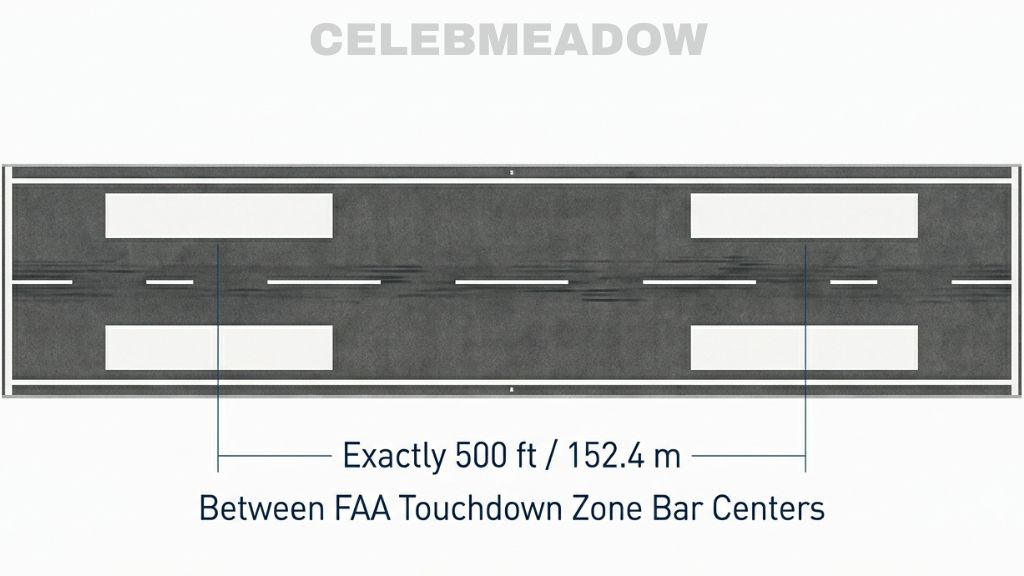
The painted touchdown zone markings on a commercial runway — those wide white bars pilots line up with during the final approach — are spaced exactly 500 feet apart by FAA regulation. This isn’t an arbitrary aesthetic choice. Pilots use these bars as a ground-speed and distance reference in low-visibility conditions. Each stripe tells a trained eye exactly how much runway remains.
Next time you’re seated near the wing on a flight, watch the runway as the plane descends. Those bars passing beneath you are 500 feet apart. They disappear beneath the aircraft fast — which tells you something about how quickly a plane at landing speed covers this distance.
Key measurement: Exactly 500 ft / 152.4 m between FAA touchdown zone bar centers
7. A Handysize Cargo Ship
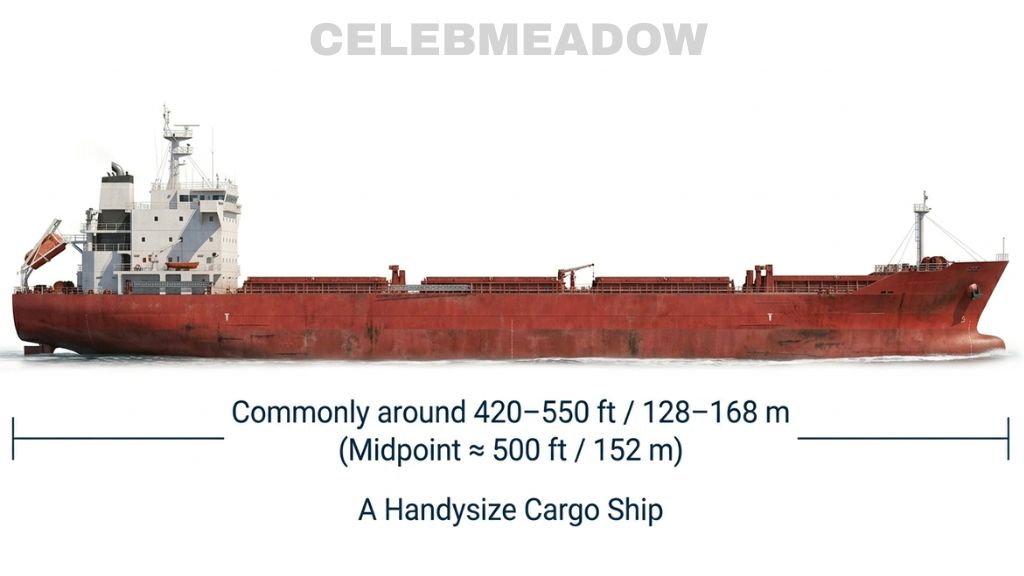
The Handysize class sits at the bottom of the ocean-going cargo hierarchy — and that’s exactly what makes it useful. These ships, ranging commonly around 420 to 550 feet long, were designed to enter ports that larger vessels simply can’t reach. Rivers, shallow harbors, industrial docks with short berths — Handysize vessels thread through all of it. At the middle of that range, you’re looking at roughly 500 feet of steel hull.
What’s interesting is that “small” in the cargo shipping world still means enormous by any human scale. A Handysize ship can carry tens of thousands of tons of grain or coal. Standing beside one at a dock, even experienced port workers describe the hull wall as feeling like a moving building.
Key measurement: Commonly around 420–550 ft / 128–168 m (midpoint ≈ 500 ft / 152 m)
8. Two Brooklyn Bridge Towers Stacked
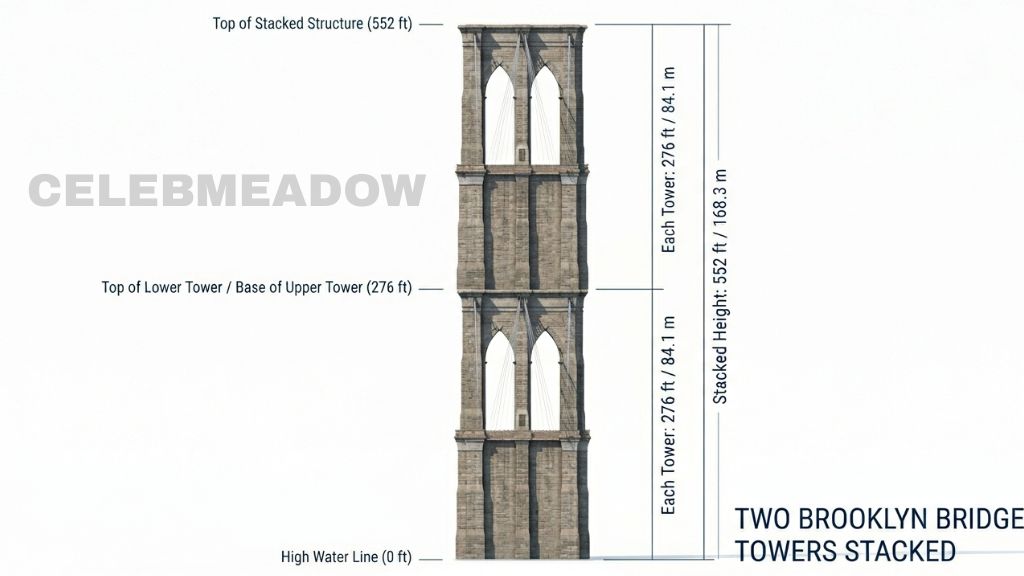
Each of the two Gothic stone towers of the Brooklyn Bridge rises 276 feet above the high water line. Stack one on top of the other and you reach 552 feet — just 52 feet past the 500-foot mark. The towers were built this way intentionally: high enough to give clearance for tall-masted ships that once crowded New York Harbor, but not so high that the suspended cables would lose tension from gravity.
Most people who cross the Brooklyn Bridge don’t look up. Those who do often describe the towers as surprisingly tall. They are. Each one alone reaches nearly the height of a modern 27-story building. Two of them, stacked, get you well past 500 feet.
Key measurement: Each tower: exactly 276 ft / 84.1 m above water — two stacked = 552 ft / 168.3 m
9. The London Eye
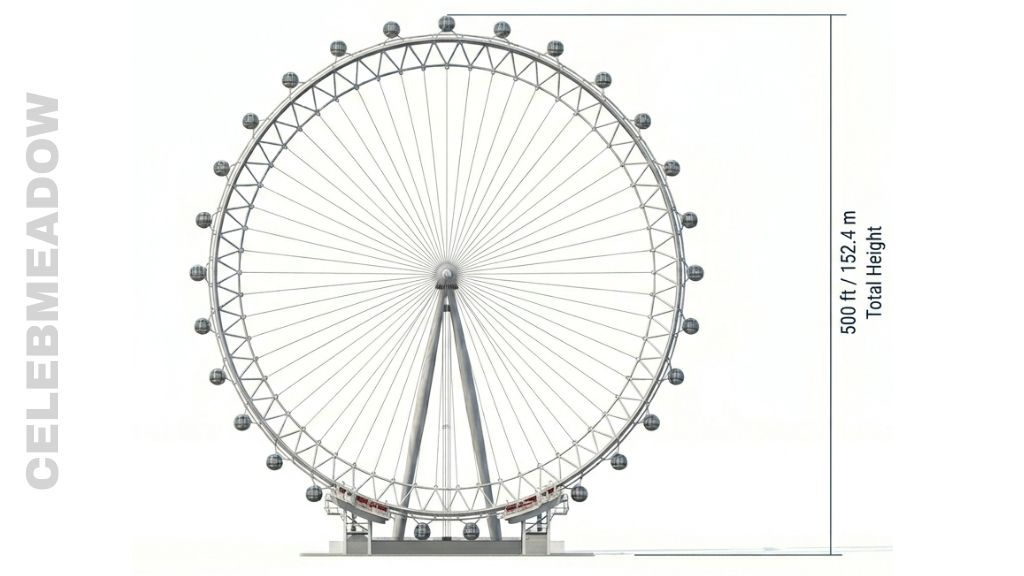
The London Eye reaches 443 feet at its highest point — the top of the wheel’s arc where a passenger capsule sits at peak rotation. That places 500 feet about 57 feet above the wheel’s crown. A five-story building could sit on top of the Eye before 500 feet was reached. When it opened in 2000, it was the world’s tallest observation wheel. It was built at this height deliberately: tall enough to see across Greater London, short enough to avoid disrupting Heathrow flight paths.
Standing on the South Bank and looking up at it gives you a real sense of 443 feet. Add one more small apartment building above that peak, mentally, and you’ve found 500 feet in the London sky.
Key measurement: Exactly 443 ft / 135 m tall (500 ft is approximately 57 ft / 17.4 m above its peak)
10. A Par 5 Fairway Landing Zone
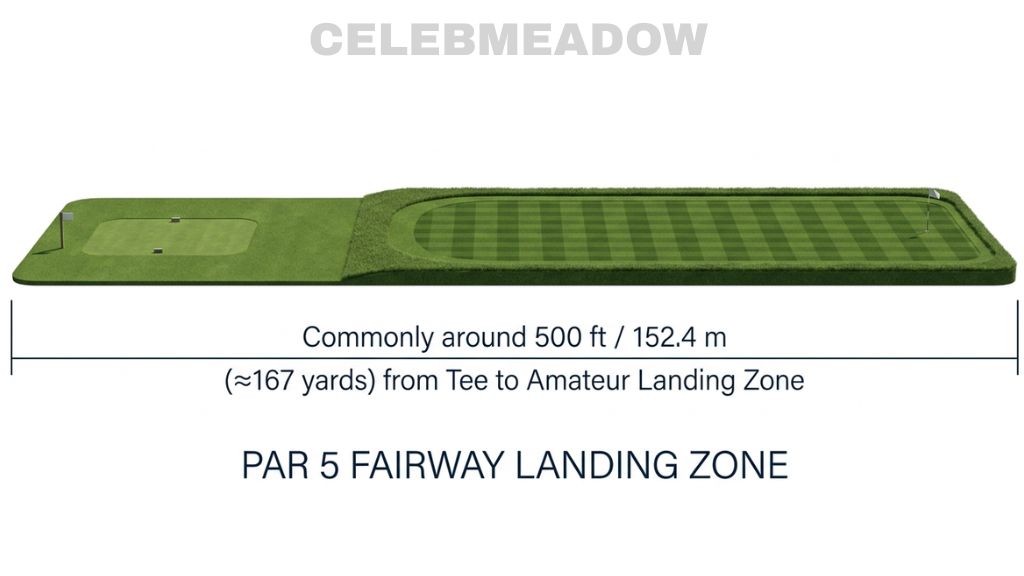
On a long Par 5 hole, the distance from where a golfer tees off to the primary landing zone — the patch of fairway where most amateur drives come to rest — averages commonly around 500 feet, or about 167 yards. This isn’t where professionals land. It’s where a solid recreational swing sends the ball.
Golf course designers use this number to create strategic fairway shapes. A bunker placed at 160 yards catches the short hitters. One at 175 yards punishes the big swingers who pull left. The 167-yard (500-foot) zone is the planning midpoint. If you’ve ever stood on a tee box and watched your drive sail out and drop — that arc is 500 feet of travel through the air.
Key measurement: Commonly around 500 ft / 152.4 m (≈167 yards) from tee to amateur landing zone
11. The Statue of Liberty
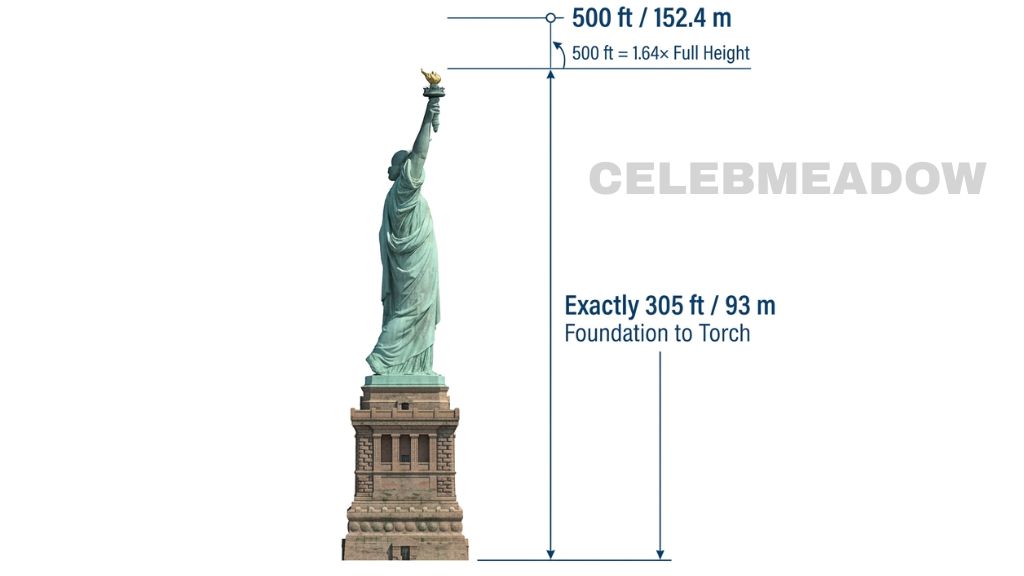
From the base of her pedestal to the tip of her raised torch, Lady Liberty stands 305 feet tall. That means 500 feet is 1.64 times her total height. Picture the statue, then add roughly another half-statue stacked above her flame. That extra half — rising from the torch tip upward — gets you to 500 feet.
She was designed at her current height partly for practical reasons: the pedestal needed to be tall enough that ships entering New York Harbor would see her clearly at a distance. The torch had to be reachable for maintenance. Every foot of her height was deliberate. Knowing that she plus half herself equals 500 feet gives you a human-scaled, emotionally resonant anchor for this distance.
Key measurement: Exactly 305 ft / 93 m from foundation to torch (500 ft = 1.64× her full height)
12. A Soccer Field (End to End, Times 1.4)
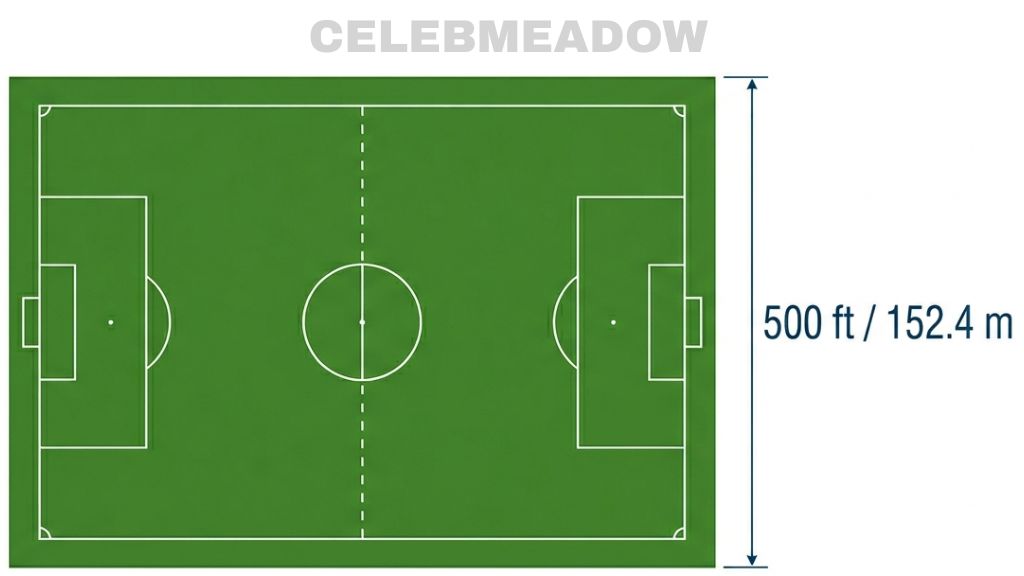
A FIFA regulation pitch runs between 330 and 360 feet long (110 to 120 yards) for international matches. Walk end to end on one of those fields, then keep going — another 40 to 50% of the same length — and you’ve covered 500 feet. This reference is especially useful outside North America, where football fields are less familiar than soccer pitches.
Youth coaches often use the full-pitch image to explain distances to players and parents. Telling someone that 500 feet is “about one and a half soccer fields” lands faster than any metric conversion.
Key measurement: FIFA pitch: commonly around 330–360 ft / 100–110 m long — 500 ft ≈ 1.4 to 1.5 pitches
13. Space Shuttle External Tank (Times 3.25)
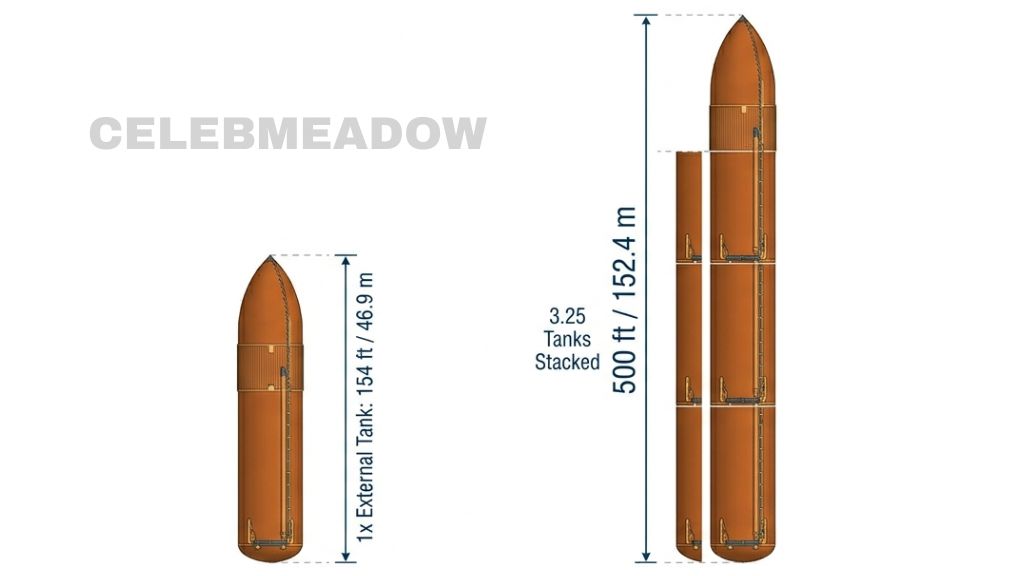
The rust-orange External Tank was the largest piece of the Space Shuttle stack — the giant fuel container that fed liquid hydrogen and oxygen to the main engines during launch. It stood exactly 154 feet tall. To reach 500 feet, you’d need to stack 3.25 of them end to end.
At Kennedy Space Center, the External Tank is one of those objects that looks smaller in photos than in person. Standing next to it on the launch pad, workers described it as overwhelming. Now multiply that by three, add a quarter more, and you have your 500-foot column of space hardware rising from the Florida swamp.
Key measurement: Exactly 154 ft / 46.9 m per tank — 3.25 tanks stacked = 500 ft / 152.4 m
14. The Space Needle
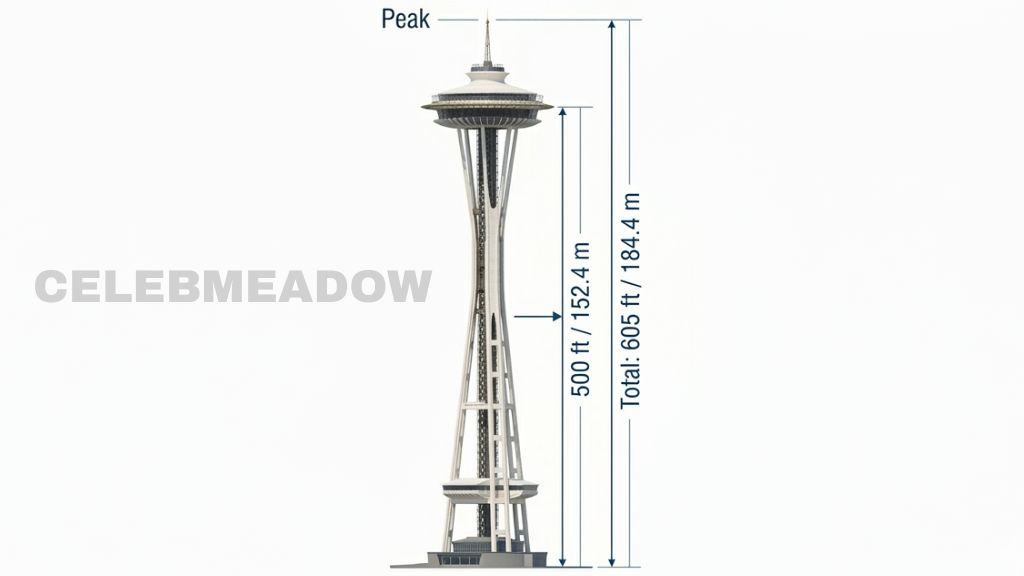
Seattle’s Space Needle tops out at 605 feet — about 105 feet taller than our target. That gap is roughly a 10-story building. So 500 feet would sit somewhere below the observation deck, in the middle of the Needle’s distinctive saucer-shaped restaurant section. Built for the 1962 World’s Fair, the Needle was designed to be visible from every corner of Seattle. At 500 feet up its shaft, you’d already have panoramic views stretching across Puget Sound.
The fact that 500 feet doesn’t even reach the top of the Space Needle is a good reality check. This is a serious height — and yet the Needle clears it by another 10 floors.
Key measurement: Space Needle = exactly 605 ft / 184.4 m tall (500 ft falls about 105 ft / 32 m below its peak)
How to Picture 500 Feet Without a Ruler
The easiest method starts with your own stride. A relaxed walking step covers roughly 2.5 feet. That means 500 feet takes about 200 steps at a normal pace. Next time you’re walking a long hallway or a parking lot, count your steps. At 200, stop. That’s your distance.
The second method uses time. Walking at a comfortable pace — not rushing, not strolling — most adults cover 500 feet in just under two minutes. If you’ve ever waited for a crosswalk light, crossed a long block, or walked from a parking spot to a stadium entrance, you’ve likely covered 500 feet without knowing it.
A third anchor: hold your arms out to your sides. That wingspan is somewhere near 5 to 6 feet for most adults. It would take about 85 to 100 of those arm-spans laid end to end to cover 500 feet. That’s a lot — which is exactly the point. This is a distance your legs understand better than your eyes.
500 Feet Compared to Similar Sizes
| Distance | In Meters | Compared to 500 Feet |
| 300 feet | 91.4 m | About 60% of 500 ft |
| 400 feet | 121.9 m | About 80% of 500 ft |
| 500 feet | 152.4 m | Your target distance |
| 600 feet | 182.9 m | 100 ft (≈10 stories) longer |
| 700 feet | 213.4 m | 200 ft (≈20 stories) longer |
| 1,000 feet | 304.8 m | Exactly double 500 ft |
Common Questions About 500 Feet
How long is 500 feet in meters and kilometers?
500 feet equals 152.4 meters. In kilometers, that’s 0.1524 km. In miles, it’s just under one-tenth of a mile (0.0947 mi).
How does 500 feet compare to a city block?
It depends on the city. In New York City, one north-south block runs about 250–280 feet — so 500 feet covers roughly two Manhattan blocks. In cities with longer blocks, it may only span one full block and part of another.
How long does it take to walk 500 feet?
At a normal walking pace, about 90 seconds to 2 minutes. Slower with stops — closer to 2.5 minutes. Fast walking gets you there in under a minute.
How far is 500 feet visually — can you see it clearly?
Yes. On flat open ground, 500 feet is clearly visible. A person at that distance looks small but recognizable. A car is easy to spot but hard to read in detail. Think of a large parking lot or a city park from end to end.
How far is 500 feet when driving?
At 30 mph, a car covers 500 feet in about 11 seconds. At 60 mph, just 5 to 6 seconds. It sounds like a long distance — at driving speed, it disappears fast.
Related More Measurements Guides:
The Washington Monument minus five stories, a cruise ship at full length from bow to stern, or one-and-a-half football fields stretching across an open field — any of those three images will serve you. Five hundred feet is a distance your body can walk in less than two minutes, but it’s also tall enough to dwarf every building most people see in daily life. Keep one of these pictures in your head, and the number will never feel abstract again.

I’m Cherry Sin, and I write clear, practical guides that help people understand everyday measurements and sizes. I focus on turning numbers into easy mental pictures using familiar objects and real-life situations. At Celebmeadow, I write guides that explain measurements in a simple, visual way.