You’re staring at a product listing, and it says the item is 6 cm. No photo with a reference point. No size comparison. Just the number — and suddenly your brain goes blank.
Six centimeters is 2.36 inches, which is roughly 0.2 feet, or 60 millimeters.
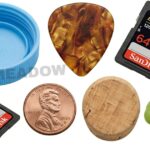
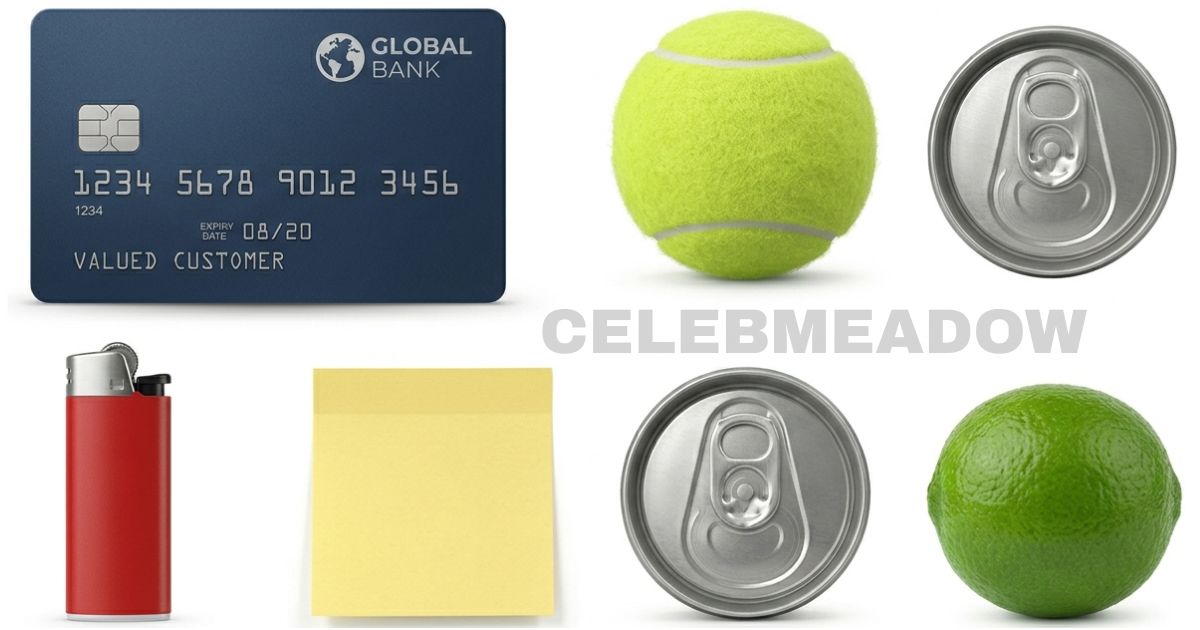
It’s a size that sits in a tricky middle zone — bigger than a coin, smaller than your palm. The objects below will lock this size into your memory for good.
Quick Measurements: How Big is 6 cm?
| Unit | Value |
| Centimeters | 6 cm |
| Millimeters | 60 mm |
| Inches | 2.36 in |
| Feet | 0.197 ft |
| Meters | 0.06 m |
9 Everyday Things That Are 6 Centimeters Big
| Object | Dimension | Measurement |
| Debit Card | Width (short side) | Exactly 5.398 cm |
| BIC Mini Lighter | Height (base to hood) | Commonly 5.9–6.1 cm |
| Tennis Ball | Diameter | Commonly 6.54–6.86 cm |
| Small Square Sticky Note | Width & Height | Exactly 5.08 cm × 5.08 cm |
| Soda Can Top | Lid diameter | Commonly 5.4–6.0 cm |
| Medium Lime | Diameter | Commonly 5.5–6.2 cm |
| Sticky Tape Roll | Outer diameter | Commonly 5.6–6.0 cm |
| Computer Mouse | Width | Commonly 5.8–6.2 cm |
| BIC Cristal Pen Cap | Length | Commonly 5.8–6.2 cm |
1. Debit Card (Short Side / Width)
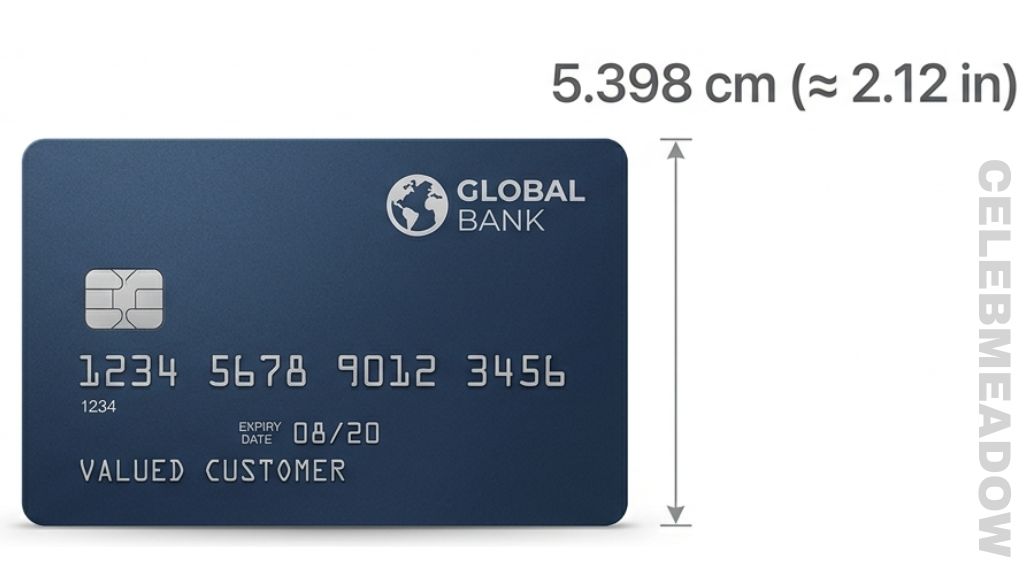
Pull any bank card from your wallet right now. Flip it so the short edge is facing you. That width — the narrow side of your debit card — measures exactly 5.398 cm under international standards. It’s just a hair under 6 cm. Close enough that the card’s short side gives you one of the most reliable, always-on-hand size references you’ll ever find.
This size isn’t random. The ISO/IEC 7810 ID-1 standard exists so that every card on Earth — your bank card, gym membership, driver’s license — slides into the same ATM slot, the same wallet pocket, the same card reader. One global size, billions of devices. When you’re figuring out whether a small item will fit inside a cardholder or checking if a tracking tile will hide behind your ID, that 5.4 cm short edge is your mental ruler.
Key measurement: 5.398 cm (≈ 2.12 inches) — the short width of any standard ID-1 card.
2. BIC Mini Lighter
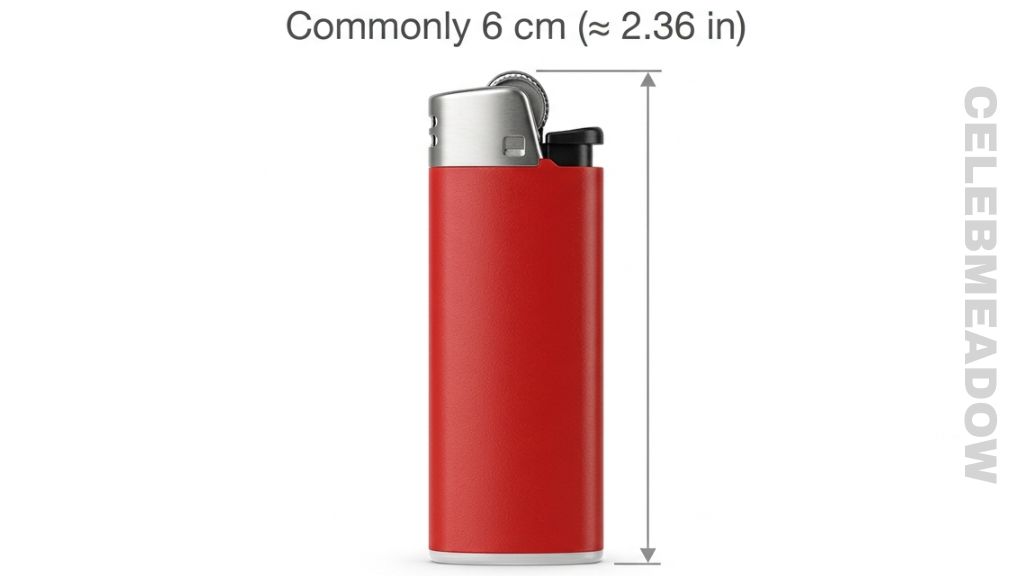
The BIC Mini lighter sits comfortably in the palm of your hand — and that’s exactly the point. From the flat base to the very top of the metal hood, it commonly runs between 5.9 cm and 6.1 cm tall. That puts it almost perfectly at 6 cm, making it one of the cleanest size references in this list.
BIC didn’t arrive at this height by accident. The lighter had to be short enough to disappear into the tiny fifth pocket of a pair of jeans, yet tall enough for a thumb to strike the flint without burning fingers. That’s a narrow design window — and the BIC Mini lands right in the middle of it.
You’ll find these at nearly every gas station checkout counter, which means almost everyone carries a sharp size memory of this object. If you’re sizing a small pouch, an emergency kit tin, or a candle-carrying case, the Mini lighter’s height is your 6 cm benchmark.
Key measurement: Commonly around 5.9–6.1 cm tall (≈ 2.32–2.40 inches).
3. Standard Tennis Ball (Diameter)
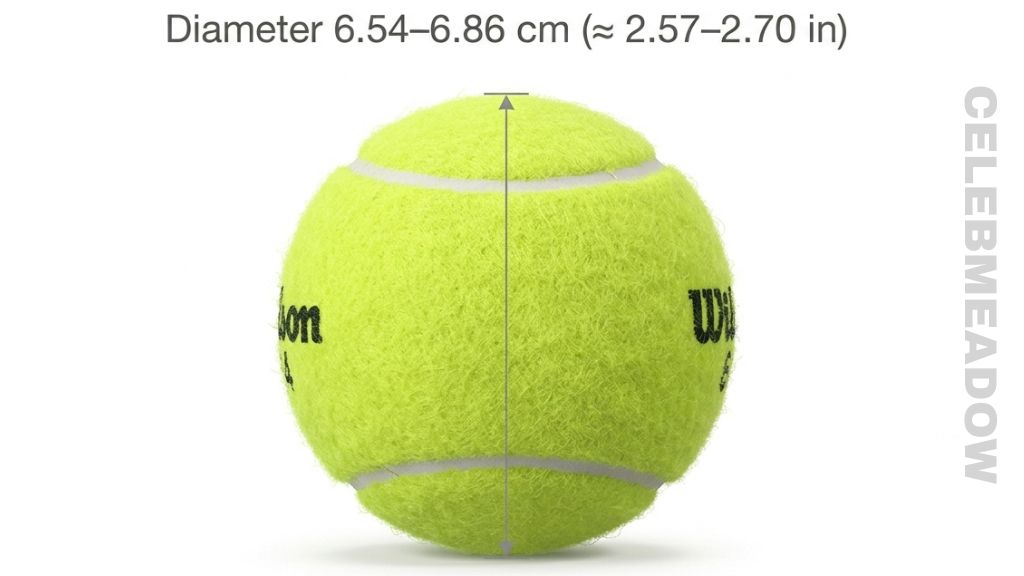
A tennis ball is the one object on this list that slightly exceeds 6 cm — its diameter runs between 6.54 cm and 6.86 cm by International Tennis Federation rules, averaging near 6.7 cm. People casually round it to “about 6 cm” all the time, which makes it a useful upper-boundary reference. Think of it as the ceiling of the 6 cm range.
The ball’s size was worked out through decades of aerodynamics testing and racket physics. It had to bounce to a precise height, travel through air at a predictable speed, and still sit comfortably in a player’s non-dominant hand during serve.
Every millimeter of that diameter was deliberate. In daily life, this size reference helps when you’re choosing a storage tube, picking out a pet toy, or checking whether something is a choking hazard for a small child. The felt-covered sphere is so familiar that almost anyone can picture its size with eyes closed.
Key measurement: Diameter commonly around 6.54–6.86 cm (≈ 2.57–2.70 inches).
4. Small Square Sticky Note
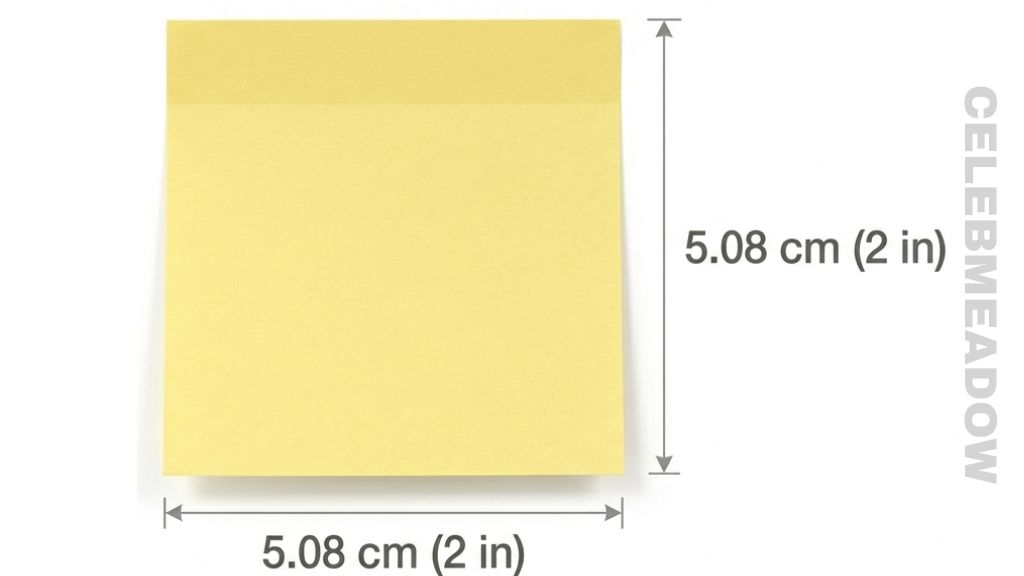
The mini square sticky note — the 2-inch-by-2-inch kind — measures exactly 5.08 cm on each side. Both dimensions land just below the 6 cm mark. This makes the sticky note’s full side length a solid lower-boundary reference: whatever you’re trying to picture at 6 cm is just slightly bigger than this small square of paper.
These were designed to carry one idea — a short word, a page flag, a quick reminder — without swallowing the surface it’s stuck to. The size keeps it useful without making it obtrusive. You’ve seen them stuck to monitors, inside textbooks, on refrigerators. Because of how often people handle them, the square footprint is surprisingly well-memorized. When estimating workspace on a whiteboard or checking if an item will cover a sticky note, this size gives you a clean mental frame.
Key measurement: Exactly 5.08 cm × 5.08 cm (exactly 2 inches × 2 inches).
5. Top of a Soda Can (Lid Diameter)
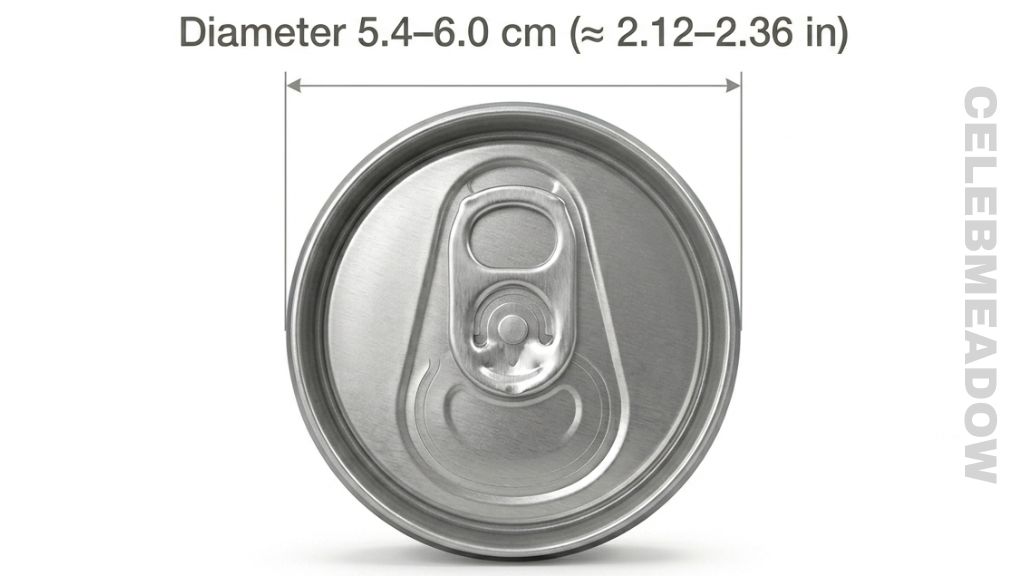
Look at a soda can from above. That circular aluminum lid — the part you press the tab on — measures between 5.4 cm and 6.0 cm across, depending on whether it’s a standard or slim-profile can. It’s not the full body of the can. Just the top. And it sits right in the 6 cm window.
Can manufacturers actually made this lid smaller than the body on purpose. The narrowed top, called a necked-in end, uses less aluminum than a flat-topped design would. Across billions of cans produced annually, even a few millimeters of metal saved on each lid becomes a massive cost reduction.
You bring this lid directly to your mouth every time you drink, which means your brain has a precise sense of how wide it is. When you need a plastic snap-cap to cover an open drink, or want to picture 6 cm quickly, just think of that aluminum top circle.
Key measurement: Diameter typically near 5.4–6.0 cm (≈ 2.12–2.36 inches).
6. Medium Lime (Diameter)
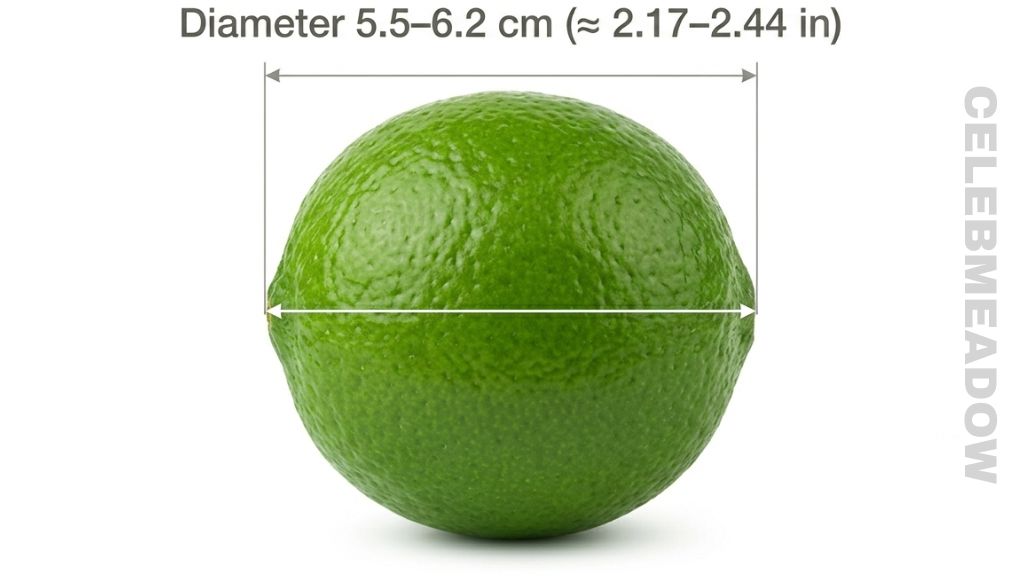
Hold a medium Persian lime in your hand — the standard green lime sold in every supermarket produce aisle. It typically measures between 5.5 cm and 6.2 cm across its widest point. That diameter sits right on top of 6 cm, making a lime one of the most hands-on size references available.
Limes are cultivated to hit this diameter range deliberately. At this size, the fruit holds the right balance of juice and rind. Go smaller, and you get more skin than juice. Go larger, and the interior starts to dry out and turn woody. Farmers and distributors call it Choice sizing — it’s the industry sweet spot. In a kitchen setting, this size reference helps when picking a citrus squeezer (you want the cup to match the fruit) or when estimating how much counter space a bowl of fruit will take. If you’ve ever squeezed a lime over tacos or stirred one into a drink, the size is already stored in your hands.
Key measurement: Diameter commonly around 5.5–6.2 cm (≈ 2.17–2.44 inches).
7. Sticky Tape Roll (Outer Diameter)
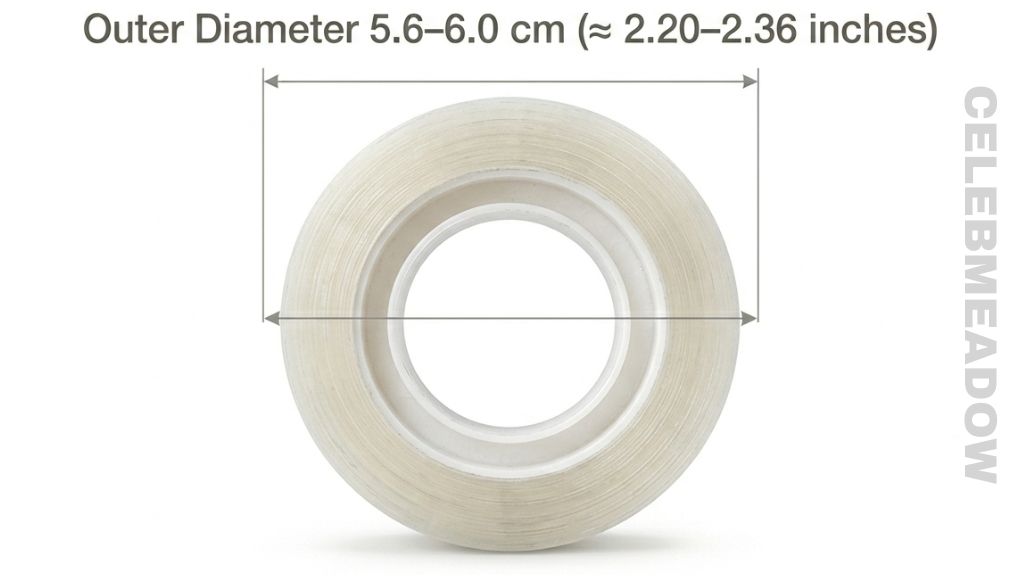
A fresh roll of standard desk tape — the transparent ¾-inch kind in plastic dispensers everywhere — measures commonly between 5.6 cm and 6.0 cm across its outer diameter when brand new. That circular cross-section of the roll is almost exactly 6 cm from edge to edge.
The roll was sized to pack in 20 to 30 meters of tape while staying light enough to use with one hand. A bigger roll would hold more tape but would make the dispenser too heavy and awkward to hold steady while pulling tape with the other hand. This is why desk tape dispensers all share roughly the same internal arm width — they’re built around that 6 cm outer diameter. Next time you wrap a gift or seal a package, look directly at the tape circle while you pull. You’re looking at 6 cm.
Key measurement: Outer diameter commonly around 5.6–6.0 cm (≈ 2.20–2.36 inches).
8. Computer Mouse (Width)
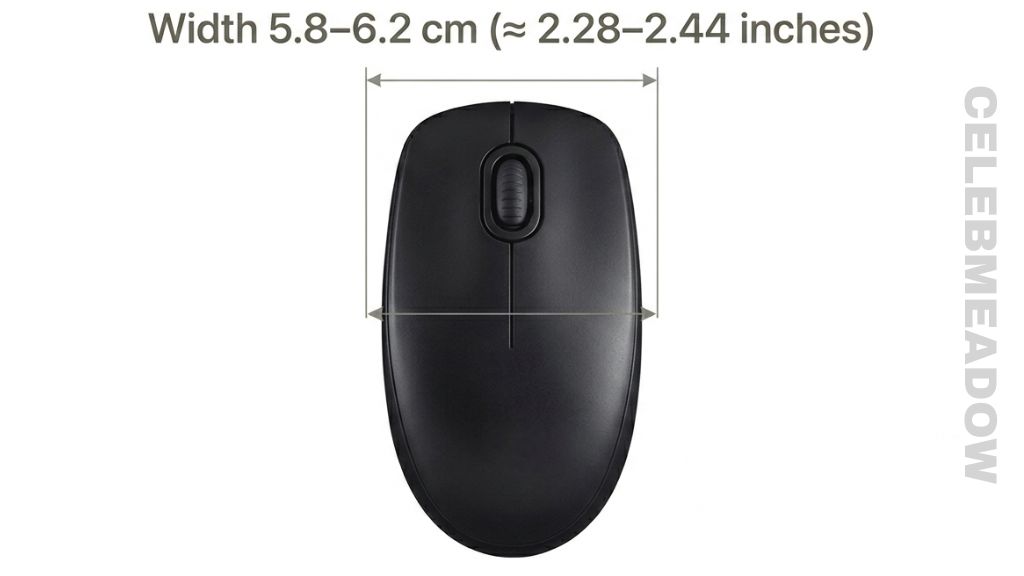
Lay your hand on a standard computer mouse — something like a Logitech M100 or a similar basic office model. The width across the left and right buttons, right where your fingers rest, runs commonly between 5.8 cm and 6.2 cm. Your fingers know this width better than almost any other object in your home or office.
That measurement didn’t come from guesswork. Mouse manufacturers run hand anthropometry studies — surveys of hand widths across thousands of adults — to find the width that keeps the index and middle finger positioned without strain during long sessions. Too narrow and fingers crowd together; too wide and the hand opens uncomfortably. The 6 cm zone is where most hands rest naturally. This is also why that width is so deeply ingrained in muscle memory. If you’ve used a desktop computer for more than a few months, you can probably picture this width with your eyes shut.
Key measurement: Width commonly around 5.8–6.2 cm (≈ 2.28–2.44 inches).
9. BIC Cristal Pen Cap (Length)
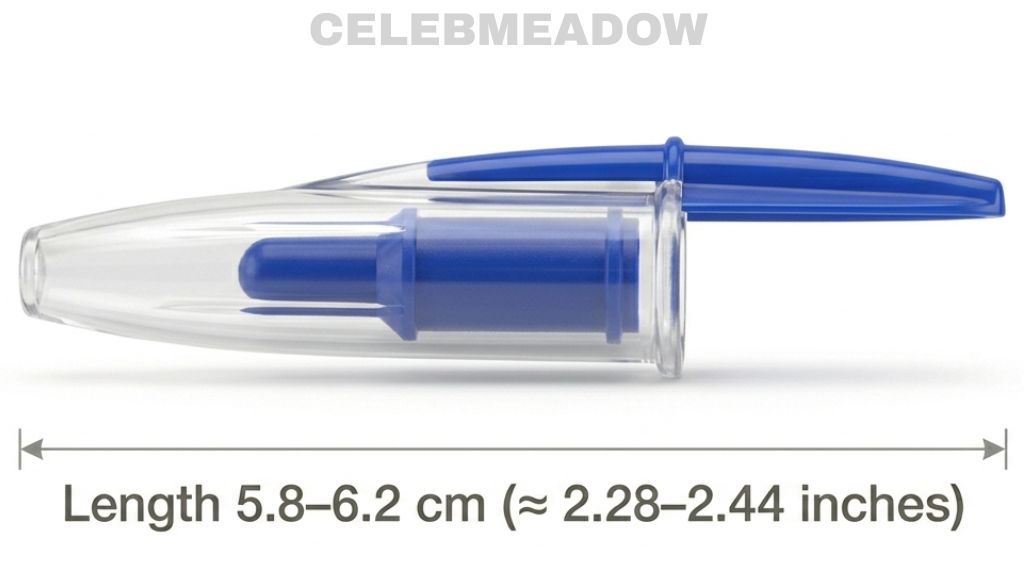
Slide the cap off a BIC Cristal ballpoint pen — the classic hexagonal one used in schools and offices everywhere. That cap runs commonly between 5.8 cm and 6.2 cm from tip to base. It’s a small piece of plastic, but its length is remarkably close to 6 cm and is something most people have touched hundreds of times.
The cap had to be long enough to cover the ballpoint tip completely and clip firmly onto a shirt pocket or notebook cover. But it also had to stay short enough that when placed on the back of the pen during writing, it didn’t throw the whole pen off balance. That’s a mechanical balancing act compressed into about 6 cm of injection-molded plastic. Most people have chewed, clicked, or fiddled with one of these caps at some point. That tactile familiarity makes it one of the most memorable size references on this list.
Key measurement: Length commonly around 5.8–6.2 cm (≈ 2.28–2.44 inches).
How to Picture 6 cm Without a Ruler
Your index finger — from the tip down to the first knuckle — is usually about 2.5 cm to 3 cm long on an average adult hand. Stack two of those knuckle-to-tip lengths mentally, and you’re sitting very close to 6 cm. It’s not a perfect method, but it gets you into the right range fast.
A second option: hold your hand flat and look at the width of your four fingers pressed together, measured across the middle. For most adults, that span runs between 7 cm and 8 cm. Shave off a bit from the pinky side, and you’re mentally at 6 cm. These body-based estimates aren’t precise, but they’re always with you — no tape measure needed.
6 cm Compared to Similar Sizes
| Measurement | In cm | Compared to a BIC Mini Lighter Height |
| 4 cm | 4.0 cm | Noticeably shorter |
| 5 cm | 5.0 cm | Slightly smaller |
| 6 cm | 6.0 cm | The target size |
| 7 cm | 7.0 cm | Slightly taller |
| 8 cm | 8.0 cm | Meaningfully larger |
| 12 cm | 12.0 cm | Double the size |
Common Questions About 6 cm
How long is 6 cm in inches?
6 cm equals 2.36 inches. In feet, that’s approximately 0.197 ft. In millimeters, it’s exactly 60 mm.
Is 6 cm bigger than 5 cm?
Yes. 6 cm is 1 cm longer than 5 cm — a difference of about 0.39 inches. Small but clearly visible on compact objects.
What common object is 6 cm long?
The BIC Mini lighter stands at roughly 6 cm tall. A medium lime and a standard pen cap are equally close matches.
How can I measure 6 cm without a ruler?
The short side of any bank card is 5.4 cm — just slightly under 6 cm. Add a tiny bit beyond that edge and you’re at 6 cm.
What does a 6 cm cyst or growth look like?
It’s roughly the size of a medium lime — clearly visible, easy to feel, and larger than a golf ball but smaller than a tennis ball.
Related More Measurements Guides:
Closing
The BIC Mini lighter in your pocket and the short side of your bank card are the two fastest mental snapshots for 6 cm — one tactile, one always in your wallet. A medium lime or the top of a soda can both confirm the size through direct touch. Once two or three of these land in your memory, the number “6 cm” stops being abstract and starts feeling completely natural.

I’m Cherry Sin, and I write clear, practical guides that help people understand everyday measurements and sizes. I focus on turning numbers into easy mental pictures using familiar objects and real-life situations. At Celebmeadow, I write guides that explain measurements in a simple, visual way.