You’re packing a bag, buying a gift, or maybe checking if a newborn’s weight sounds right — and the number “3 kg” just doesn’t land. It stays abstract. 3 kilograms equals 6.61 pounds, or about 106 ounces. That’s not a massive weight. You can hold it in one hand. But without something real to attach it to, the number means nothing. The ten objects below give you that anchor.
How Much is 3kg? Quick Conversion Chart
| Unit | Value |
| Kilograms | 3 kg |
| Grams | 3,000 g |
| Pounds | 6.61 lbs |
| Ounces | 105.8 oz |
| Pounds & Stone | 0 st 6.61 lbs |
10 Everyday Things That Weigh 3 kg
| Object | Category | Weight | Exact or Approximate |
| Three 1-liter water bottles | Hydration | 3 kg | Exact |
| 3 kg bag of rice | Pantry | 3 kg | Exact |
| Six 500 ml soda cans | Beverages | ~3.09 kg | Approximate |
| 3 kg tub of laundry powder | Household | 3 kg | Exact |
| 3-liter box of wine | Beverages | ~3.1 kg | Exact |
| 3 kg gym dumbbell | Fitness | 3 kg | Exact |
| Standard clay brick | Construction | ~2.7–3 kg | Approximate |
| Cordless circular saw | Power tools | ~2.8–3.2 kg | Approximate |
| Wood-splitting axe | Outdoor tools | ~3–3.3 kg | Approximate |
| 6-pound bowling ball | Sport | 2.72 kg | Exact |
1. Three 1-Liter Bottles of Water
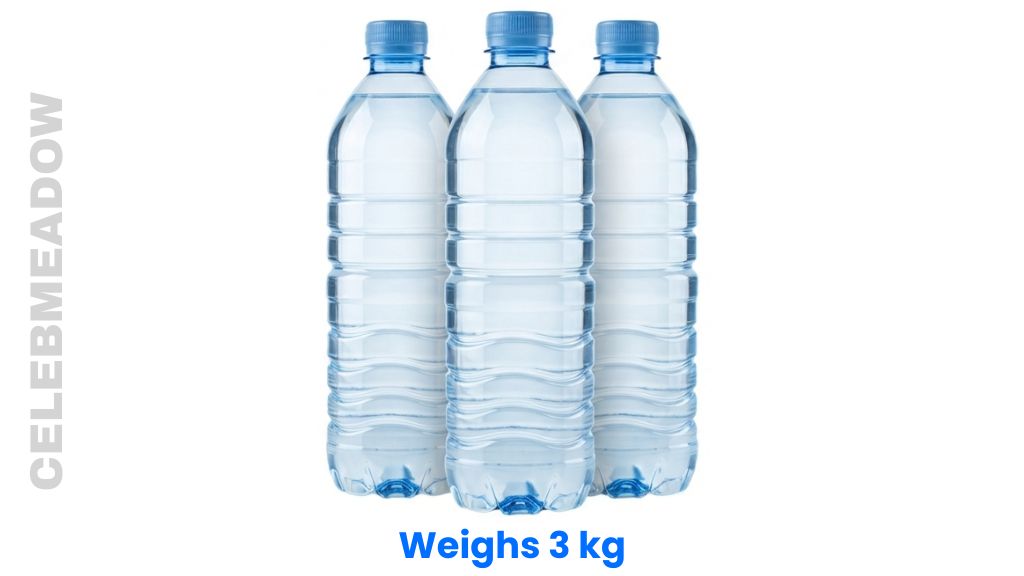
Three full 1-liter water bottles together weigh almost exactly 3 kg.
This one works because the math is built into the metric system itself. One liter of pure water weighs exactly one kilogram — that’s not a coincidence, it’s how the metric system was designed. Each plastic bottle adds roughly 30 grams, so three bottles together land right at 3.09 kg in real life.
Pick up one water bottle. Now imagine holding three of them — two in one hand, one in the other, or all three stuffed into a bag. That’s your weight. It’s light enough to carry without strain, but you’ll feel it after a few minutes. Great mental anchor when you’re checking if a travel backpack is getting too heavy.
- Key measurement: 3 kg / 6.61 lbs
2. A 3 kg Bag of Rice
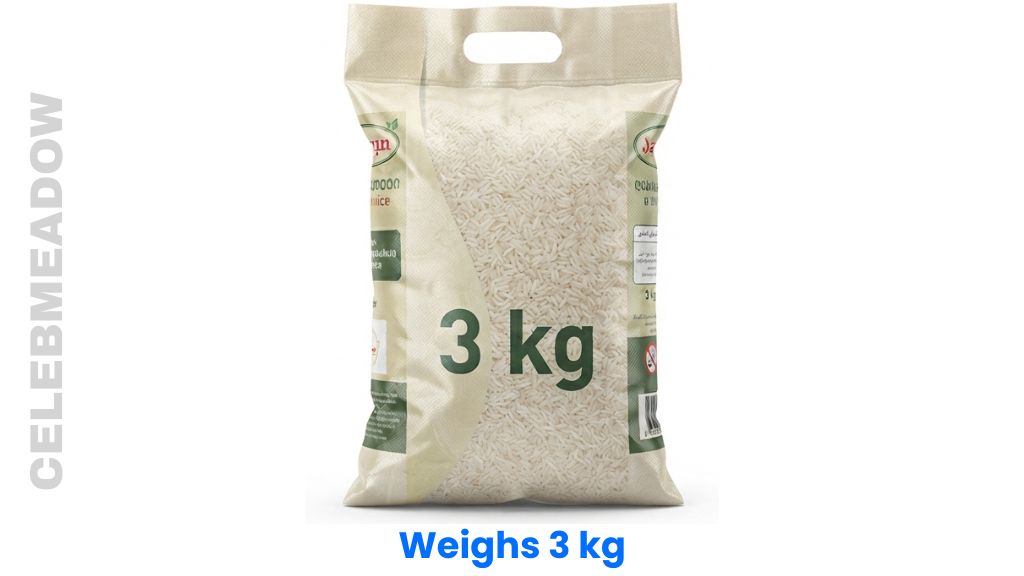
A standard 3 kg bag of dry rice is one of the most accurate real-world references for this weight.
Rice bags are packaged to this size deliberately. It’s heavy enough to feel like real value, but light enough for one person to carry from the grocery store without a trolley. The bag sits dense and firm in your hands — it doesn’t shift around like a liquid.
Think about the walk from your car to the kitchen with a grocery haul. That compact, slightly awkward bag of rice you tuck under your arm? That’s exactly 3 kg. It also helps with pantry decisions — knowing a full bag occupies roughly the same footprint as a shoebox helps when you’re organizing shelves.
- Key measurement: 3 kg / 6.61 lbs
3. Six Standard 500 ml Cans of Soda

Six half-liter cans of soda together come in at just over 3 kg close enough to use as a reference.
Each 500 ml can holds about 500 grams of liquid, plus the aluminum shell weighs around 15 grams. Multiply that by six and you land at roughly 3.09 kg. The “six-pack” format was designed specifically for easy retail carrying — one hand, one trip.
What makes this reference stick is the swing weight. When you carry a plastic-wrapped six-pack from the store to your car, it hangs heavy from your fingers. That swinging, dense pull is 3 kg. If a lightweight grocery bag starts feeling like that, it’s time to distribute the load.
- Key measurement: ~3 kg / ~6.6 lbs
4. A Standard 3 kg Tub of Laundry Powder

A full-sized tub of laundry powder sold at most supermarkets is commonly packaged at exactly 3 kg.
This isn’t random. The 3 kg size is calibrated to last a family roughly 60 to 75 wash cycles — enough that you’re not constantly restocking, but not so much that the tub becomes awkward to lift or store. The rectangular shape makes it shelf-friendly too.
Slide a full tub across the top of your washing machine. That drag, the slight effort of pushing or lifting it, is your body registering about 3 kg. It’s a weight you barely think about — until the shelf bracket holding it turns out to be flimsy. Knowing the weight upfront helps you plan storage properly.
- Key measurement: 3 kg / 6.61 lbs
5. A Standard 3-Liter Box of Wine
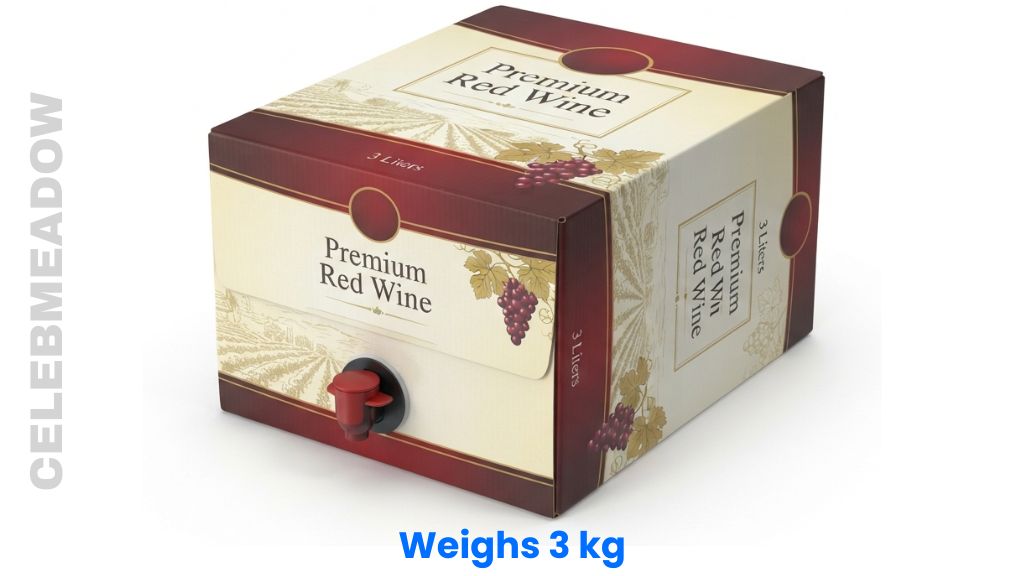
A 3-liter box of wine weighs right around 3 kg, because liquid wine is almost as dense as water.
The math is clean here. Three liters of wine weighs essentially 3 kilograms, plus around 100 grams for the cardboard box and plastic bladder inside. The bag-in-box format was designed for parties and casual home use — easy to pour, easy to store in the fridge door, and convenient to carry to a picnic.
What’s interesting about this one: the weight is distributed low and wide in your hands, unlike a dumbbell or a bottle. Carry it to a dinner party once and you’ll remember exactly how that cardboard base feels pressing into your palms. That sensation is 3 kg in a very different physical shape.
- Key measurement: ~3 kg / ~6.6 lbs
6. A 3 kg Gym Dumbbell
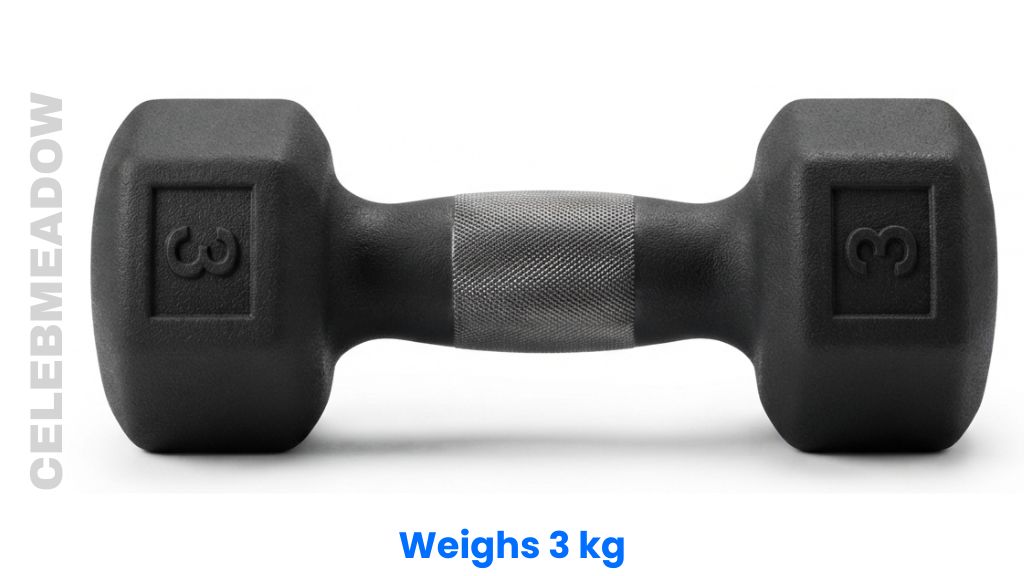
A single 3 kg hand dumbbell is one of the most precise references available — it’s manufactured to hit that number exactly.
Dumbbells exist purely to be felt. There’s no packaging, no liquid, no variation — just solid cast iron or neoprene-coated steel stamped with the number 3. Gyms stock this weight because it’s the sweet spot for beginners doing shoulder work, elderly users doing resistance training, and anyone recovering from injury.
Pick one up with your dominant hand and hold it at your side for thirty seconds. That arm fatigue building at the shoulder? That’s 3 kg over time. It’s a weight that feels manageable at first and earns respect quickly. Perfect mental anchor for understanding why 3 kg matters in fitness contexts.
- Key measurement: 3 kg / 6.61 lbs
7. A Standard Clay Red Brick
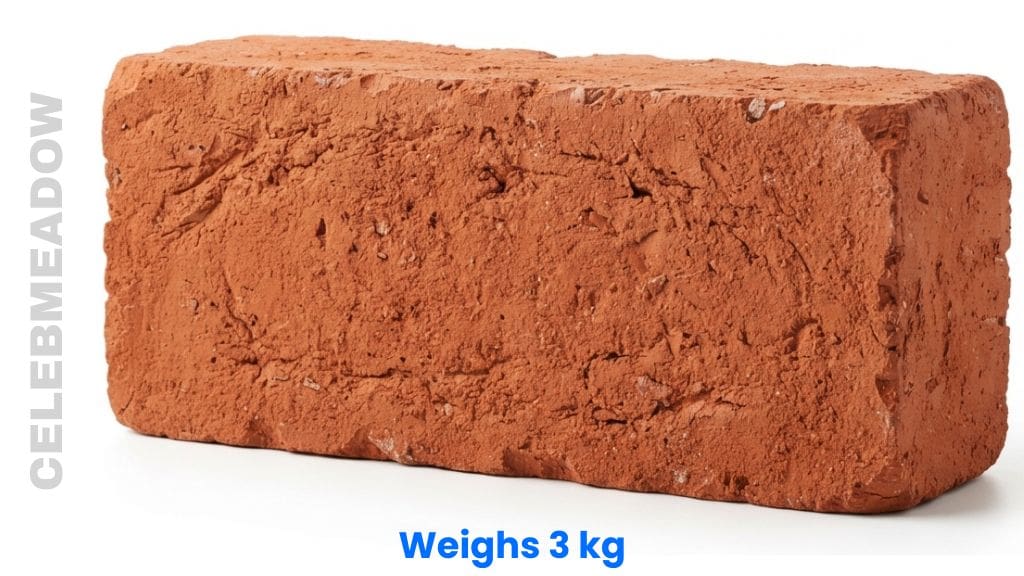
A standard clay brick commonly weighs between 2.7 and 3 kg — close enough to use as a 3 kg reference.
The size of a brick isn’t arbitrary. It’s engineered around the human hand. A bricklayer needs to hold one brick in one hand while using a trowel in the other — all day long. If bricks were heavier, workers would fatigue in hours. The 3 kg target is an ergonomic ceiling that the construction industry settled on over centuries of physical labor.
Pick up a brick the next time you’re at a hardware store or see one on a garden border. The dense, rough, cool surface pressing into your palm — that compact heaviness — is your body understanding 3 kg in its most raw form. It’s heavier than it looks every single time.
- Key measurement: ~2.7–3 kg / ~6–6.6 lbs
8. A Handheld Cordless Circular Saw
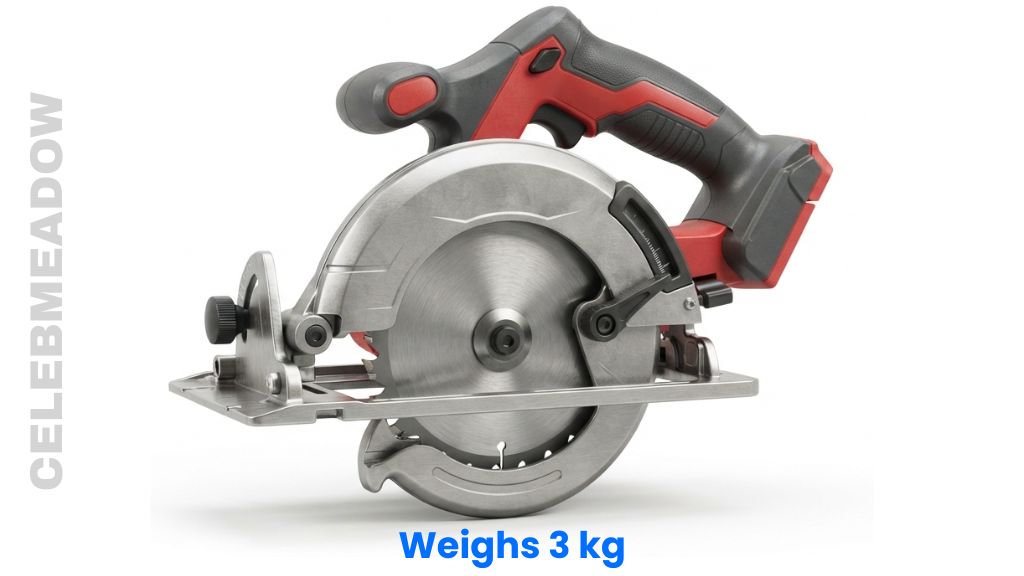
A cordless circular saw without its battery typically weighs somewhere between 2.8 and 3.2 kg.
The weight isn’t accidental. The metal shoe-plate needs to be heavy enough to stay flat against the wood surface during a cut. The motor needs enough copper and steel to push through hardwood without stalling. Shave too much weight and the saw kicks back. Add too much and it becomes tiring to hold steady for an extended cut.
Lift one off a shelf at a hardware store and hold it out in front of you at waist height. The front-heavy, chunky pull on your wrist is distinct. That’s the weight distribution of 3 kg concentrated into a compact tool shape — very different from how three water bottles or a rice bag feel in the hands.
- Key measurement: ~2.8–3.2 kg / ~6.2–7 lbs
9. An Adult Wood-Splitting Axe
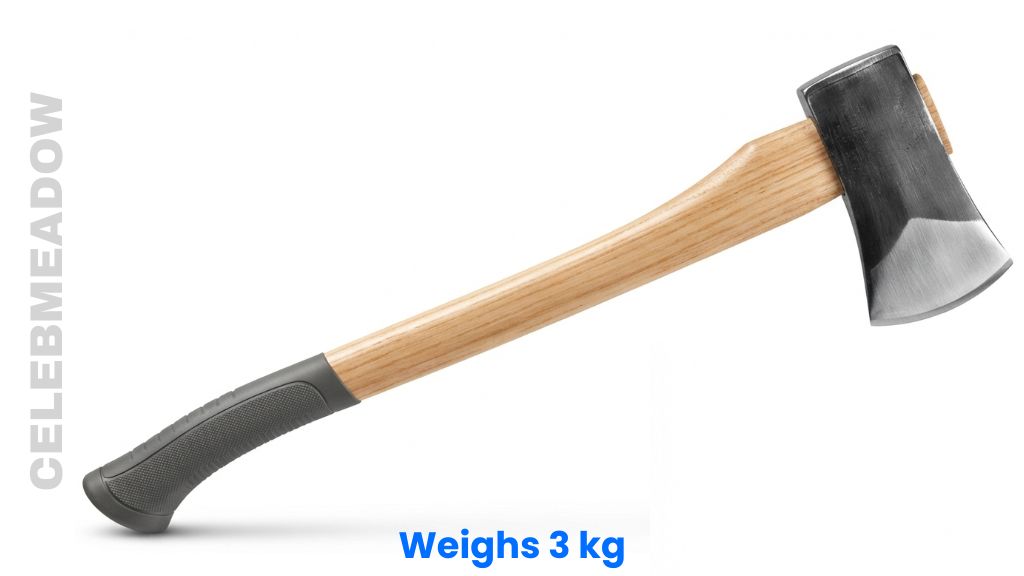
A full adult wood-splitting axe commonly weighs between 3 and 3.3 kg in total — steel head, handle, and grip together.
The weight is the whole point. When you swing an axe overhead and let gravity bring it down, the 3 kg mass builds momentum that does the splitting work for you. A lighter axe would just bounce off a log. A heavier one would exhaust the user before the job was done. The 3 kg range is the product of generations of trial and physical refinement.
Lift one from a garden shed or hardware display and feel the way the weight pulls forward toward the head. That forward-heavy sensation, the way it wants to swing downward on its own, is what 3 kg feels like when it’s shaped for work. It’s very different from a dumbbell, even though the numbers are similar.
- Key measurement: ~3–3.3 kg / ~6.6–7.3 lbs
10. A 6-Pound Youth Bowling Ball

A 6-pound bowling ball — the lightest standard size made for younger players and beginners — weighs exactly 2.72 kg.
This is the closest standard bowling ball weight to 3 kg. The 6-pound class exists because competitive regulations require balls to be produced in set increments, and this is the entry point for kids and beginners learning proper form without stressing their wrists. Go lighter than this and the ball loses enough mass that it struggles to knock pins consistently.
Almost everyone has been bowling at least once. Remember reaching into the ball return and picking one up for the first time — that “oh, this is heavier than I expected” moment? That surprised feeling is 2.72 kg registering in your body. Three kilograms is just slightly more than that surprise.
- Key measurement: 2.72 kg / 6 lbs
How to Picture 3 kg Without a Scale
The most reliable trick is to use your grocery run as a reference. Next time you’re at a supermarket, pick up a 3 kg bag of rice or a family-sized tub of laundry detergent. Hold it in one hand for about ten seconds. Your arm and fingers will give you a clear, honest read on the weight — no numbers needed. That sensation is your personal benchmark.
A second method uses water. Fill three standard 1-liter bottles completely. Put them all in a bag and lift the bag with one hand. Water has no tricks — it’s heavy where the metric system says it should be heavy. Three full bottles is three kilograms. Period.
For a body reference: 3 kg is roughly the weight of a large healthy newborn baby. It’s also about what a loaded school lunch bag feels like at the start of the day. Both of these are weights most adults have held at some point, which makes them useful mental bridges when the number on a label doesn’t connect.
3 kg Compared to Similar Weights
| Weight | In Grams | Compared to 3 kg |
| 1 kg | 1,000 g | One-third of 3 kg |
| 2 kg | 2,000 g | Two-thirds of 3 kg |
| 3 kg | 3,000 g | This is your target |
| 4 kg | 4,000 g | About 33% heavier |
| 5 kg | 5,000 g | Nearly double the feel |
| 6 kg | 6,000 g | Double the weight of 3 kg |
Common Questions About 3 kg
How much is 3 kg in pounds?
3 kg equals 6.61 pounds. Multiply any kilogram value by 2.205 to convert. In full: 3 × 2.205 = 6.61 lbs.
How heavy is 3 kg in ounces?
3 kg is approximately 105.8 ounces. One kilogram holds 35.274 ounces, so three kilograms gives you just under 106 oz total.
Is 3 kg a healthy weight for a newborn baby?
Yes. A 3 kg birth weight falls within the normal range. Most full-term newborns weigh between 2.5 kg and 4 kg, so 3 kg is a good, healthy starting point.
What household item can I use to estimate 3 kg?
Grab a 3 kg bag of rice or fill three 1-liter water bottles completely. Both sit right at 3 kg and are easy to find in any home or grocery store.
How can I measure 3 kg without a scale?
Fill three standard 1-liter bottles with water and hold them. That’s exactly 3 kg. No scale, no guessing — water and the metric system do the math for you.
How does 3 kg feel when you lift it?
Light at first, noticeable after a minute. Most people lift it easily with one hand. Hold it extended at arm’s length for 30 seconds and your shoulder will remind you it’s there.
How many grams is 3 kg?
Exactly 3,000 grams. “Kilo” always means one thousand, so this never changes regardless of what you’re measuring.
The clearest mental picture of 3 kg is probably a single gym dumbbell in one hand — compact, honest, no surprises. Or three water bottles in a bag, which gives you the same number spread across a slightly awkward shape. Both of those images stay with you. The next time a product label, a shipping weight, or a baby’s birth announcement shows 3 kg, you’ll already know exactly what that feels like.
Read More Measurements Guides:

I’m Cherry Sin, and I write clear, practical guides that help people understand everyday measurements and sizes. I focus on turning numbers into easy mental pictures using familiar objects and real-life situations. At Celebmeadow, I write guides that explain measurements in a simple, visual way.