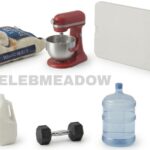
You’re standing in a store, holding something that feels heavier than expected, and the tag says 20 pounds. But what does that actually feel like? Twenty pounds is the exact weight of a standard gym dumbbell — that solid, dense chunk of metal you’ve probably grabbed at least once in your life. It’s not light, but it’s not unmanageable either. Most adults can carry it short distances without much trouble, though you’ll definitely feel it after a minute. 20 pounds = 9.07 kilograms = 320 ounces = 9,071 grams.
How Heavy is 20 Pounds? Quick Conversion Chart
| Unit | Value |
| Pounds | 20 lb |
| Ounces | 320 oz |
| Kilograms | 9.07 kg |
| Grams | 9,071 g |
| Metric Tons | 0.00907 mt |
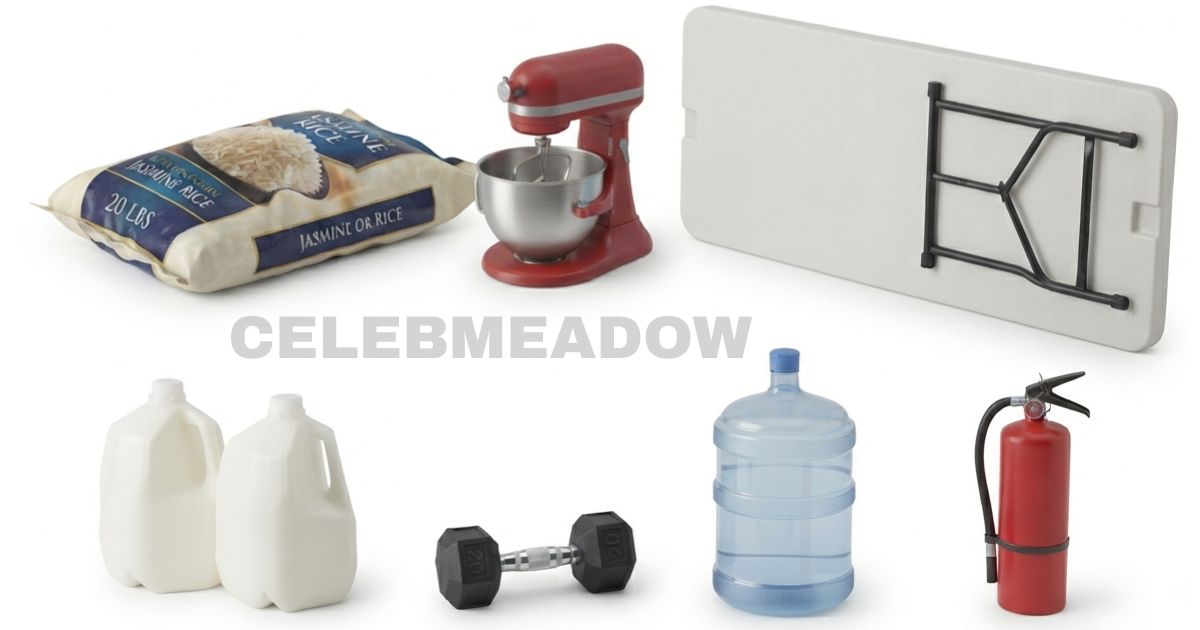
15 Everyday Things That Weigh 20 Pounds
| Object | Category | Weight | Exact or Approximate |
| Two 1-Gallon Milk Jugs | Food & Grocery | ~17.5 lbs | Approximate |
| 20 lb Dumbbell | Fitness | 20.0 lbs | Exact |
| Four Reams of Paper | Office | 20.0 lbs | Exact |
| Large Bag of Dry Dog Food | Pet Care | 20.0 lbs | Exact |
| 10 lb ABC Fire Extinguisher | Safety | ~18–20 lbs | Approximate |
| Kitchen Stand Mixer | Appliance | ~20–22 lbs | Approximate |
| 20 lb Bag of Rice | Food & Grocery | 20.0 lbs | Exact |
| Cased Electric Guitar | Music | ~18–22 lbs | Approximate |
| Wire Dog Crate (36-inch) | Pet Care | ~19–21 lbs | Approximate |
| Large Sledgehammer | Tools | ~20 lbs | Approximate |
| Mid-Sized Microwave | Appliance | ~20–22 lbs | Approximate |
| Half-Full 5-Gallon Water Jug | Home/Office | ~21.5 lbs | Approximate |
| Pop-Up Canopy Frame | Outdoor | ~20 lbs | Approximate |
| Manual Reel Lawn Mower | Yard Care | ~19–22 lbs | Approximate |
| 4-Foot Folding Patio Table | Furniture | ~18–21 lbs | Approximate |
1. Two Standard 1-Gallon Jugs of Whole Milk

Grabbing two full gallon jugs of whole milk at the same time puts roughly 17.5 pounds in your hands — one of the most honest weight experiences in any grocery store.
Whole milk is denser than water. One gallon sits at about 8.6 lbs of liquid, and once you count the plastic jug itself, each container lands close to 8.75 lbs. Two together bring you right to that 20-pound neighborhood.
This is also a quiet stress test you may not have thought about. That plastic shopping bag holding both jugs is working hard. The handles on those bags are not designed for this kind of load — and most people find that out the uncomfortable way. Next time you’re at the grocery store, try carrying both jugs in one hand for just 30 seconds. Your forearm will tell you everything you need to know about what 20 pounds feels like.
Key measurement: ~17.5 lbs total | ~7.9 kg
2. A Standard 20 lb Dumbbell
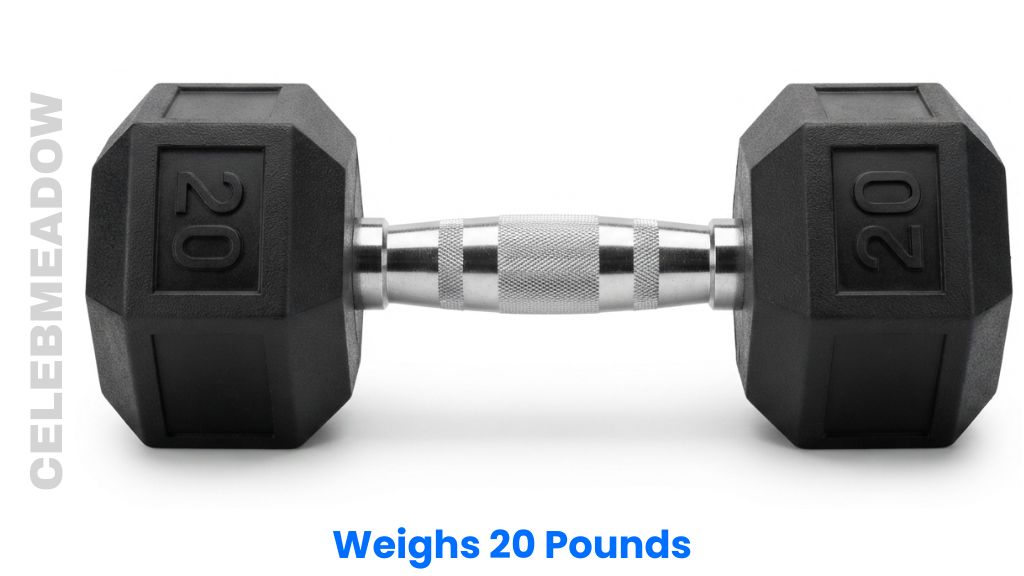
A 20 lb dumbbell is the most precise, no-guesswork reference for this weight — it is manufactured to be exactly 20.0 pounds, nothing more, nothing less.
The fitness industry built this precision on purpose. Gym equipment is calibrated so athletes can track their strength over time. Every pound matters in progressive training, so manufacturers hold tight tolerances. A 20 lb dumbbell from one brand feels nearly identical to one from another.
What makes it useful as a mental benchmark is the grip experience. The weight is concentrated in a short, rigid bar — no shifting, no wobbling, just dead load in your palm. Pick one up the next time you’re in a gym or sporting goods store and hold it for 60 seconds with your arm hanging straight down. That burn in your shoulder and forearm? That’s the honest weight of a 20 lb object doing its job.
Key measurement: 20.0 lbs | 9.07 kg
3. Four Reams of Letter-Size Paper
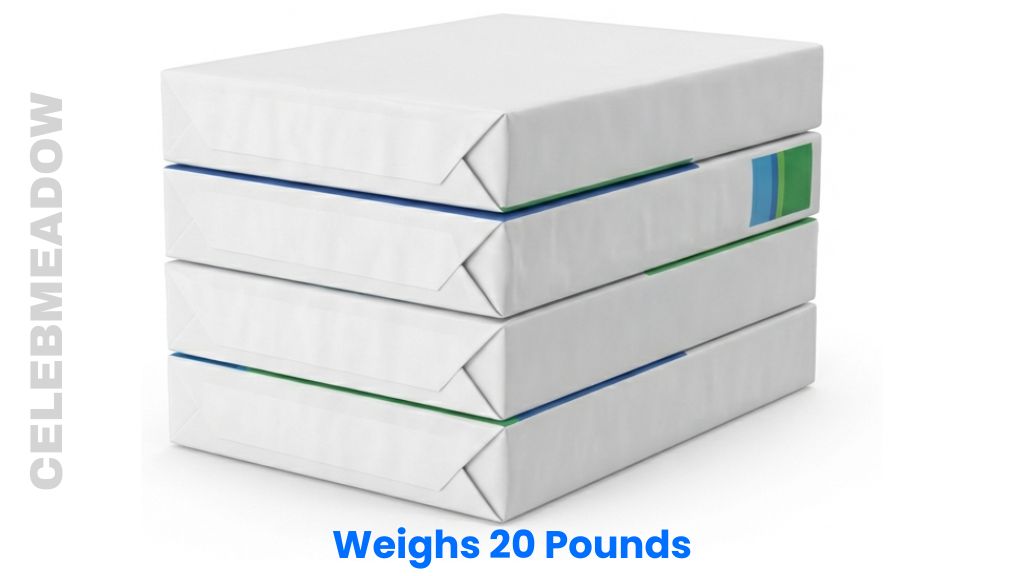
Four sealed reams of standard copy paper stack up to exactly 20.0 pounds — and here’s the part most people don’t know: the paper is literally named after this weight.
The “20 lb bond” label on a ream doesn’t mean each package weighs 20 lbs. It refers to a large uncut manufacturing sheet stack that weighs 20 lbs — and that scales down perfectly so that each retail ream hits almost exactly 5.0 lbs. Stack four together and you’re right on target.
The interesting thing about this weight is how it feels compared to, say, a dumbbell. Same number on the scale, completely different experience. The paper stack is wide, flat, and dense in a way that feels almost rigid, like a thick slab of something solid. Lift a four-ream box from the bottom, not the sides. Feel how the weight presses down evenly rather than pulling from a single point. That’s what dead weight distribution feels like at 20 pounds.
Key measurement: 20.0 lbs | 9.07 kg
4. A Large Bag of Dry Dog Food

A standard 20 lb bag of dry dog food is one of the most awkward carries at this weight — not because of how heavy it is, but because of how the weight moves.
Major pet food brands settled on 20 lbs as a standard retail size for practical reasons. It fits cleanly on store shelves, ships efficiently on pallets, and sits at the upper edge of what most adults can comfortably carry from a car trunk to a pantry in one trip.
The real trick is the shifting interior. Unlike a dumbbell or a stack of paper, the kibble inside slides and redistributes as you move. Hoist the bag onto one shoulder and you’ll feel it lean. Tuck it under an arm and it pushes back. It’s a classic example of how 20 lbs with an unstable center of gravity demands more from your body than 20 lbs of solid, fixed weight. Pet owners know this walk well.
Key measurement: 20.0 lbs | 9.07 kg
5. A Commercial Fire Extinguisher (10 lb ABC Model)
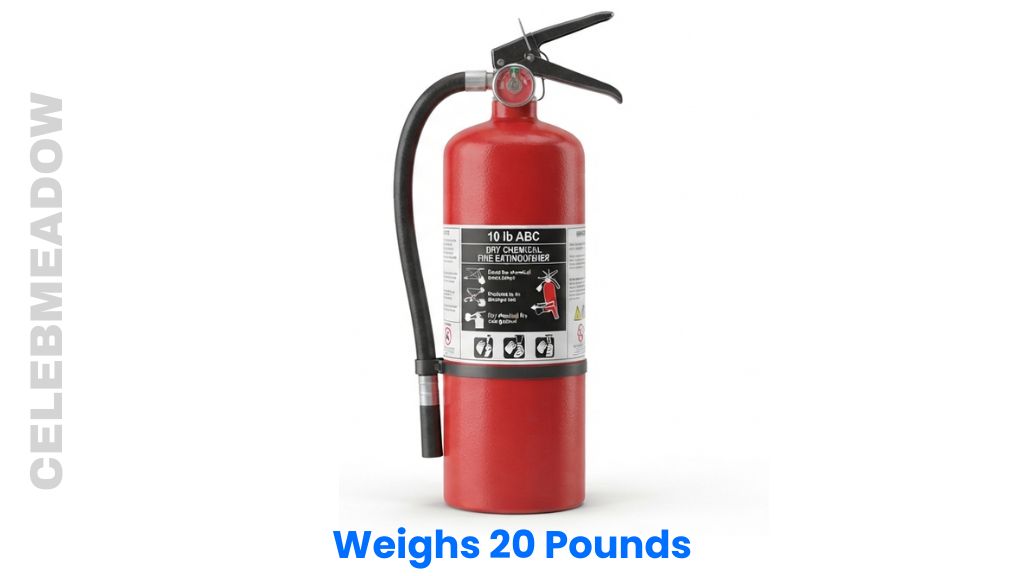
The standard 10 lb commercial fire extinguisher surprises almost everyone the first time they pull it off a wall — it feels far heavier than the “10 lb” label suggests, commonly landing around 18 to 20 pounds total.
The reason is simple physics and safety engineering. The 10 lb rating refers only to the dry chemical powder inside. The thick-walled steel cylinder required to hold pressurized gas adds substantial weight on its own, and the valve, hose, and handle add a bit more. Together, the whole unit ends up close to twice what the capacity label implies.
Pull one off the wall bracket in your office building or apartment hallway and feel the immediate, compact heaviness. It’s dense for its size in a way that catches people off guard. That solid, pressurized-metal feel is what fire safety engineering demands — the unit needs to be robust enough to survive being dropped, knocked over, or stored for years without failure.
Key measurement: ~18–20 lbs total | ~8.2–9.1 kg
6. A Premium Kitchen Stand Mixer
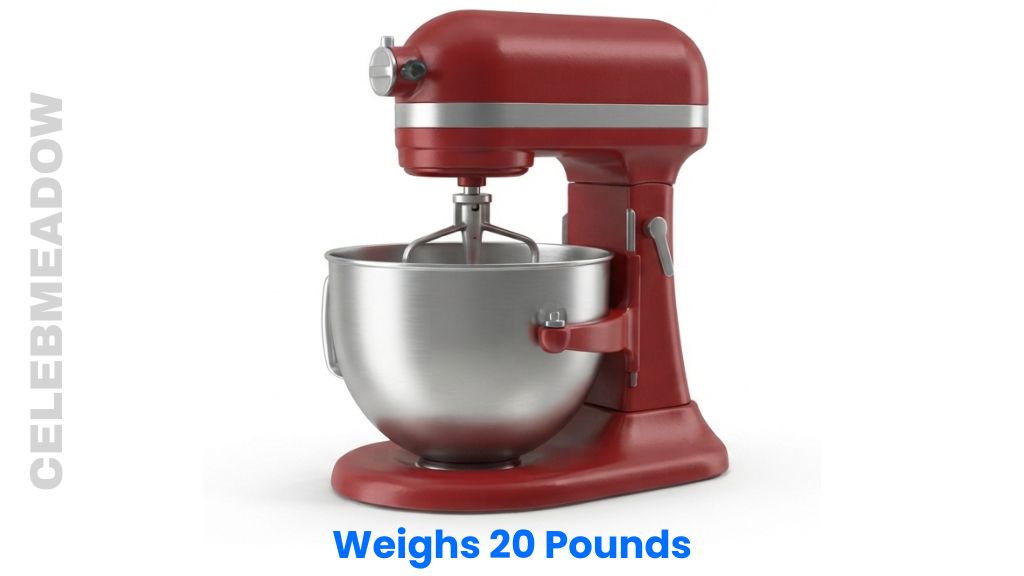
A quality kitchen stand mixer sits commonly around 20 to 22 pounds, and every ounce of that weight is doing a structural job.
The housing is solid cast metal, not plastic. The internal gear train — the mechanism that drives the bowl through kneading, whipping, and mixing — is built from steel components that need mass to stay stable under load. When you’re pushing dense bread dough, the mixer wants to walk across your counter. The weight pins it down.
That’s also exactly why so many people leave their stand mixer on the counter permanently rather than storing it in a cabinet. Lifting 20-plus pounds from a low shelf repeatedly is a commitment. Try sliding one from the back of a countertop to the front edge and you’ll feel immediately why the design prioritizes stability over portability.
Key measurement: ~20–22 lbs | ~9.1–10 kg
7. A Bulk Bag of Jasmine or Basmati Rice

A 20 lb bag of rice is an agricultural standard used across global markets, and the way it feels in your arms is unlike almost anything else at this weight.
Grain packs in a way that conforms. Carry a 20 lb bag of rice and it shapes itself slightly to your body — it wraps around your hip or molds to your forearm. This is the weight’s non-rigid side, the kind that feels manageable right up until you’ve been holding it for 90 seconds and your grip starts protesting.
Find a 20 lb bag at a wholesale club or international grocery market and hoist it from the floor to a shelf. Notice how it wants to slump and fold at the middle. Bulk grain distributes mass in a fluid, low-rigidity way that’s genuinely different from any boxed or rigid object at this weight. It’s a full-body carry, not just a hand carry.
Key measurement: 20.0 lbs | 9.07 kg
8. A Cased Electric Guitar
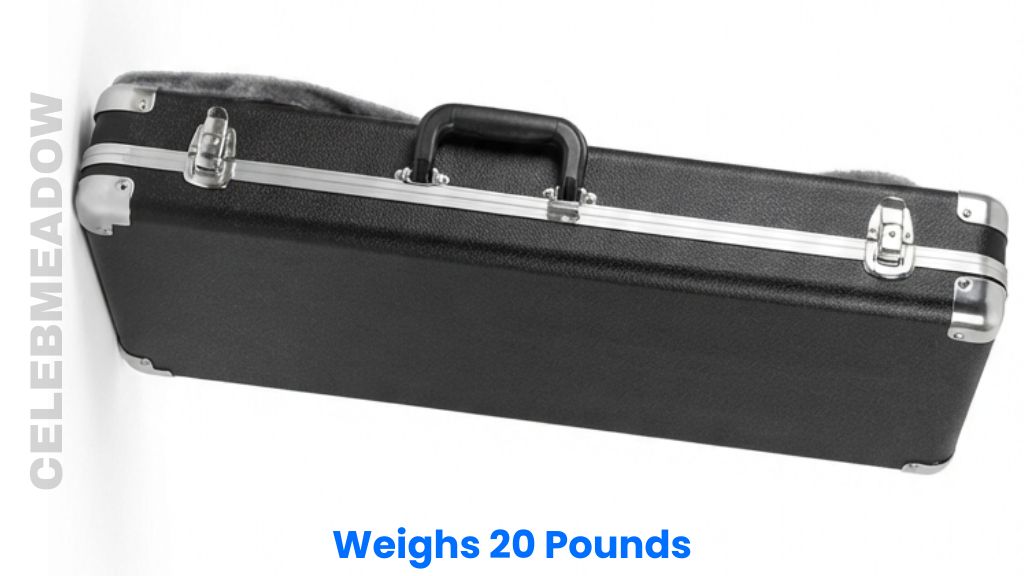
A solid-body electric guitar packed inside a standard hardshell travel case typically lands in the 18 to 22 pound range — and the shape makes every pound feel more demanding than the number suggests.
The guitar body itself — something like a Fender Stratocaster — runs around 7 to 8 lbs. The hardshell case adds roughly 10 to 12 more. The case needs thick plywood walls, metal corner reinforcements, dense internal padding, and heavy-duty latches. All of that protection adds up fast.
What makes the weight feel unusual is the geometry. It’s long, narrow at points, wide at others, and the balance shifts depending on which end you’re carrying. Walk through a parking lot holding a guitar case by the handle and you’ll feel it swing awkwardly against your leg. Anyone who has helped a band load equipment knows this is the carry that stays in your muscle memory.
Key measurement: ~18–22 lbs total | ~8.2–10 kg
9. A Medium-Sized Wire Dog Crate (36-Inch Model)
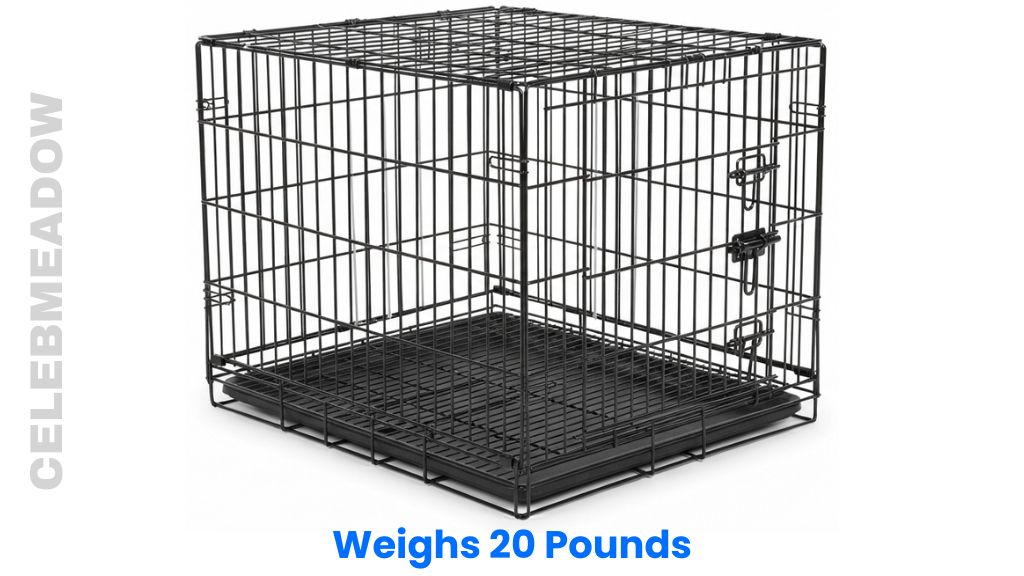
A 36-inch collapsible steel wire dog crate typically weighs somewhere in the 19 to 21 pound range — but it’s one of the few objects at this weight that feels lighter than it actually is.
The illusion comes from the open structure. The crate is mostly air. The steel grid is heavy-gauge welded wire, strong enough that a determined dog cannot bend the bars, but it leaves the interior hollow. Your hands and arms sense the large volume of the object before they register the weight. It feels lighter than a bag of rice even if the scale says otherwise.
Fold one down and lift it into a vehicle trunk. The flat, wide panel is awkward to grip but manageable for one person. That’s the design goal — portability without compromise on the structural safety a contained animal requires.
Key measurement: ~19–21 lbs | ~8.6–9.5 kg
10. A Large Demolition Sledgehammer
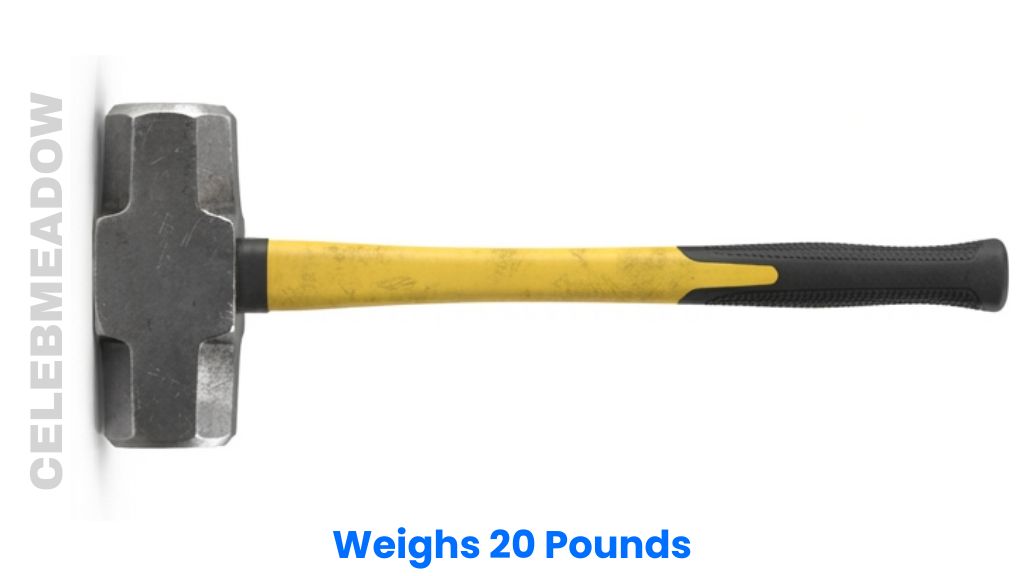
A heavy-duty 20 lb sledgehammer — roughly a 16 lb forged steel head on a 4 lb fiberglass or hickory handle — is one of the most physically demanding ways to experience this weight because of how leverage changes everything.
The head is where nearly all the mass lives. Lift the hammer by the top of the handle and it barely feels like 20 lbs because your grip is close to the weight. Slide your hand to the base of the handle, where you hold it during actual use, and that same 20 lbs suddenly feels like it’s fighting you. The physics of the long lever arm multiplies the perceived effort.
This is exactly why demolition workers pace themselves when using this tool. It’s not just lifting 20 lbs repeatedly — it’s controlling 20 lbs at the end of a 3-foot arm, over and over. Even standing in a hardware store and pressing the head of one against the floor while gripping the base of the handle tells you something meaningful about this weight.
Key measurement: ~20 lbs total | ~9.07 kg
11. A Mid-Sized Microwave Oven
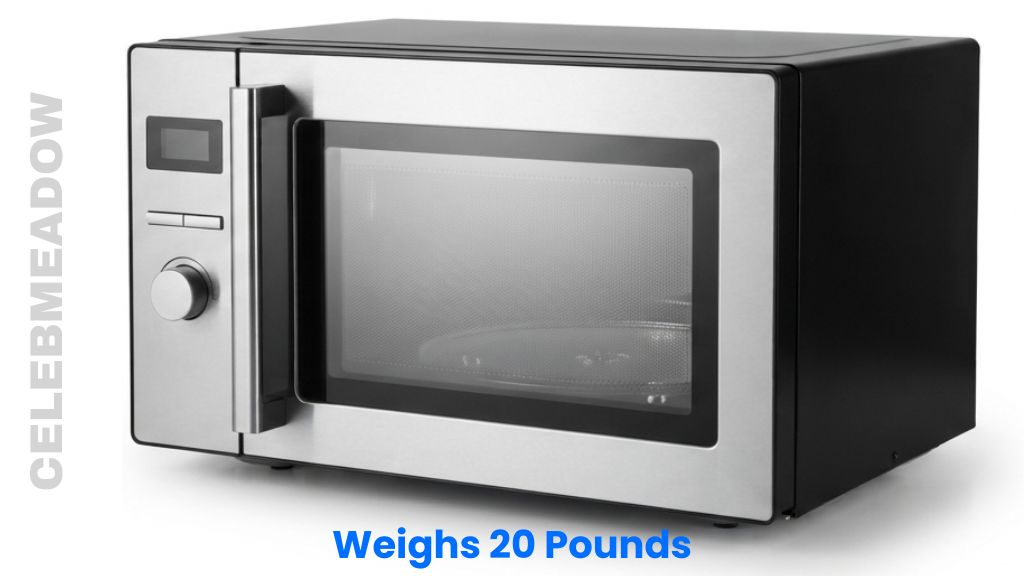
A compact countertop microwave — the 0.7 to 0.9 cubic foot size common in dorm rooms and small kitchens — typically weighs commonly around 20 to 22 pounds, and most of that weight is hidden inside.
The outer shell looks like lightweight plastic, but inside sits a copper transformer, a magnetron tube, a glass turntable plate, and a reinforced steel cavity. Every one of those components is heavy. The engineering requires it. The transformer alone accounts for a significant chunk of the total.
Moving a microwave during a house clean or apartment relocation is a shared experience for most adults. The box is boxy, awkward to grip, and the weight doesn’t distribute the way a bag or handle does. You end up pressing it against your chest or stomach for control. That carry — arms wrapped around a dense, boxy appliance — is a reliable way to feel what 20 pounds of compact machinery actually demands.
Key measurement: ~20–22 lbs | ~9.1–10 kg
12. A Half-Full 5-Gallon Water Cooler Jug

Filling a standard 5-gallon water jug halfway gives you roughly 20.85 pounds of water alone — add the plastic jug and you’re sitting at about 21.5 pounds total.
This comes straight from water density. One gallon of pure water weighs 8.34 lbs. Half of five gallons is 2.5 gallons, which scales to 20.85 lbs. No rounding tricks, just math that follows directly from how water behaves.
What makes this a useful weight reference is the slosh. Lift a half-full jug and the water inside moves independently of the container. That internal shifting means your muscles are constantly making small adjustments — your wrists, forearms, and core all engage in ways they wouldn’t with a rigid object of the same weight. Anyone who has ever hoisted one of these to reload an office water dispenser knows the awkward lean-and-flip moment that makes this task feel harder than 20 pounds has any right to.
Key measurement: ~21.5 lbs total | ~9.75 kg
13. A Heavy-Duty Pop-Up Canopy Frame (10×10 Model)
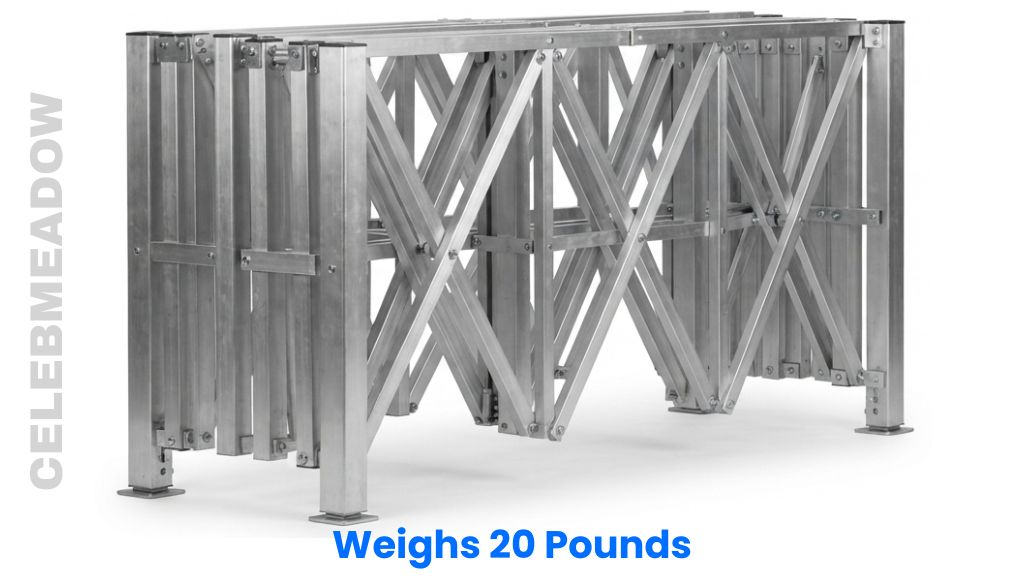
The steel or aluminum accordion frame of a standard 10×10 pop-up canopy — pulled from its carry bag without the fabric top — weighs commonly around 20 pounds, concentrated into a long, dense bundle.
The legs and cross-beams are built to resist wind. That structural requirement means the metal must be thick enough not to buckle under lateral force, which adds up quickly when you’re talking about eight or more interconnected metal segments. The fabric canopy gets most of the attention, but the frame is where the weight lives.
Pull the bare frame out of its bag and try carrying it a short distance. It’s long and rigid, and the weight doesn’t sit in one easy spot. Most people end up cradling it against one shoulder like a metal log. Farmers’ market vendors and weekend event booth operators know this carry very well — it’s usually the first thing that comes out of the car and the last thing that goes back in.
Key measurement: ~20 lbs | ~9.07 kg
14. A Lightweight Manual Reel Lawn Mower
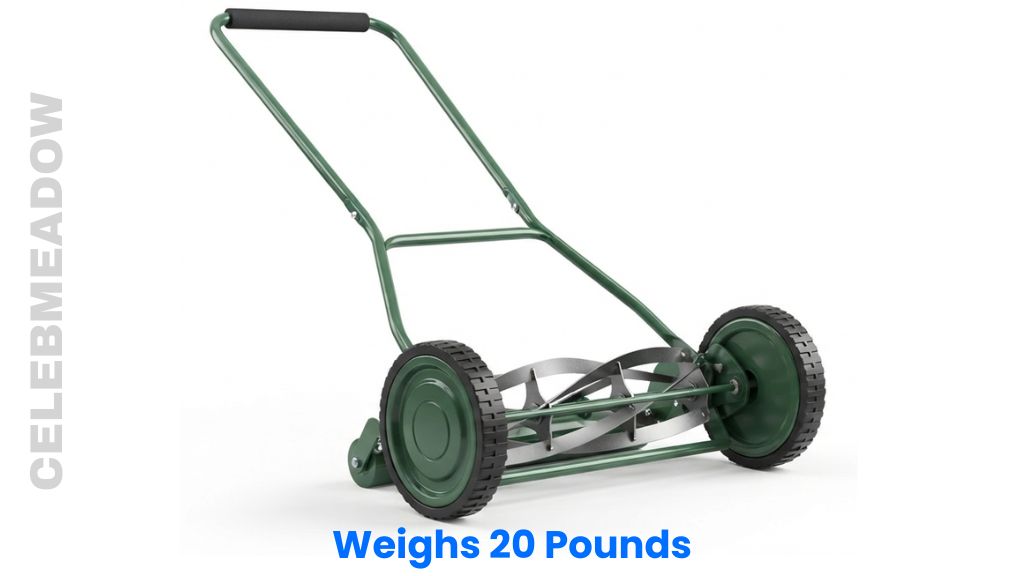
A lightweight manual reel mower sits commonly around 19 to 22 pounds — deliberately engineered to stay light enough to push by hand while still keeping the hardened steel blades pressed firmly against the grass.
The balance here is precise. Too light and the blades bounce off uneven terrain without cutting cleanly. Too heavy and the mower becomes exhausting to push across a full lawn. Manufacturers land in this weight range because it’s where the cutting physics and user effort reach a workable equilibrium.
Lift one by its crossbar to clear a garden step or a curb — the kind of quick hoist any suburban lawn owner has done dozens of times — and you feel that weight in your lower back before you feel it in your arms. The reel mower is wide, low, and the weight spreads across its width in a way that makes the lift feel more awkward than heavy. That’s 20 pounds with an unusual center of gravity.
Key measurement: ~19–22 lbs | ~8.6–10 kg
15. A 4-Foot Folding Resin Patio Table
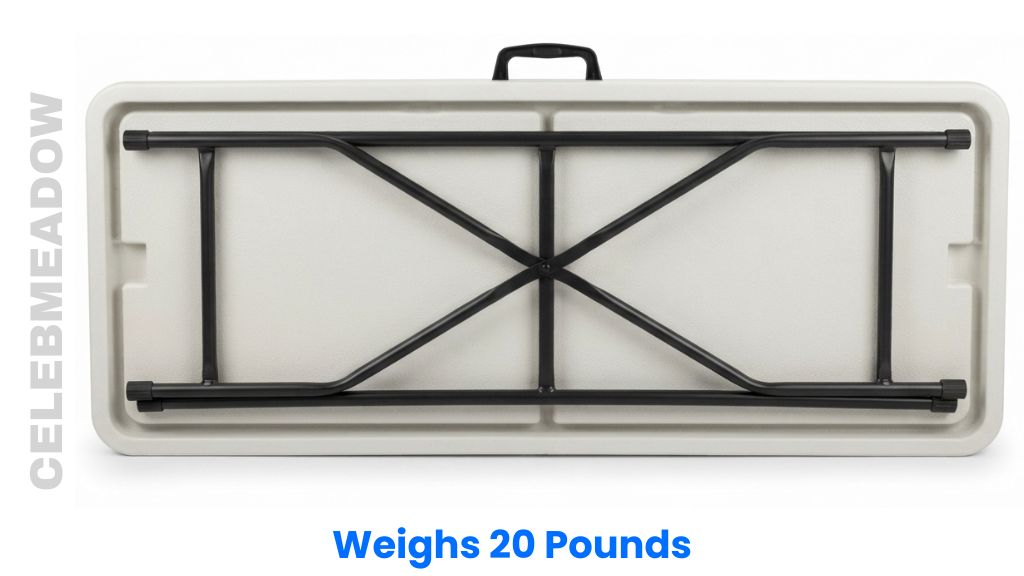
A standard 4-foot blow-molded plastic folding table weighs commonly around 18 to 21 pounds — and carrying one by its built-in center handle is one of the most distinctive 20-pound experiences available in everyday life.
The top is hollow high-density polyethylene — relatively light for its size. The folded steel tube leg frame underneath is where most of the weight concentrates. Together they make an object that’s wide, flat, and oddly front-heavy when carried from the side.
Swing one out of a storage closet by its center handle and walk it to a backyard. It hangs like a very wide, flat briefcase, and the width makes it catch air. The folding table is a weight you feel in your shoulder more than your hand. It’s never quite as heavy as it looks, but it’s always a little more awkward than you expect — a useful reminder that 20 pounds wears many shapes.
Key measurement: ~18–21 lbs | ~8.2–9.5 kg
How to Picture 20 Pounds Without a Scale
The fastest way to feel this weight is to grab two full gallon jugs of milk simultaneously — one in each hand — and just hold them. Your arms will register the load within seconds. That combined pull downward is what 20 pounds does to your body in a simple, unambiguous way.
A second method works with what’s already in your kitchen. Most mid-sized countertop microwaves weigh right around 20 pounds. Next time you move yours to clean behind it or relocate it during a kitchen refresh, pay attention to the effort involved. That dense, boxy, slightly awkward carry is a reliable physical memory you can pull on later.
For a more active reference, think about hoisting a 20 lb bag of dog food or rice from the floor to a shelf. This weight doesn’t feel extreme on the way up, but hold it for 60 seconds at chest height and your whole upper body starts negotiating. That slow build of effort is what makes 20 pounds worth knowing — it’s a real load, not a trivial one.
20 Pounds Compared to Similar Weights
| Weight | In Kilograms | Compared to a 20 lb Dumbbell |
| 10 lbs | 4.54 kg | Half a dumbbell |
| 15 lbs | 6.80 kg | 75% of a dumbbell |
| 20 lbs | 9.07 kg | One full 20 lb dumbbell |
| 25 lbs | 11.34 kg | 1.25 dumbbells |
| 30 lbs | 13.61 kg | 1.5 dumbbells |
| 40 lbs | 18.14 kg | Two 20 lb dumbbells |
Common Questions About 20 Pounds
How much is 20 pounds in kilograms?
20 pounds equals 9.07 kilograms. To convert, divide any pound value by 2.205. In grams, 20 pounds comes out to 9,071 grams.
Is 20 pounds heavy to lift for most people?
It depends on the person. Most healthy adults can lift 20 pounds without much trouble, but it gets tiring fast if you’re holding it for a while or picking it up from the floor repeatedly. It’s not light — you’ll feel it.
What common household object weighs about 20 pounds?
A sealed 20 lb bag of dry dog food or a 20 lb bag of rice are two of the easiest examples. A small countertop microwave falls in the same range. Any of these give you a quick, no-scale way to feel the weight.
How can I estimate 20 pounds without a scale?
Stack four unopened reams of copy paper. Each ream weighs exactly 5 pounds, so four together hit exactly 20 pounds. It’s the most precise at-home method — no guessing involved.
Picking up a 20 lb dumbbell and holding it for one full minute tells you more than any description can. So does hoisting a full bag of rice from the floor or carrying two milk jugs across a parking lot. The weight is real, it’s specific, and once you’ve felt it in the right context, you don’t need a scale to recognize it again.
Related More Measurements Guides:

I’m Cherry Sin, and I write clear, practical guides that help people understand everyday measurements and sizes. I focus on turning numbers into easy mental pictures using familiar objects and real-life situations. At Celebmeadow, I write guides that explain measurements in a simple, visual way.