You’re standing in a hardware store trying to figure out if that shelf bracket will work. Or maybe you’re measuring a gap under the cabinet and you don’t have a tape measure handy.
One foot — 12 inches = 1 foot = 30.48 cm — sounds simple on paper, but picturing it in your head is a different story. The good news? You’ve been surrounded by one-foot objects your entire life.
Quick Measurements: How Long is 1 Foot Long?
| Unit | Value |
| Inches | 12 inches |
| Feet | 1 foot |
| Centimeters | 30.48 cm |
| Millimeters | 304.8 mm |
| Meters | 0.3048 m |
13 Everyday Things That Are 1 Foot Long
| Object | Dimension | Exact or Approximate |
| Standard School Ruler | Length | Exact |
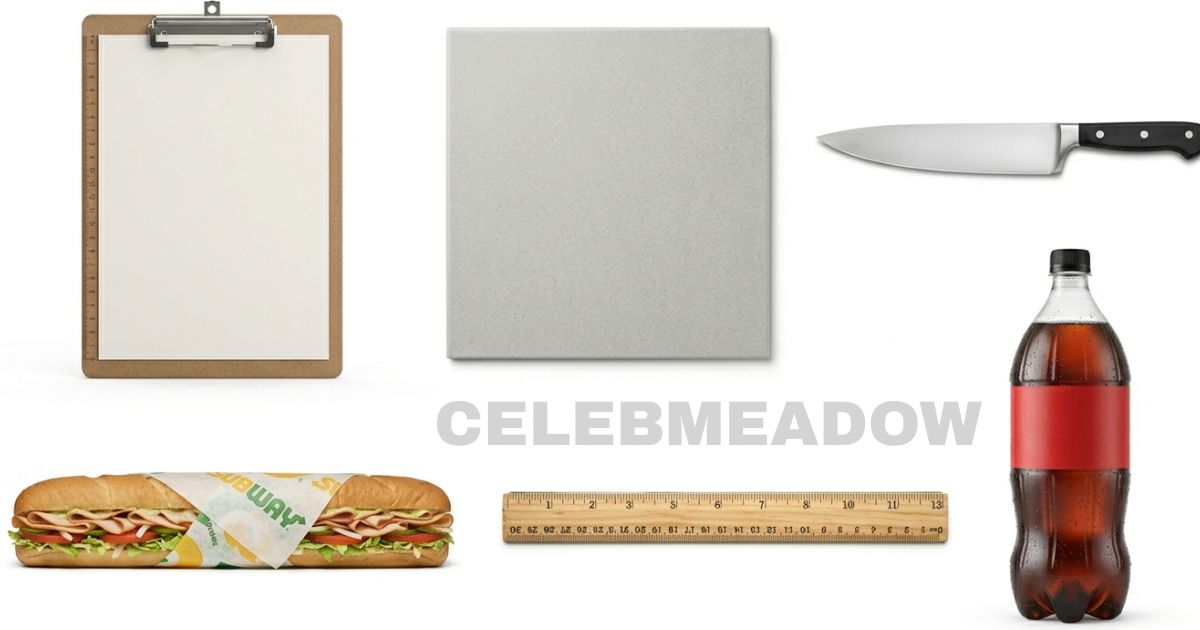
| 2-Liter Soda Bottle | Height | Approximate |
| Subway Footlong Sandwich | Length | Approximate |
| Standard Clipboard | Height | Approximate |
| US & Canadian License Plate | Width | Exact |
| Desktop Keyboard (Alphanumeric Section) | Width | Approximate |
| Standard Wine Bottle | Height | Approximate |
| 12×12 Floor Tile | Length & Width | Exact |
| 12×12 Scrapbook / Craft Paper | Length & Width | Exact |
| Household Aluminum Foil Box | Length | Exact |
| Chef’s Knife | Total Length | Approximate |
| Standard Hacksaw Frame | Blade Length | Exact |
| Standard Pizza Box | Length & Width | Exact |
1. Standard School Ruler
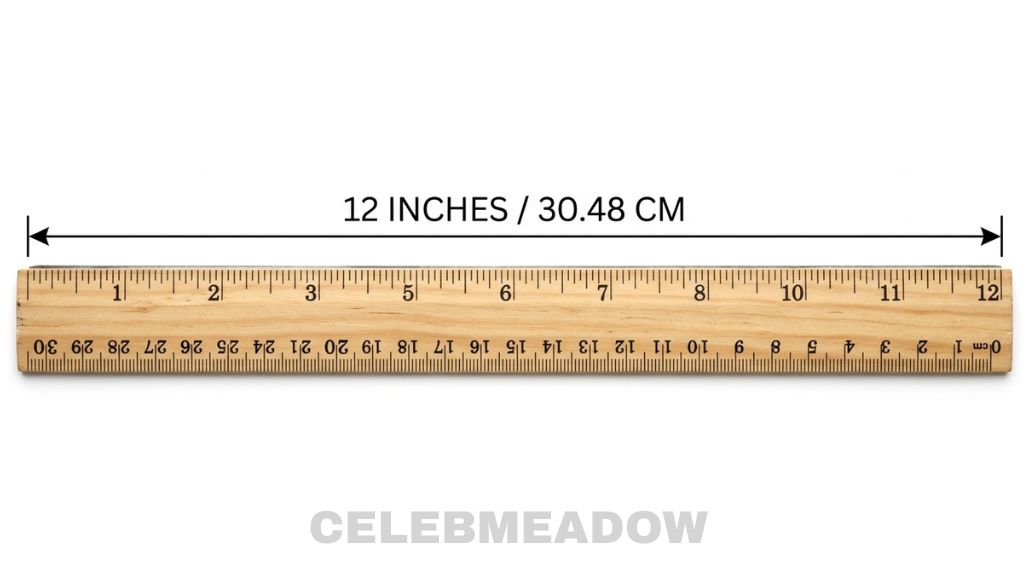
This is the one reference that never lies. A standard ruler is exactly 12 inches long — no rounding, no approximation. That size was locked in by the International Yard and Pound Agreement of 1959, which created a single global standard for the foot. Before that, different countries had slightly different versions of a “foot,” which caused real problems in trade and construction.
The ruler exists at exactly this length because it was designed to be a foot — not just measure one. Every time you lay one flat on a surface, you’re holding the official definition of 1 foot. If you ever need to check whether a gap is roughly a foot wide, a ruler is your most reliable mental anchor.
Key measurement: 12 inches / 30.48 cm
2. 2-Liter Soda Bottle
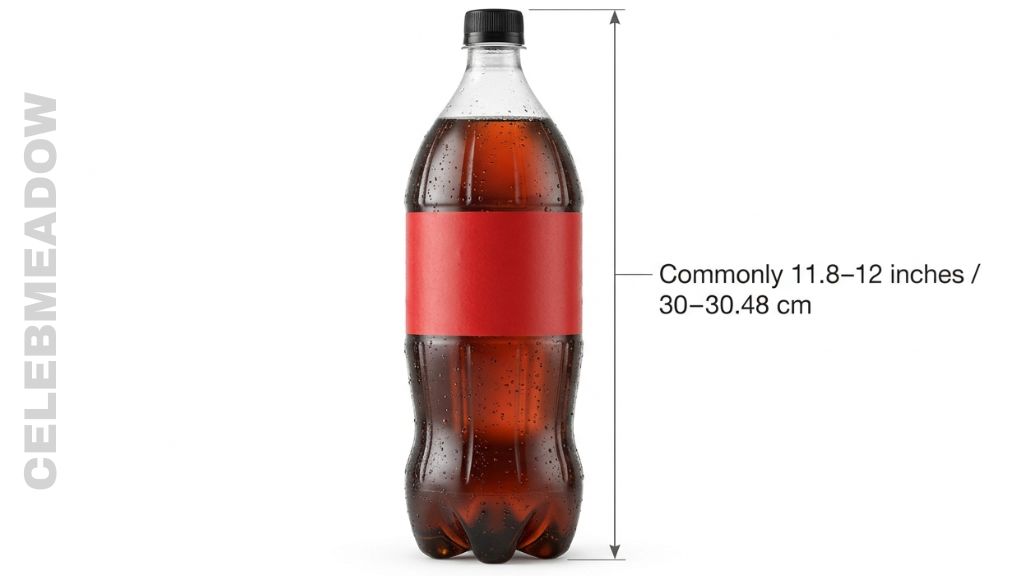
Set a 2-liter bottle on your kitchen counter and you’re looking at something very close to one foot tall. Most brands — Coca-Cola, Pepsi, store generics — sit between 11.8 and 12 inches in height. That slight variation comes from blow-mold specs that differ by bottler, but the range is tight enough to treat it as a foot reference.
The reason it lands at this height isn’t accidental. Supermarket shelves are designed with specific vertical clearances, and a 2-liter bottle had to fit those spaces while staying stable under the pressure of carbonation. Next time you open the fridge, look at where the top of the bottle sits. That’s your foot mark.
Key measurement: Commonly around 11.8–12 inches / 30–30.48 cm
3. Subway Footlong Sandwich
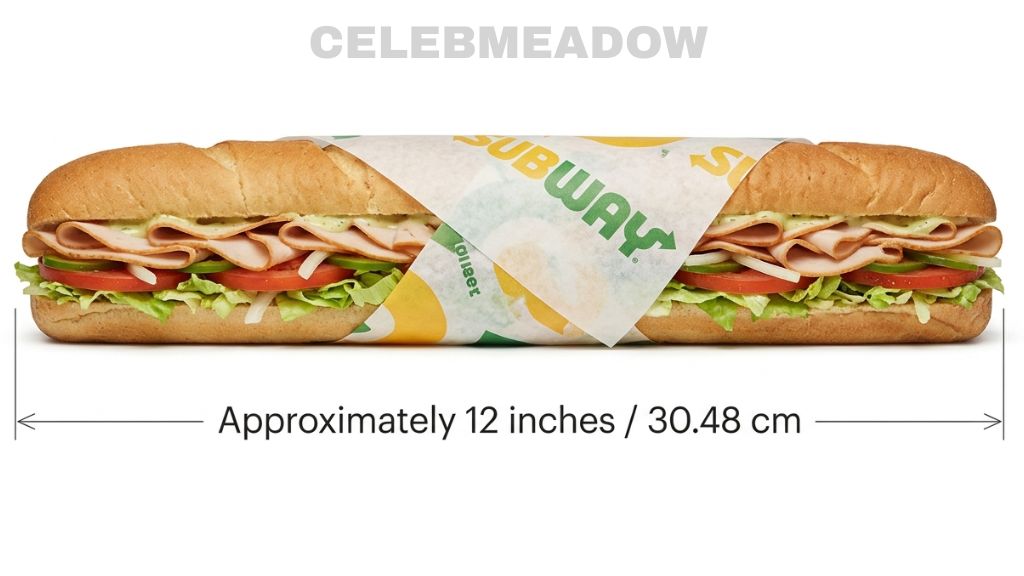
The name says it all — and yet most people have never actually measured one. A Subway Footlong bakes to approximately 12 inches, a standard set after the brand faced public scrutiny in 2013 about inconsistent bread lengths. The slight variation you sometimes see comes from how bread expands in the oven, not from any change in dough weight.
The 12-inch length exists because it splits a standard loaf cleanly in half, giving two equal 6-inch portions. It also fits neatly into the sandwich paper and bag. Laying one on a counter gives you an instant visual reference for one foot of horizontal space — something that’s surprisingly useful when you’re trying to judge whether a lunchbox or container is long enough.
Key measurement: Approximately 12 inches / 30.48 cm
4. Standard Clipboard
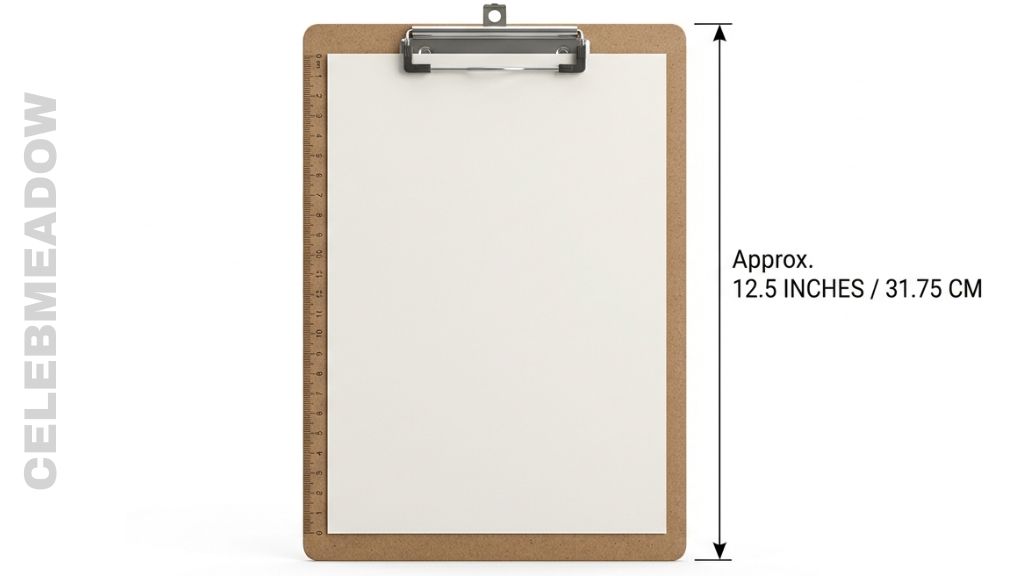
A clipboard is just a hair over one foot — about 12.5 inches tall. That extra half-inch isn’t a design quirk. It’s there on purpose. Standard letter-size paper is 11 inches long, and the clipboard needs to extend past that edge to protect the paper from curling, bending, or tearing at the bottom.
Pick one up at a doctor’s office or a warehouse and you’ll notice how confidently rigid it feels. That stiffness is intentional — the clipboard is built to serve as a writing surface you can hold in one hand while standing. For measuring purposes, it gives you a near-perfect foot reference with just a small buffer at the top.
Key measurement: Approximately 12.5 inches / 31.75 cm
5. US & Canadian License Plate
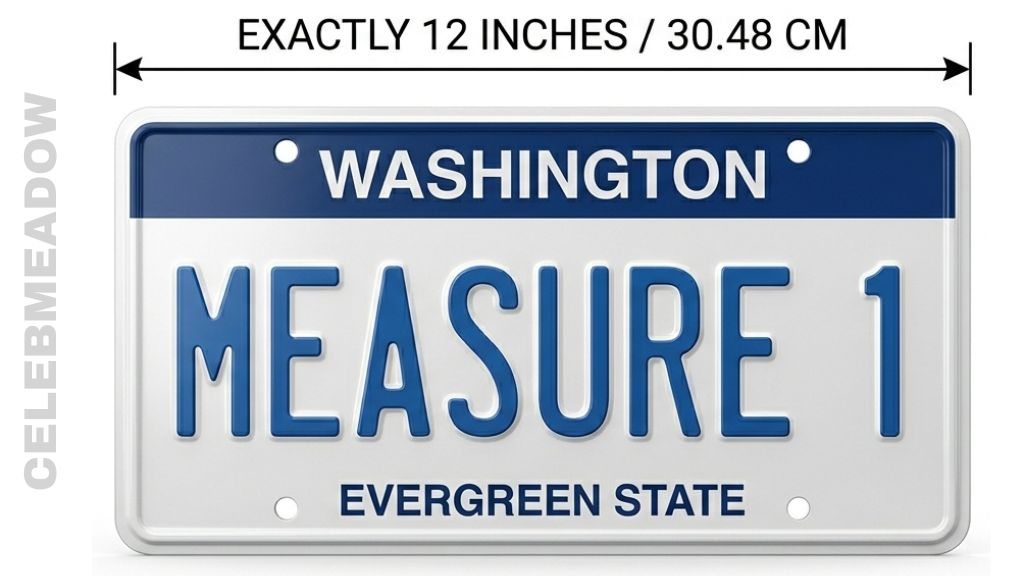
Walk up to any car and look at the license plate. Its horizontal width is exactly 12 inches — a standard set in 1956 by US and Canadian transportation regulators. That uniformity exists so that automakers can design bumper brackets, mounting frames, and trunk recesses that fit any plate from any state or province without custom adjustments.
It’s one of the most exact one-foot references you’ll find in the real world. The plate is always right there, always the same, and always easy to spot. If you need to judge one foot on a car or in a parking lot, the plate is your reference.
Key measurement: Exactly 12 inches / 30.48 cm
6. Desktop Keyboard (Alphanumeric Section)
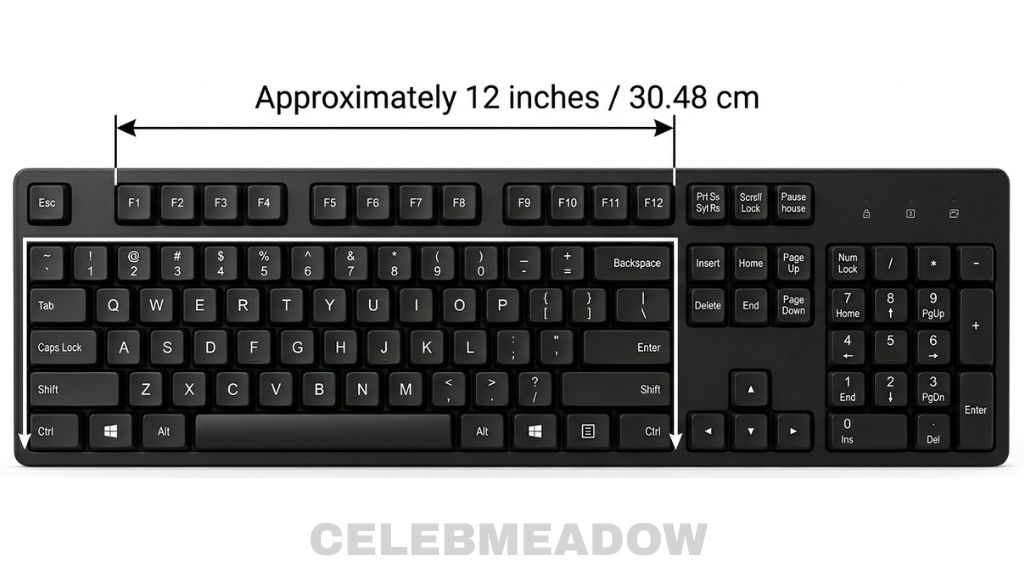
Sit down at a desk and look at the letter-and-number section of a desktop keyboard — not the full keyboard with the number pad on the right, just the main typing block. That section measures around 12 inches wide across most major brands. It’s no coincidence that it lands near a foot.
The width traces back to mechanical typewriters, which were built to match the natural spacing of human shoulders and hands during typing. Modern keyboards inherited that dimension because it simply works. The next time you’re trying to judge one foot on a desktop surface, your keyboard’s core section is already doing the measuring for you.
Key measurement: Approximately 12 inches / 30.48 cm
7. Standard Wine Bottle
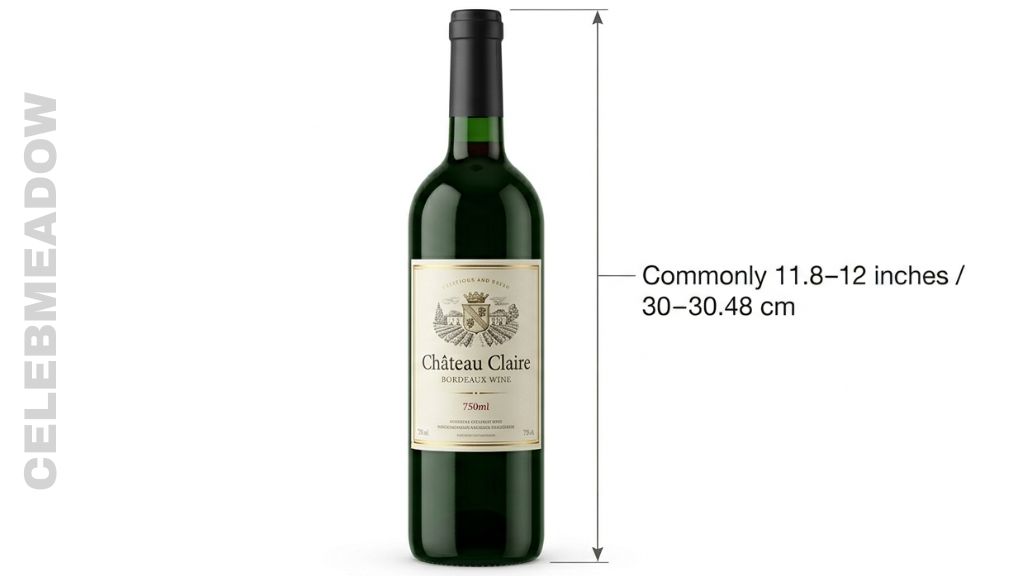
A standard wine bottle — the classic 750ml Bordeaux or Burgundy shape — stands commonly around 11.8 to 12 inches tall. That height goes back further than most people expect. In the 19th century, before machine manufacturing, glassblowers shaped bottles by hand. The size of a bottle was largely dictated by a single breath of air from the blower’s lungs — and a typical breath produced a bottle close to this height.
That historical accident became a commercial standard, and it stuck. Today it defines wine rack slot sizes, cabinet shelf heights, and gift box dimensions. If you’re measuring vertical clearance in a kitchen cabinet or checking a wine rack opening, one bottle height is one foot.
Key measurement: Commonly around 11.8–12 inches / 30–30.48 cm
8. 12×12 Floor Tile
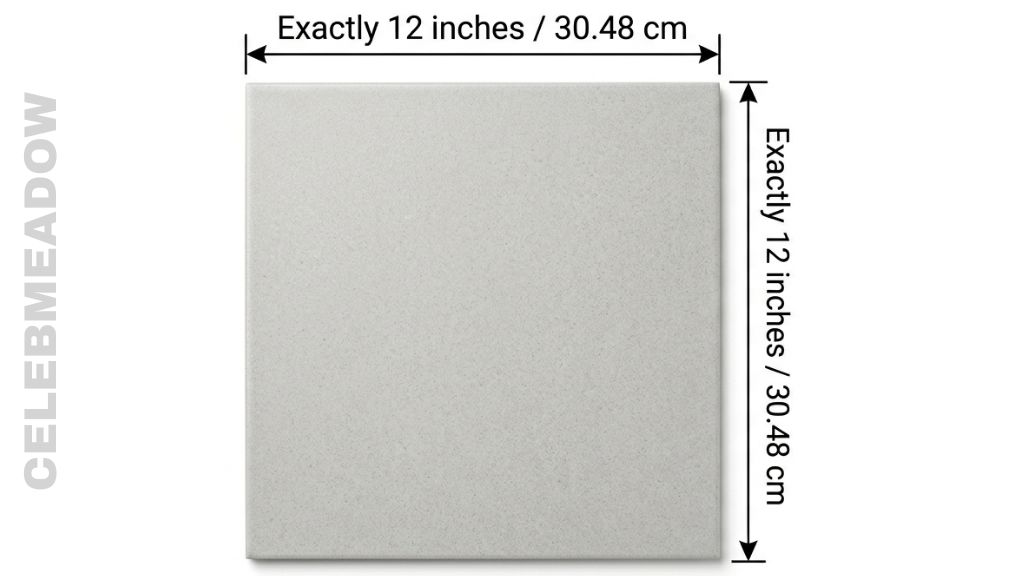
Look down the next time you’re in a grocery store, a public restroom, or a school hallway. Those square tiles beneath your feet are very likely 12 inches × 12 inches — a size chosen by the construction industry specifically because one tile equals one square foot. That makes calculating floor area as simple as counting the tiles.
One 12×12 tile gives you a foot in two directions at once. It’s one of the rare references that works both vertically and horizontally depending on how you think about the space. If you’re ever estimating room size by feel, you’re already holding the math in every step you take.
Key measurement: Exactly 12 inches × 12 inches / 30.48 cm × 30.48 cm
9. 12×12 Scrapbook or Craft Paper Sheet
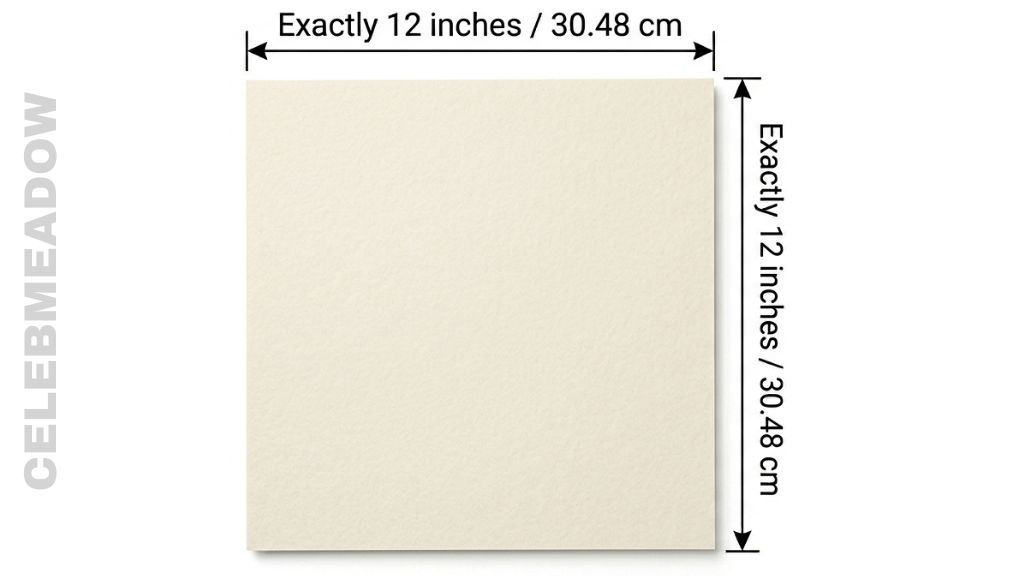
A standard scrapbook paper sheet is 12 inches on every side — a format that became the global hobby standard because it fits four 4×6 photo prints in a balanced layout without wasting paper. The square shape also makes it easy to rotate compositions without cutting anything down.
Unlike regular letter paper (which is 8.5×11 inches), this sheet gives you a perfect square foot. If you’ve ever done a school art project or walked through a craft supply aisle, you’ve held this size. Lay one flat and you’ve got a clean, one-foot grid to work with in any direction.
Key measurement: Exactly 12 inches × 12 inches / 30.48 cm × 30.48 cm
10. Household Aluminum Foil Box
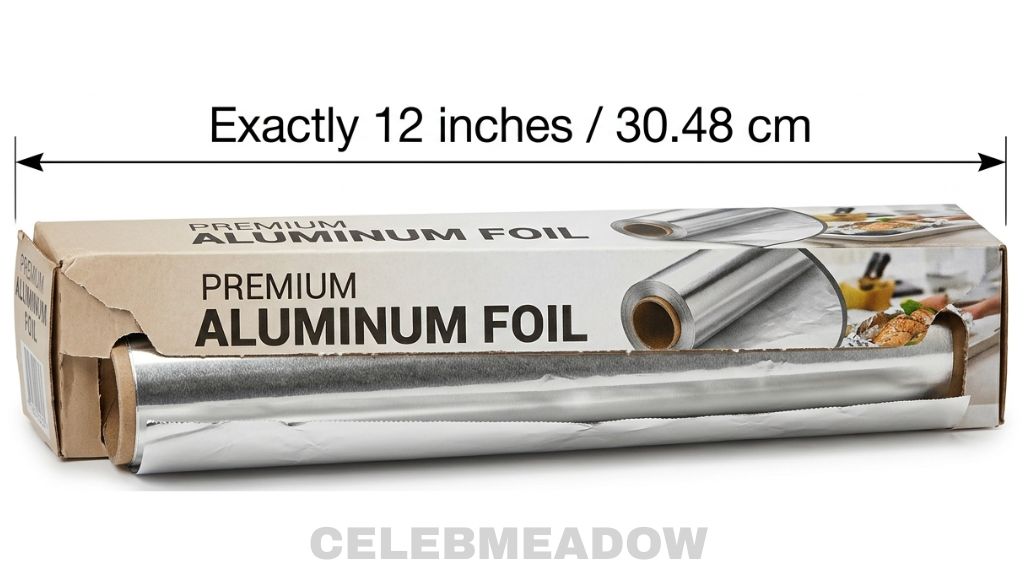
Grab an aluminum foil box from your kitchen drawer. The box itself — and the roll inside — is 12 inches wide. That’s not random. Standard baking sheets and roasting pans are designed around this same width, so a single pull of foil covers a cooking surface completely without needing to overlap pieces.
The box is a quiet ruler that lives in almost every kitchen. Next time you’re measuring drawer depth or checking whether something fits inside a cabinet, hold up the foil box lengthwise. It’s compact, rigid, and almost always within arm’s reach.
Key measurement: Exactly 12 inches / 30.48 cm
11. Chef’s Knife
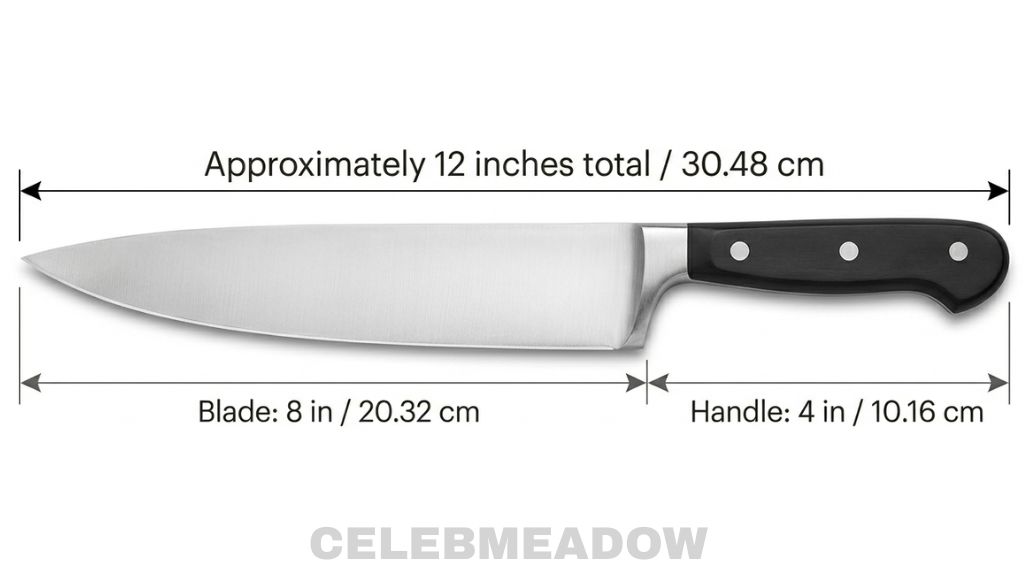
A standard chef’s knife — the kind you find in most home and professional kitchens — runs about 12 inches from the tip of the blade to the end of the handle. That total length combines an 8-inch blade with a 4-inch handle, a ratio refined by culinary tool makers like Wüsthof and Victorinox to balance weight perfectly so the knife pivots naturally on a cutting board without the cook lifting the tip.
The knife is long enough to slice through a large cabbage in a single draw but short enough to stay controlled in one hand. If you want to picture one foot on a kitchen counter, lay a chef’s knife flat. The scale of it is immediately clear.
Key measurement: Approximately 12 inches total / 30.48 cm
12. Standard Hacksaw Frame
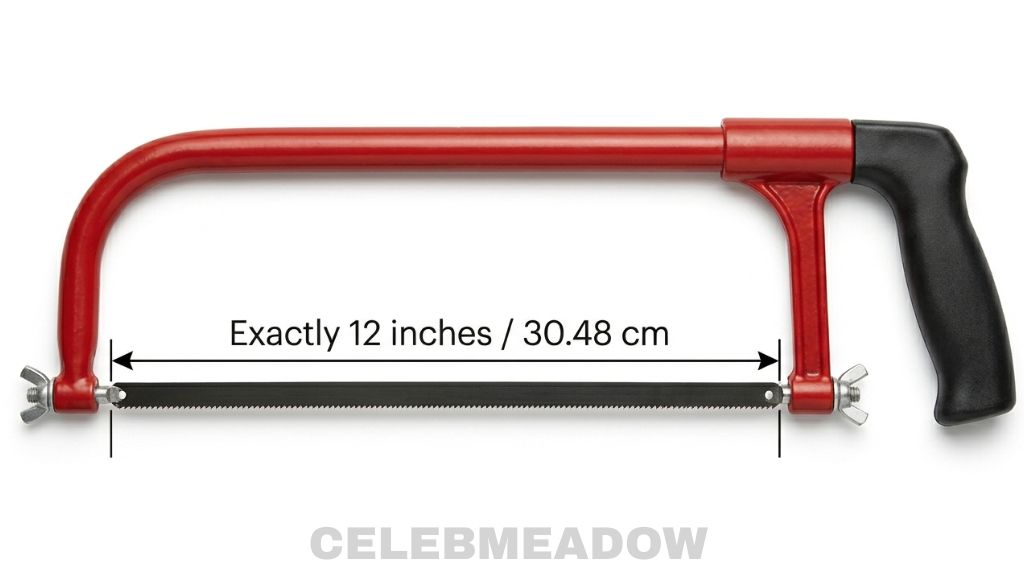
Open any basic toolbox and there’s a good chance a hacksaw is in there. The distance between the two mounting pins — where the blade locks in — is exactly 12 inches. That length isn’t a suggestion. It’s an ANSI/ASME standard, which means any replacement blade from any hardware brand will fit any frame without measuring.
The 12-inch span exists because it gives enough tension and length to cut through metal pipe, conduit, or bolt without the blade flexing dangerously. The frame itself is thin and arched, which makes the 12-inch span easy to see at a glance. It’s one of the more precise one-foot references you’ll find in a garage or workshop.
Key measurement: Exactly 12 inches / 30.48 cm
13. Standard Pizza Box
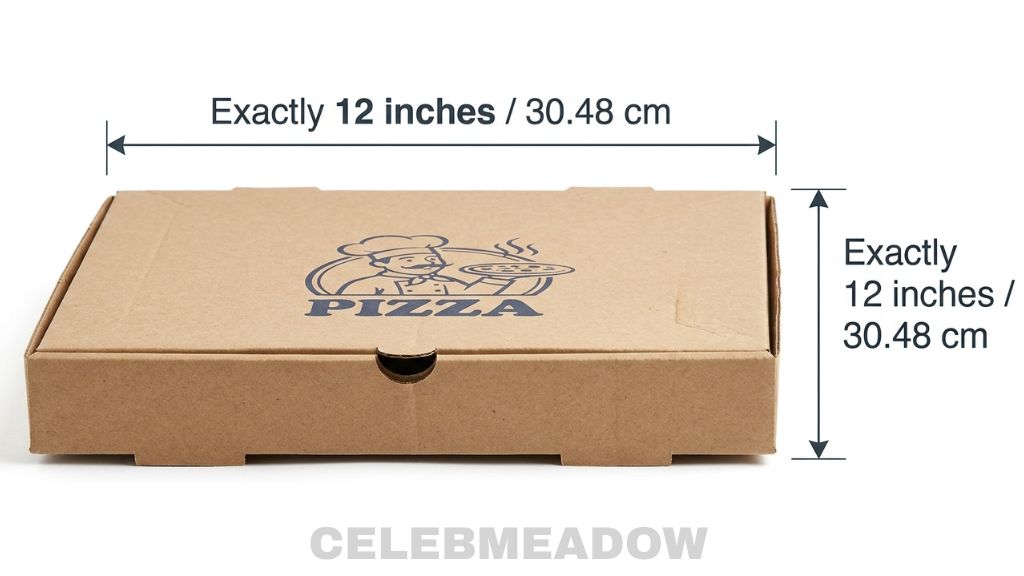
Open a pizza box from almost any delivery chain and you’re holding a near-perfect one-foot square in your hands. A 12-inch pizza box is designed to fit a 12-inch pizza — the most popular size ordered worldwide — with just enough border room to keep the crust from pressing against the sides. That snug fit is intentional. Too much extra space and the pizza slides around during delivery. Too little and the lid won’t close cleanly.
The box is square, which means you get a foot of measurement in both directions at once — length and width. That makes it one of the most practical visual references in this entire list. Need to know if a shelf gap is a foot wide? If a drawer is deep enough for a flat storage item? Hold up a pizza box. It’s cardboard, it’s flat, and most households see one at least once a week. You’ve probably never thought of it as a measuring tool before — but now you will.
Key measurement: Exactly 12 inches × 12 inches / 30.48 cm × 30.48 cm
How to Picture 1 Foot Without a Ruler
Your hand is one of the best measuring tools you already own. Spread your fingers as wide as they go — from the tip of your thumb to the tip of your pinky. For most adults, that hand span sits between 8 and 9 inches. Add a few finger-widths and you’re at a foot. It’s not perfect, but it gets you close enough for most everyday decisions.
A second method: a standard piece of letter paper is 8.5 × 11 inches. Hold it vertically and you’re about an inch short of a foot on the long side. Flip it sideways and you can use the 8.5-inch edge plus one thumb-width to get close to 12 inches. Most people have a piece of paper nearby — and now it’s a measuring tool.
If neither is available, think about your forearm. From the average adult’s wrist crease to the inside of the elbow is commonly around 11 to 12 inches. It varies by person, but it’s a fast, zero-tool way to gauge whether something is roughly a foot long before you commit to a purchase or a cut.
1 Feet Compared to Similar Sizes
| Measurement | In cm | Compared to 1 Foot (12 in) |
| 9 inches | 22.86 cm | 3 inches shorter |
| 10 inches | 25.4 cm | 2 inches shorter |
| 12 inches (1 foot) | 30.48 cm | ← This is 1 foot |
| 14 inches | 35.56 cm | 2 inches longer |
| 15 inches | 38.1 cm | 3 inches longer |
| 24 inches (2 feet) | 60.96 cm | Double the length |
Common Questions About 1 Foot
How long is 1 foot in cm?
One foot equals 30.48 centimeters. It also equals 304.8 millimeters or 0.3048 meters. The value is fixed — it never changes.
Is 1 foot the same as 12 inches?
Yes. One foot is always 12 inches. The symbol for feet is (′) and the abbreviation is “ft.” So 1 foot, 1 ft, and 12 inches all mean the exact same thing.
What common object is exactly 1 foot long?
A standard ruler is the most accurate — it is literally built to be 12 inches. A US license plate and a 12-inch pizza box are also exactly one foot across.
How can I measure 1 foot without a ruler?
Two options work well. A sheet of letter paper is 11 inches long — add one thumb-width to reach 12 inches. Or lay two dollar bills end to end — that gets you to about 12.3 inches, close enough for a quick estimate.
Where did the foot measurement come from?
The foot unit came from early civilizations that based measurements on the human foot. Different regions had different versions for centuries. In 1959, the International Yard and Pound Agreement fixed it globally at exactly 12 inches — and it has stayed that way since.
Related More Measurements Guides:
Closing
The next time you’re stuck without a tape measure, look around. A license plate on the nearest car, the foil box in the kitchen drawer, or the floor tile under your feet — any one of them puts a clear, physical foot right in front of you. A chef’s knife laid flat on a counter and a 2-liter bottle standing upright both get you to that same 12-inch mark from completely different angles.
Once you start seeing a foot in the objects you already use every day, the number stops being abstract and starts being something you can reach out and touch.

I’m Cherry Sin, and I write clear, practical guides that help people understand everyday measurements and sizes. I focus on turning numbers into easy mental pictures using familiar objects and real-life situations. At Celebmeadow, I write guides that explain measurements in a simple, visual way.