You’re standing in a store, holding a shelf bracket, and the label says 30 cm. Your brain goes blank. That’s not unusual — most people can picture inches more easily than centimeters, especially in daily shopping moments.
So here’s the quick answer: how big is 30 cm: 30 cm is roughly 11.81 inches, just under 1 foot, and exactly 0.3 meters. Once you pair that number with something you’ve already touched or seen, it clicks instantly.
Quick Reference How Big is 30 cm?
| Unit | Value |
| Centimeters | 30 cm |
| Millimeters | 300 mm |
| Meters | 0.3 m |
| Inches | 11.81 in |
| Feet | 0.984 ft (just under 1 foot) |
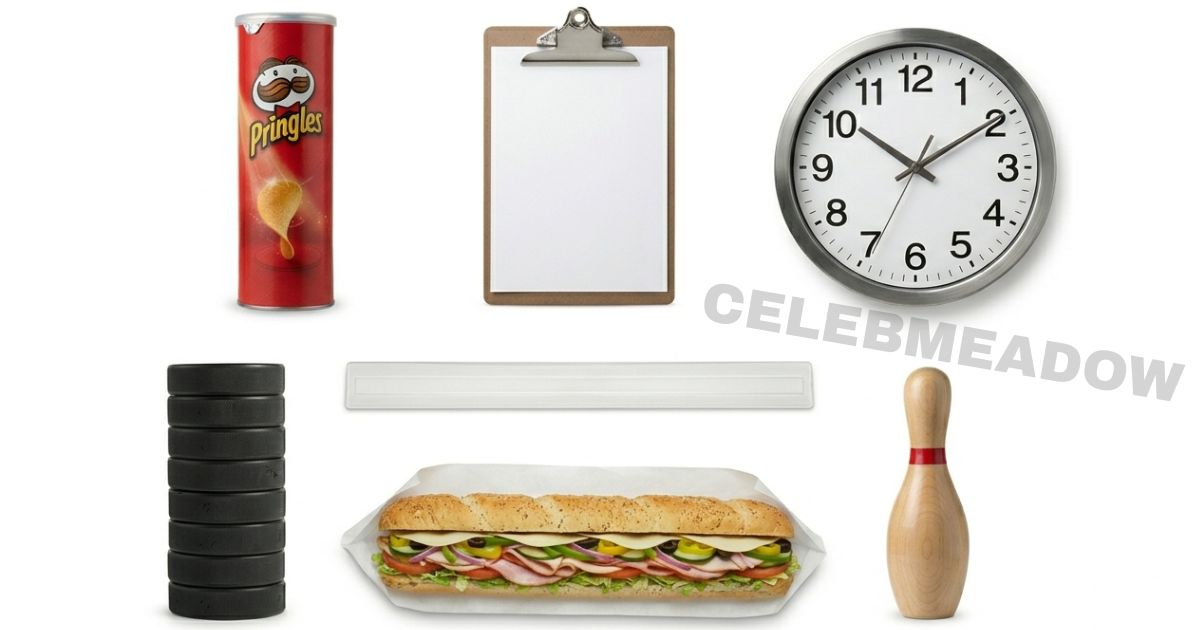
13 Everyday Things That Are 30 cm Big or Long
| # | Object | Measurement | Context |
| 1 | Standard School Ruler | Exactly 30 cm | Length |
| 2 | A4 Sheet of Paper | 29.7 cm | Height (upright) |
| 3 | 2-Liter Soda Bottle | ~30–32 cm | Height |
| 4 | Subway Footlong Sandwich | ~30 cm | Length |
| 5 | Standard License Plate (USA/Canada) | 30.48 cm | Width |
| 6 | 30×30 cm Floor Tile | 30 cm × 30 cm | Width & Length |
| 7 | Large Pringles Can | ~30 cm | Height |
| 8 | Rolling Pin Barrel | ~25–30 cm | Length |
| 9 | Standard Clipboard | ~31.75 cm | Height |
| 10 | Junior Bowling Pin | Exactly 30 cm | Height |
| 11 | Wall Clock | ~30 cm | Diameter |
| 12 | Toaster Oven | ~30 cm | Width |
| 13 | Stack of 12 Hockey Pucks | 30.48 cm | Stacked Height |
Standard School Ruler
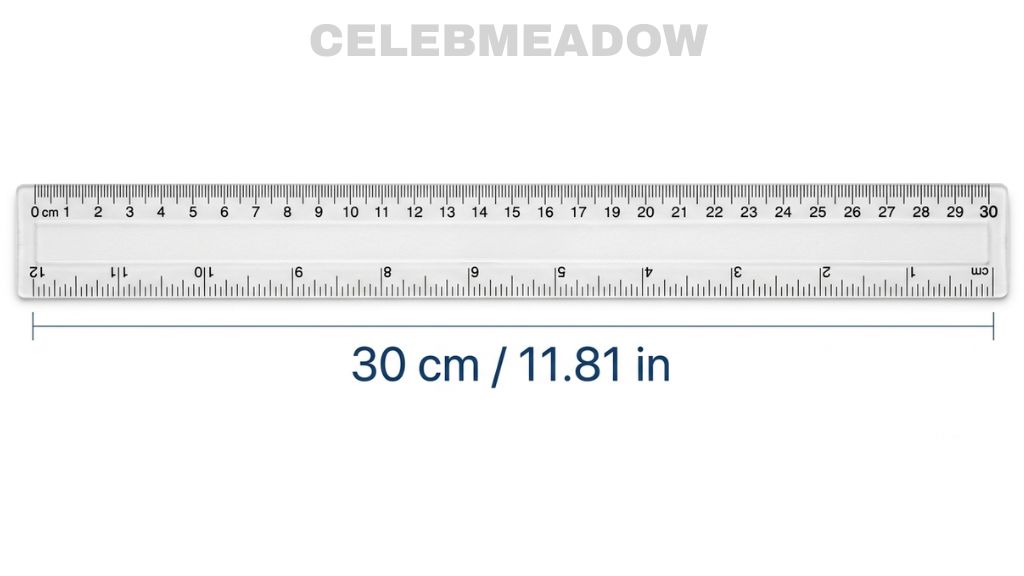
The school ruler is the most direct answer to “how long is 30 cm?” because it literally is 30 cm — no rounding, no approximation. It was designed this way on purpose. The metric ruler became the standard classroom tool because 30 cm pairs perfectly with the decimal system students learn in school. It fits inside most pencil cases, slides into backpack pockets, and sits flat in a desk drawer without bending.
Pick one up and hold it between two fingers. That straight edge from one end to the other? That’s your mental anchor for this entire article.
Key measurement: 30 cm / 11.81 inches
A4 Sheet of Paper
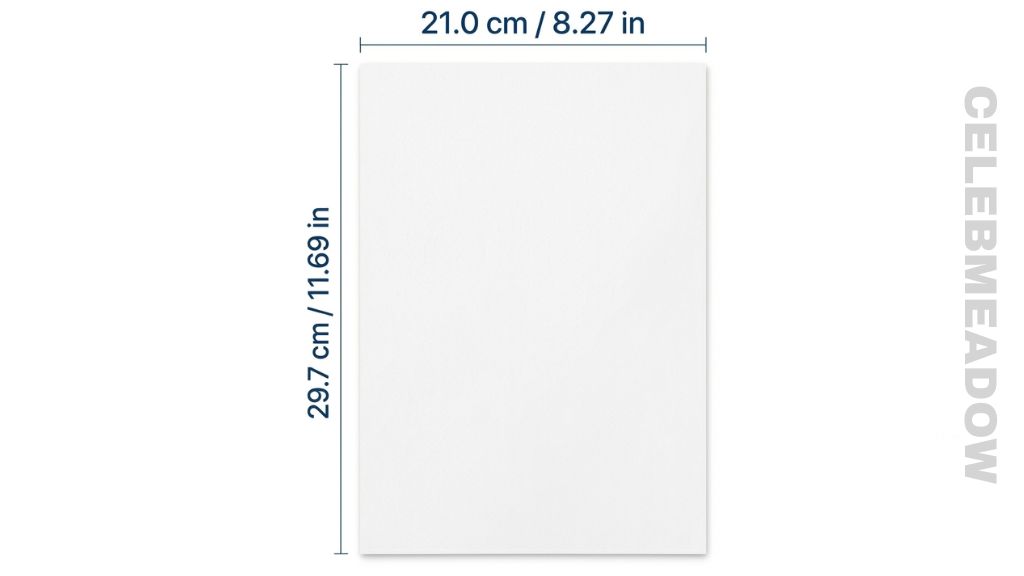
An A4 page stands at 29.7 cm tall — close enough to 30 cm that the difference is barely a fingernail’s width. This size comes from the ISO 216 standard, a mathematical system where every time you fold the sheet in half, the same proportions are kept. That’s why A4 fits neatly into binders, scanners, and printers without wasted space.
When you hold an A4 sheet upright by its short edge, the height you’re looking at is nearly a perfect 30 cm. It’s one of the most universally available objects in any home or office. Next time you need to estimate 30 cm, grab a sheet of printer paper and stand it on its long side.
Key measurement: 29.7 cm / 11.69 inches
2-Liter Soda Bottle
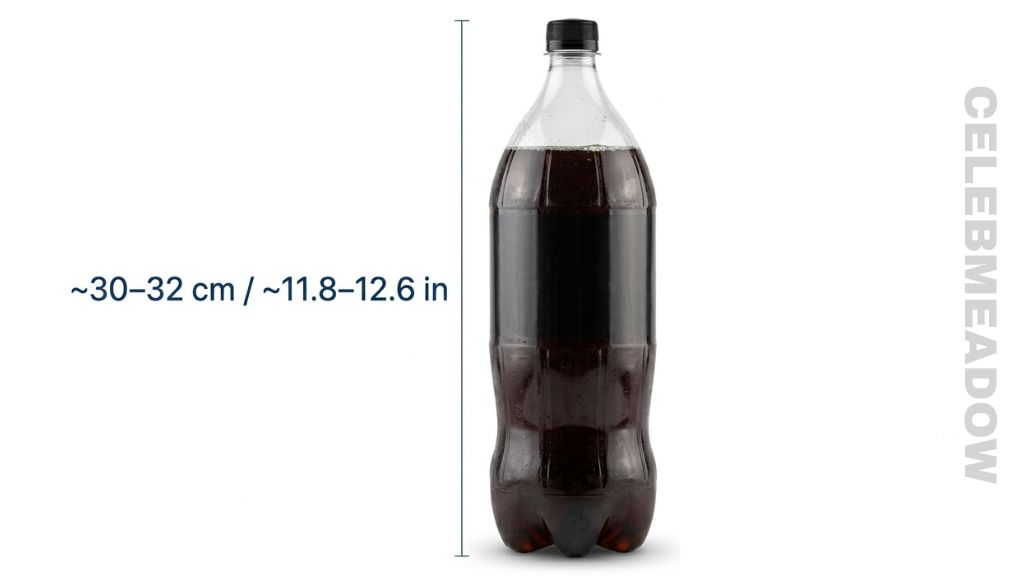
The 2-liter soda bottle stands commonly around 30 to 32 cm tall depending on the brand’s bottle shape. The height wasn’t chosen randomly. Engineers needed the bottle to hold pressure from carbonation without tipping in a refrigerator door shelf, so the base is wide and the total height stays within a range that balances stability and volume.
Stand one on your kitchen counter. That height — from the base to the cap — is your 30 cm reference point. It’s also why checking whether a tall bottle fits on a refrigerator shelf matters: most adjustable shelves are set at exactly this height range.
Key measurement: ~30–32 cm / ~11.8–12.6 inches
Subway Footlong Sandwich
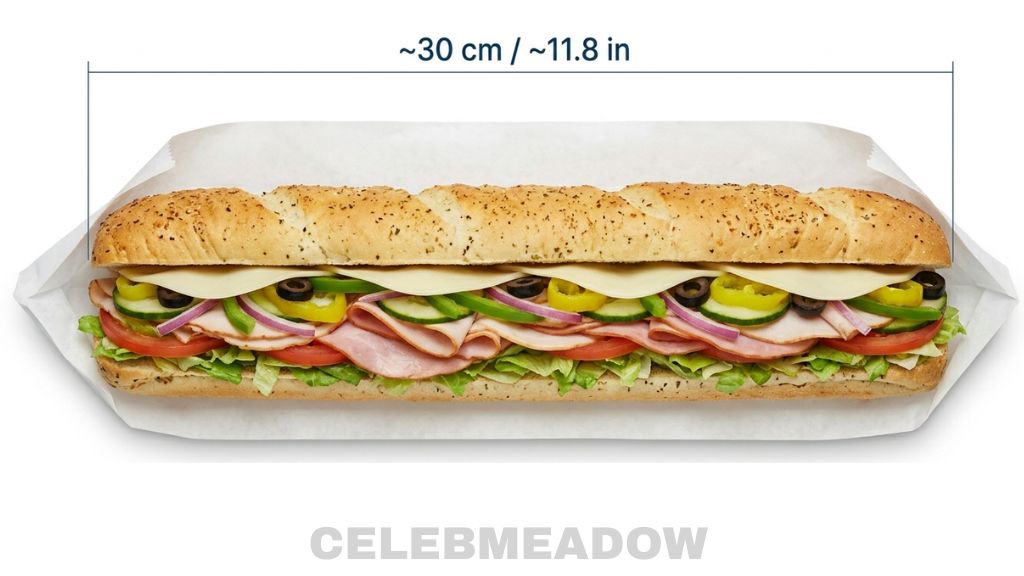
The Subway Footlong was built around one simple idea — a sandwich exactly one foot long. That’s 30.48 cm, which lands it right at 30 cm territory. The name is the marketing, but the size is real: it was set to give enough bread and filling for a full meal, or to split cleanly between two people.
Lay one flat on a table and you’re looking at almost exactly 30 cm from end to end. There’s something satisfying about a measurement that doubles as a meal. If you’ve ever shared one of these with someone, you already have a body memory of what 30 cm feels like in your hands.
Key measurement: ~30 cm / ~11.8 inches (12 inches targeted)
Standard License Plate (USA/Canada)
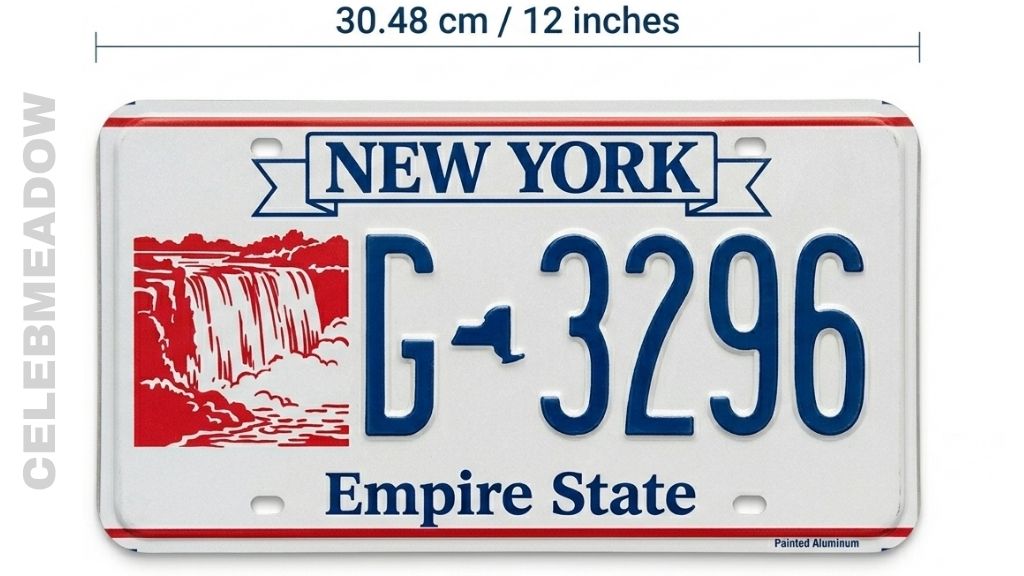
A license plate in the United States and Canada measures exactly 30.48 cm wide — the result of a 1956 agreement between car manufacturers and state governments to standardize mounting hardware. Before that, plates came in different sizes, which made aftermarket frames and brackets nearly impossible to sell at scale.
That width is so close to 30 cm that it’s often used as a proxy measurement by mechanics and fabricators. If you’ve ever installed a front plate bracket or bought a plate frame online, you were working with this exact dimension without thinking about it.
Key measurement: 30.48 cm / 12 inches
Standard 30 cm × 30 cm Floor Tile
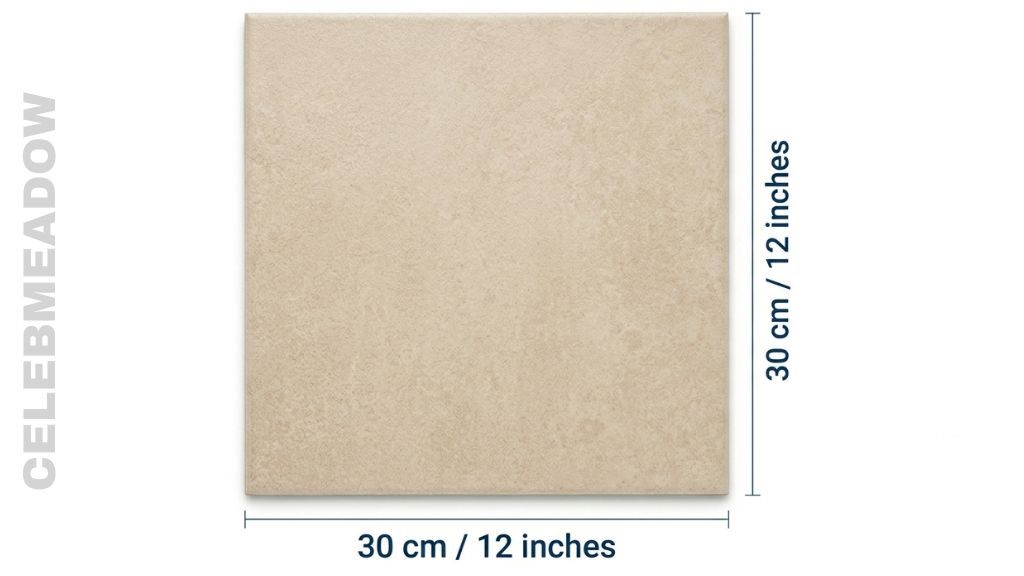
The 30 × 30 cm tile is the most modular shape in home construction. Each tile covers exactly one square foot in area, which made them easy for factories to produce in large volumes and simple for contractors to calculate materials. Ten tiles across a bathroom floor? That’s 3 meters. No complex math needed.
What makes this one special is that it gives you a 2D picture of 30 cm — width and length at once. Crouch down next to a tiled floor and look at one square. That’s a 30 cm box sitting right at your feet.
Key measurement: 30 cm × 30 cm / 12 in × 12 in
Large Pringles Can
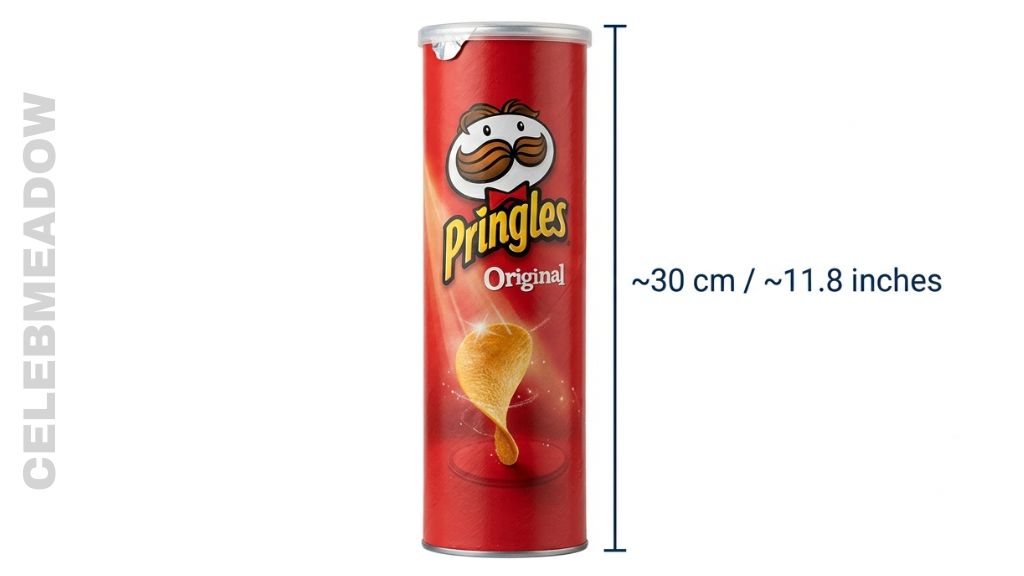
A full Pringles can typically stands near 30 cm tall. The tube was designed by Fredric Baur specifically to stack chips in a uniform shape — the hyperbolic paraboloid, or “saddle shape” — so they wouldn’t break during shipping. The height of the tube was set to hold a specific count of chips, not the other way around.
It’s a surprisingly useful size reference because the can is narrow, rigid, and stands perfectly straight. Slide it into a backpack’s side pocket and you immediately know whether a 30 cm object will fit. The diameter is small enough that the height is obvious and easy to compare.
Key measurement: ~30 cm / ~11.8 inches
Standard Rolling Pin Barrel
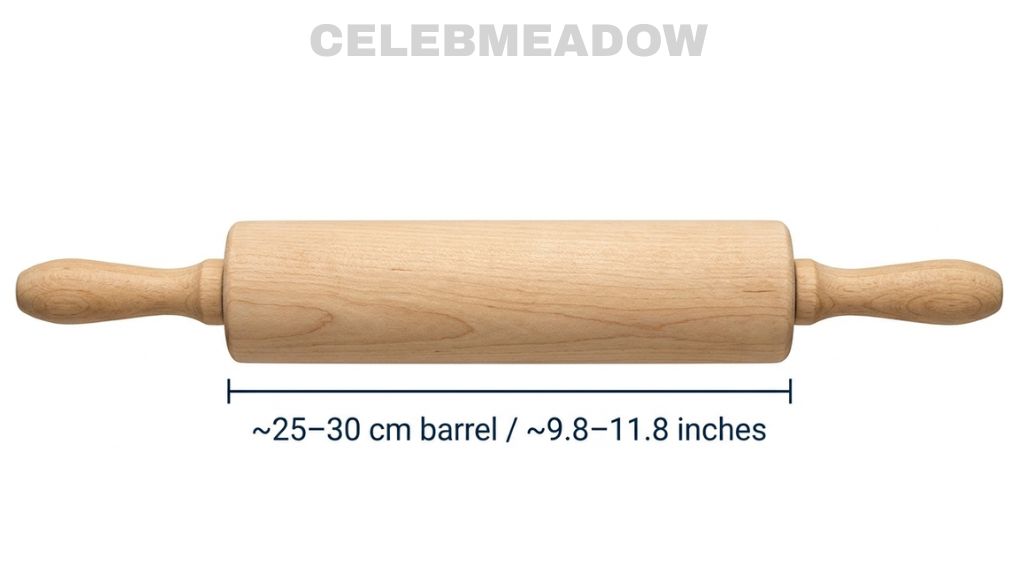
The barrel of a standard rolling pin — just the cylinder, not the handles — runs commonly around 25 to 30 cm. That length matches the width of a typical pie crust or pizza base that fits inside a home oven. It’s a functional measurement: too short and the dough bunches at the edges; too long and it doesn’t fit in a standard kitchen drawer.
When you roll out dough, the barrel glides across roughly 30 cm of surface in a single pass. That motion gives you a physical feel for the measurement. Pull it out of the drawer and look at the wooden cylinder between your hands — that’s your estimate of 30 cm.
Key measurement: ~25–30 cm barrel / ~9.8–11.8 inches
Standard Clipboard
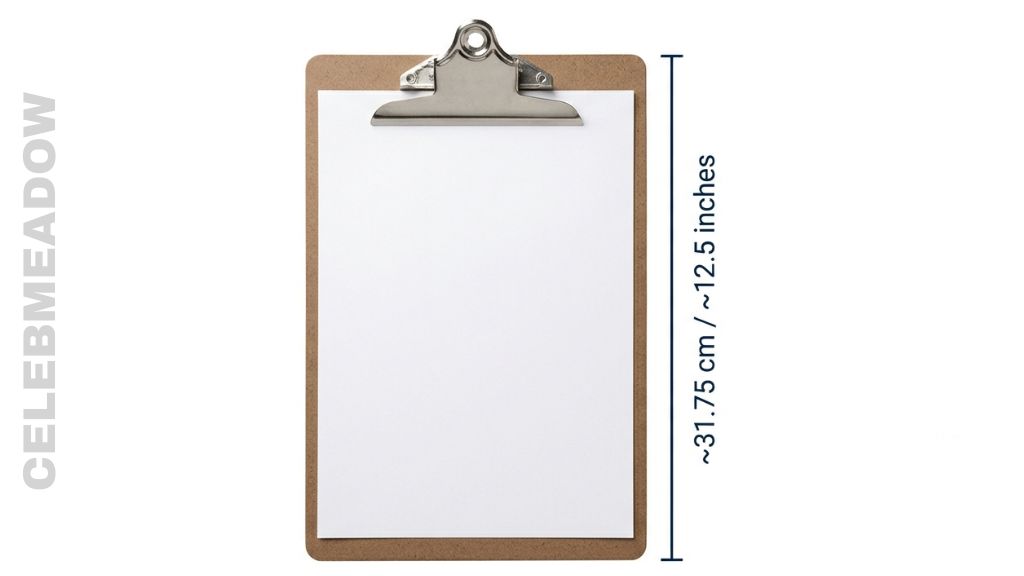
A standard clipboard measures typically near 31.75 cm tall — slightly more than 30 cm, but close enough to serve as a reliable visual reference. The extra length beyond the paper was intentional: the rigid board needs to extend past the document edge to protect the bottom of the sheet from curling or bending.
Clipboards show up everywhere — hospital wards, construction sites, delivery drivers’ hands. That makes them a universally recognized object. Hold one vertically. The length from clip to bottom edge is your 30 cm mark, give or take a finger’s width.
Key measurement: ~31.75 cm / ~12.5 inches
Junior Bowling Pin
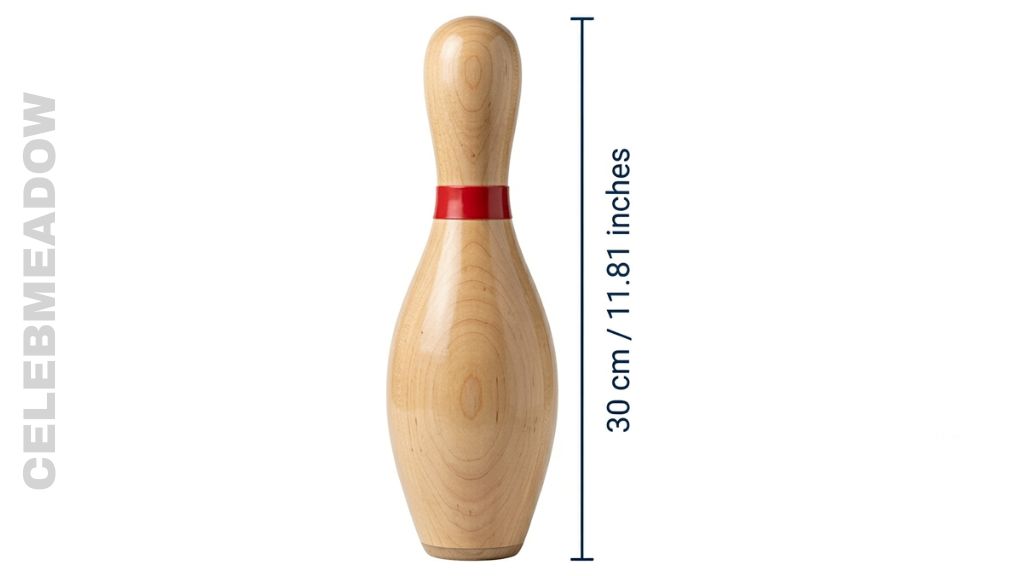
Most people picture a standard tall bowling pin, but the youth/junior bowling pin stands exactly 30 cm. This size was engineered for younger players — the weight distribution keeps it reactive when struck, even by a lighter ball, creating the same satisfying scatter as the full-size game.
It’s a narrow, upright object, which makes it useful for visualizing 30 cm height in a vertical space. Think of a column the height of that pin and you have a clear mental image for shelf clearance, decorative spacing, or storage planning.
Key measurement: 30 cm / 11.81 inches
Standard Wall Clock (Diameter)
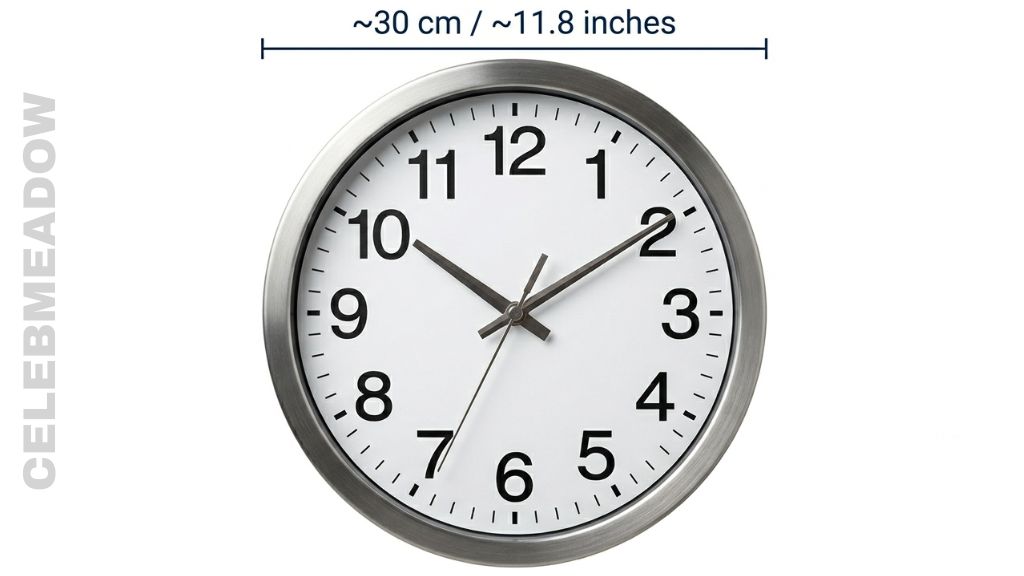
The most common “medium-large” wall clock sold for offices and classrooms has a diameter of commonly around 30 cm. That size hits a practical sweet spot: big enough to read from across a room, small enough to hang between a doorframe and a window without looking oversized.
Stand back and look at a clock face this size on a wall. The circle you’re seeing — the full width from edge to edge — is 30 cm. It’s a helpful reference because circular measurements can be harder to estimate than straight lines, and a clock gives you a clean, familiar circle to work with.
Key measurement: ~30 cm / ~11.8 inches
Toaster Oven
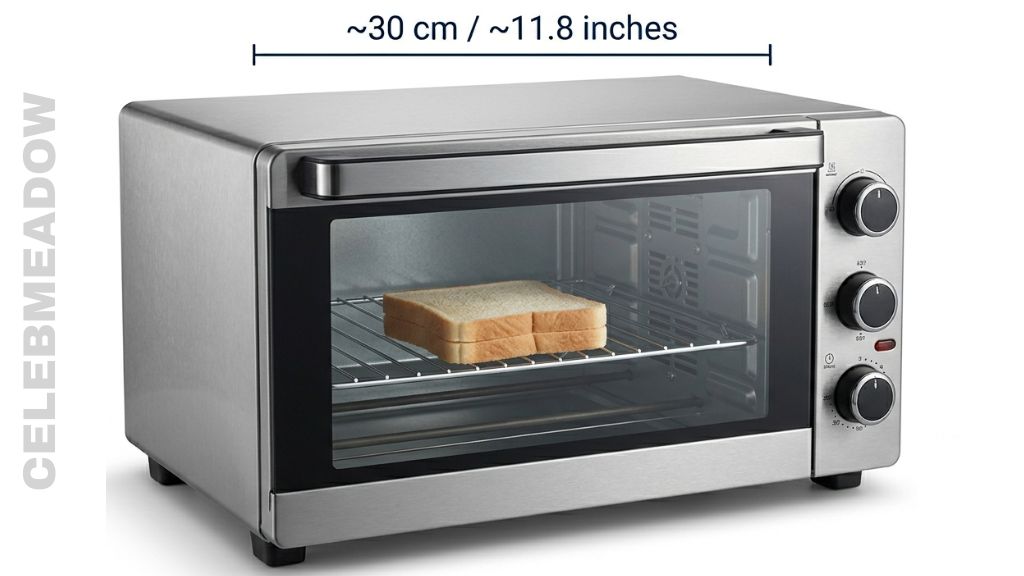
A toaster oven’s width or depth commonly sits near 30 cm. That dimension was chosen to fit four bread slices or a small personal pizza while still leaving countertop space on either side. It also needs to slide under standard upper kitchen cabinets, so both height and footprint are carefully constrained.
When you look at one from the front, the width across the door panel is your 30 cm reference. It’s a compact but solid box — nothing about it feels small in person. That’s the thing about 30 cm: it’s genuinely substantial when you’re standing in front of it.
Key measurement: ~30 cm / ~11.8 inches
Stack of 12 Hockey Pucks
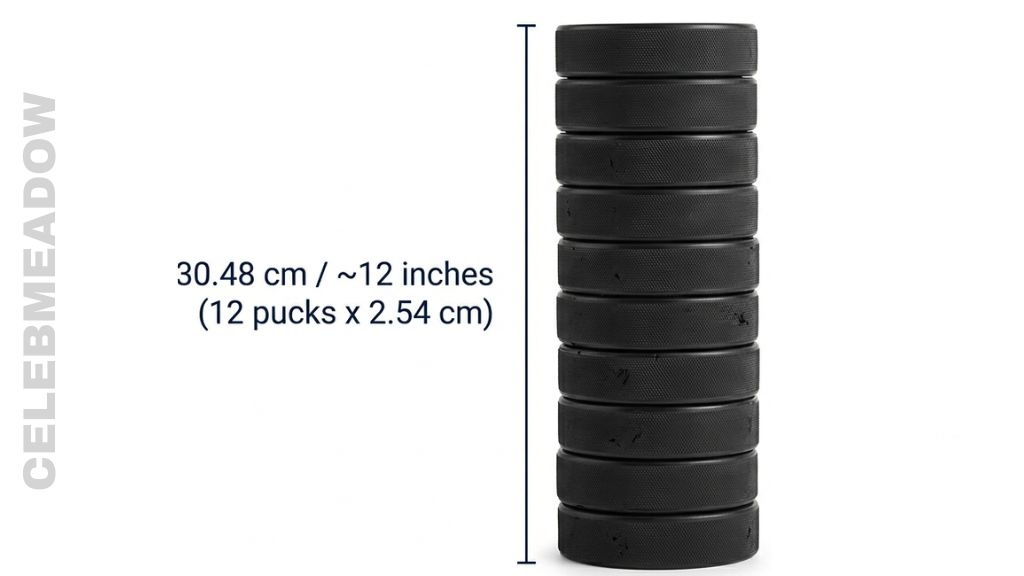
A single NHL hockey puck is exactly 2.54 cm thick. Stack 12 of them and you reach 30.48 cm — essentially 30 cm. Each puck’s thickness is regulated precisely so that players, referees, and manufacturers can all depend on consistent performance during play.
This one is a different kind of visual. Instead of a single object, it’s 12 identical discs stacked into a column. That column is 30 cm tall. It’s an unusual mental image, but it works because pucks are so familiar and so uniform. Once you picture that stack, the height becomes concrete.
Key measurement: 12 pucks × 2.54 cm = 30.48 cm / ~12 inches
How to Picture 30 cm Without a Ruler
Your hand is one of the most reliable tools you have. For most adults, the hand span — measured from the tip of the thumb to the tip of the little finger, fully stretched — falls between 18 and 23 cm. That means 30 cm is roughly one hand span plus half of another. Hold out your hand wide, then add about half that distance again. That combined stretch gets you to approximately 30 cm.
A second method uses standard printer paper. Most people have A4 or Letter-size paper nearby. An A4 sheet is 29.7 cm tall — essentially 30 cm. Stand it upright on a table and that height is your measurement. Letter-size paper (27.9 cm) is close but slightly shorter, so A4 is the better match.
For a fast body check: 30 cm is roughly the distance from your wrist crease to the tip of your middle finger on an average adult hand. This varies by person, but it’s a useful starting point when you need a quick estimate on the go.
30 cm Compared to Similar Sizes
| Measurement | In cm | Compared to 30 cm |
| 20 cm | 20 cm | 10 cm shorter |
| 25 cm | 25 cm | 5 cm shorter |
| 30 cm | 30 cm | ← This is your target |
| 35 cm | 35 cm | 5 cm longer |
| 40 cm | 40 cm | 10 cm longer |
| 60 cm | 60 cm | Double the length |
Common Questions About 30 cm
How long is 30 cm in inches and feet?
30 cm equals 11.81 inches — just under one foot (0.984 ft). For quick mental math, treat it as almost exactly one foot.
What household object is closest to 30 cm?
A standard school ruler is the closest — it’s exactly 30 cm. An A4 sheet held upright (29.7 cm) and a large Pringles can are also reliable matches.
How does 30 cm compare to a human hand?
30 cm is roughly one and a half adult hand spans. Most adults span 18–23 cm fingertip to fingertip. 30 cm also matches the distance from a typical wrist to mid-forearm.
How can I measure 30 cm without a ruler?
Stand an A4 sheet of paper upright — it’s 29.7 cm tall, nearly perfect. No paper? Stretch your hand wide and add about half that span again.
Is 30 cm a big measurement?
It’s a mid-range everyday size. Bigger than a smartphone, shorter than a laptop screen. You see it constantly — soda bottles, wall clocks, floor tiles, and sandwich lengths all land right at this mark.
A standard ruler, a soda bottle, a sheet of A4 paper — three things sitting in almost every home right now, each one a near-perfect match for 30 cm. The next time a product description, a shelf gap, or a tile order lists 30 cm, you won’t need to convert it or estimate blindly. You already have the picture.
Related More Measurements Guides:

I’m Cherry Sin, and I write clear, practical guides that help people understand everyday measurements and sizes. I focus on turning numbers into easy mental pictures using familiar objects and real-life situations. At Celebmeadow, I write guides that explain measurements in a simple, visual way.