You’re trying to cut foam, fit something into a drawer, or figure out if a product will work in your space — and the listing says “20 cm.” That number floats in your head without meaning anything.
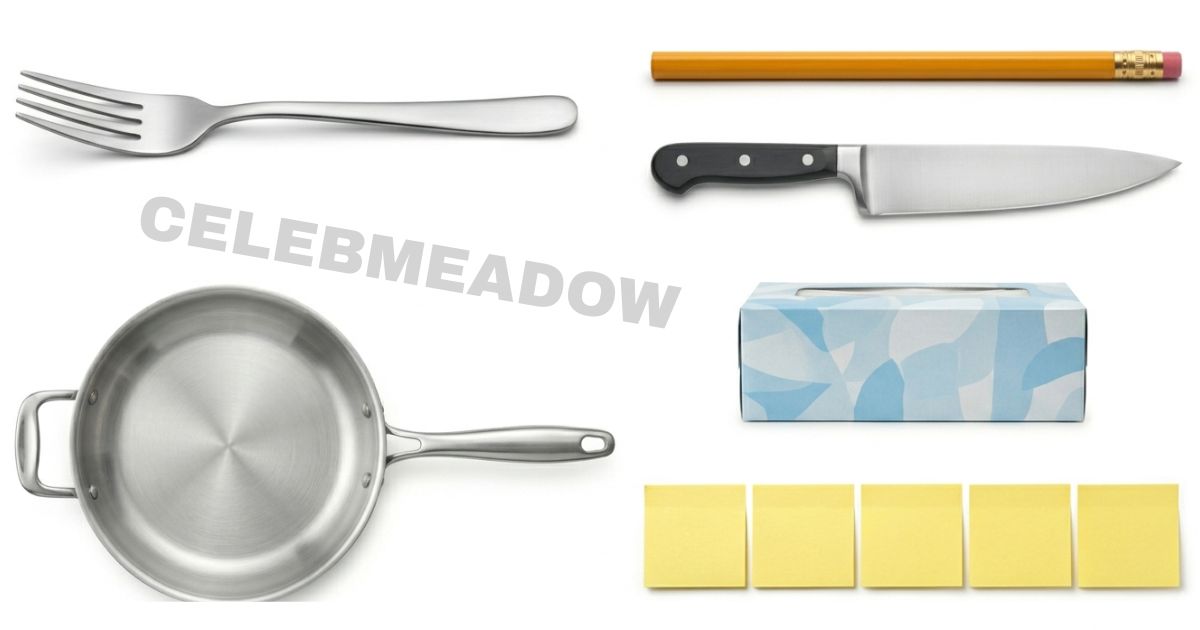
Here’s the anchor: how big is 20 cm? 20 centimeters is just about 7.87 inches, which is roughly 0.66 feet. It’s shorter than a school ruler, but longer than most people expect. The twelve objects below will lock that size into your memory fast.
Exactly How Big is 20 cm? Quick Measurements
| Unit | Value |
| Centimeters | 20 cm |
| Millimeters | 200 mm |
| Inches | 7.87 in |
| Feet | 0.66 ft |
| Meters | 0.20 m |
Quick List of 12 Everyday Things That Are 20 cm Big
| Sr. # | Object | Measurement | Dimension |
| 1 | Standard Dinner Fork | 19–21 cm / 7.5–8.25 in | Length |
| 2 | Standard No. 2 Pencil | 19.05 cm / 7.5 in | Length |
| 3 | Chef’s Knife Blade | 20.3 cm / 8 in | Blade Length |
| 4 | 20-oz Plastic Soda Bottle | 20.3–21 cm / 8–8.25 in | Height |
| 5 | iPad Mini (6th Gen) | 19.54 cm / 7.69 in | Height |
| 6 | Standard DVD/Blu-Ray Case | 19.1 cm / 7.5 in | Height |
| 7 | 8-Inch Frying Pan | 20.32 cm / 8 in | Diameter |
| 8 | Standard Tissue Box | 20.3–21 cm / 8–8.25 in | Length |
| 9 | Wine Bottle Shoulder Height | 19.5–20.5 cm / 7.7–8.1 in | Height (base to shoulder) |
| 10 | Medium Banana | 18–22 cm / 7–8.7 in | Length |
| 11 | Tennis Ball Circumference | 20.7–21.8 cm / 8.1–8.6 in | Circumference |
| 12 | Five Post-it Notes (side by side) | 19–19.5 cm / ~7.5 in | Combined Width |
1. Dinner Fork
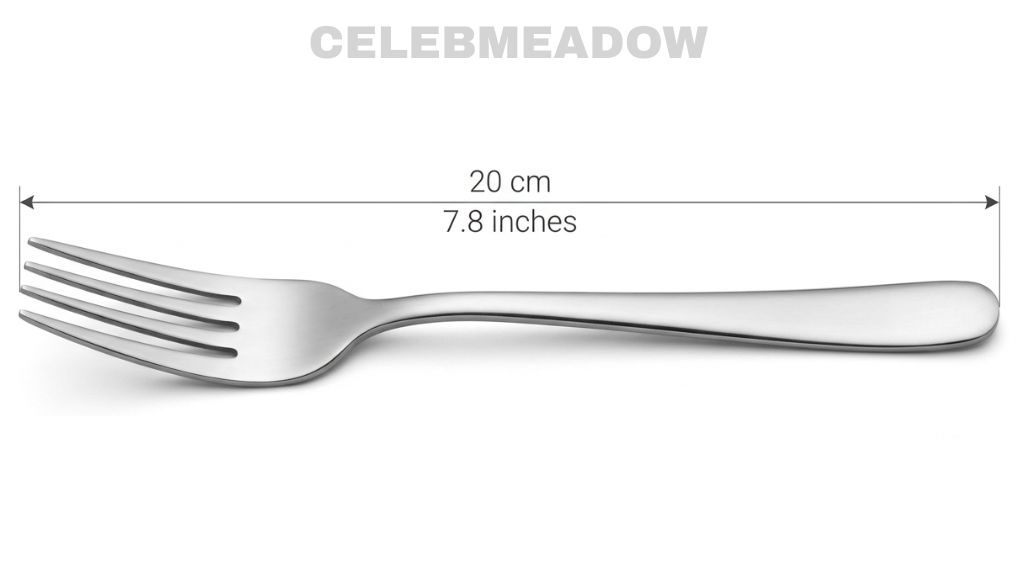
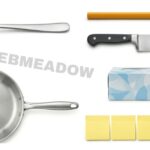
Pick up a fork at any dinner table and you’re holding almost exactly 20 cm of metal. The standard dinner fork falls between 19 and 21 cm in length — and that range isn’t random. The handle has to be long enough for an adult palm to wrap around it comfortably while pressing down to cut food. Too short, and you lose control. Too long, and it feels clunky and awkward to use.
This is a size you interact with multiple times a day without thinking about it. Next time you’re eating, just look at the fork resting on your plate. That’s your 20 cm.
Key measurement: 19–21 cm / 7.5–8.25 inches (length)
2. Standard No. 2 Pencil (Brand New)
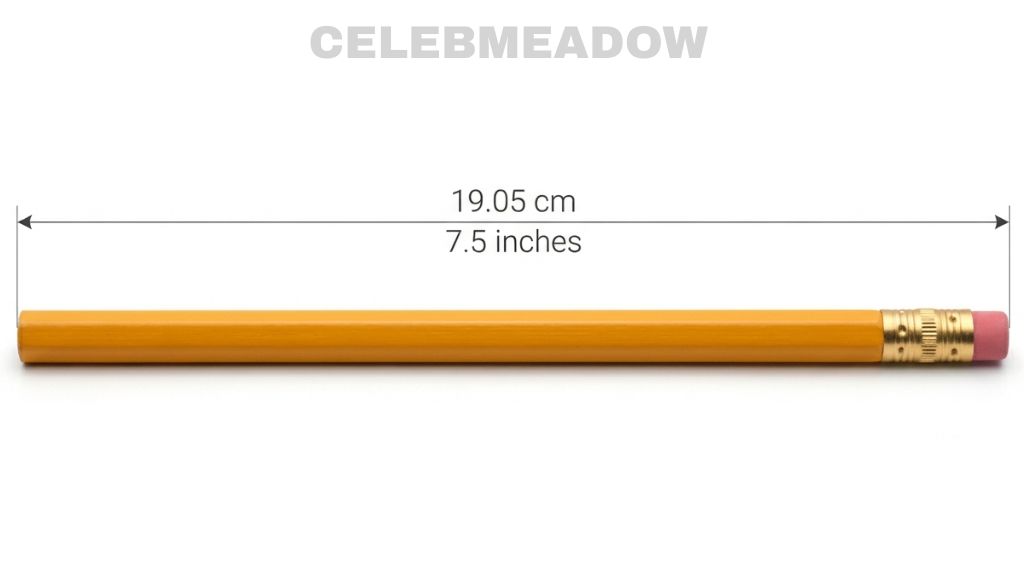
A fresh No. 2 pencil, straight out of the box and not yet sharpened, measures 19.05 cm — a precise manufacturing standard that has stayed consistent for decades. That length isn’t chosen randomly. It gives the pencil just enough weight balance in the fingers to feel comfortable while writing, and it leaves room for dozens of sharpenings before the pencil becomes too short to hold.
When you picture a brand-new yellow hexagonal pencil fresh from a school supply pack, you’re picturing something that sits right at the 20 cm mark. It’s a size almost every person on earth has held at some point.
Key measurement: 19.05 cm / 7.5 inches (length)
3. Chef’s Knife Blade (8-Inch)
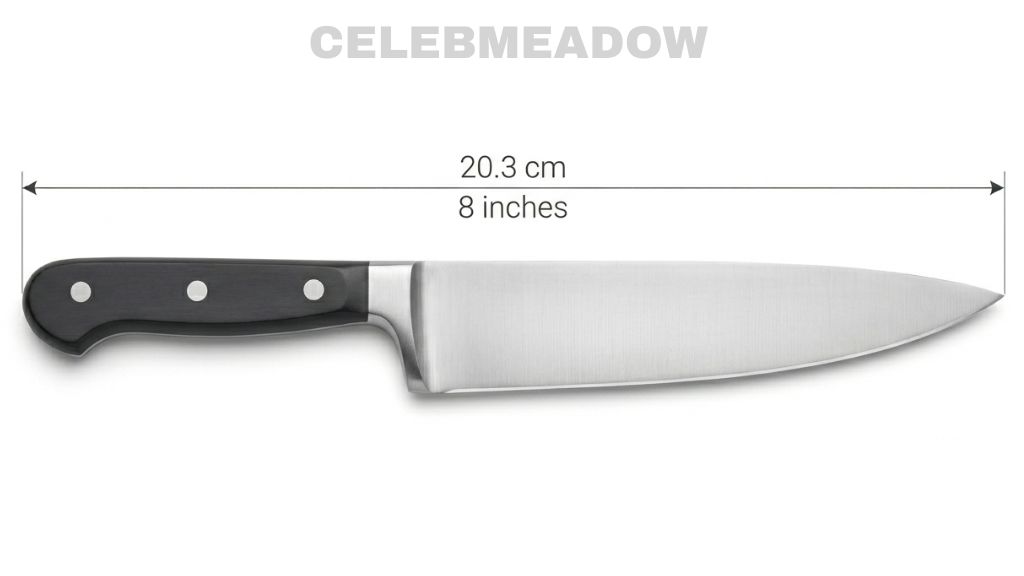
The 8-inch chef’s knife blade is one of the most precise examples of 20 cm you’ll find in a home. The blade measures 20.3 cm — a size that became the global culinary baseline because of how it performs during actual cutting. It’s long enough to slice through a large onion or a head of cabbage in a single clean stroke. Short enough that the tip stays fully under your control.
Go any longer and home cooks lose confidence with the blade. Go shorter and you’re making multiple cuts where one should do. That 20 cm blade length is not a guess — it’s the result of decades of kitchen testing.
Key measurement: 20.3 cm / 8 inches (blade length only)
4. 20-Ounce Plastic Soda Bottle
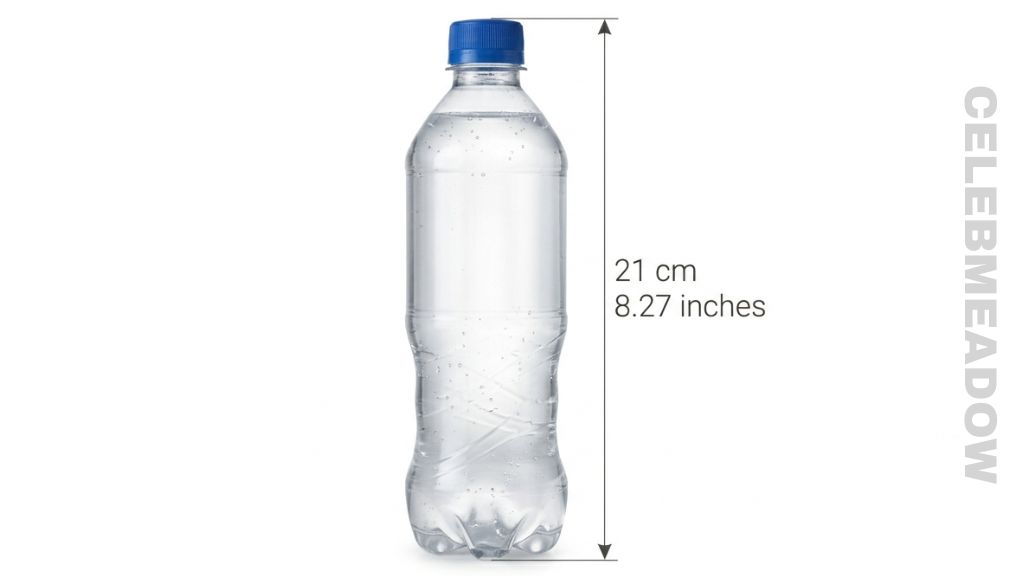
Grab a 20-ounce soda bottle from any gas station cooler. The height of that bottle, from the flat base to just below the cap, sits commonly around 20 to 21 cm depending on the brand. That height is tied directly to the bottle’s function — it has to hold 591 ml of liquid in a shape that fits inside a standard car cup holder and still feels manageable in one hand.
The bottle can’t be much taller without becoming awkward to grip or tip over easily. It can’t be much shorter without becoming too wide to fit in a cup holder. The 20 cm height is a quiet piece of ergonomic design most people never think about.
Key measurement: Commonly around 20.3–21 cm / 8–8.25 inches (height)
5. iPad Mini (Height)
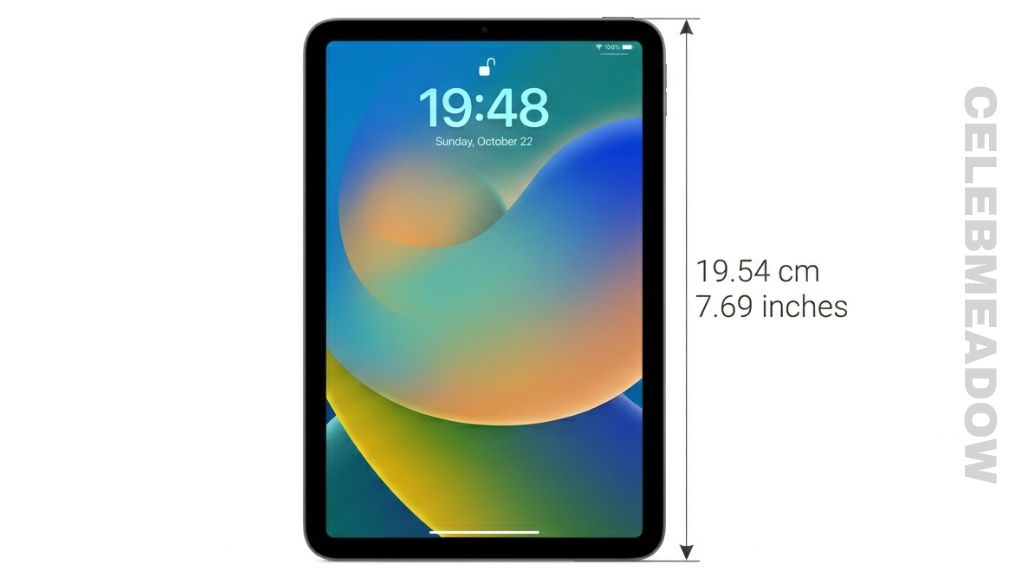
The iPad Mini (6th generation) stands 19.54 cm tall when held upright. Apple landed on this height because it’s the largest screen size that still fits into a roomy coat pocket or can be held comfortably in one adult hand for an extended period. It was designed to feel like a paperback book in the hand — familiar, light, readable.
That 19.54 cm is also a useful physical reference point. If you’ve ever held a small tablet and thought “this fits just right,” you were holding something very close to 20 cm tall.
Key measurement: 19.54 cm / 7.69 inches (height, vertical orientation)
6. DVD or Blu-Ray Case
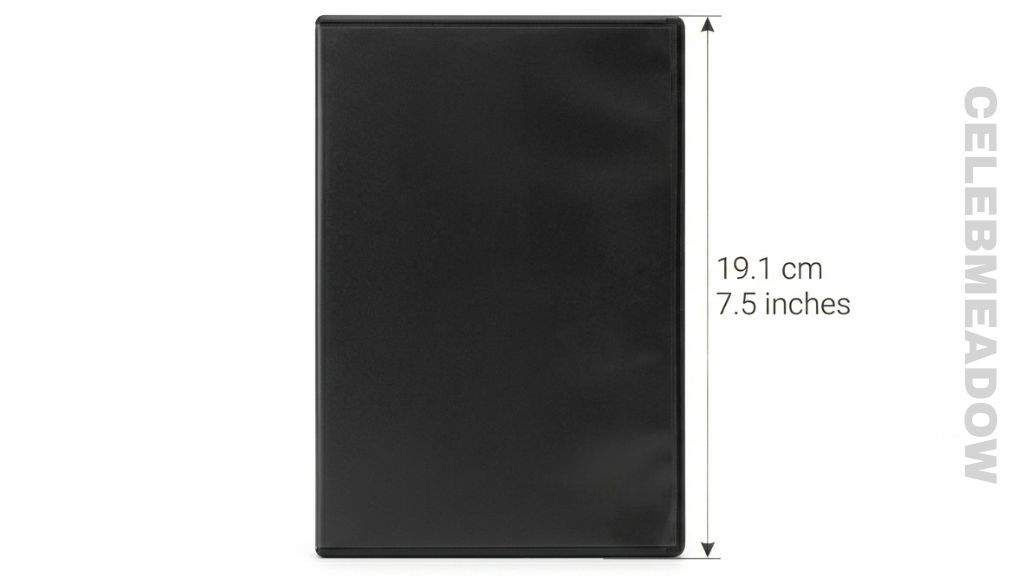
A DVD case standing on its spine measures 19.1 cm tall — and the reason for that specific height is more interesting than most people expect. When DVDs replaced VHS tapes in the late 1990s, retailers didn’t want to rebuild all their store shelving from scratch. So DVD cases were manufactured to match the height of VHS boxes, keeping all the shelving intact.
That retail decision from decades ago is why your DVD shelf still sits close to the 20 cm mark. The case you pull off a shelf to watch a movie tonight carries that history quietly in its dimensions.
Key measurement: 19.1 cm / 7.5 inches (height)
7. 8-Inch Frying Pan
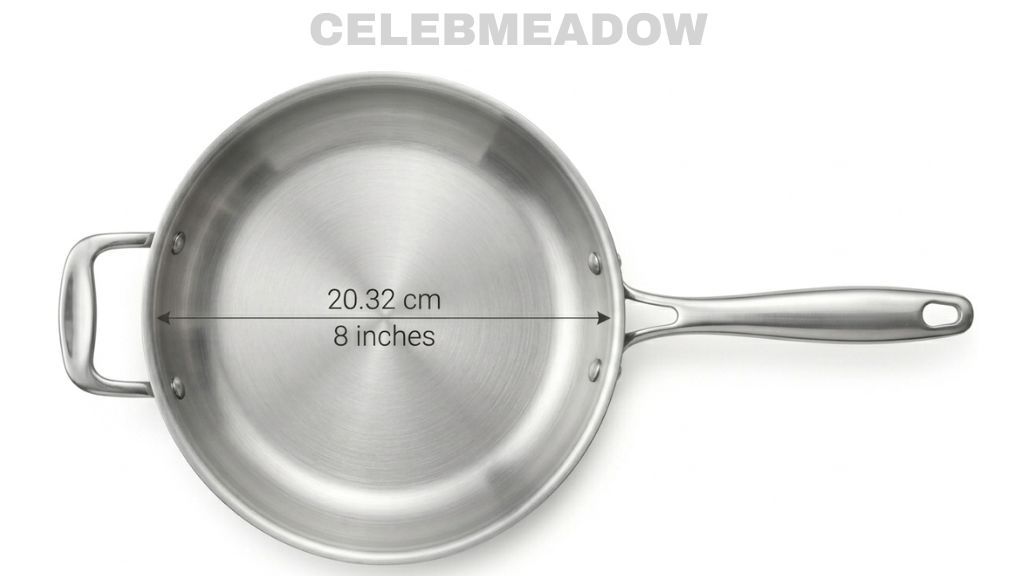
The 8-inch frying pan measures 20.32 cm across its top rim — making it one of the most precise round references for 20 cm you’ll find in a kitchen. This pan size was designed around a single-serving purpose: cooking a two-egg omelet or one chicken breast. The diameter lines up almost perfectly with a small stove burner, which means the heat spreads across the pan base without wasting energy on the sides.
It’s a pan most people either own or have used. Picture it sitting flat on a burner — that circle is your 20 cm.
Key measurement: 20.32 cm / 8 inches (diameter across top rim)
8. Tissue Box (Length)
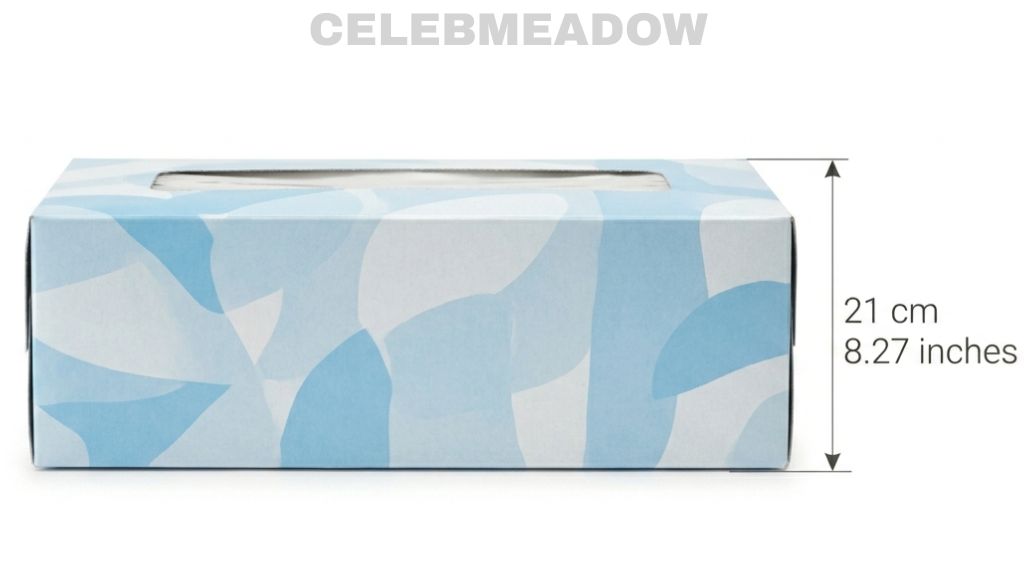
A standard facial tissue box, like Kleenex, runs commonly around 20.3 to 21 cm along its longer side. That length is tied directly to the human face. A tissue has to unfold wide enough to cover an adult nose and mouth comfortably, which means the box holding those tissues has to be roughly the same width. The product and its packaging are both sized around the same body it was made to serve.
Set a tissue box flat on your nightstand and look at the long edge. You’re looking at 20 cm sitting right there.
Key measurement: Commonly around 20.3–21 cm / 8–8.25 inches (length)
9. Wine Bottle (Shoulder Height)
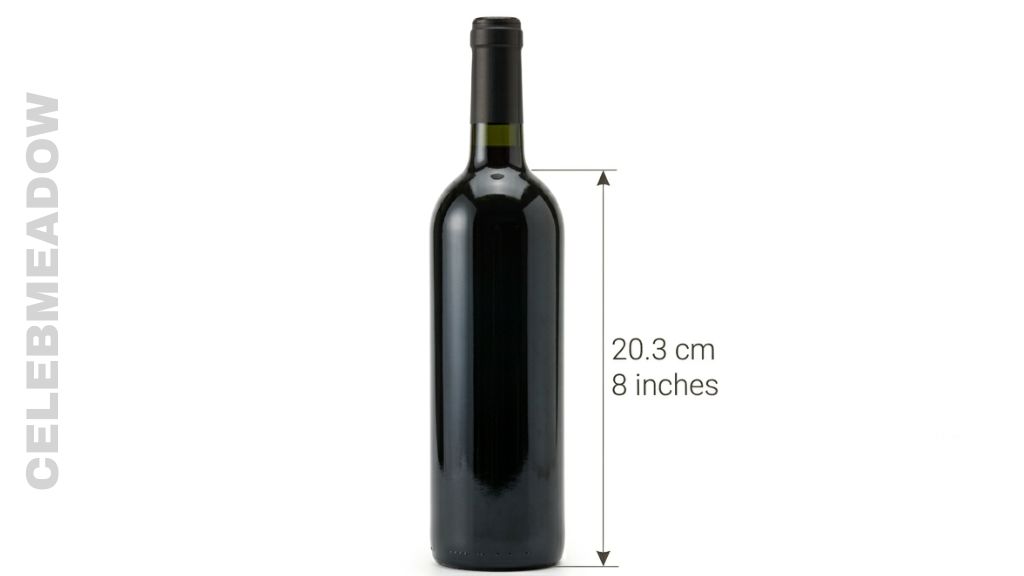
On a standard 750 ml Bordeaux wine bottle, the shoulder — the point where the straight cylindrical body begins to taper into the neck — sits commonly around 19.5 to 20.5 cm from the base. That straight cylindrical body is approximately 20 cm tall, and the reason goes back further than most people realize.
Glass blowers in the 1600s and 1700s could produce a glass bubble of roughly this size in a single breath. That physical limit shaped the bottle. The straight 20 cm body also allowed bottles to be laid flat in wine cellars to keep the cork moist, stopping air from ruining the wine inside.
Key measurement: Commonly around 19.5–20.5 cm / 7.7–8.1 inches (base to shoulder)
10. Medium Banana
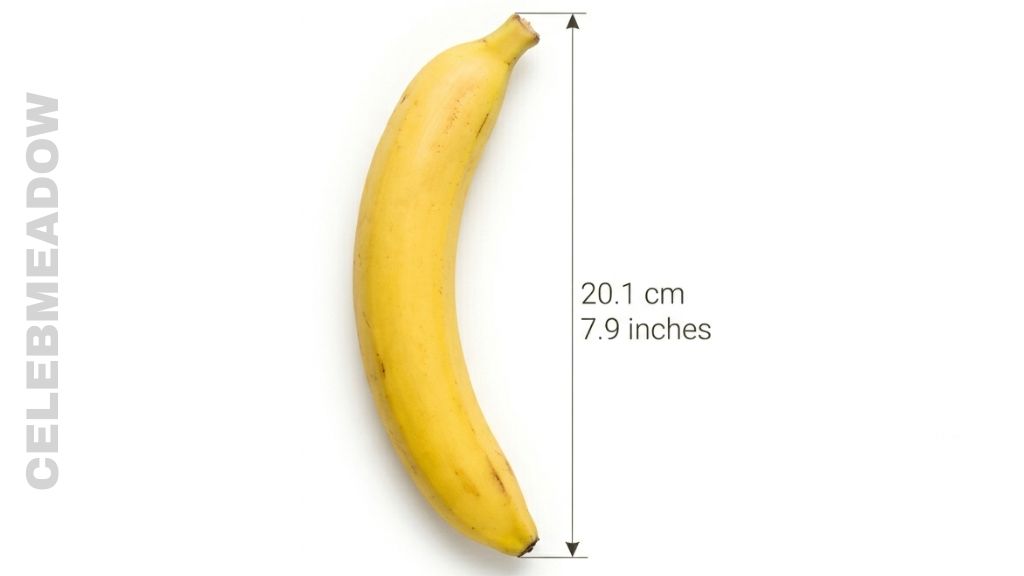
A medium banana from any grocery store measures typically near 20 cm from the stem end to the curved tip. Bananas in this size range were bred over generations for a specific balance — large enough to be filling, compact enough to fit in a lunchbox or a fruit bowl without taking over the space.
Natural fruit doesn’t come in a fixed size, but when you reach for what you’d call a normal, average banana, you’re almost certainly holding something close to 20 cm. It’s also a useful comparison because it’s curved — so 20 cm on a banana looks slightly different than 20 cm on a ruler, even though the measurement is the same along the fruit’s length.
Key measurement: Typically near 18–22 cm / 7–8.7 inches (stem to tip)
11. Tennis Ball Circumference
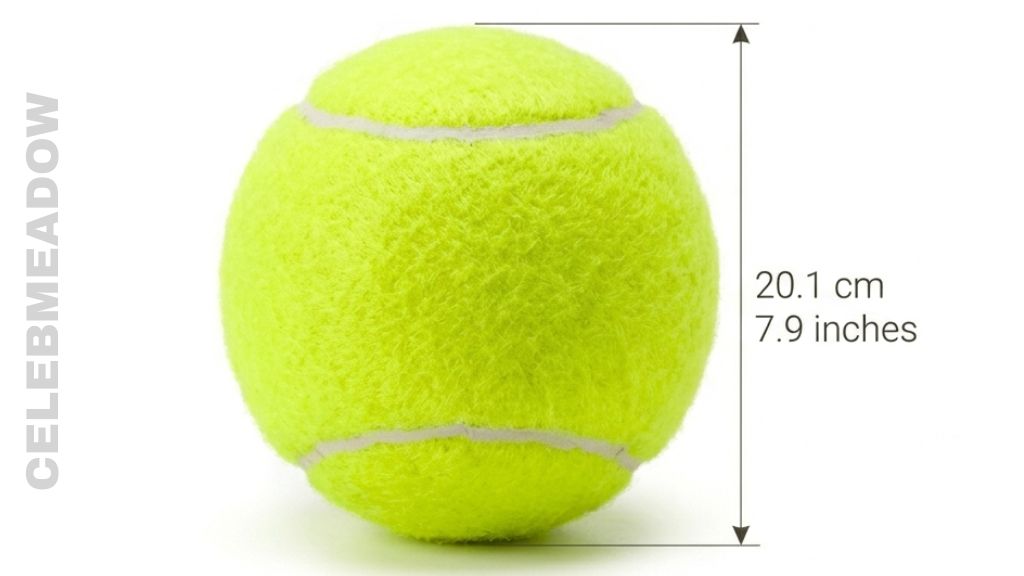
This one surprises people. A tennis ball’s circumference — the distance all the way around the outside of the ball — falls between 20.7 and 21.8 cm under International Tennis Federation rules. Wrap a piece of string around a tennis ball and you get a length that sits right at 20 cm.
The diameter of the ball is only about 6.7 cm, so the ball itself looks small. But the distance around it maps perfectly onto what you’re trying to picture. This is a useful reference if you’re thinking about 20 cm as a curved or circular measurement rather than a straight line.
Key measurement: Commonly around 20.7–21.8 cm / 8.1–8.6 inches (circumference)
12. Width of Five Standard Post-it Notes
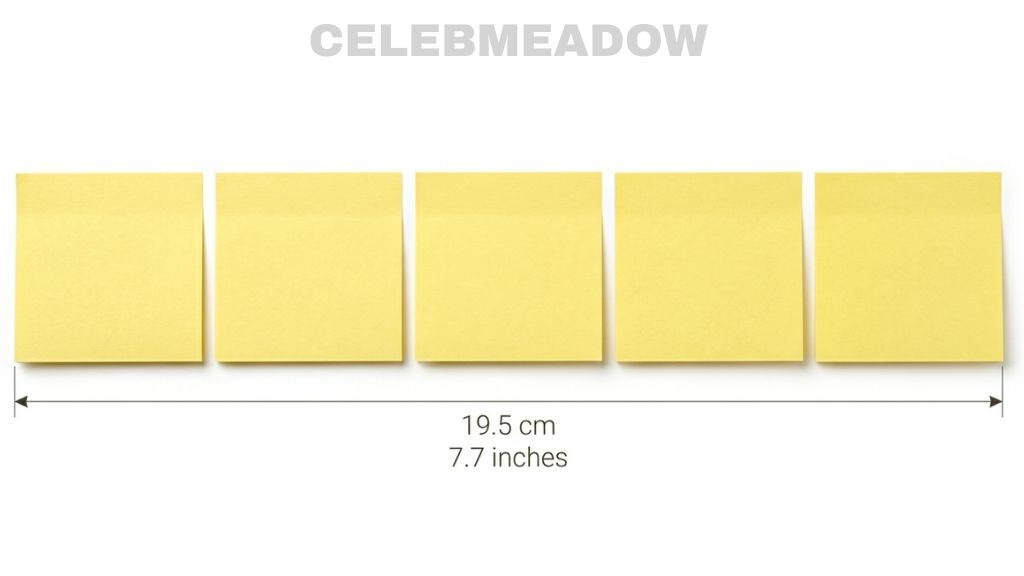
A single Post-it note is 7.62 cm wide. Place five of them side by side in a row and you get a total span of about 19 to 19.5 cm — right at the edge of 20 cm. Three placed end-to-end go just past it.
This reference is useful at a desk. If you have a pad of sticky notes nearby, you don’t need a ruler. Line five of them up and you’ve got an instant visual ruler for 20 cm. It’s also a good reminder of how 20 cm isn’t that big — five small squares side by side and you’re there.
Key measurement: Five notes side by side: commonly around 19–19.5 cm / approximately 7.5 inches
How to Picture 20 cm Without a Ruler
Your hand is one of the best measuring tools you always have with you. For most adults, the span from the tip of the thumb to the tip of the pinky finger — with the hand fully stretched open — is between 18 and 22 cm. That puts a relaxed full hand stretch almost exactly at 20 cm. Try it now against a door frame or a countertop edge.
A second method: standard copy paper (like A4 or 8.5×11 inch letter paper) is 29.7 cm tall. Fold it roughly one-third of the way down from the top and the folded section shows you close to 20 cm. It’s not perfect, but it gets you within a centimeter.
These two methods together — your hand span and a folded sheet of paper — give you a fast, reliable way to check any 20 cm measurement when nothing else is available.
20 cm Compared to Similar Sizes
| Measurement | In cm | Compared to 20 cm |
| 15 cm | 15 cm | 5 cm shorter |
| 18 cm | 18 cm | 2 cm shorter |
| 20 cm (target) | 20 cm | This is your reference |
| 22 cm | 22 cm | 2 cm longer |
| 25 cm | 25 cm | 5 cm longer |
| 40 cm | 40 cm | Double the length |
Common Questions About How Big is 20 cm
How many inches is 20 cm?
20 cm equals 7.87 inches. To convert, divide the centimeters by 2.54 — since one inch is exactly 2.54 cm. So 20 ÷ 2.54 gives you 7.874 inches, which most people round to 7.87 or just under 8 inches.
What does 20 cm look like on a ruler?
On a standard 30 cm ruler, 20 cm lands at the two-thirds mark — past the halfway point but not yet at the end. It’s a length that looks substantial on a ruler but shorter than most people imagine before they see it.
What common household item is about 20 cm?
A chef’s knife blade, a standard tissue box, and a 20-ounce soda bottle are all commonly around 20 cm. The easiest one to check at home is a dinner fork — most adult forks sit between 19 and 21 cm and are in nearly every kitchen drawer.
How can I measure 20 cm without a ruler?
Stretch your hand wide open. Thumb tip to pinky tip on most adults spans 18 to 22 cm — close enough to 20 cm for a quick check.
How does 20 cm compare in feet?
20 cm is 0.656 feet — just under two-thirds of a foot. Since one foot is 30.48 cm, 20 cm falls well short of a full foot. It’s closer in feel to the length of your hand than to a foot-long object like a standard ruler or a footlong sandwich.
A dinner fork at your table, a chef’s knife in your kitchen drawer, a fresh pencil on your desk — these are all sitting right at 20 cm, quietly measuring out a length most people struggle to picture in the abstract. Once you’ve matched this size to the everyday objects you already handle, the number stops being confusing. Twenty centimeters is closer, more familiar, and more present in daily life than most people ever realize.
Related More Measurements Guides:

I’m Cherry Sin, and I write clear, practical guides that help people understand everyday measurements and sizes. I focus on turning numbers into easy mental pictures using familiar objects and real-life situations. At Celebmeadow, I write guides that explain measurements in a simple, visual way.