You’re tracking your food, calibrating a kitchen scale, or just trying to make sense of a number on a nutrition label — and 100 grams feels strangely abstract. What weighs 100 grams, anyway? It’s about 3.53 ounces, just under a quarter of a pound, and lighter than most people guess when they first hold it. The 13 everyday objects below will make that number click in your head for good.
How Much is 100 Grams? Quick Conversions
| Unit | Value |
| Grams | 100 g |
| Kilograms | 0.1 kg |
| Ounces | 3.53 oz |
| Pounds | 0.22 lb |
| Milligrams | 100,000 mg |
13 Everyday Things That Weigh 100 Grams
| Object | Category | Weight | Exact or Approximate? |
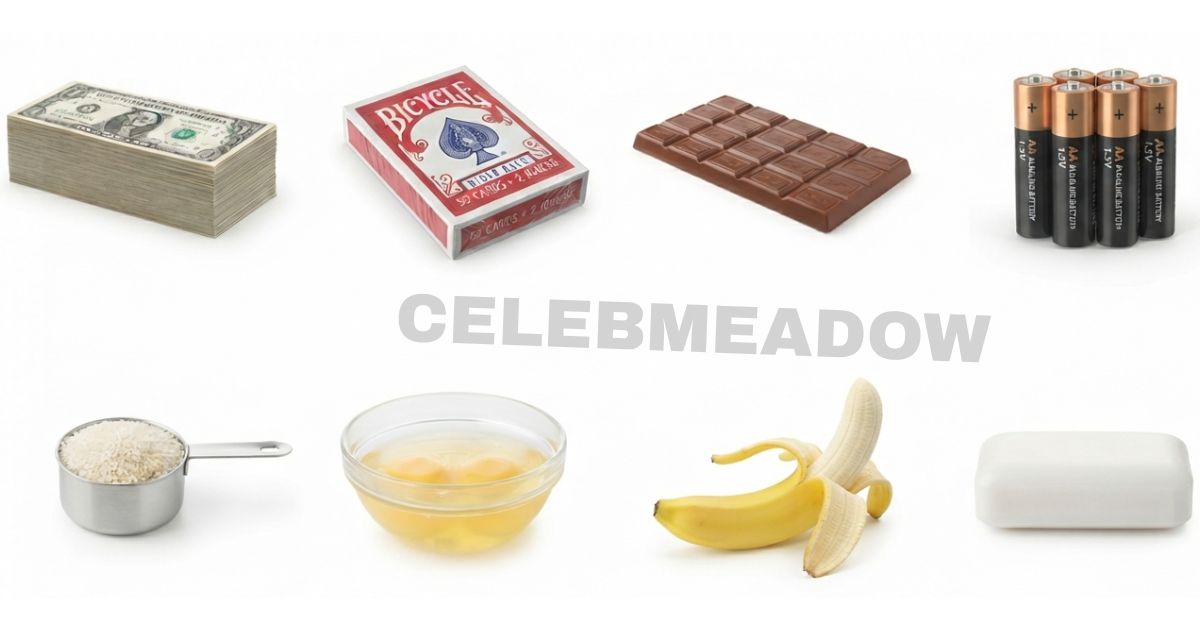
| Stack of 100 U.S. Dollar Bills | Currency & Money | 100 g | Exact |
| Standard Deck of Playing Cards | Games & Entertainment | 94–100 g | Approximate |
| King-Size Chocolate Bar | Food & Snacks | 100 g | Exact |
| Four AA Batteries | Electronics & Power | 92–96 g | Approximate |
| Half-Cup of Uncooked White Rice | Food & Cooking | ~100 g | Approximate |
| 20 Sheets of A4 Copy Paper (80 gsm) | Office & School Supplies | 99.8 g | Exact |
| 17 Standard Ballpoint Pens | Office & School Supplies | ~98–99 g | Approximate |
| Liquid Inside Two Large Eggs | Food & Cooking | ~100 g | Approximate |
| One Peeled Medium Banana | Fruits & Produce | ~100 g | Approximate |
| Standard Bar of Bath Soap | Personal Care & Hygiene | 100 g | Exact |
| 20 U.S. Nickels | Currency & Money | 100 g | Exact |
| Small Votive Candle | Household Items | ~100 g | Approximate |
| 22 U.S. Letter-Size Paper Sheets | Office & School Supplies | ~100 g | Approximate |
A Stack of 100 U.S. Dollar Bills
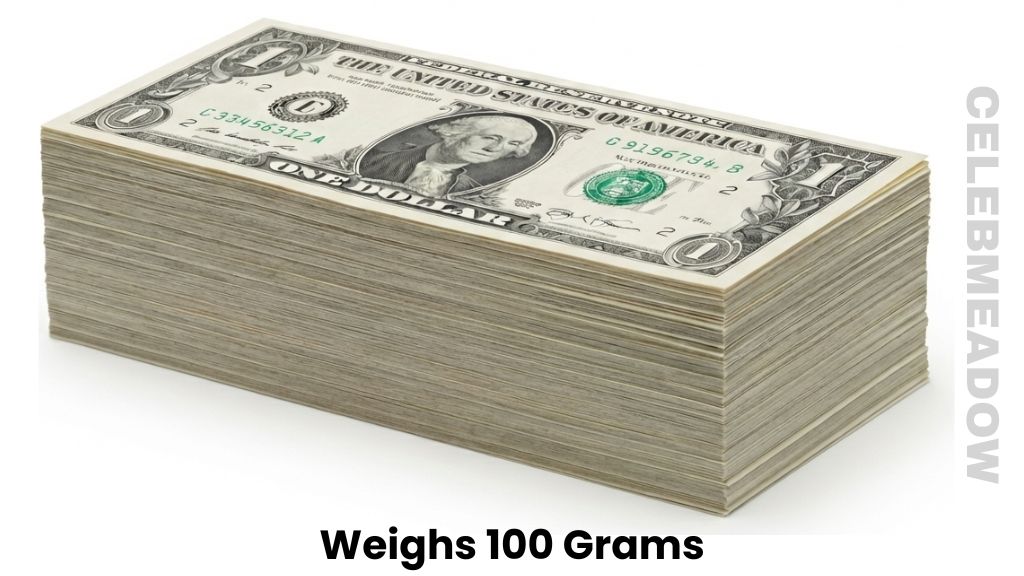
A uniform stack of exactly 100 U.S. banknotes — any denomination — weighs precisely 100 grams.
Each bill weighs exactly 1 gram, a standard set by the U.S. Bureau of Engraving and Printing. That isn’t accidental. Currency paper is made from a legally fixed blend of 75% cotton and 25% linen — a mix tough enough to survive thousands of folds without tearing, yet dense enough that high-speed counting machines in bank vaults can weigh a stack and instantly know if a note is missing or fake.
Picture holding 100 one-dollar bills in your hand right now. That tidy little brick of paper — thin, stiff, slightly cool to the touch — weighs exactly 100 grams. No scale needed.
Key measurement: 100 g / 3.53 oz
A Deck of Playing Cards
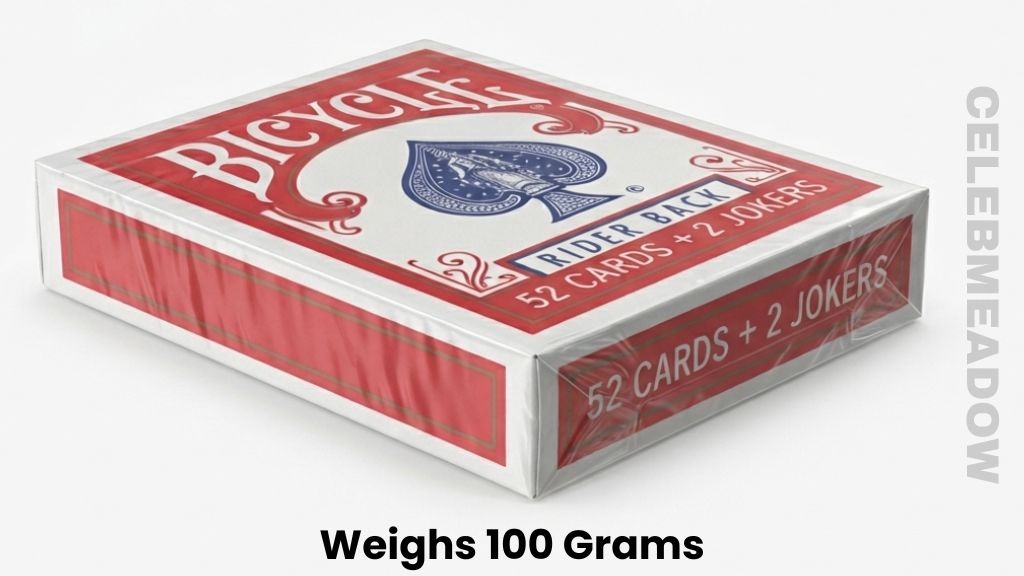
A single retail deck of playing cards — 52 cards plus two jokers inside the original box — typically comes in right around 94 to 100 grams.
The cards are printed on a laminated paper stock with a thin glue core sandwiched between two textured layers. That layered build gives each card enough snap to riffle cleanly through a shuffle, without adding bulk.
The whole deck ends up sitting right at the 100-gram mark, which is why game manufacturers use this weight when estimating shipping costs for card-based products. Pick up a deck from a drawer or shelf. Hold it flat in your palm. That light, satisfying weight resting across your hand? That’s what 100 grams feels like.
Key measurement: ~94–100 g / ~3.3–3.53 oz
A King-Size Chocolate Bar
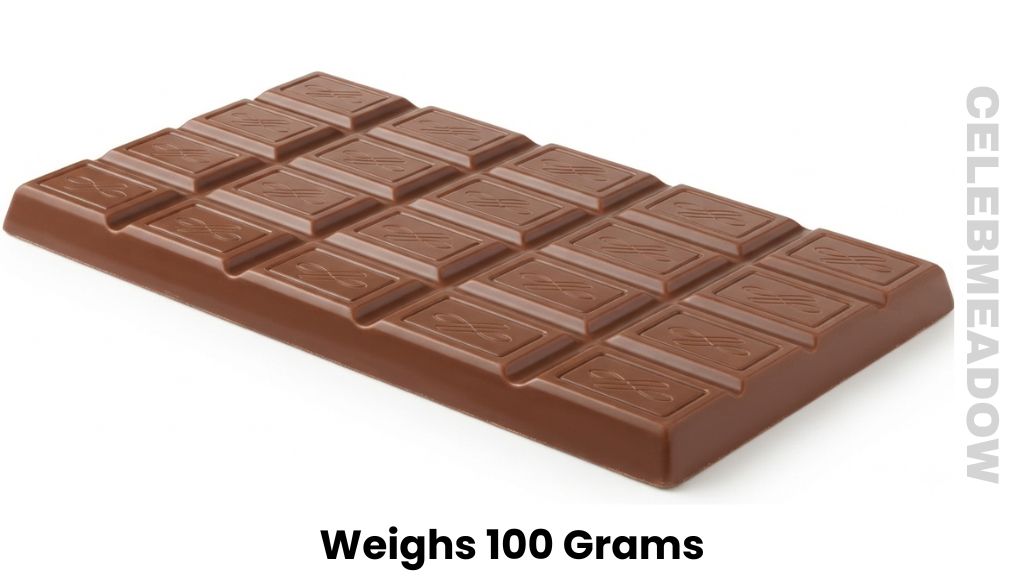
Many standard European chocolate bars — Ritter Sport, Lindt Excellence, Milka — are produced at exactly 100 grams as a factory production weight.
International trade rules push food companies toward round metric numbers because it makes price-per-gram comparisons easy on store shelves. The moulds used in chocolate factories are precision-milled to hold exactly 100 grams of liquid chocolate before it sets.
That’s also why nutritional labels worldwide use 100 grams as the default serving baseline — it makes math easy for anyone counting calories or macros. Next time you open a chocolate bar at that size, you’re literally holding the global dietary measurement standard in your hands.
Key measurement: 100 g / 3.53 oz (exact factory weight)
Four AA Batteries
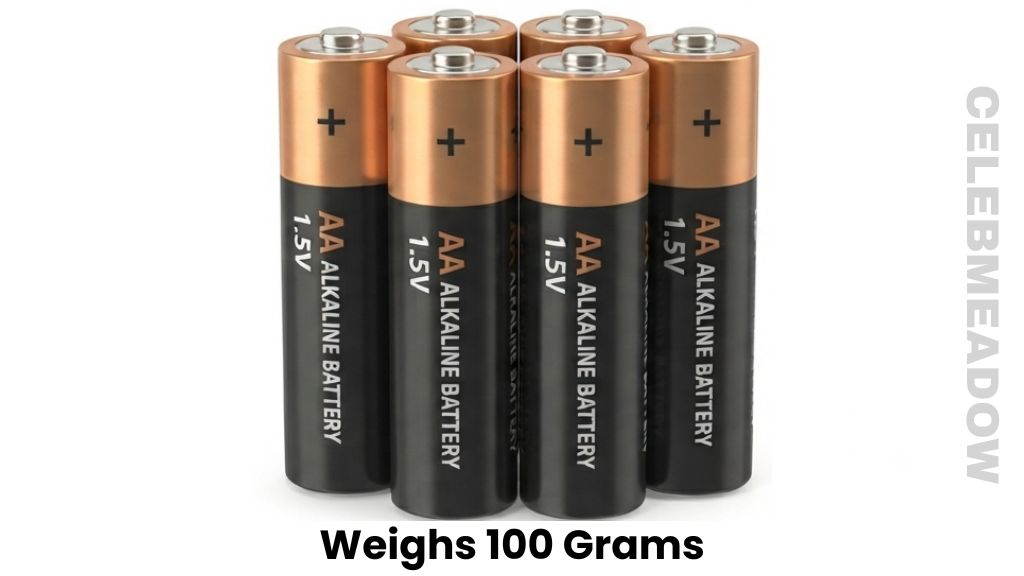
A group of four standard alkaline AA batteries weighs commonly around 92 to 96 grams together — just a hair under 100 grams.
The International Electrotechnical Commission sets strict size rules for AA cells, which means every manufacturer has to pack the same fixed volume of dense manganese dioxide and zinc paste inside the same steel shell. That density is what pushes each cell to roughly 23–24 grams. Four of them together land right at the 100-gram neighborhood.
Grab four AA batteries from a remote control right now and hold them loosely in your closed fist. Feel that compact, dense weight pressing down into your palm? That’s the 100-gram range — small but surprisingly solid.
Key measurement: ~92–96 g / ~3.25–3.39 oz
Half a Cup of Uncooked White Rice
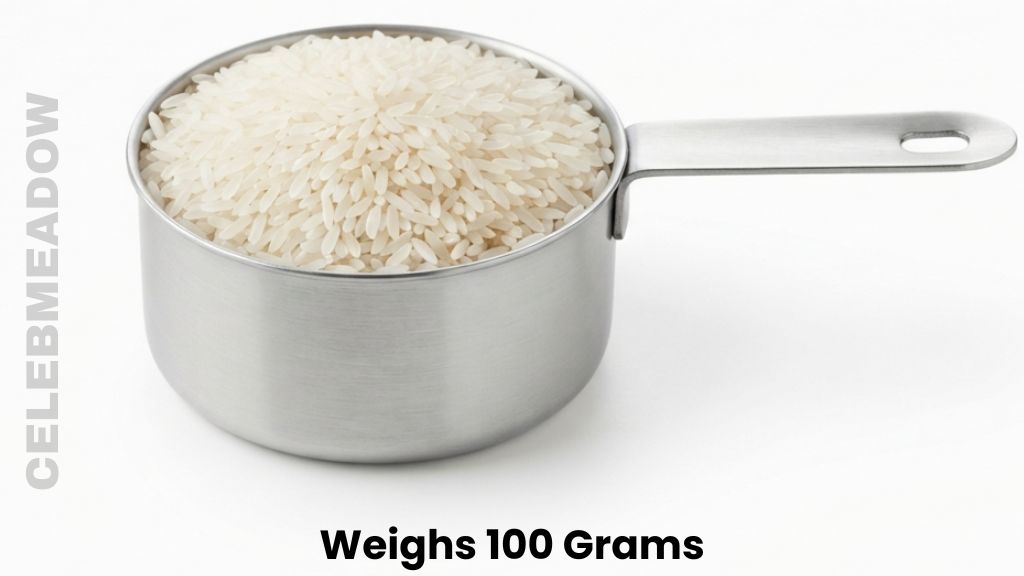
One half-cup of dry, uncooked long-grain white rice sits commonly around 100 grams on a kitchen scale.
Commercial rice mills dry harvested rice to a strict 12–14% moisture content before packaging. That tight moisture window keeps the grains stable on shelves without cracking or growing mold — and it also means the density of polished white rice grains is consistent enough that half a cup holds roughly 100 grams almost every time, regardless of brand.
Home cooks use this relationship constantly without realizing it. When a scale isn’t nearby, half a standard measuring cup of dry rice is a reliable stand-in for 100 grams — and the water-to-rice ratio for fluffy results (1:2 by weight) becomes much easier to think about.
Key measurement: ~100 g / ~3.53 oz
20 Sheets of Standard A4 Copy Paper (80 gsm)
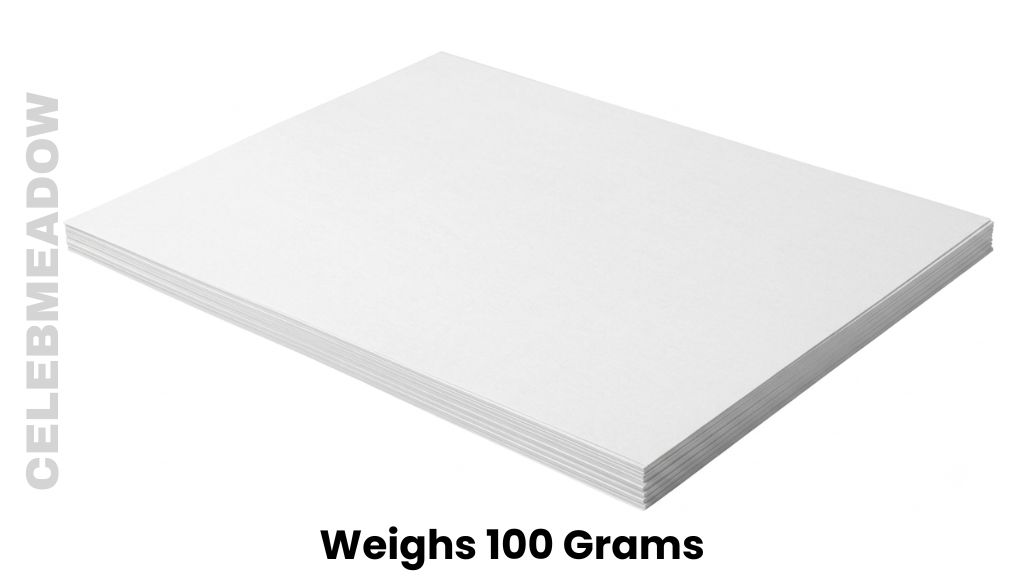
Exactly 20 sheets of standard 80 gsm A4 office printer paper adds up to 99.8 grams — as close to 100 grams as you’ll get from a paper stack.
The math behind this is clean. Under the ISO 216 standard, an A0 sheet covers exactly 1 square meter. An A4 sheet is precisely 1/16 of that area. At 80 grams per square meter, one A4 sheet weighs exactly 5 grams. Twenty sheets? 100 grams flat. Postal services worldwide use this exact relationship — the 100-gram threshold is where international letter pricing jumps to the next tier.
Pull 20 sheets from a printer tray and hold them loosely between two fingers. Thin, whisper-light, barely there. That’s 100 grams in one of its most surprising forms.
Key measurement: 99.8 g / ~3.52 oz
17 Standard Ballpoint Pens
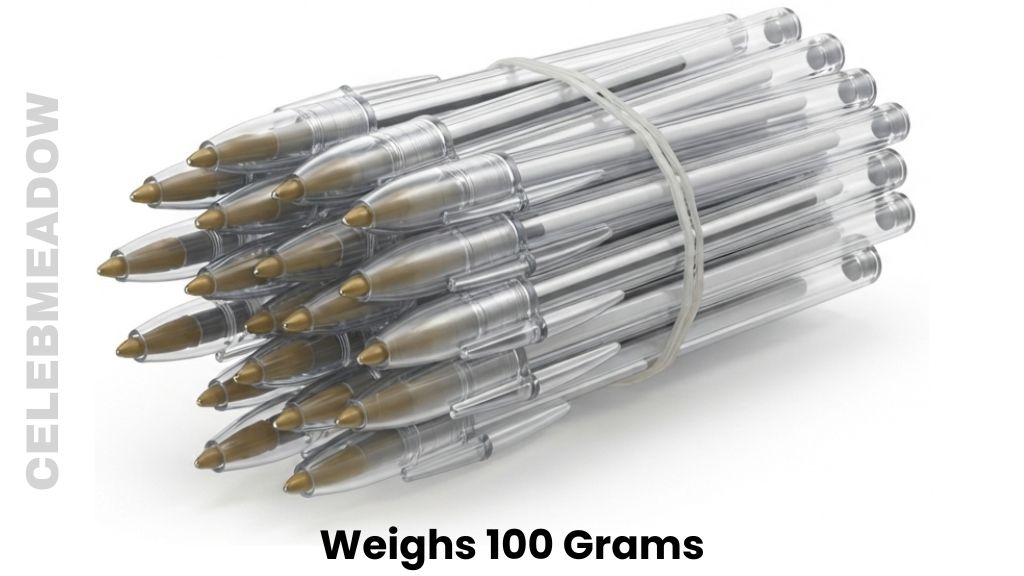
Seventeen classic clear-barrel ballpoint pens held together weigh commonly around 98 to 99 grams.
Each pen sits at roughly 5.8 grams because manufacturers minimize every single gram during design. The polystyrene barrel, polypropylene cap, and tiny brass tip are all chosen to use the least material possible while keeping the pen rigid and functional. It keeps production cost at pennies per unit.
This one is useful to picture for bulk office orders. Imagine a bundle of 17 pens wrapped together with a rubber band — thin, lightweight, easy to miss in a bag. The whole bundle weighs about as much as that chocolate bar from item three.
Key measurement: ~98–99 g / ~3.46–3.49 oz
The Liquid Inside Two Large Chicken Eggs
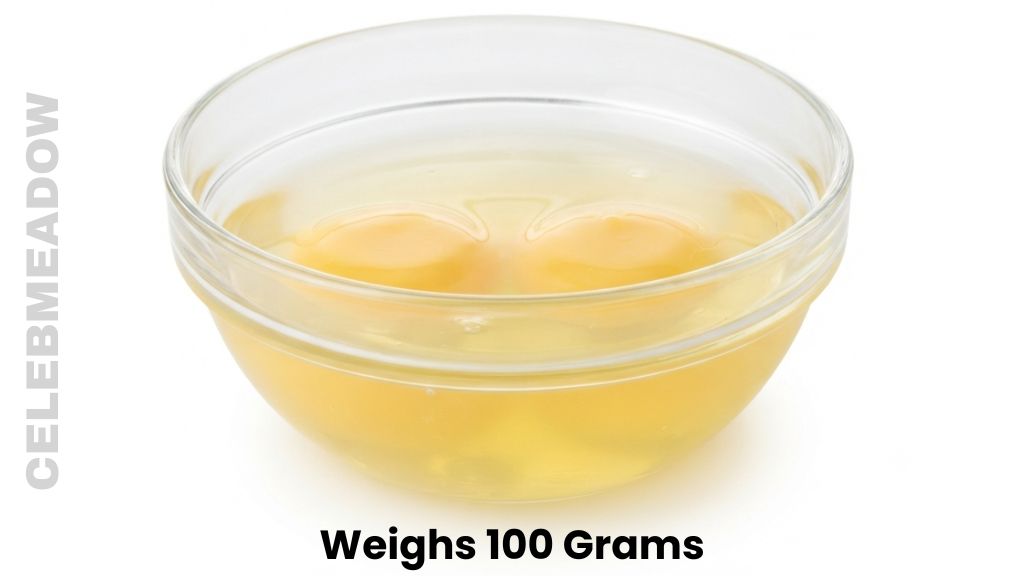
The raw liquid contents of two standard “Large” chicken eggs — yolks and whites combined, shells removed — weigh commonly around 100 grams.
Commercial egg farms sort eggs at high speed using automated weight sensors, not visual size checks. A carton of Large eggs must total 24 ounces per dozen, which forces each egg to sit in a consistent weight bracket.
That standardization is exactly why professional pastry chefs weigh eggs by grams instead of counting them — even two “large” eggs from different hens can vary slightly in size, so weight keeps recipes precise. Crack two large eggs into a bowl. The liquid sitting there, without a single piece of shell — that’s your 100 grams.
Key measurement: ~100 g / ~3.53 oz (liquid only, no shell)
A Peeled Medium Banana
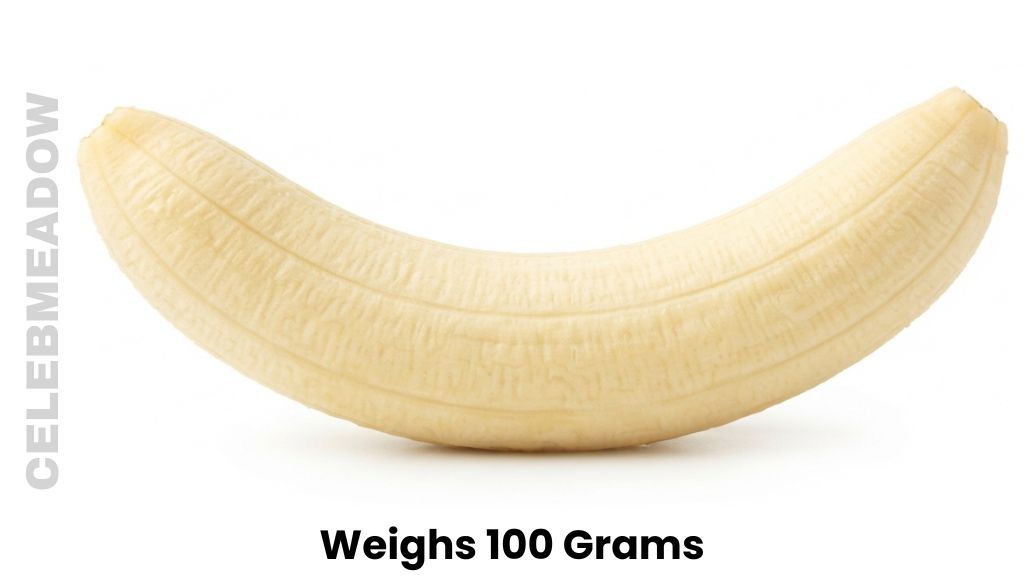
One medium commercially sold banana, with its peel completely removed, typically comes in at around 100 grams of actual fruit.
The global banana supply chain — dominated by the Musa acuminata (Cavendish) variety — harvests fruit at specific length and diameter ranges so it ripens at a predictable rate during shipping. That consistency in size means the edible portion of a medium banana reliably lands near 100 grams.
It’s also why nutritional databases use 100 grams of raw fruit as the gold standard denominator for listing fiber, sugar, and potassium counts. Peel a banana and set the peel aside. What’s left in your hand is a real-world 100-gram food portion — the same weight used on every nutrition label you’ve ever read.
Key measurement: ~100 g / ~3.53 oz (peeled weight)
A Standard Bar of Bath Soap
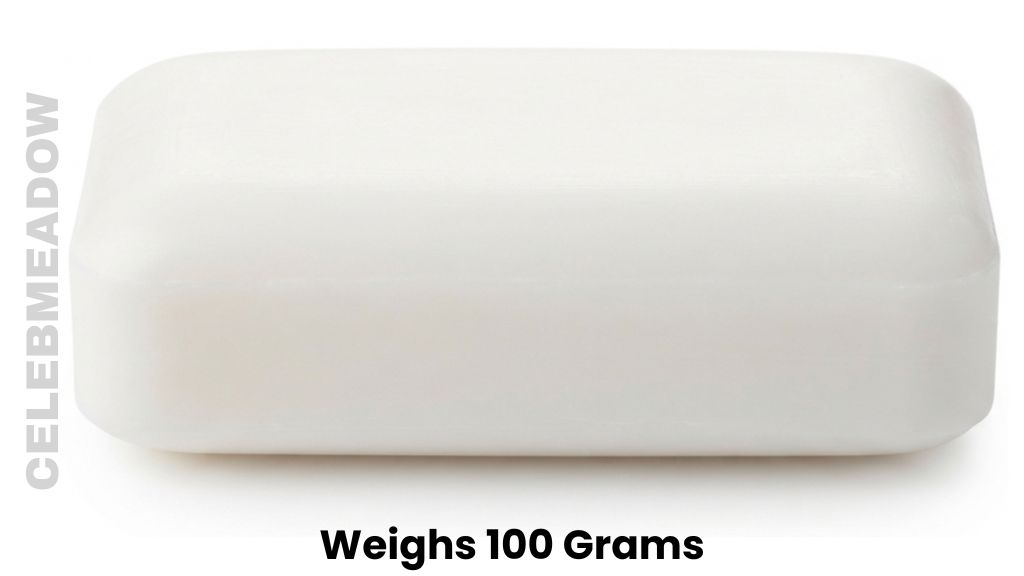
A standard, unused medium bath or hand soap bar typically weighs exactly 100 grams straight from the factory.
The 100-gram bar size isn’t random. Ergonomic studies in personal care manufacturing found it matches the natural grip of an average adult hand — heavy enough to feel solid during lathering, light enough not to slip. Hospitality businesses (hotels, airlines) bulk-order this exact size because it also fits within common travel toiletry liquid restrictions when broken down to volume equivalents.
Pick up a bar of soap — preferably one still in its wrapper. Feel how it fills the width of your palm without overhanging. That comfortable, firm weight? Exactly 100 grams.
Key measurement: 100 g / 3.53 oz (exact production weight)
20 U.S. Nickels
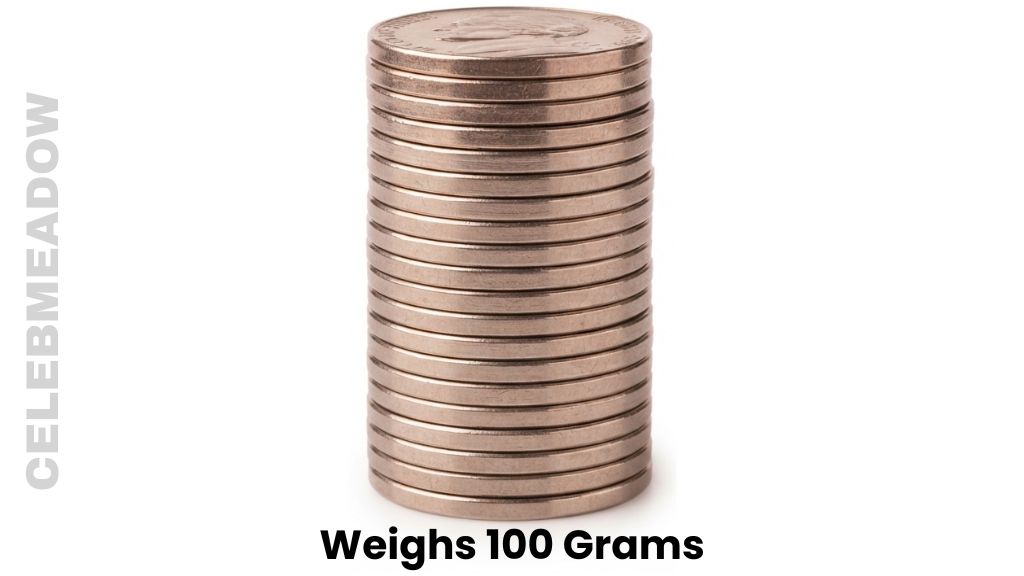
Twenty U.S. nickel coins weigh exactly 100 grams — making this the most reliable free method to calibrate a digital scale.
Each nickel weighs precisely 5.000 grams, a standard set by the Coinage Act of 1866. Congress designed that weight on purpose — they wanted to quietly introduce metric measurement into everyday American life through coins people handled daily. The result, over 150 years later, is that 20 clean, uncirculated nickels placed on a kitchen or jewelry scale should read 100.0 grams. If it doesn’t, your scale needs adjustment.
Find 20 nickels in a jar or wallet. Stack them. That small, dense tower is one of the most precise free calibration tools most people already own.
Key measurement: 100.0 g / 3.53 oz (exact legal mint standard)
A Small Votive Candle
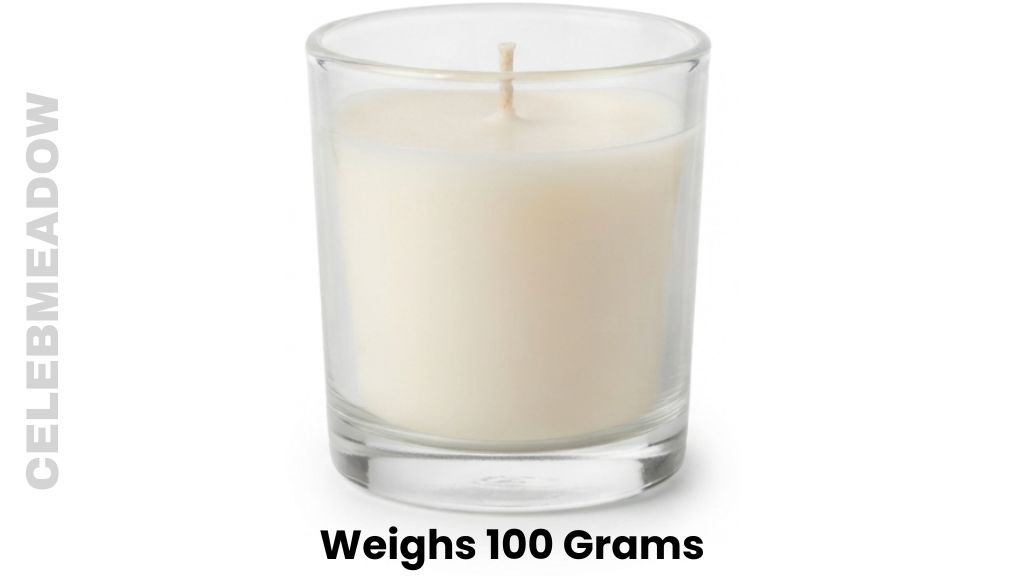
A small votive candle or mini travel tin candle typically comes in at around 100 grams total gross weight — wax, wick, and container combined.
Candle makers pour in 2 to 3 ounces of wax into a lightweight vessel to hit this weight range. At 100 grams, a votive-size candle delivers roughly 20 to 25 hours of burn time — long enough to be genuinely useful, small enough to mail cheaply. Craft sellers who run subscription boxes love this weight point because it sits just under or right at the threshold where courier pricing changes.
Hold a small candle in your palm. It feels a little heavier than you’d expect from something that size — that’s the glass or tin adding to the wax weight.
Key measurement: ~100 g / ~3.53 oz
A Stack of 22 U.S. Letter-Size Sheets (20 lb Paper)
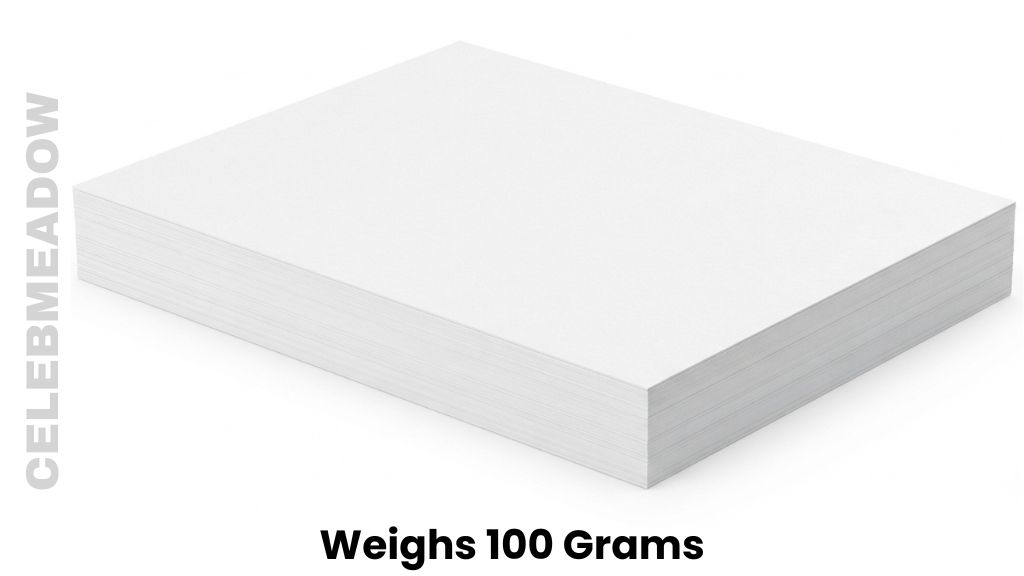
A pinch-stack of 22 sheets of standard 20 lb U.S. Letter-size copy paper lands at commonly around 100 grams.
The “20 lb” designation refers to the weight of 500 large parent sheets before they’re cut down to letter size. Once trimmed, each individual sheet comes to 4.54 grams. Multiply by 22 and you hit the 100-gram mark. Legal assistants and office clerks use this calculation regularly to figure out how many pages can be stuffed into a flat envelope before crossing a courier’s pricing threshold.
This is slightly different from the A4 stack in item 6 — U.S. Letter paper is cut from a different parent sheet, so the per-sheet weight differs. Two sizes, same 100-gram goal, different sheet counts.
Key measurement: ~100 g / ~3.53 oz (22 sheets)
More Post: 1 cm: 10 Common Objects That Show It Clearly
How to Picture 100 Grams Without a Scale
The easiest starting point is your hand. Lay a medium banana flat across your palm with the peel off. That gentle, barely-there weight pressing down against your skin? That’s 100 grams. It won’t strain your wrist or tug at your arm — it just rests there, light and easy. Most people are surprised by how little 100 grams actually feels like when they hold it for the first time.
A second useful method uses coins. Find 20 nickels and stack them in your palm. The stack feels compact and dense — like a tight little cylinder — but it weighs the same as that banana. The difference is that the coins feel heavier because the weight is concentrated in a smaller surface area. Same 100 grams, totally different sensation. That contrast alone teaches you something real about how weight and size relate.
If you want one more anchor, think about a small chocolate bar — the flat, pocket-sized kind. The kind that fits entirely in one hand with nothing hanging over. Unopened, wrapper still on. That’s your 100 grams wrapped in foil. Once you’ve held that bar and committed the feeling to memory, you’ll never need to guess again.
100 Grams Compared to Similar Weights
| Weight | In Grams | Compared to a Medium Banana (Peeled) |
| 25 g | 25 g | About ¼ of a peeled banana |
| 50 g | 50 g | About half a peeled banana |
| 100 g | 100 g | One full peeled banana |
| 200 g | 200 g | Two peeled bananas |
| 500 g | 500 g | Five peeled bananas |
| 1,000 g | 1,000 g | Ten peeled bananas (= 1 kilogram) |
Common FAQ’s About How Much is 100 Grams
How much is 100 grams in ounces and pounds?
100 grams equals 3.53 ounces or 0.22 pounds. Think of it as roughly one-fifth of a pound.
Is 100 grams equal to 1 kilogram?
No. 100 grams is one-tenth of a kilogram. You need ten 100-gram portions to make 1 kg.
What household item weighs 100 grams for scale calibration?
Stack 20 U.S. nickels. Each coin weighs exactly 5 grams by law, so 20 of them hit 100 grams precisely every time.
How much is 100 grams as a food serving size?
It looks like one peeled medium banana, half a cup of dry rice, or the liquid inside two large eggs — all land near 100 grams.
How can I measure 100 grams without a scale?
Two easy ways: fill a measuring cup halfway with dry white rice, or count out 20 nickels. Both give you 100 grams without any equipment.
The next time you reach for a chocolate bar, peel a banana, or drop 20 nickels into your palm — you’re already touching 100 grams. A single playing card deck. A bar of soap. Twenty sheets of printer paper. None of these feel heavy, and that’s exactly the point. 100 grams is a quiet, everyday weight hiding in the most ordinary objects around you.
Related More Measurements Guides:

I’m Cherry Sin, and I write clear, practical guides that help people understand everyday measurements and sizes. I focus on turning numbers into easy mental pictures using familiar objects and real-life situations. At Celebmeadow, I write guides that explain measurements in a simple, visual way.