
You’re ordering something online and the shipping weight says 4 pounds. Or maybe you’re packing a bag and trying to guess if you’re under the limit. Four pounds is one of those weights that sounds familiar but is surprisingly hard to picture. Knowing what weighs 4 pounds gives you an instant mental anchor — and 4 pounds converts to roughly 1.81 kilograms, or about 64 ounces.
Quick Measurements: What Weighs 4 Pounds?
| Unit | Value |
| Pounds | 4 lb |
| Ounces | 64 oz |
| Kilograms | 1.81 kg |
| Grams | 1,814 g |
13 Everyday Things That Weigh 4 Pounds
| Sr. # | Object | Category | Weight |
| 1 | 4-Pound Bag of Granulated Sugar | Food & Grocery | Exactly 4 lb / 1.81 kg |
| 2 | Standard Red Clay Building Brick | Construction Material | ~4.3–4.5 lb / 1.95–2.04 kg |
| 3 | Large Pineapple | Fruit & Food | ~4 lb / 1.81 kg |
| 4 | Four Standard Soccer Balls | Sports Equipment | ~3.8–4.0 lb / 1.72–1.81 kg |
| 5 | 4-Pound Neoprene Hand Dumbbell | Fitness Equipment | Exactly 4 lb / 1.81 kg |
| 6 | Thick Hardcover Dictionary or Textbook | Books & Education | ~4.0–4.5 lb / 1.81–2.04 kg |
| 7 | Pair of Men’s Leather Work Boots | Clothing & Footwear | ~3.8–4.3 lb / 1.72–1.95 kg |
| 8 | 25-Foot Heavy-Duty Extension Cord | Home & Tools | ~4 lb / 1.81 kg |
| 9 | Standard Acoustic Guitar | Musical Instrument | ~4.0–4.5 lb / 1.81–2.04 kg |
| 10 | 15-Inch Laptop | Electronics | ~3.8–4.2 lb / 1.72–1.90 kg |
| 11 | Football Helmet | Sports Equipment | ~4.0–4.5 lb / 1.81–2.04 kg |
| 12 | Small Cordless Drill | Power Tool | ~3.5–4.0 lb / 1.59–1.81 kg |
| 13 | Personal-Sized Watermelon | Fruit & Food | ~4 lb / 1.81 kg |
A 4-Pound Bag of Granulated Sugar

A standard 4-pound bag of granulated sugar is one of the most precise, dead-on examples of this weight you’ll ever hold.
This bag size isn’t random. It became a retail standard in North America because it sits perfectly between the smaller 2-lb bag and the bulkier 10-lb sack — hitting a price point that works for regular home bakers without taking over a cabinet shelf. Pick one up at any grocery store and you have a near-perfect calibration tool in your hands.
The weight feels dense and settled, not floppy. It’s the kind of bag you grip with one hand but feel immediately in your wrist. Next time you’re at the store, grab one and hold it for a few seconds. That feeling — firm, compact, slightly heavy — is exactly 4 pounds.
- Key measurement: 4 lb / 1.81 kg
Related Post: What Weighs 1 Pound? 16 Common Things That Weigh 1 Pound
A Standard Red Clay Building Brick
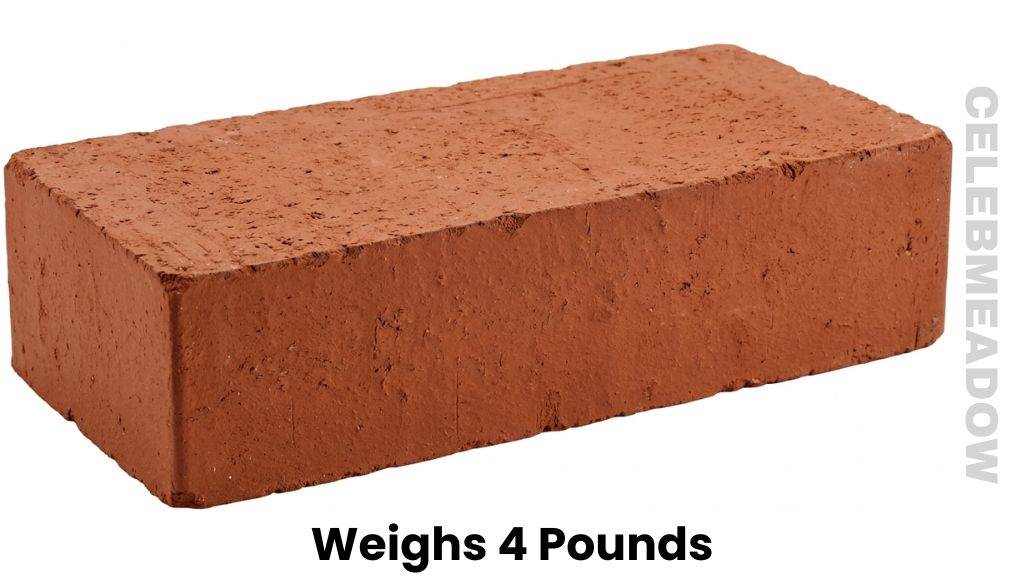
A dry, solid red clay building brick typically comes in at around 4.3 to 4.5 pounds — just a hair over our target, but close enough to feel identical in the hand.
Bricks are sized and weighted this way on purpose. The Brick Industry Association sets strict standards so that a mason can pick up and place bricks all day without destroying their back. Too light and the wall won’t hold load. Too heavy and workers burn out. This weight is the result of decades of ergonomic and structural compromise.
Pick up a single brick from a garden center or hardware store. Notice how it feels heavier than it looks. That dense, rigid, slightly gritty weight sitting in your palm — that’s what 4 pounds feels like in solid form.
- Key measurement: commonly around 4.3–4.5 lb / 1.95–2.04 kg
A Large Pineapple
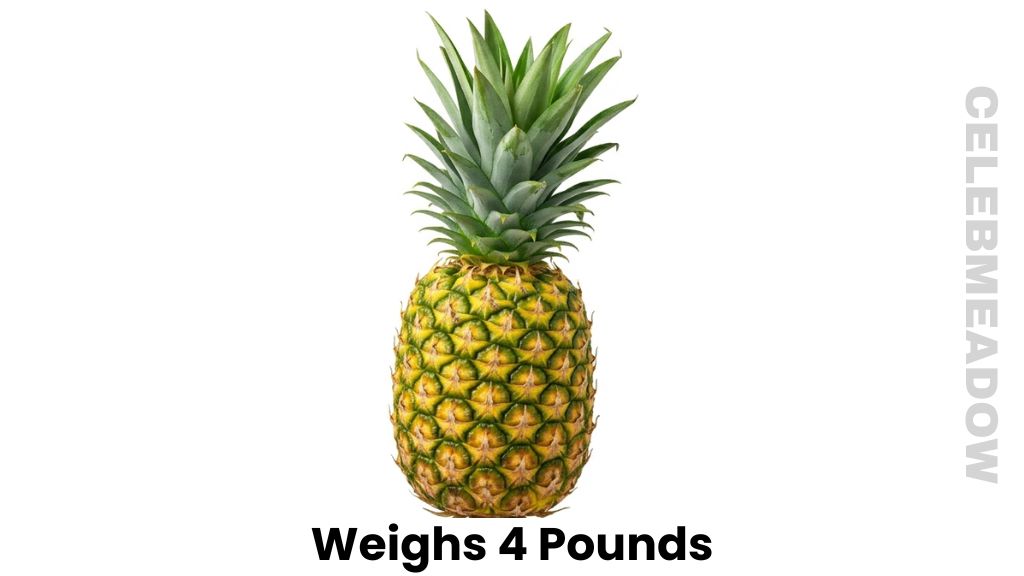
A large, whole pineapple with its crown still attached typically weighs right around 4 pounds.
This isn’t controlled by any factory — it’s pure biology. Commercial growers sort pineapples by size and grade for supermarket shelves, and a “large” grade pineapple lands consistently in that 3.5 to 4.5-pound range. The dense, water-rich core drives most of that weight, while the spiky shell adds very little.
Here’s what makes this comparison interesting: the pineapple looks big and awkward to hold, but once it’s in your hands, you feel how much weight is packed into a tight space. Grab one in the produce aisle and cradle it in your forearm. That’s a living, natural 4-pound object — grown, not manufactured.
- Key measurement: commonly around 4 lb / 1.81 kg
Four Standard Soccer Balls
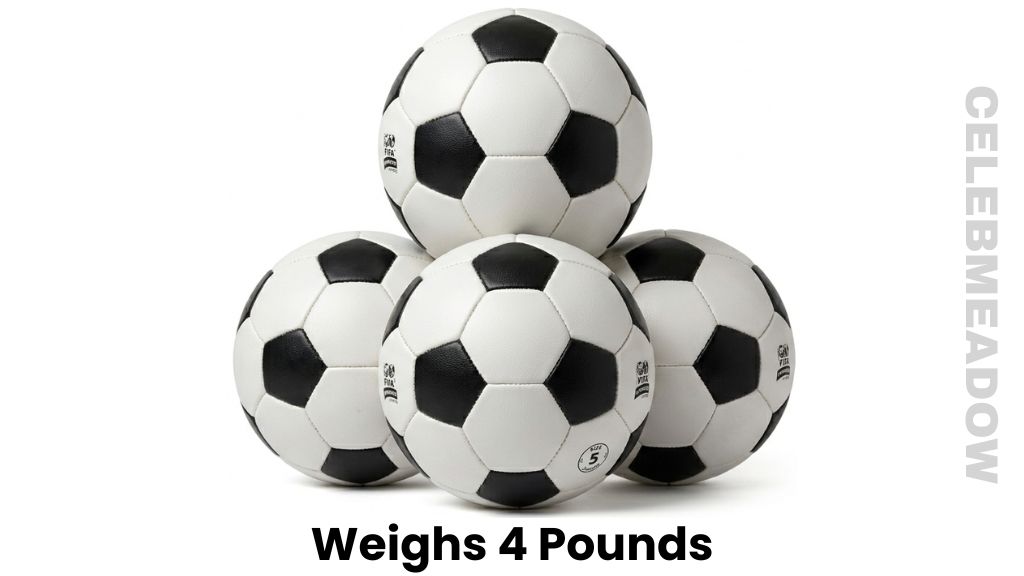
Four fully inflated, official size-5 soccer balls together weigh right around 4 pounds total.
Each individual ball must weigh between 410 and 450 grams under FIFA Law 2 — that’s roughly 0.95 pounds per ball. This rule exists to keep flight paths predictable and protect players from impact injuries. Too heavy and a headed ball causes concussions. Too light and wind completely controls the game.
Four of these stacked together gives you a vivid physical picture. You’re holding the combined weight of four match balls — something every coach who has ever lugged a bag of balls across a field understands deeply. Each ball alone feels almost nothing. Together, they quietly add up.
- Key measurement: approximately 3.8–4.0 lb total / 1.72–1.81 kg
A 4-Pound Neoprene Hand Dumbbell
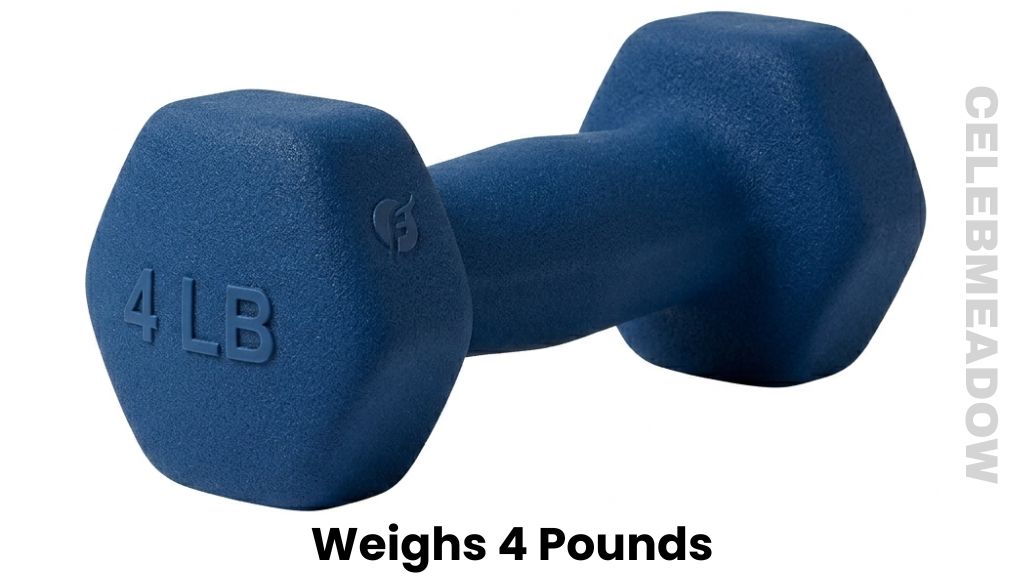
A 4-pound neoprene dumbbell is one of the only objects on this list that exists purely and exactly to weigh 4 pounds — it has the number stamped right on the side.
These weights are built for progressive resistance training and rehabilitation. The neoprene coating protects floors and gives you a non-slip grip, but underneath is solid cast iron. It’s a beginner-to-intermediate weight — light enough for full range-of-motion exercises, heavy enough to fatigue smaller muscle groups after a few sets.
Hold one at arm’s length for 30 seconds. After about 15 seconds, your shoulder will remind you that 4 pounds, held at a distance, is not as trivial as it sounds. That’s the most physical lesson in what this weight actually means.
- Key measurement: exactly 4 lb / 1.81 kg
A Thick Hardcover Dictionary or Textbook
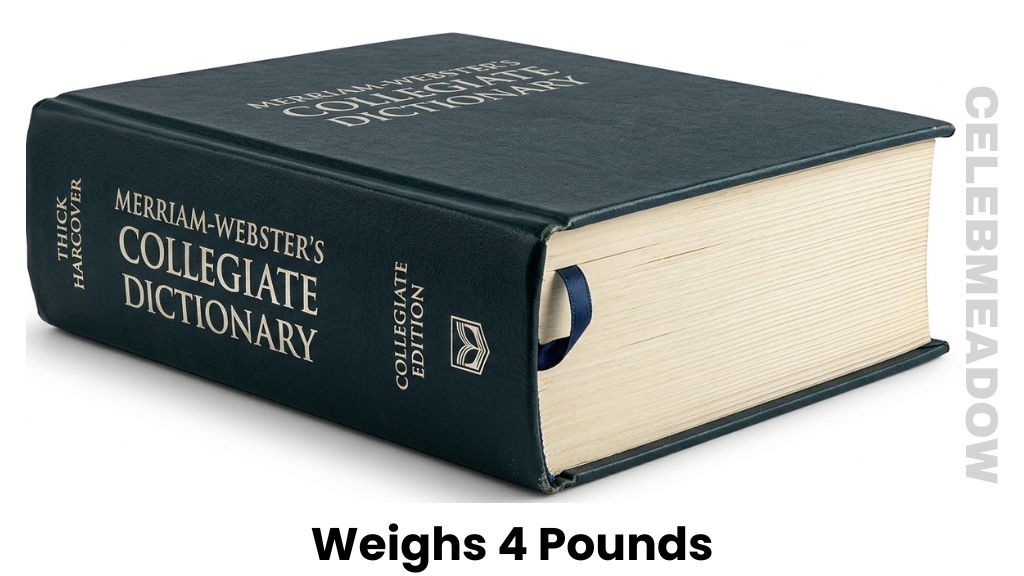
A large hardcover dictionary or heavy university textbook usually lands between 4.0 and 4.5 pounds.
The weight isn’t padding — it’s function. A reference book built to last decades needs durable binding, thick protective covers, and high-quality paper that can handle thousands of page turns without tearing. A 1,000-page book using proper acid-free stock is going to weigh something. There’s no lighter shortcut if you want it to survive.
Anyone who carried a college backpack full of these knows the cumulative damage. One textbook alone at 4 pounds feels manageable. Three of them will make your shoulder ache by noon. That familiar ache is a direct measurement experience most people have already had.
- Key measurement: commonly around 4.0–4.5 lb / 1.81–2.04 kg
A Pair of Premium Men’s Leather Work Boots
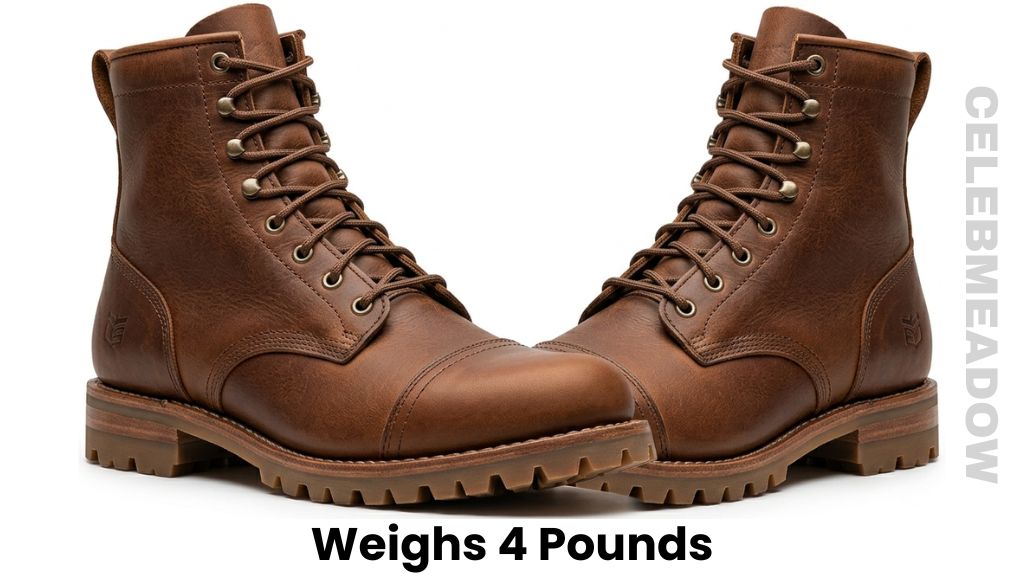
A complete pair of men’s leather work boots in a standard size 10 typically weighs between 3.8 and 4.3 pounds.
That weight isn’t accidental bulk — it’s protection. Oil-tanned leather, steel shanks, and thick lugged outsoles all add up because they’re doing real jobs: guarding against punctures, electrical hazards, and ankle roll. Every layer exists for a safety reason.
The reason this matters practically: when you’re packing for a flight, wearing your work boots on the plane instead of packing them can save you over 4 pounds of checked luggage weight. Frequent travelers who build this habit understand the weight of a boot pair more precisely than most people ever need to.
- Key measurement: commonly around 3.8–4.3 lb / 1.72–1.95 kg
A 25-Foot Heavy-Duty Extension Cord
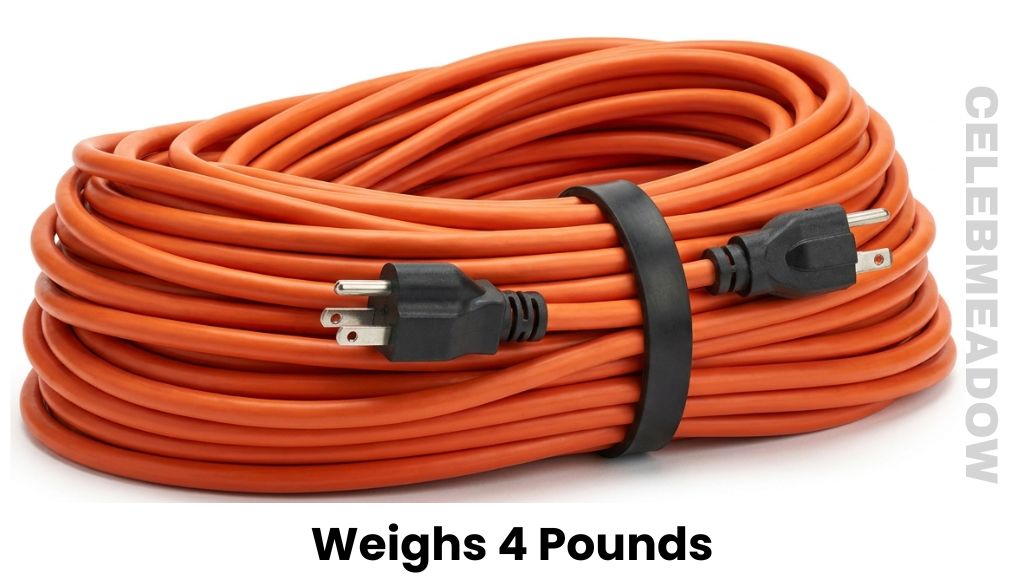
A 25-foot, 12-gauge outdoor extension cord coiled up weighs commonly around 4 pounds — which surprises most people the first time they pick one up.
The weight comes from physics, not packaging. A 12-gauge cord needs thick, pure copper conductors to carry serious amperage without overheating. Copper is dense. Wrap that in thick weather-rated PVC insulation and you’ve got a coil that’s much heavier than it looks hanging on a peg in the hardware store.
Unroll one across your driveway sometime. Notice the resistance as you drag it — that’s all copper and rubber pulling back. Then coil it up and hold it in one hand. That rubbery, dense, slightly awkward bundle is 4 pounds you probably never thought to weigh.
- Key measurement: commonly around 4 lb / 1.81 kg
A Standard Acoustic Guitar
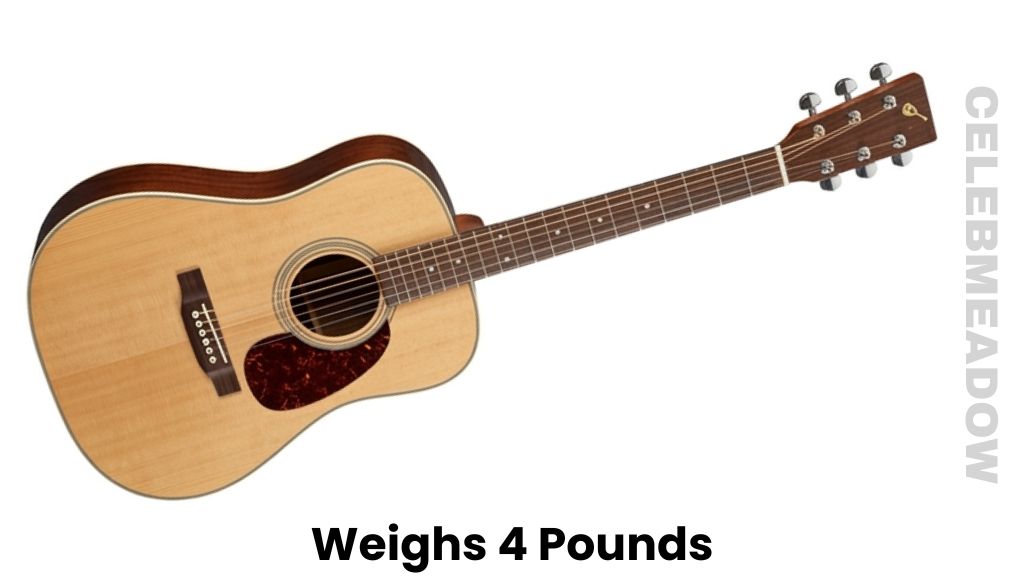
An acoustic guitar — the full instrument, uncased — typically weighs between 4.0 and 4.5 pounds, which shocks most people given how large it looks.
The lightness-for-its-size is the whole point. Luthiers shave the top wood extremely thin so the guitar body can vibrate freely and amplify sound naturally. Too thick and the tone dies. Too thin and the neck tension cracks the top. The final weight is a product of acoustic physics, not wood saving.
This makes the guitar one of the best examples of how looks can mislead weight judgment. Something that takes up the space of a small child weighs about the same as a bag of sugar. Hold one by the neck, body dangling — that surprisingly gentle pull is 4 pounds spread across a large, hollow frame.
- Key measurement: commonly around 4.0–4.5 lb / 1.81–2.04 kg
A 15-Inch Laptop
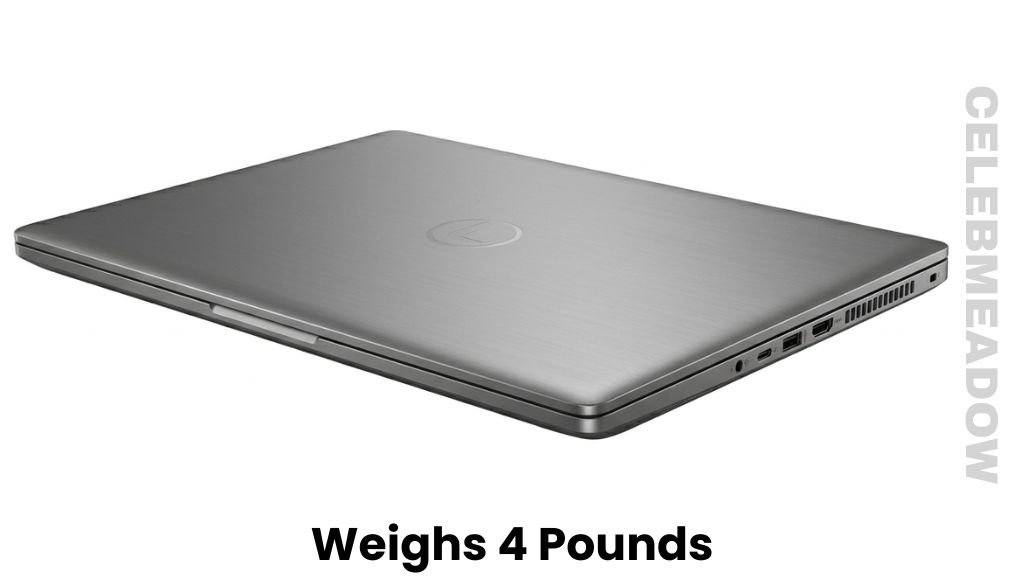
Most standard 15-inch laptops — closed, without the charger — weigh somewhere between 3.8 and 4.2 pounds.
This weight is an ongoing engineering negotiation. Make the chassis too thin and the cooling system can’t protect the processor. Add a larger battery for longer runtime and the weight climbs. The 4-pound laptop zone represents the middle ground where manufacturers land when balancing battery life, screen size, and thermal performance without going ultrabook-thin.
It’s also the weight that makes your laptop bag noticeably heavy after two hours of commuting. If you’ve ever switched from a heavy laptop to an ultralight one, you felt the difference in your shoulder immediately. That gap — the relief you felt — was often right around this 4-pound range.
- Key measurement: commonly around 3.8–4.2 lb / 1.72–1.90 kg
A Football Helmet
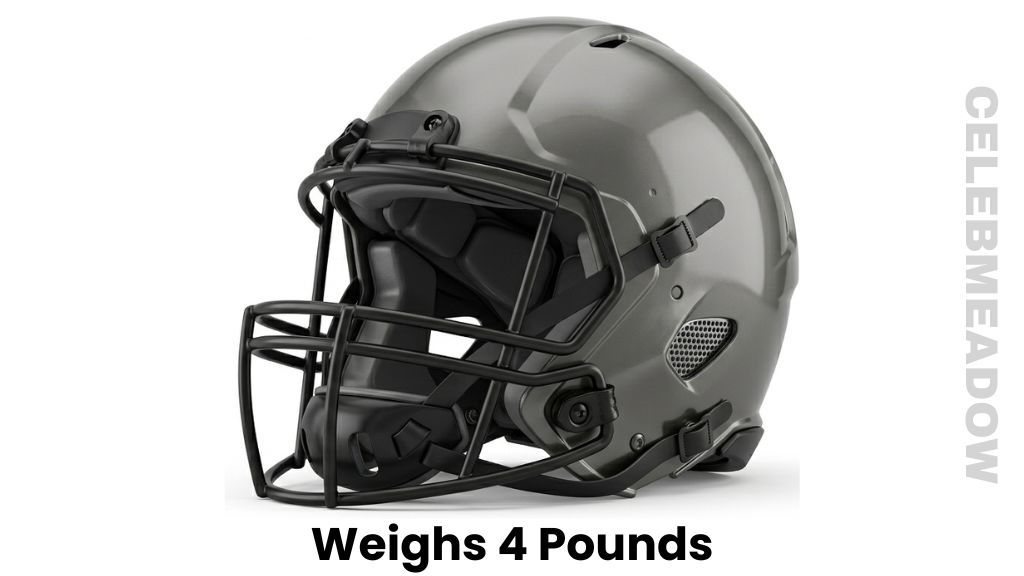
A full adult football helmet with the steel facemask and interior padding commonly weighs between 4.0 and 4.5 pounds.
Every gram in that helmet is deliberate. The outer shell is polycarbonate — hard enough to deflect impact, light enough not to strain the neck. The steel facemask adds rigid face protection. The internal padding and jaw cup are the last layers. Together they meet the impact dissipation requirements that keep players upright after a hit.
Pick one up from a shelf and the weight feels manageable. Now imagine wearing it for a three-hour game in summer heat. That’s when 4 pounds on your skull becomes a serious athletic conditioning factor — which is exactly why neck strengthening is a core part of football training.
- Key measurement: commonly around 4.0–4.5 lb / 1.81–2.04 kg
A Small Cordless Drill
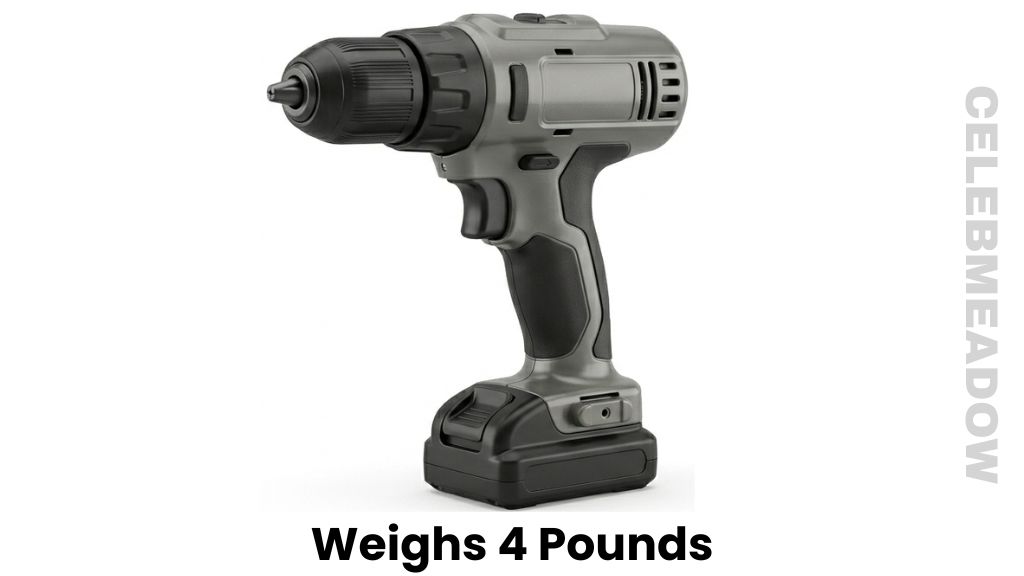
A compact 12V cordless drill with its battery clicked in typically weighs between 3.5 and 4.0 pounds — right at the bottom edge of our target.
The weight balance in a drill is carefully considered. The lithium-ion battery at the base acts as a counterweight to the motor at the front, keeping it from nose-diving in your hand during use. A lighter battery means less runtime. A heavier one means arm fatigue faster. Manufacturers of 12V tools land in this range on purpose.
Hold a drill at arm’s length with one hand extended as if you’re drilling into a ceiling. After about 30 seconds, that 4 pounds will feel like considerably more. Overhead work is where this weight becomes very personal, very quickly.
- Key measurement: commonly around 3.5–4.0 lb / 1.59–1.81 kg
A Small Personal Watermelon
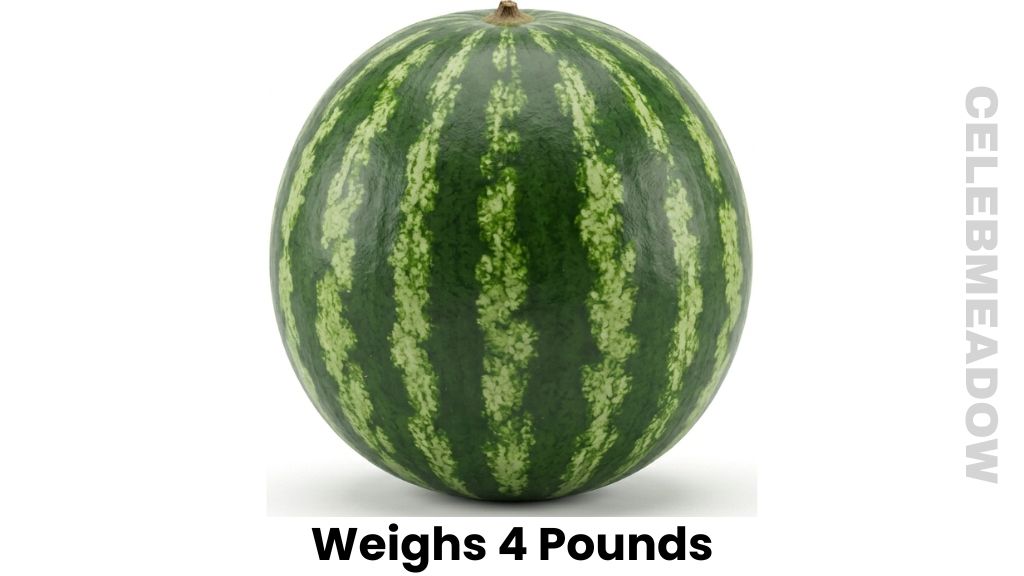
A “personal” or mini watermelon — the kind marketed as a single-serving variety — weighs commonly around 4 pounds, almost entirely because of water.
About 92% of a watermelon’s weight is water, locked inside a dense rind. That’s not a fun fact — it’s the mechanical reason it feels so much heavier than it looks. The rind is rigid and compact, so none of that weight shifts around when you pick it up. It just sits there, solid and surprising.
This one is worth comparing to the acoustic guitar above. Both weigh roughly 4 pounds. One is large and hollow; one is small and dense. Same number, completely different physical experience. That contrast alone teaches you something real about how weight and size don’t always match up.
- Key measurement: commonly around 4 lb / 1.81 kg
How to Picture 4 Pounds Without a Scale
The easiest reference most people already carry is a large water bottle. A 1.5-liter bottle of water weighs about 3.3 pounds when full. A standard 2-liter bottle? About 4.4 pounds. Somewhere between those two — that’s 4 pounds. You’ve probably grabbed one off a grocery shelf a hundred times without thinking about it.
Another method: think about your forearm. The average human forearm and hand together weigh roughly 3 to 4 pounds. When you hold your arm straight out in front of you, you’re already lifting close to 4 pounds from your shoulder. That constant, low-grade pull you feel is your built-in weight reference.
A third mental method works for people who cook: a standard carton of 12 large eggs weighs about 1.5 pounds. Stack two and a half imaginary cartons in your mind. Or think about a full bag of flour — a 2-lb bag plus another 2-lb bag. That combined lift, those two compact bags stacked in your arms, is exactly what you’re trying to picture.
4 Pounds Compared to Similar Weights
| Weight | In Grams | Compared to a Bag of Sugar |
| 2 lb | 907 g | Half a sugar bag |
| 3 lb | 1,361 g | Three-quarters of a sugar bag |
| 4 lb | 1,814 g | One full standard sugar bag |
| 5 lb | 2,268 g | A bag of sugar plus a large orange |
| 6 lb | 2,722 g | A bag of sugar plus a large pineapple half |
| 8 lb (double) | 3,629 g | Two full sugar bags |
Common Questions About 4 Pounds
How much is 4 pounds in kilograms?
4 pounds equals 1.81 kilograms. Multiply any pound value by 0.4536 to get kilograms. Simple, fast, no calculator needed once you remember that number.
Is 4 pounds heavy for a laptop bag or backpack?
For one item, no — it’s manageable. But it adds up fast. A 4-pound laptop plus books, a charger, and a water bottle can push your bag past 12–15 pounds quickly, which is where daily shoulder strain usually starts.
What household item can I use to estimate 4 pounds at home?
Grab a full 2-liter soda bottle from your fridge — it weighs about 4.4 pounds. That’s your closest instant reference. A sealed sugar bag from your pantry works too, and it’s exact.
How do I estimate 4 pounds without a scale?
Hold a full 1.5-liter water bottle in one hand. That’s about 3.3 pounds. Now imagine it just slightly heavier — that gap is 4 pounds. A full 2-liter bottle is even closer, sitting just above the mark.
How heavy is a 4-pound baby?
It’s small — clinically considered low birth weight. Full-term babies typically arrive between 6 and 9 pounds. A 4-pound newborn is roughly the weight of a large pineapple, which puts the fragility of that size into immediate perspective.
The bag of sugar on your kitchen shelf and the acoustic guitar leaning against your wall weigh the same thing. One is dense and compact, the other is wide and hollow — but both are 4 pounds. That contrast is the fastest way to rewire how your brain estimates weight. Next time you pick up something new and wonder how heavy it is, start with what you already know: a laptop, a brick, a pineapple. One of them is probably already in your hands.
Related More Measurements Guides:

I’m Cherry Sin, and I write clear, practical guides that help people understand everyday measurements and sizes. I focus on turning numbers into easy mental pictures using familiar objects and real-life situations. At Celebmeadow, I write guides that explain measurements in a simple, visual way.